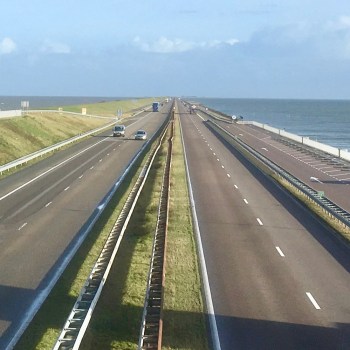
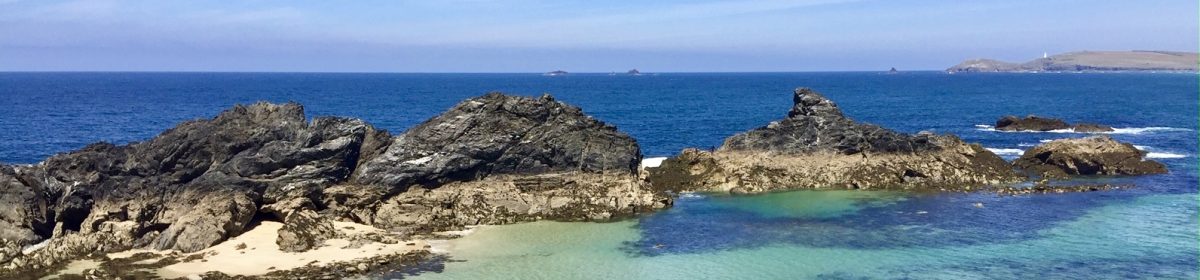
What’s that doing here?

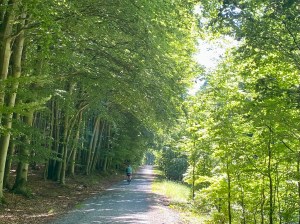
Todays ride, although only 30km was a hilly one, taking in the Konigsstuhl Visitor Centre in Jasmund National Park and the town of Sassnitz. Most of the route was through quiet, shady UNESCO listed ancient Beech forest.
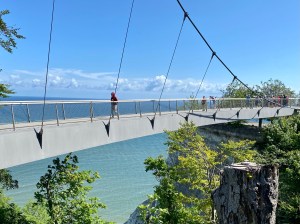
We’d underestimated the popularity of the Visitor Centre, coach loads of tourists and children were disembarking as we arrived. The viewing platform over Kingsstuhl chalk cliff was busy but we managed a few photos.
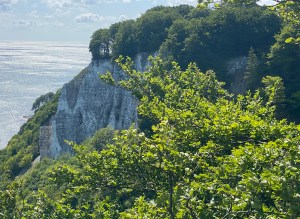
In addition to a cafe, the visitor centre houses an educational film cinema and an exhibition. We had a cuppa while Jacky and Ken went to be educated. It wasn’t a deliberate ploy on our part, just poor timing to access both which were strictly controlled. It became hotter and busier so we abandoned our friends and continued down to Sassnitz.

We cheated a little, deviating from a longer forest based cycle route, choosing a tarmac road instead. Despite being the main road into town, it was quiet and any traffic gave us a wide berth or waited patiently until it was safe to pass. We can only dream of such courtesy at home.

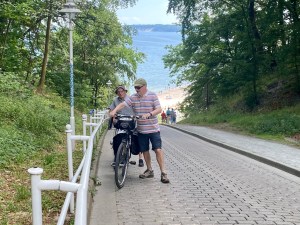
Sassnitz has the longest harbour jetty in Europe, reached by a tortuous cycle down a steep, winding cobbled road. The bikes have taken some punishment over cobbles this holiday, as have we! Our fact of the day – the harbour was the main point of entry for Soviet troops travelling to East Germany during the Cold War. Kim finally sampled a Fischbrotchen for lunch, essentially a fish finger sandwich’s posh cousin. There isn’t a photo, John was too busy fending off a persistent seagull. We cycled along the harbour to look at the U-boot museum which is a decommissioned UK submarine (HMS Otus) flying a Union Jack flag. It doesn’t seem right that it’s not a German sub and does anyone know the difference between a submarine and a U-boat?
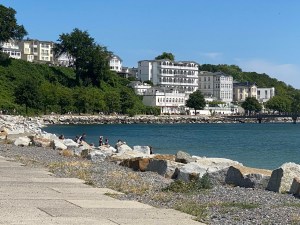
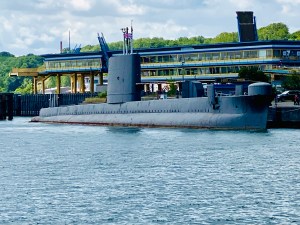
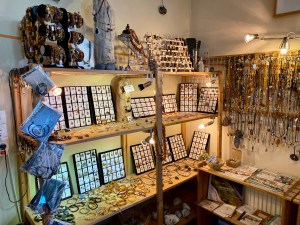
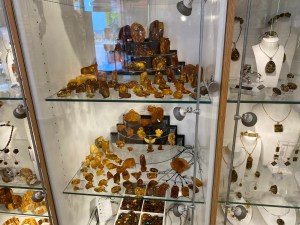
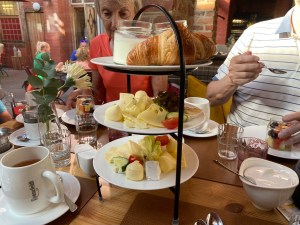
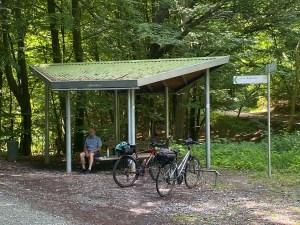
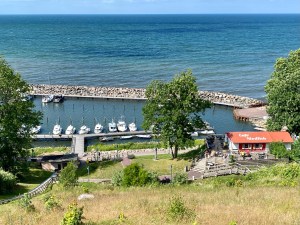
Black clouds gathered overhead and we chose the challenge of the hilly ride back rather than wait a couple of hours for a bus with a cycle trailer. Luckily, black clouds soon gave way to blue sky. We had a brief refreshment stop in the forest before securing our bikes at the hotel for a walk around Lohme. We visited a little shop selling amber or Bernstein as it is called in Germany – literally stone that burns. There followed a steep walk down to the harbour side cafe for coffee and cake. A nice leisurely end to the afternoon.
Strength Through Joy

We’re sitting in our hotel at Lohme, after a long hot day in the saddle, tired, grumpy and very wet. In despair, Kim has put her pyjamas on and it’s only 16:30. Despite our best endeavours we didn’t arrive before the promised storm broke, 15 minutes less meandering along the way and we would have been fine.

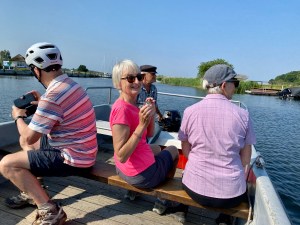
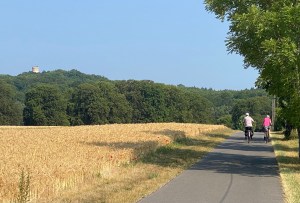
We left Hotel Solthus-am-See at 09:00, the earliest we could catch the ferry. Doesn’t that sound grander than a two minute ride across a 50m stretch of water? The sun was shining, it already felt rather warm for our 50km ride and, alarmingly, we could see our first stop perched on top of a hill in the distance.

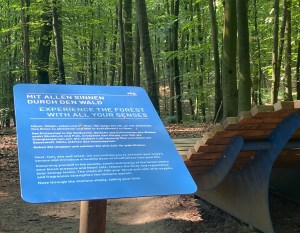
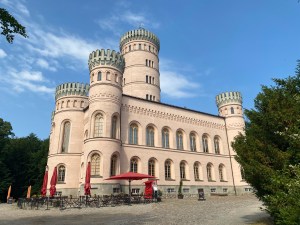
Jagdschloss Granitz Hunting Lodge was only 7km along our route but with the steepest climb of the day up a cobbled track. We did our best, Jacky and John managed most of the climb before giving up. Ken and Kim decided to take a mindful approach and followed instructions to ‘experience the forest with all your senses’. It was of course just an excuse to walk slowly up the hill arriving at the cafe just as Jacky and John finished their coffee. The Hunting Lodge with its commanding views dates back to 1723. In 1944 the von Putbus family were imprisoned and it passed into Nazi hands. They were finally dispossessed of it following East German Land Reforms and attempts to have it returned to the family have failed in court so it now houses a museum.

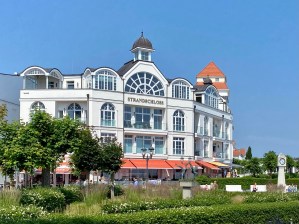
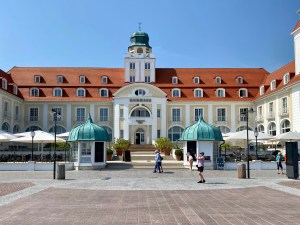
A steep descent and a few more km saw us arriving in the spa resort of Binz. Very pretty and very touristy. We parked the bikes and had a wander. The Baltic is renowned for its amber and, as you would expect, there are shops specialising in it in Binz. Knowing nothing about Amber, we were rather surprised at how expensive it was.

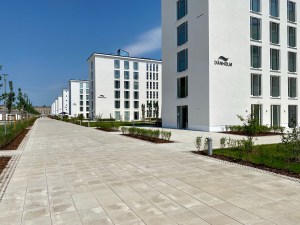
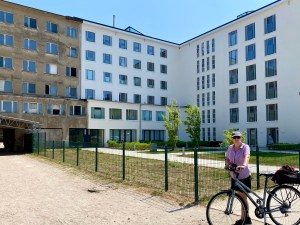
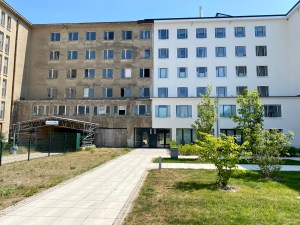
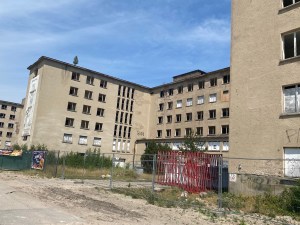
Next stop, Prora the three mile long Nazi holiday camp, intended to be the largest holiday camp in the world and designed to house 20,000 working class people. Work began in 1936 as part of the Strength through Joy project and stopped when the country went to war. Today, much of the unfinished site has been sold to individual developers with apartments taking advantage of sea views and a beautiful beach, quite a contrast with the old. We stopped at the Dokumentations Zentrum, in one of the least restored blocks and, although in German, it was astonishing. Displays charted the propaganda and showcased photos of executions. The museum is funded by a joint collaboration promoted by the Education Director of the EU which may explain the incredibly informative film, using original footage, with English subtitles.

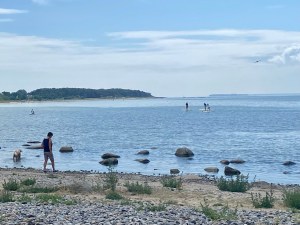
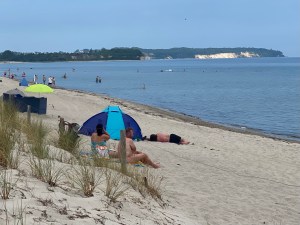
Suddenly, it was 13:30 and we were less than halfway. Apart from a very brief lunch stop on the beach, we’re not sure how we managed to find a place with a lovely view of a port and several naked men! It’s probably quite a skill, we were so hungry, it didn’t put us off eating.

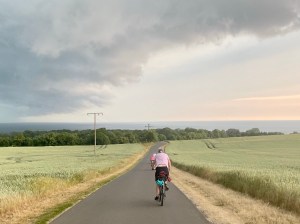
Our final 20km took us out into the Jasmund National Park along hilly roads, through farmland as we raced to stay ahead of the storm that was fast approaching. Some races you don’t win, a chilling wind followed by a clap of thunder, then it suddenly went so dark we had to put our lights on, and despite being only only a few hundred meters from our hotel we were soaked by the deluge.

Racing the storm

Ken needs therapy

John’s been saying this for decades, today Ken agreed. More of that later.

I think we’ve mentioned this before, on an activity holiday, there is nothing quite as welcome as two nights in the same hotel (obviously a room with a kettle would be better). Our luggage doesn’t need to be at Reception by 9am, we can linger over breakfast and activity is optional.

After a leisurely breakfast of fruit, cold meats, cheese and locally smoked fish, we chose activity. A 35 km amble around old fishing villages, through pine woods visiting spa towns along the Monchgut peninsula. Well, that’s what the blurb told us.

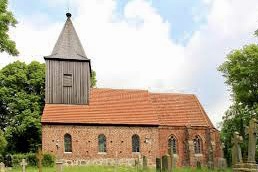
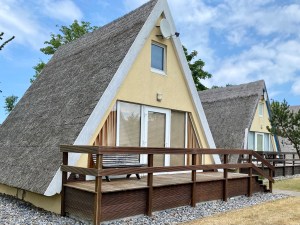
We’d barely left the hotel before we were on a narrow sandy, grass track that was heavy going. After 1km the first steep climb of the day appeared, at least we had fresh legs for pushing the bikes up it! Once we’d conquered this, it was fairly flat cycling through pretty thatched villages down to Thiessow and on to Klein Zicker stopping for refreshments at a rustic fish shack overlooking the bay. Cycling onwards, the church at Gross Zicker dates back to 1360 with its unusual wooden tower.

The route retraced our steps along the coast through welcome shady pine woods, it’s been a hot day. Kim and Jacky stopped at one point, we’d cycled about 6km alongside a beach but not seen it once. The beaches are beautifully sandy, the sea calm and blue. We had our first glimpse of the chalk cliffs the island is famous for……oh, and our first nudists. Kim at age 15 remains deeply scarred by an experience involving her parents, in France, Diane insists she’s being over dramatic. Anyway, Ken announced that he had never seen a nudist beach in his life and headed up over the sand dune. He was warned and, on his own admission, now requires therapy.

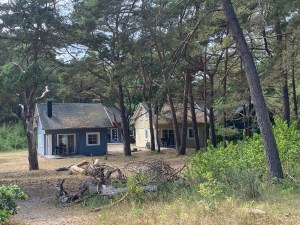
All along the coast, campsites and stylish cabins are located amongst the trees. However, dotted in amongst them are derelict huts dating back to the old GDR. Tourism pretty much ceased in 1953 when hotels, taxis and service companies were nationalised. Owners of private hotels were convicted of economic crimes, their property confiscated and sent to prison. By 1963, there were over 50,000 places available for East Germans and their children, mainly alongside beaches.

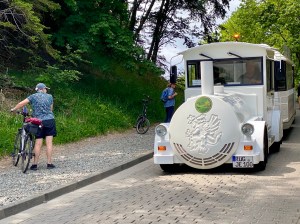
Another flat stretch of coast was cycled before arriving at the outskirts of Sellin where a hideous climb awaited us. Our instructions said ‘you may wish to dismount’. Ha! Dismounting was the only realistic option. Halfway up, we took the opportunity to rest and let the tourist train past while trying to work out if it carried bikes.

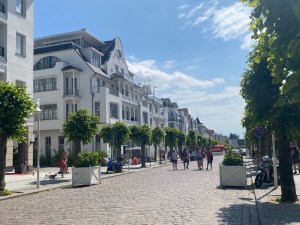
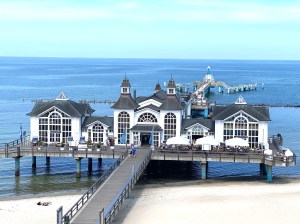
Lulled into a false sense of security, we sailed down the other side into Sellin. We were soon met with cobbled roads, which are lovely if you’re not on a bike, and a long slow ascent up to the top of the cliffs where the town is perched. Sellin is an elegant spa town, famous for its ornate wooden pier and pavilion. As we admired the magnificent structure from the cliff top we looked at each other and agreed that what we needed was an ice cream, not a steep walk down to an old pier.

Retracing our steps back down the cobbled streets was slow and painful. Luckily our last 5km were on lovely flat asphalted cycle paths.

Apologies for lack of photos. When it’s really hot and your phone is navigating the way, the view has to be really, really special to stop, detach a phone and get off a bike. In fact, we hope you’re suitably grateful that any photos appear.

Tomorrow we cycle up to Lohme so an early start for us and it looks like rain may keep us company all the way.

You say left, I say right

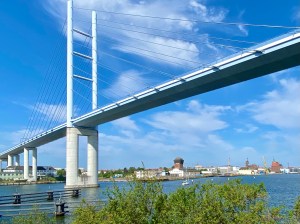
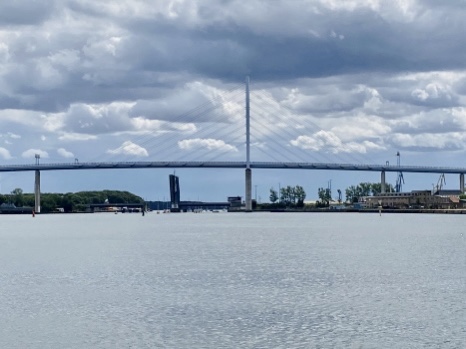
Our cycling holiday started with a very smart breakfast followed by the usual row over which way to turn out of the hotel as we argued our way out of Stralsund’s cobbled streets. Not over the big, sweeping bridge that had given us nightmares but the lovely, older bridge that runs alongside it without the severe elevation.

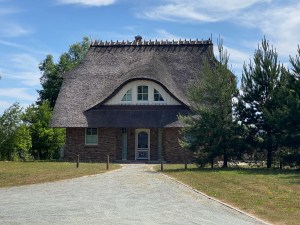
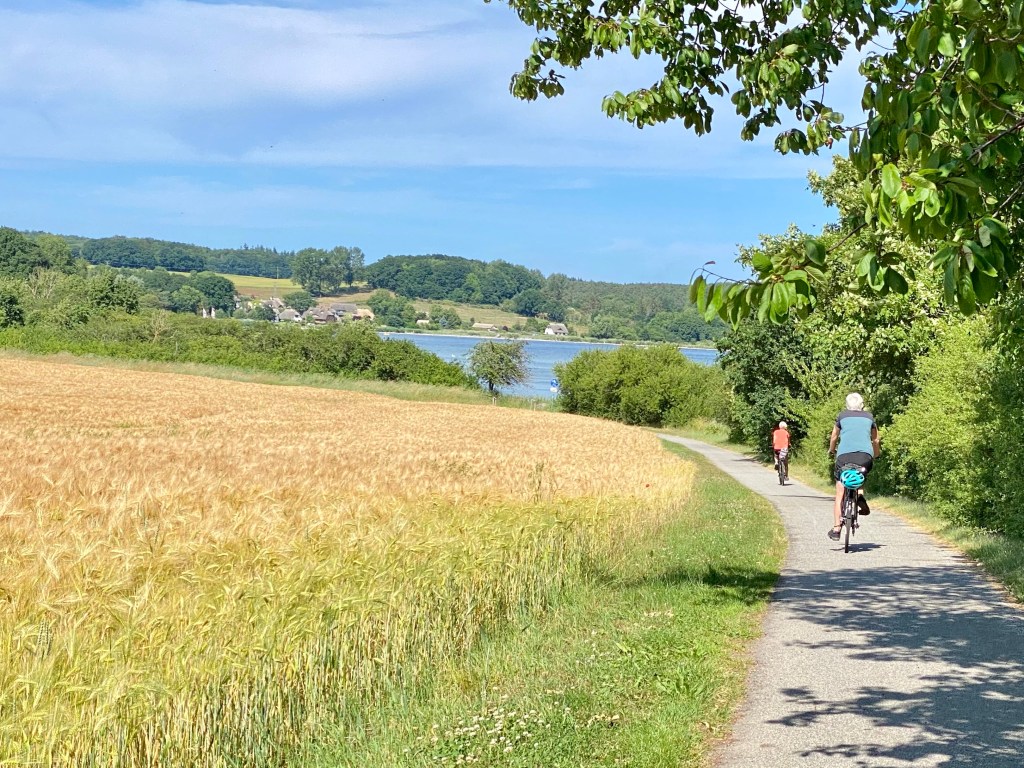
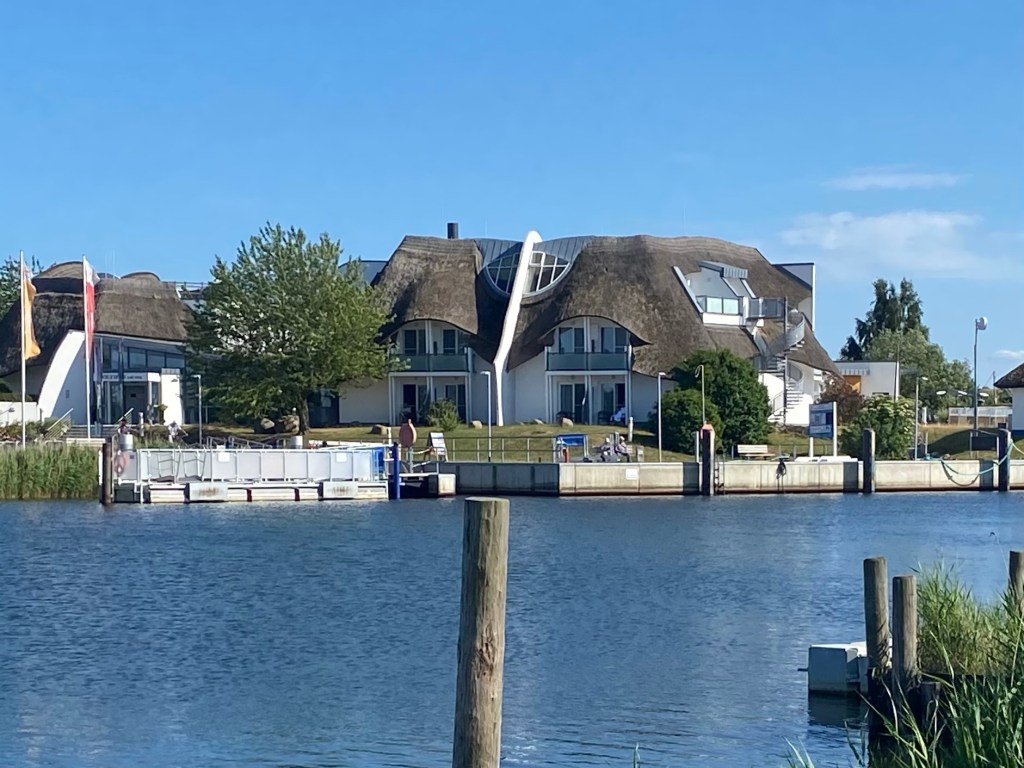
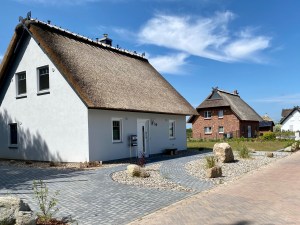
Our 65k route took us out through farmland, woodland and small villages with beautiful thatched cottages. Heading out of one small village, we passed a new development. We’re trying to work out how we can live here, it’s a far cry from new estates at home.

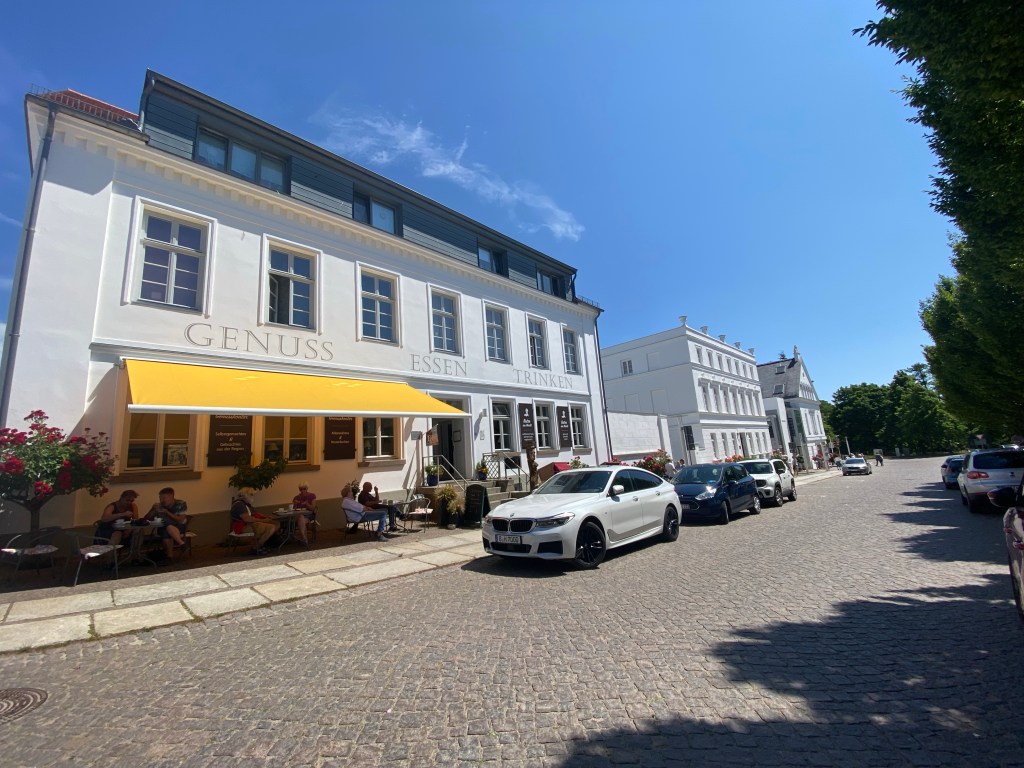
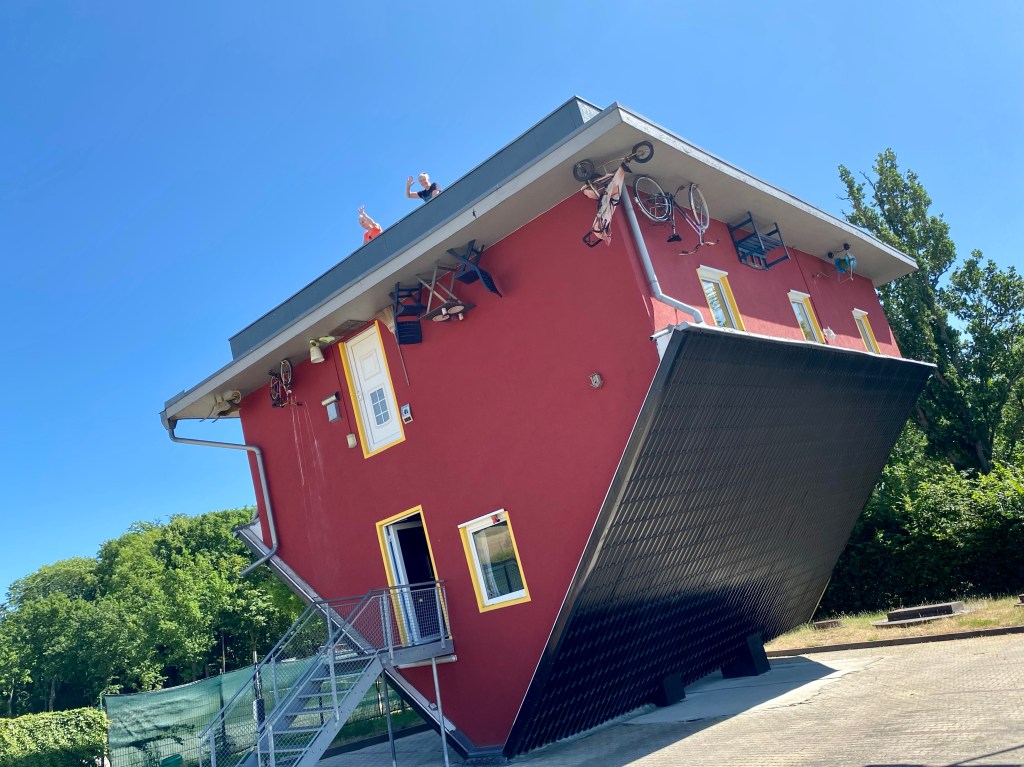
Our instructions warned us that there would be no refreshment stops for first 42k which had us worried. Resourceful packing ensured we were ok for elevenses, and we reached the elegant town of Putbus, for a well deserved coffee and cake, before malnutrition set in. Putbus was founded in 1810 and is renowned for its white mansions and statutory rose bushes. It is stunning, and a real surprise after the rural landscapes we’d been cycling through. We had a slight detour through the 75 acre Schlosspark before heading out to the Haus-Knopf-Uber. Not only is it upside down but tilted so the whole experience challenges balance and perception, can you find Kim and Jacky in the photo?

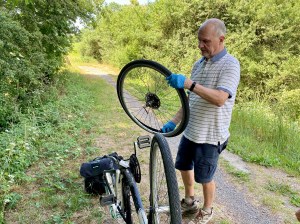
We haven’t mentioned that our arrival in Putbus was delayed by the need to fix a puncture. Who was so careless we hear you cry…

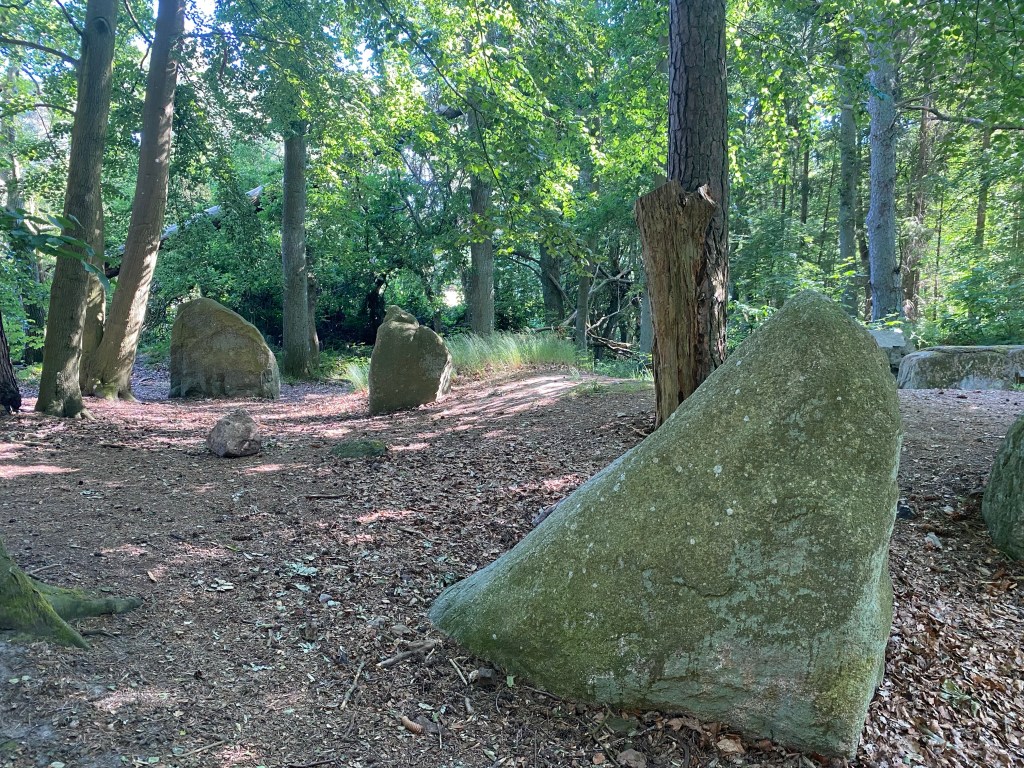
We treated ourselves to a brief ice cream stop overlooking the sea at Gross Stresow before passing the megalithic tombs of Ziegensteine.

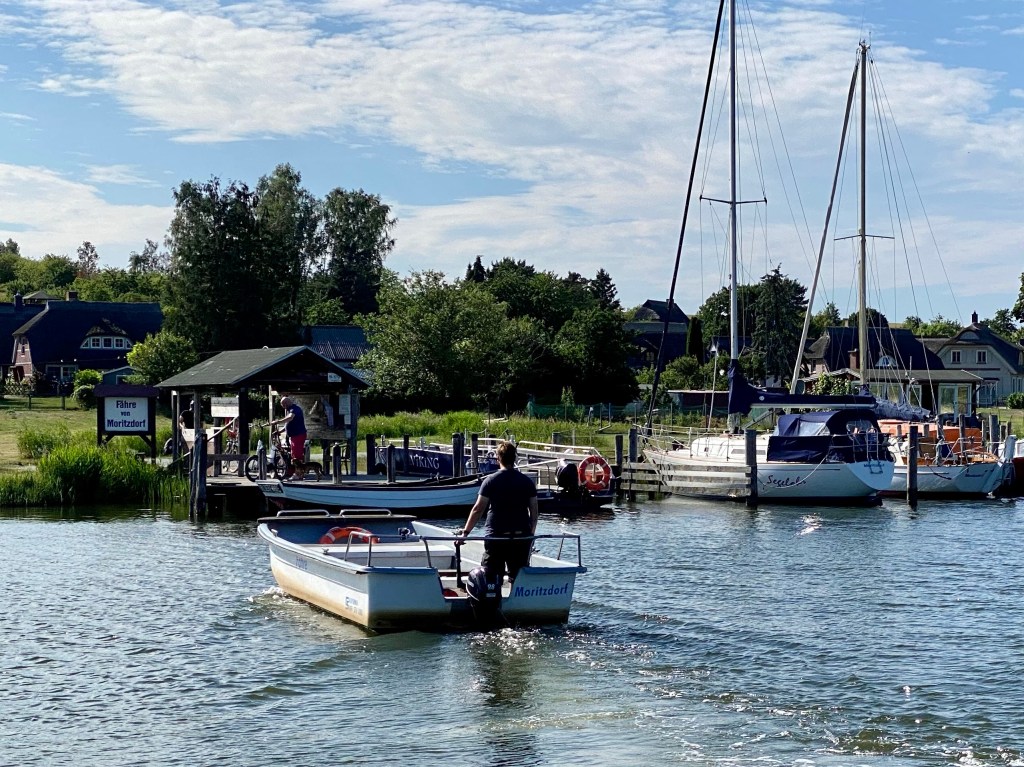
What had been a rather pleasant, if long, cycle ride was marred by an unexpectedly steep climb in the last few kilometres. We all have to admit to getting off our bikes and pushing. The long descent finished at a small inlet where we, and our bikes, were loaded onto a small motorboat and ferried across to our hotel. We were greeted with a complimentary glass of bubbly before being allowed to check in – a rather lovely end to the day

Almost there..

You may wonder why today’s update starts with a blurry picture of the Farge power station. The power station is worth a mention because it was directly opposite our hotel and has been supplying power to Bremen for over 100 years. In the early 1990s it successfully pioneered the use of sewage sludge as coal replacement and has been running on poop ever since. It prides itself on minimal residual waste, most being recycled into other products. Due for decommission in 2022, the Russia – Ukraine war has reprieved it until at least 2024.

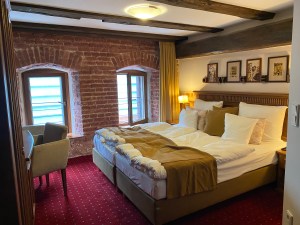
Moving on, another long day in the car and it was a relief to arrive in Stralsund. We are staying in the Romantik Hotel Scheelehof , named after the chemist Carl-Wilhelm Scheele who was born here and discovered oxygen. Our room is in a converted warehouse, one of 5 adjoining 14th century houses which make up the hotel.

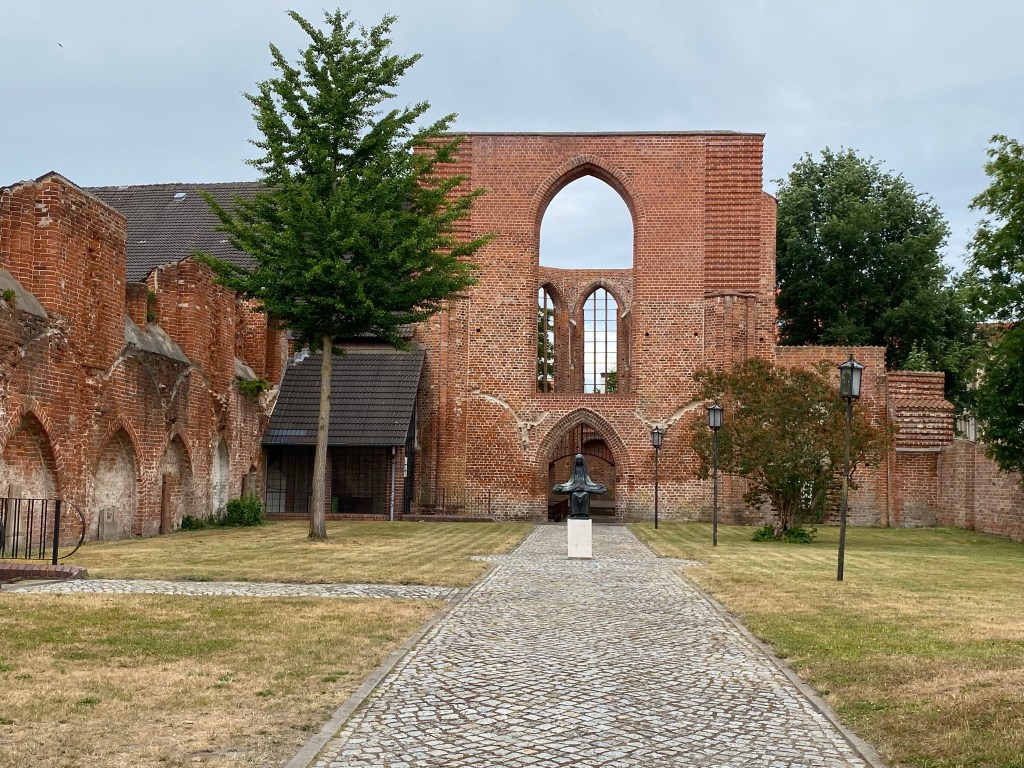
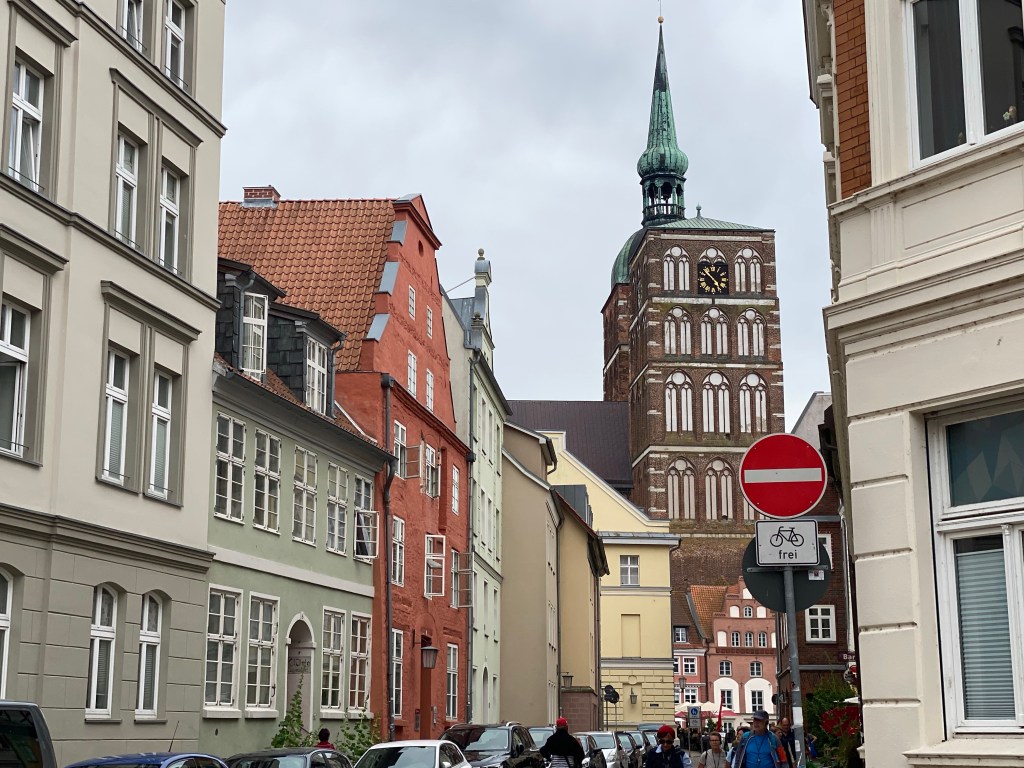
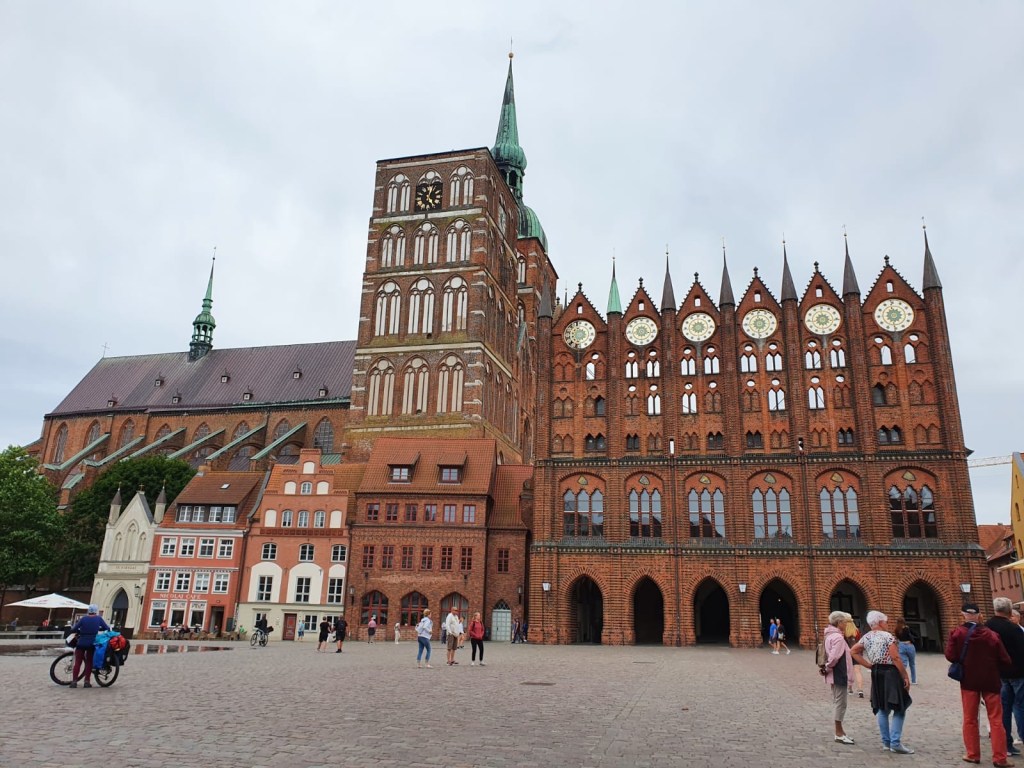
Stralsund is an old Hanseatic trading city only two hours from Poland and the old town is now a UNESCO world heritage site, due to it’s Brick Gothic buildings and former Swedish rule. Having looked around the old town square, we took a walk down to the sea to look at the bridge that we need to cycle over tomorrow, to get to the island of Rugen. From our view point it looks a rather intimidating way to start the day.

Cycling in the Baltic

Cycling, holiday and Baltic…… three words you would not usually see in the same sentence but this has been on our wish list since 2019. We are cycling around Rugen, the largest German island located off the Pomeranian coast in the Baltic Sea. Despite threats made over the last couple of years we are not alone, Jacky and Ken are still gluttons for punishment and thought it sounded ‘fun’. That was before our route GPX files arrived and we discovered Rugen is both hilly and windy.

Yesterday, we sailed overnight from Harwich which is a civilised way to start a holiday, despite a 05:30 wake up call this morning. There is a deranged mind that thinks ‘Don’t worry, be happy’ is suitable music at that time of the morning. As an aside, last night, as we approached Colchester, a car came speeding past waving frantically. What a coincidence to see Katie and Elizabeth, albeit briefly.

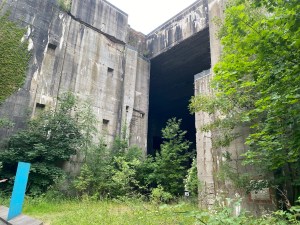
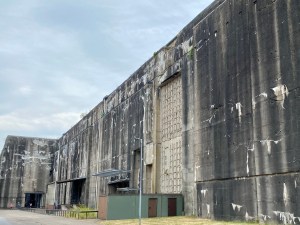
Cycling starts from Stralsund on Saturday so our 8 hour journey has been broken on the outskirts of Bremen. It’s about halfway and is home to the Valentin Bunker, a huge reinforced concrete structure built between 1943 and 1945, using forced prisoner labour, with the intention of housing submarines.

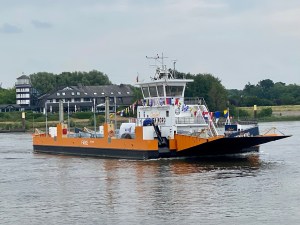
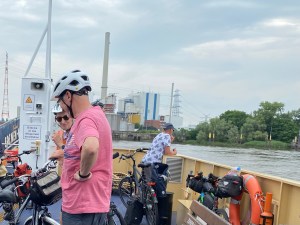
Our hotel is a short cycle from the bunker, with the added adventure of a ferry across the river Weser, so that’s where we spent our afternoon. The day has been incredibly hot and humid but the temperature plummeted as we approached this monolithic building. Photos are simply not adequate do it justice.
The bunker was intended to house 4500 workers building U-boats in 13 assembly bays. The Allies had other ideas, having developed precision bombing techniques during the Dambusters raid, 617 Squadron sent 115 Lancasters and managed to blow two large holes in the roof. No U-boats were ever built there.

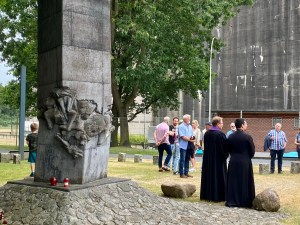
In 2010, the German Navy agreed to cease using the bunker for storage and it became a memorial project, opening to the public in 2016.

10000 prisoners worked on the bunker, often carrying sacks of cement powder that weighed more than they did for 12 hours a day, with only a slice of bread and bowl of soup for nourishment. This is an eye watering example of ‘Extermination through Labour’ which, although not an official Nazi policy, was an effective way for projects to be delivered quickly and cheaply.

Our visit ended with a brisk cycle ride back to the ferry, racing ahead of the rain towards a well earned beer. It’s currently pouring with rain, fingers crossed it stops by the morning.

Final thoughts from Catalonia

Actually from Clophill, but that’s a minor detail! Over 6 days walking we have covered over 80 kilometres and climbed the equivalent 274 flights of stairs. All our devices say something different and there has been some debate over the accuracy of these figures. We are playing our own small part in online misinformation.
Each time we experience InnTravel holidays, we remember their attention to detail, choice of locations and hotels provide an experience that never fails to impress. We have been fortunate to spend time in some wonderful and memorable locations.

Now for the highlights. We thought Jacky’s highlight might be arriving in Spain without Ken. However, we were mistaken and she was impressed with the amazing scenery, lovely hotels and perfect weather.
John’s highlight was being able to set up a microscope, in the Cork Museum, in order for a French family to see the cell structure as originally discovered by Robert Hooke. They were very grateful and many years spent peering through a microscope weren’t wasted.

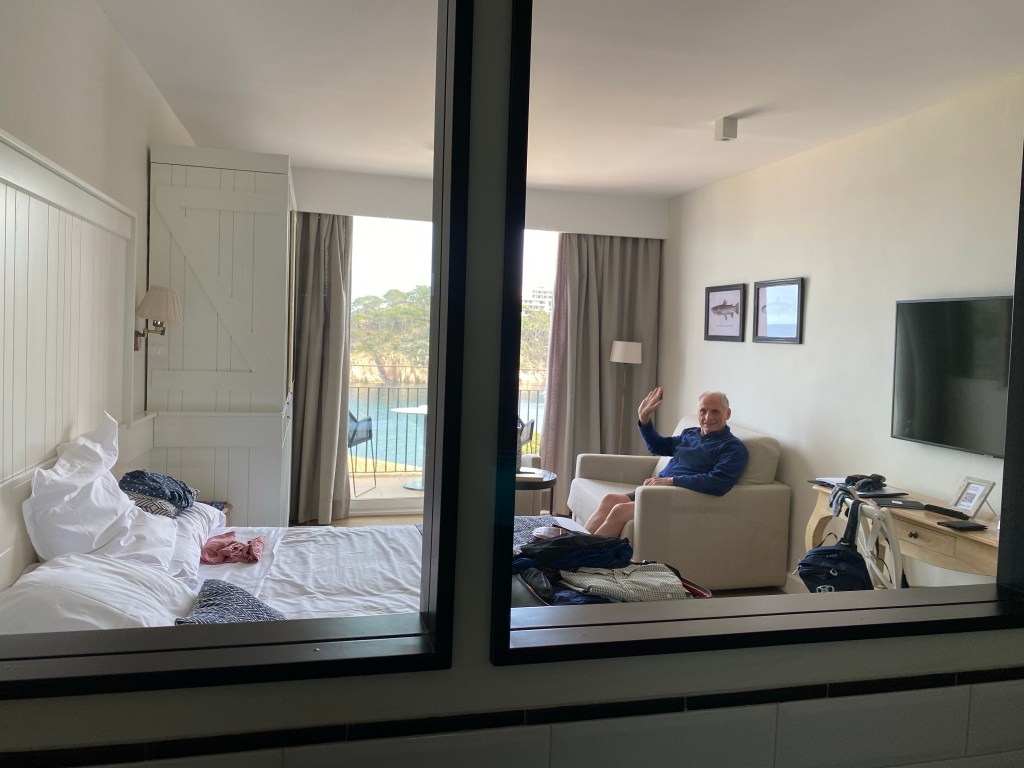
Kim was impressed that she didn’t fall over once. Our last two activity holidays have resulted in physical injury and resulting scars, she was worried it was a trend. The view from our bathroom out across the bay in Hotal Aigua Blava made her laugh. It’s a shame about the bedroom in the way and it took some getting used to.

Ken was overwhelmed by the joy on everyone’s faces when he arrived late on our first day, having travelled by train. The rest of us are a little puzzled by this. We were all grateful that he arrived before midnight. John was slightly miffed that he’d walked out to meet Ken who had snuck into the hotel by a side door. It had taken us a while to notice John was missing. Obviously something to do with the overwhelming joy of seeing Ken

Our next joint adventure, in June, is cycling around Rugen. No one has been on a bike since we returned from The Bodensee last September. We have eight weeks to get cycling fit!. This will mean watching the 2023 Giro d’Italia on TV every day for the next three weeks.

Begur – a concise tour of a medieval town

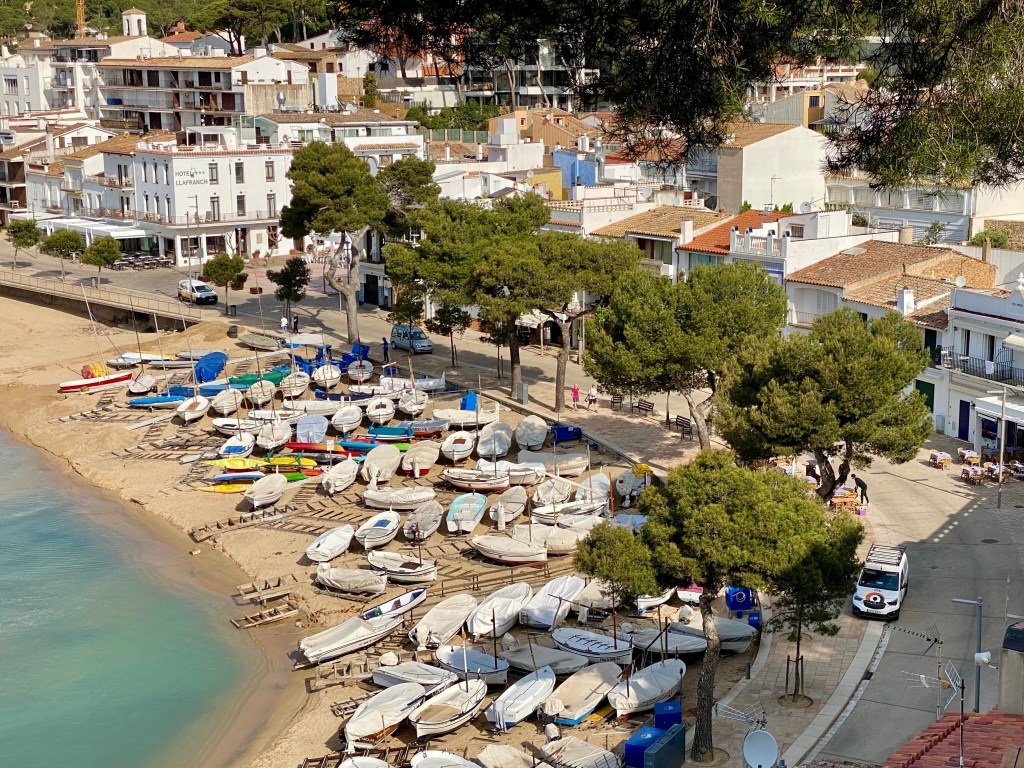
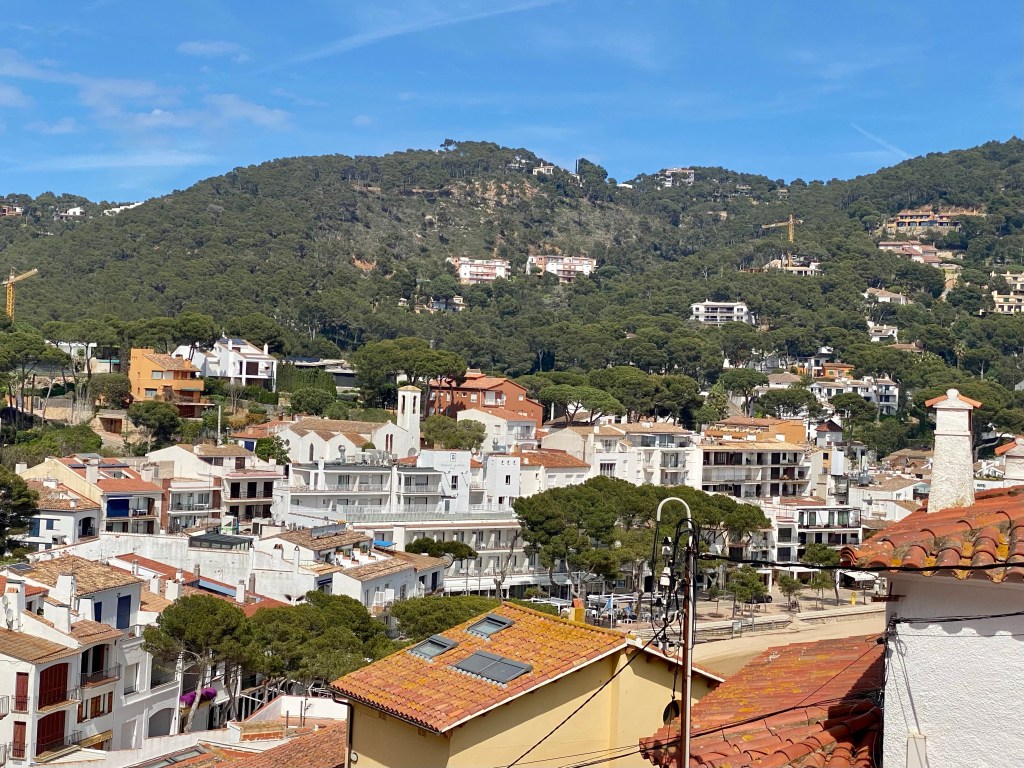
The headline on this evening’s news is ‘Spain provisionally sees hottest April day on record with temperature of 38.7C’. Rest assured that temperature was recorded further South in Seville, here in Catalan it only reached a rather pathetic 27C. Although we appreciate the weather at home has been atrocious, we thought it would be lovely to let you all know that our day started with a cup of tea on our balcony in warm sunshine, overlooking the bay. You can thank us later for this little bit of Catalonian warmth.

There was a choice of walks, 16 or 7km, we chose 7 into Begur. The route was uphill all the way, 200m over 2km, and as relentless as the climb had been out of Llafranc yesterday. This has been our warmest day yet and it felt like hard work.

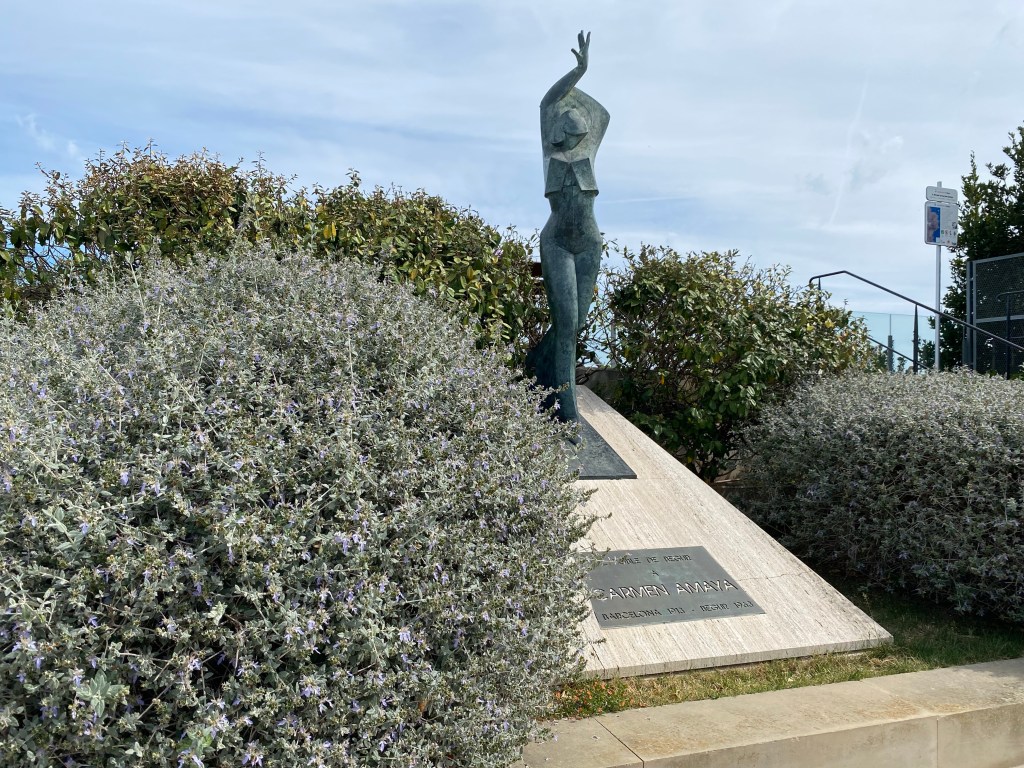
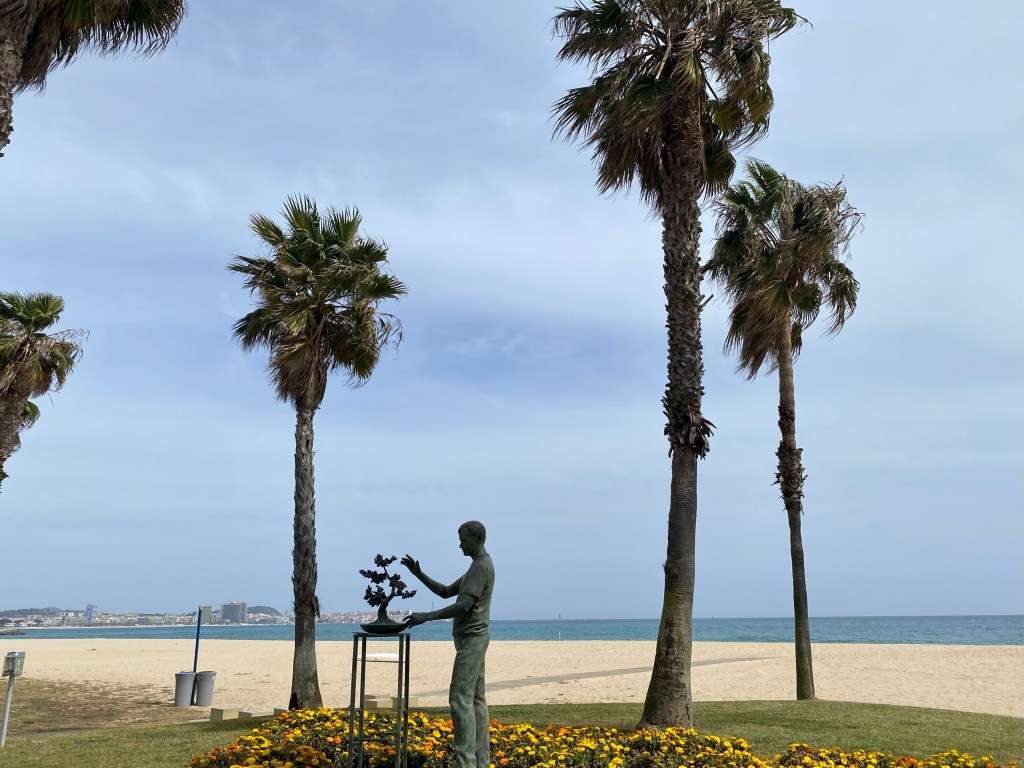
Once in Begur, the views around are stunning, right across to the Pyrenees on a clear day. We stopped at the statue of Carmen Amaya, a famous local flamenco dancer, credited with revolutionising the female dance that we associate with Spain today.

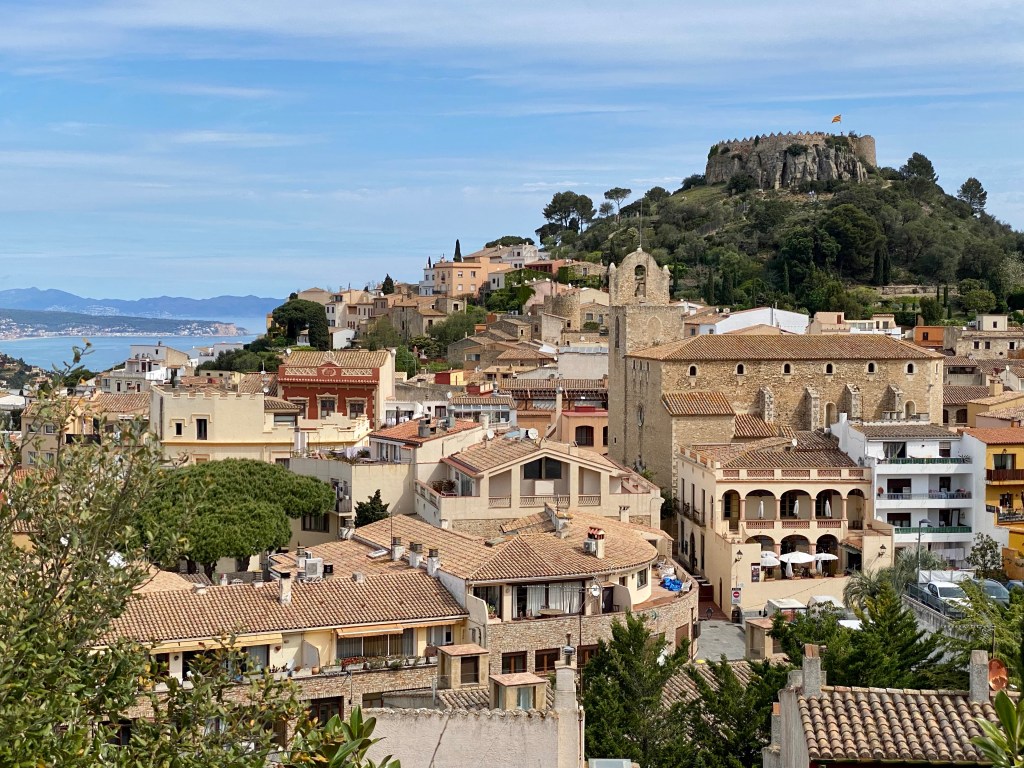
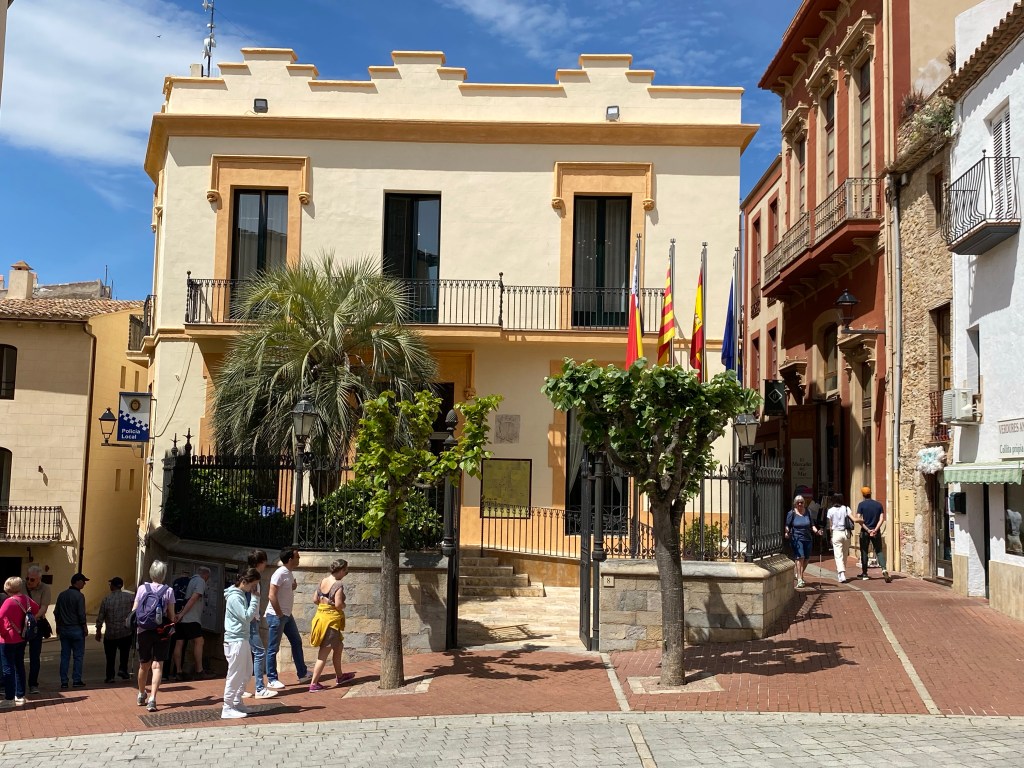
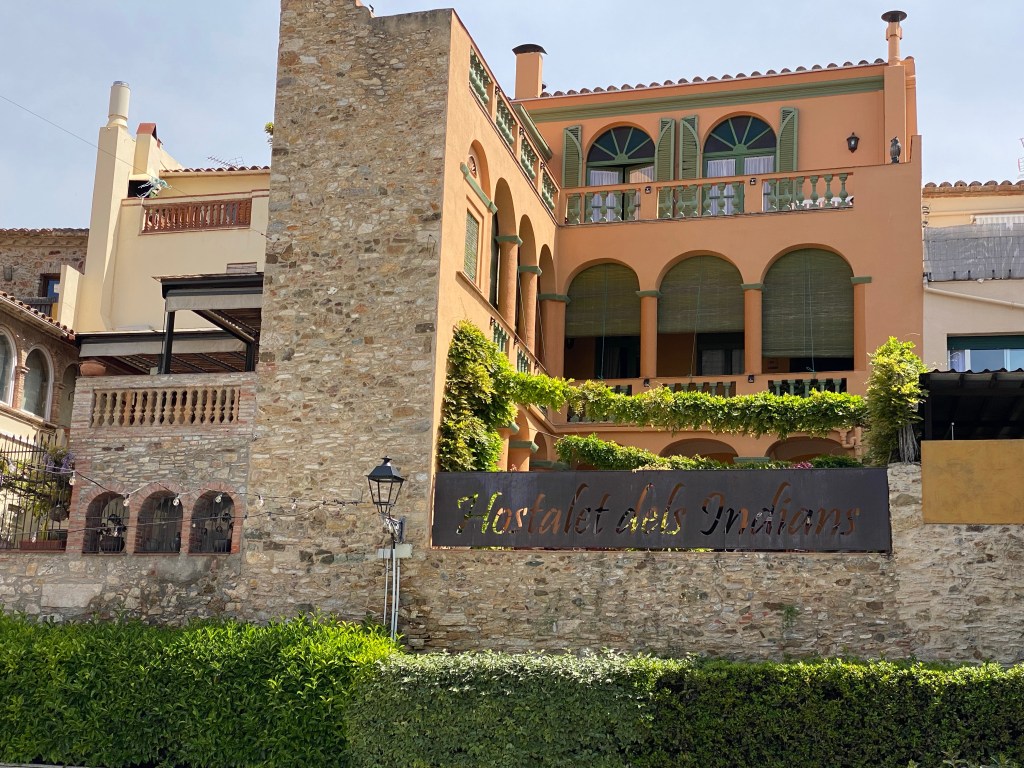
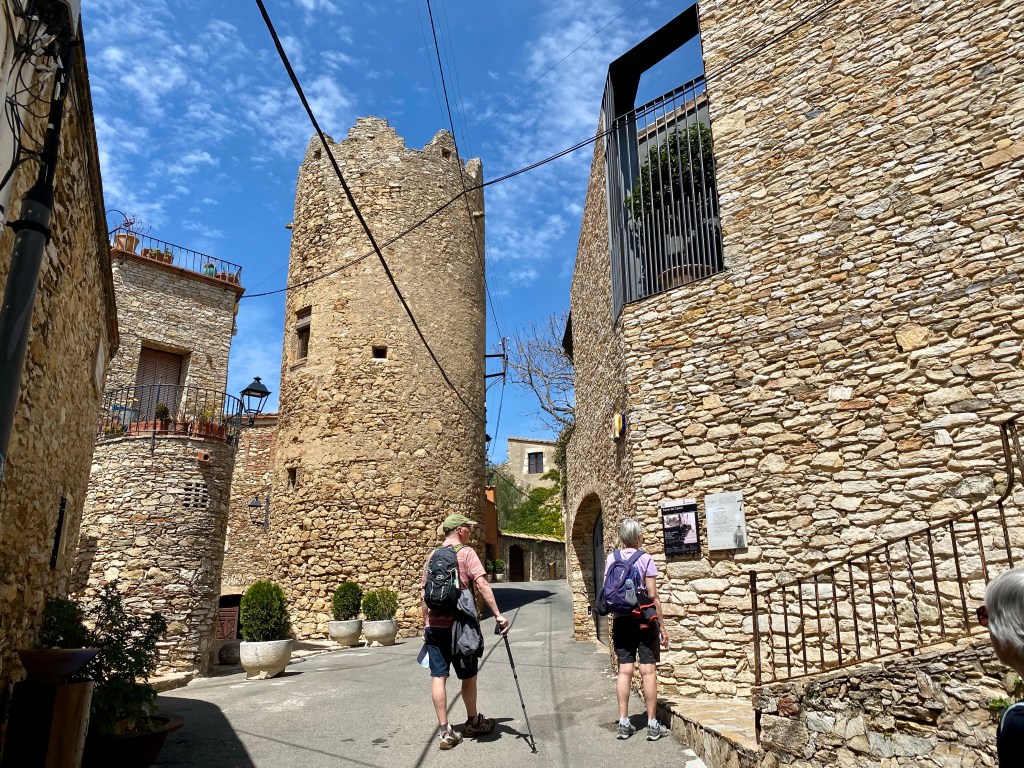
Our route included a tour of the town, which has a fascinating history and retains many historic buildings. Livelihoods were earned through fishing and the coral trade. In the late 19th century many residents decided to emigrate to the West Indies or South America, returning once they had made their fortunes to build large colonial style houses.

Begur Castle stands on top of the hill the town is built around. It was a strategic site, along with many watchtowers, defending the town from pirates. We have all, previously, walked to the top of the hill where only the ruins of the castle remain after being blown up during the Napoleonic wars. We’ve had enough of hills so chose not to do so again.

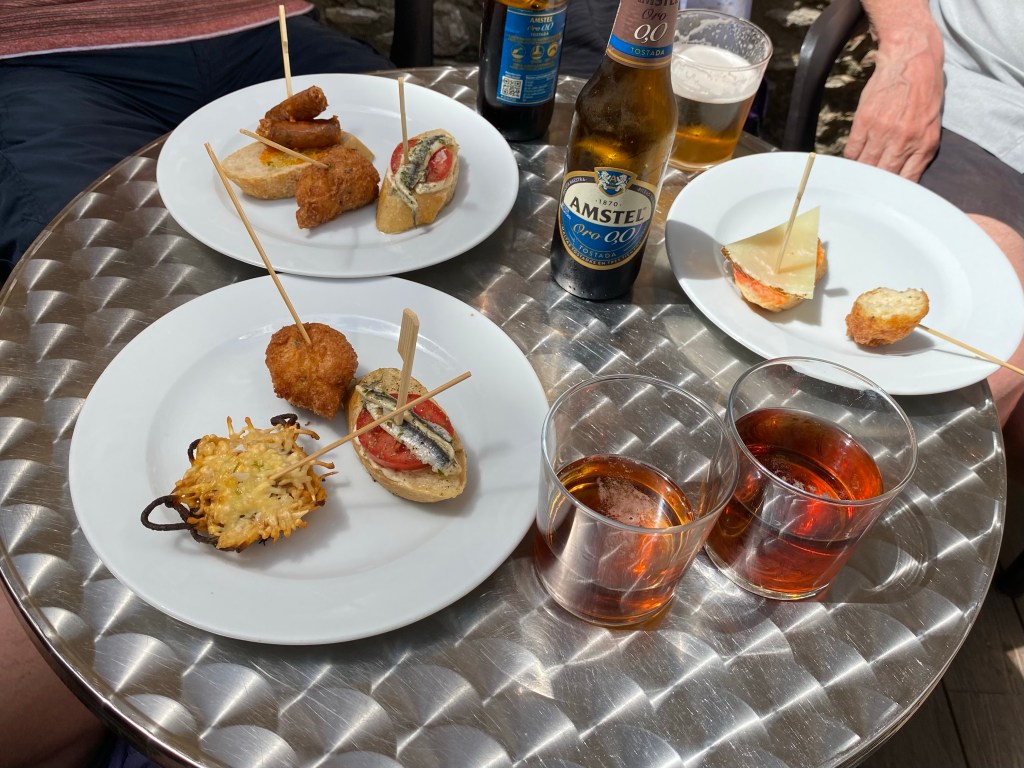
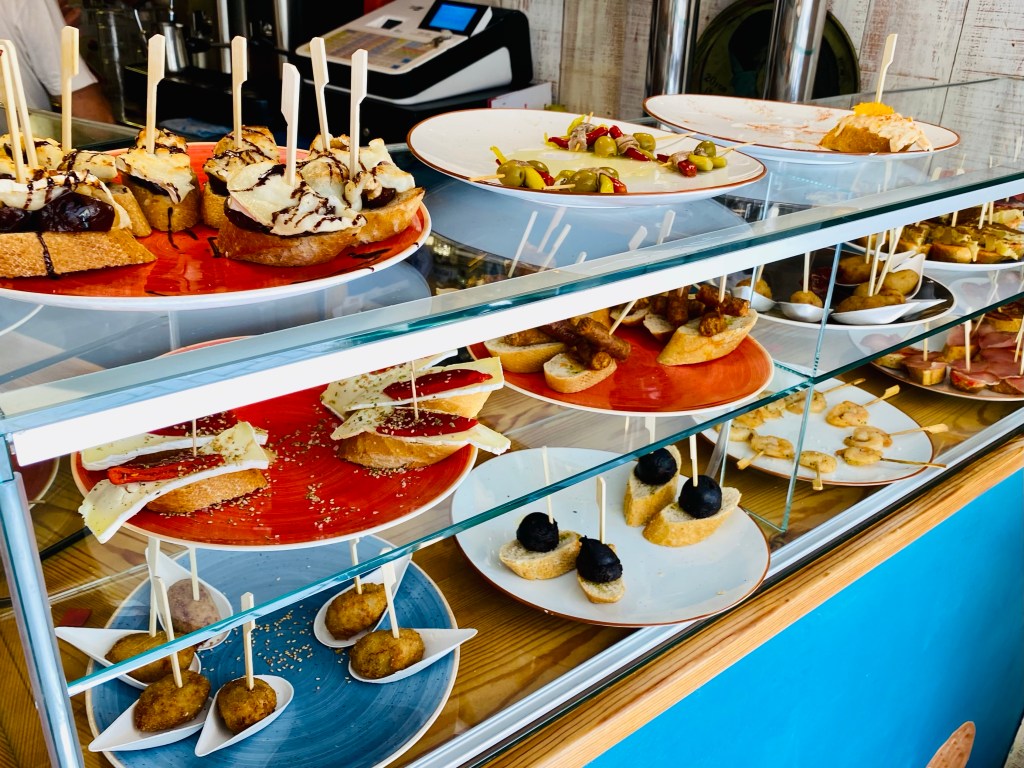
Lunch was an adventure at Tapas de Begur. A small self-service buffet restaurant located in a shady square. The bill is calculated, based on the number and type of cocktail sticks you have at the end of the meal.

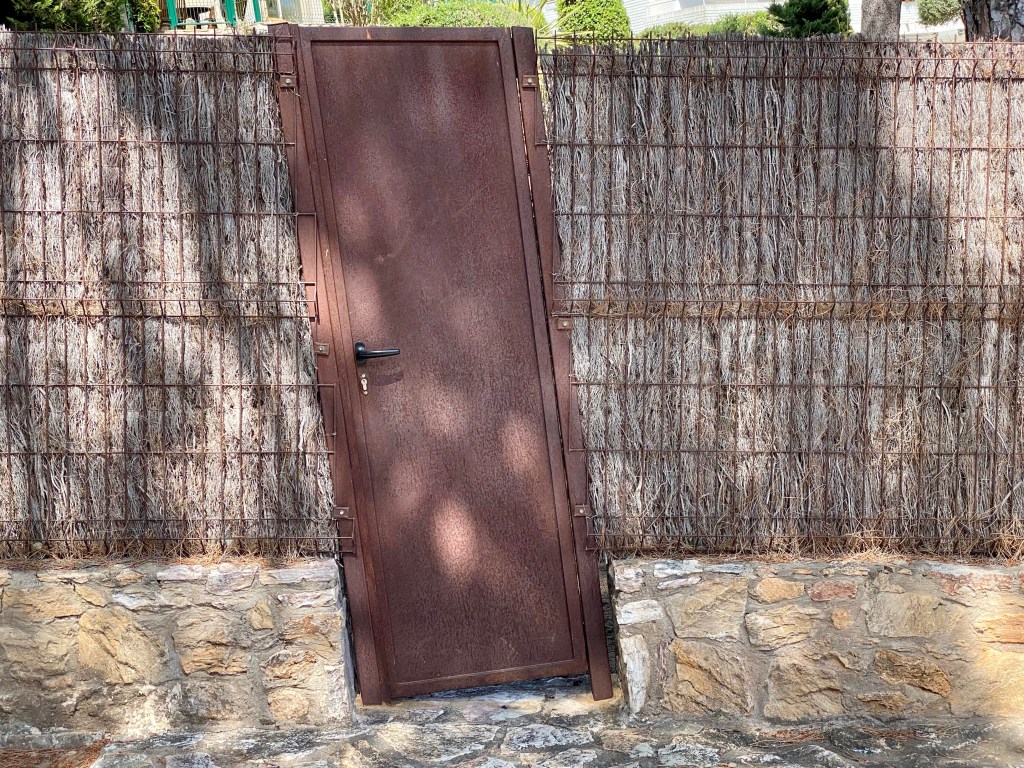
The downhill walk back was significantly easier and faster than the walk out. A moment was taken to admire the craftsmanship that has a door frame completely upright as the fence follows the angle of the hill we were walking up. We checked and the doorframe is vertical.

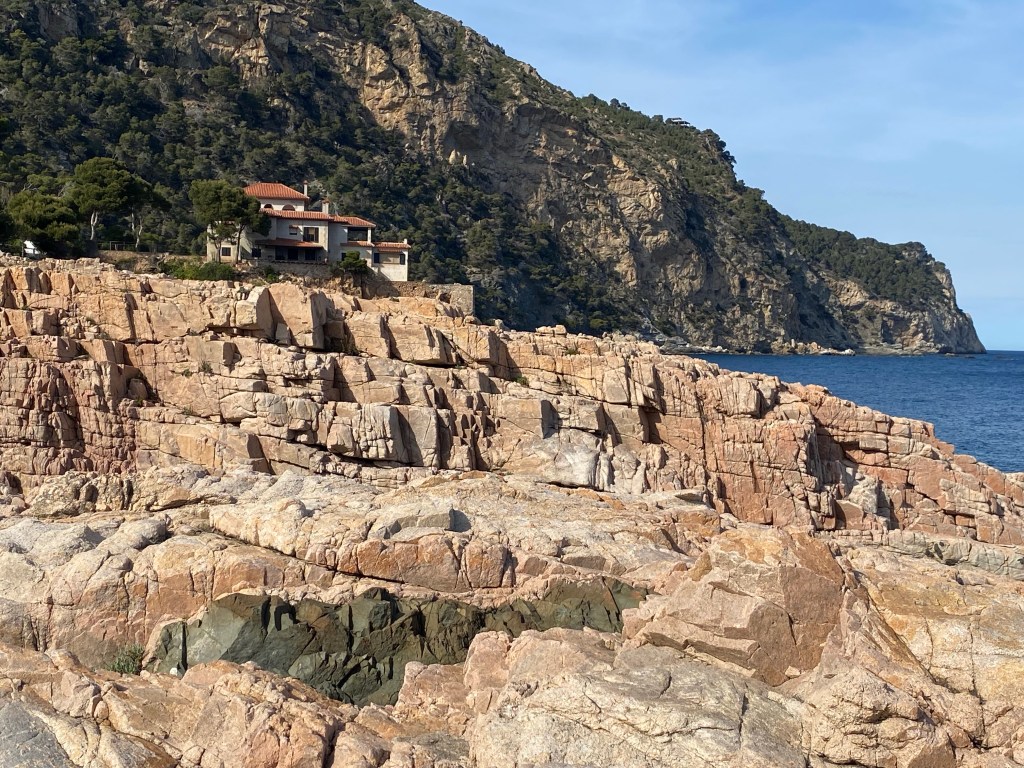
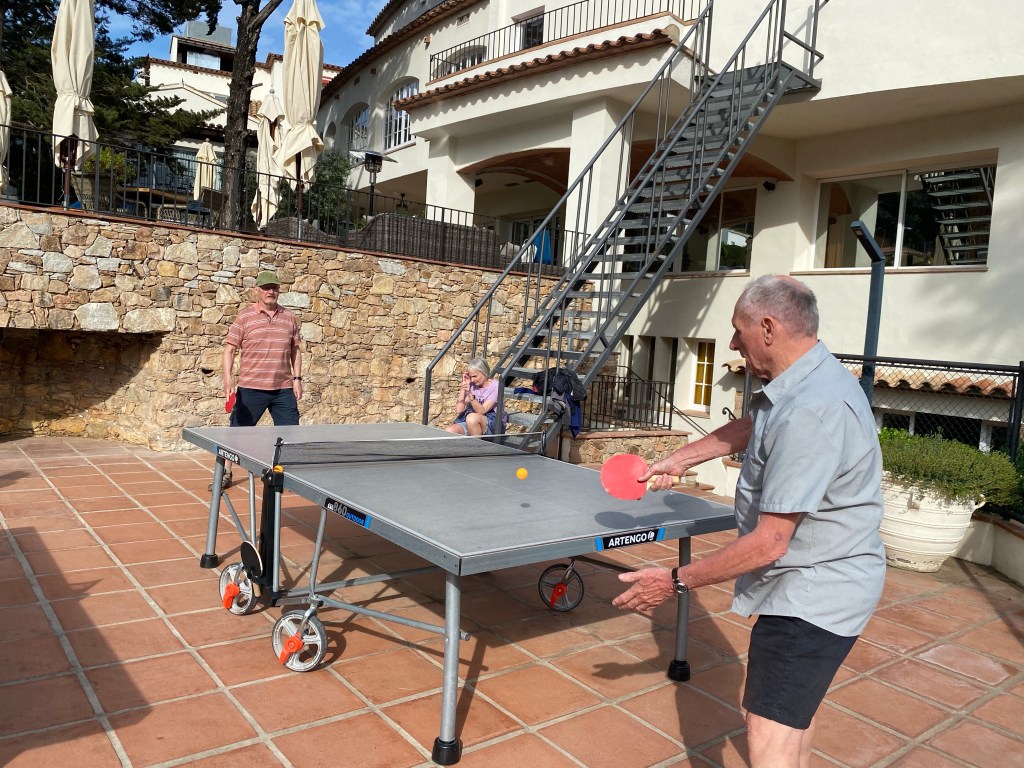
We had a leisurely afternoon reading before exploring the rocks around the town. It was almost like being back in Porthcothan, just warmer. This was followed by 2023’s most competitive ping pong match ever. It wouldn’t win any style or skill awards though. For the record, Ken won the best of three tournament

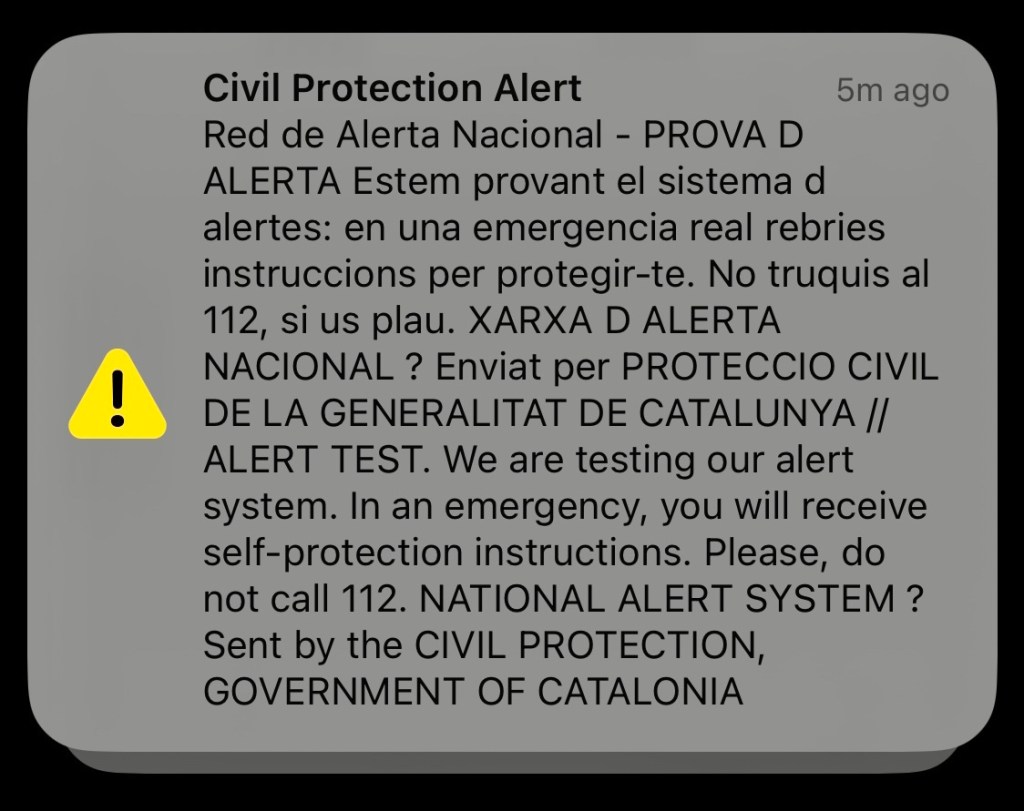
We were sorry to miss out on the UK Emergency Alert on Sunday but, happily, we were included in Catalonia’s today. Our phones all made siren sounds but no one was really sure what was happening until this message appeared.

A route for mountain goats?

We are not really sure why we pay good money to suffer such discomfort day after day, and our instructions even provided advance warning that this would be the toughest day of the week. Before we start whining about the day, it’s worth taking a moment to mention Hotel Terramar. If you ever find yourselves in Llafranc, we recommend staying there. It’s beautifully maintained, the staff are friendly and you’ve already seen the wonderful view from a balcony room.

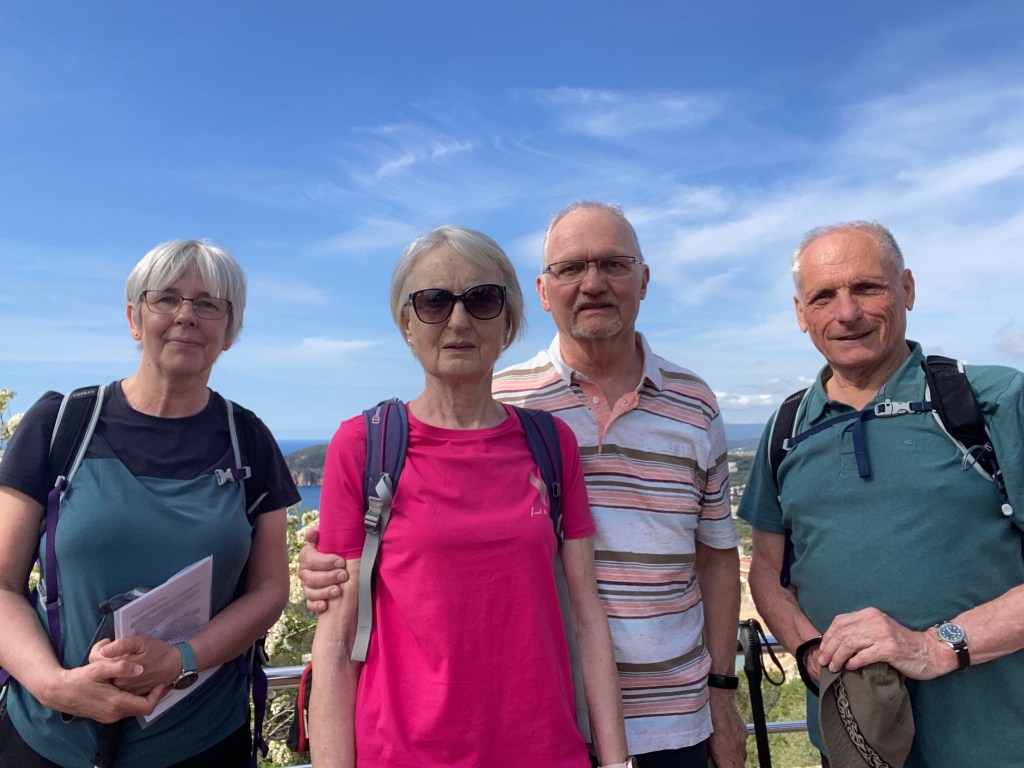
There really is only one route out of town, the GR 92 long distance footpath and it’s not far off vertical! Well, 150 metres over 1.5km felt like it. We climbed many steps and zigzagged up the hairpin road to the San Sebastiá lighthouse, the most powerful on the Spanish Mediterranean coast with a range of 37 miles and built on the site of a pre-Roman Iberian settlement. Along our walk, there have been points to rest our phones for selfies. At each one, Kim has felt obliged to use them. This is today’s offering. We are meant to share them on social media but that is a step too far for us!

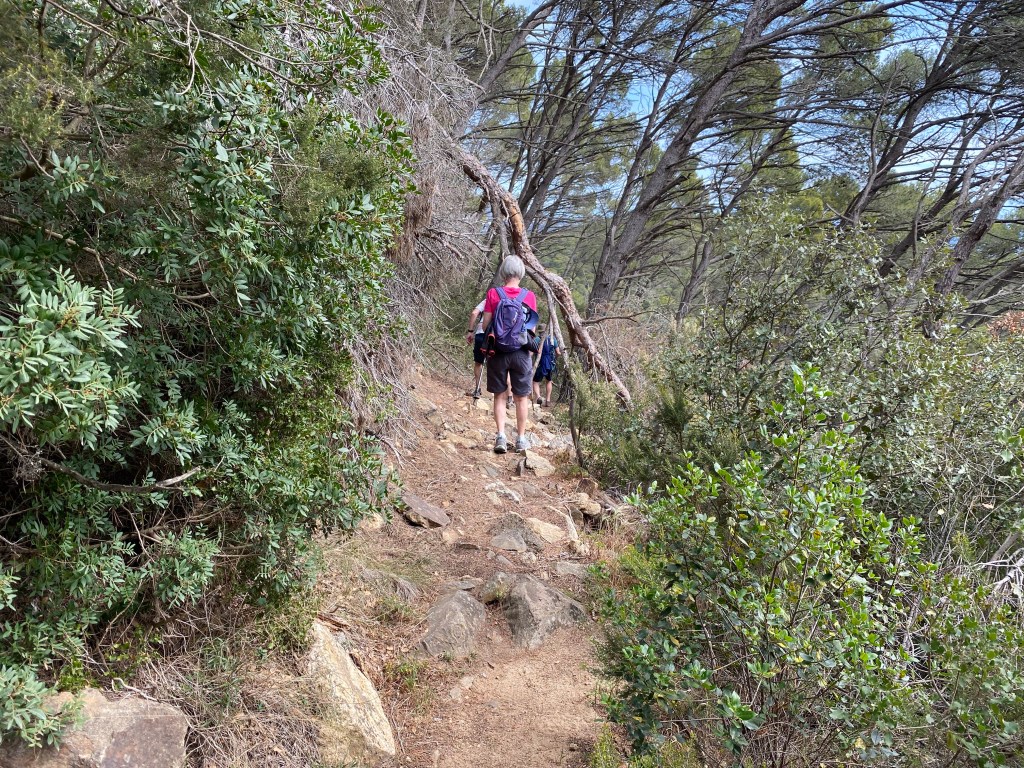
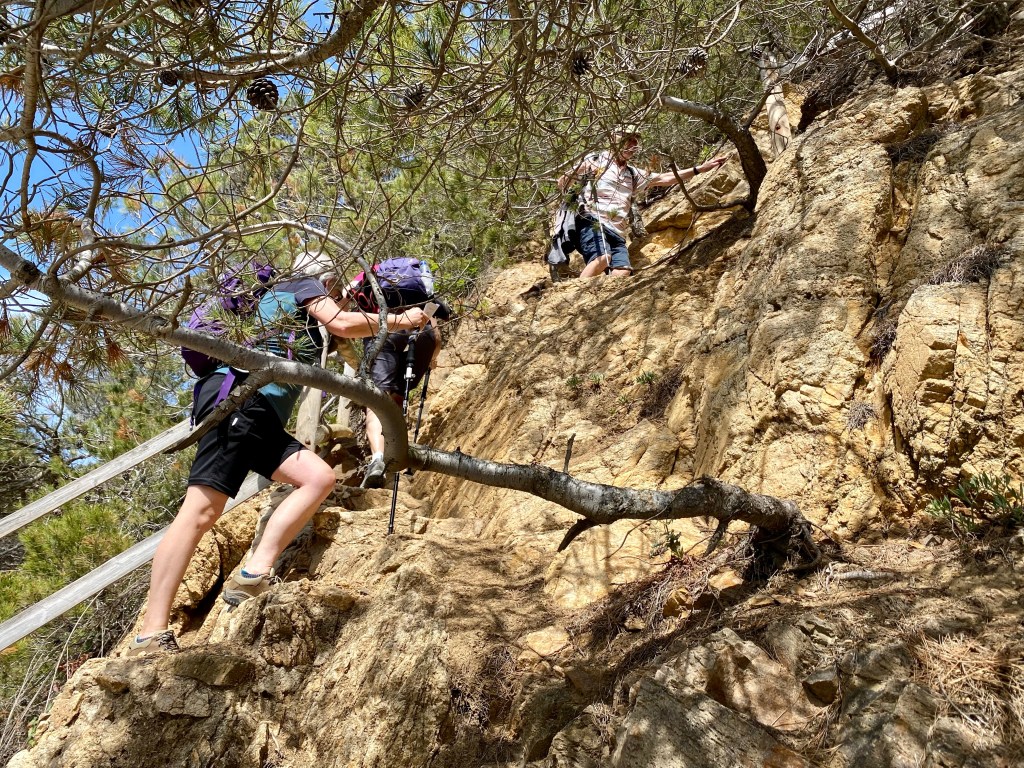
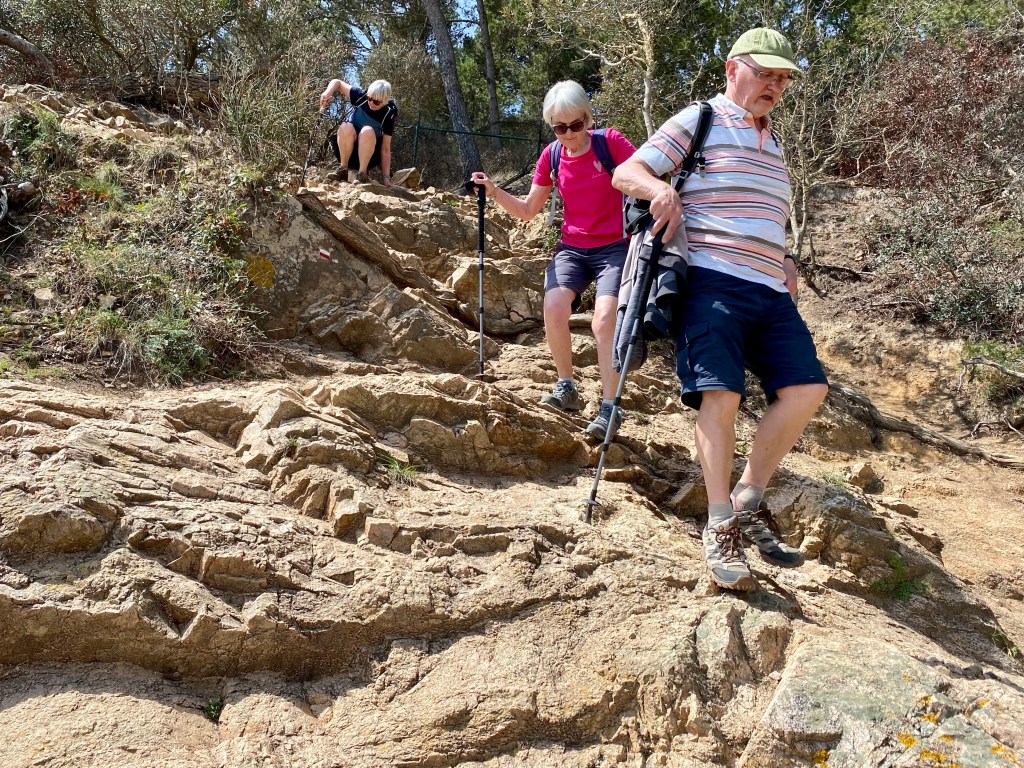
Bravely we soldiered on, out across a rocky headland with narrow, ill-defined paths hugging the hillside edge. We scrabbled down something designed for mountain goats before crawling back up the other side. Luckily, at one point, Ken said ‘are we going the right way?’ Funnily enough we weren’t.

Despite being provided with a map, gpx files and detailed written instructions we still managed to get lost. The map wasn’t much good, it was safely packed away in a suitcase. We’d obviously misread the instructions. Thank goodness for mobile phones and gpx files! Frustratingly we’d strayed quite a way from our intended route, but were thrilled to pick up an alternative path and not have to retrace our steps.

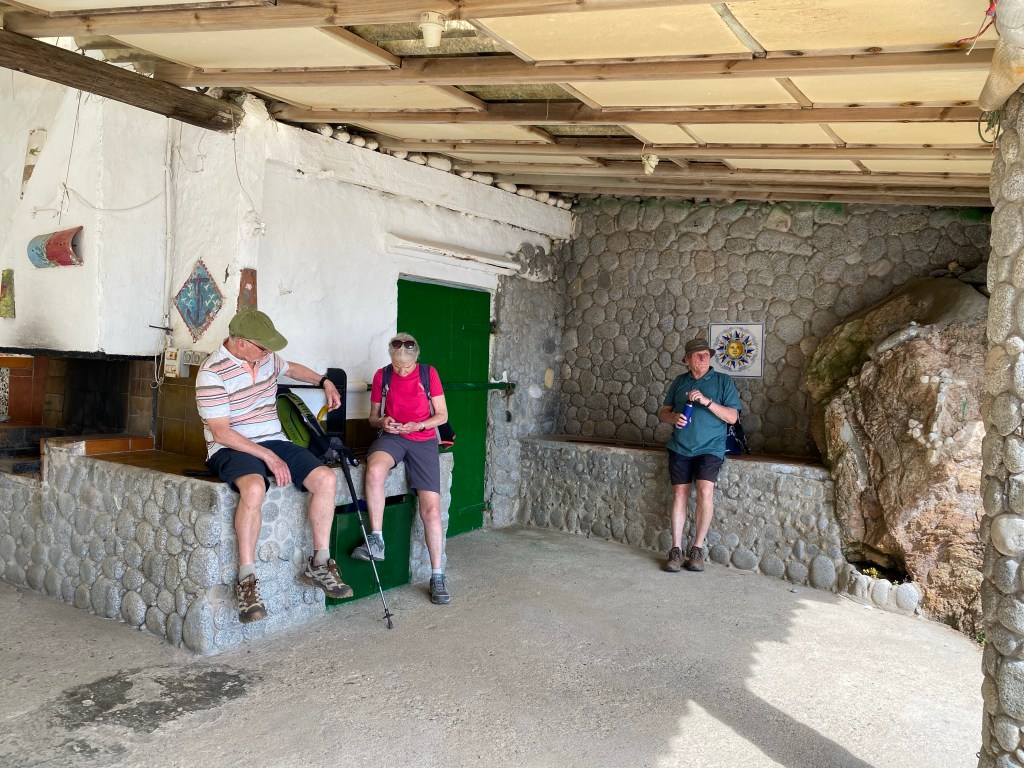
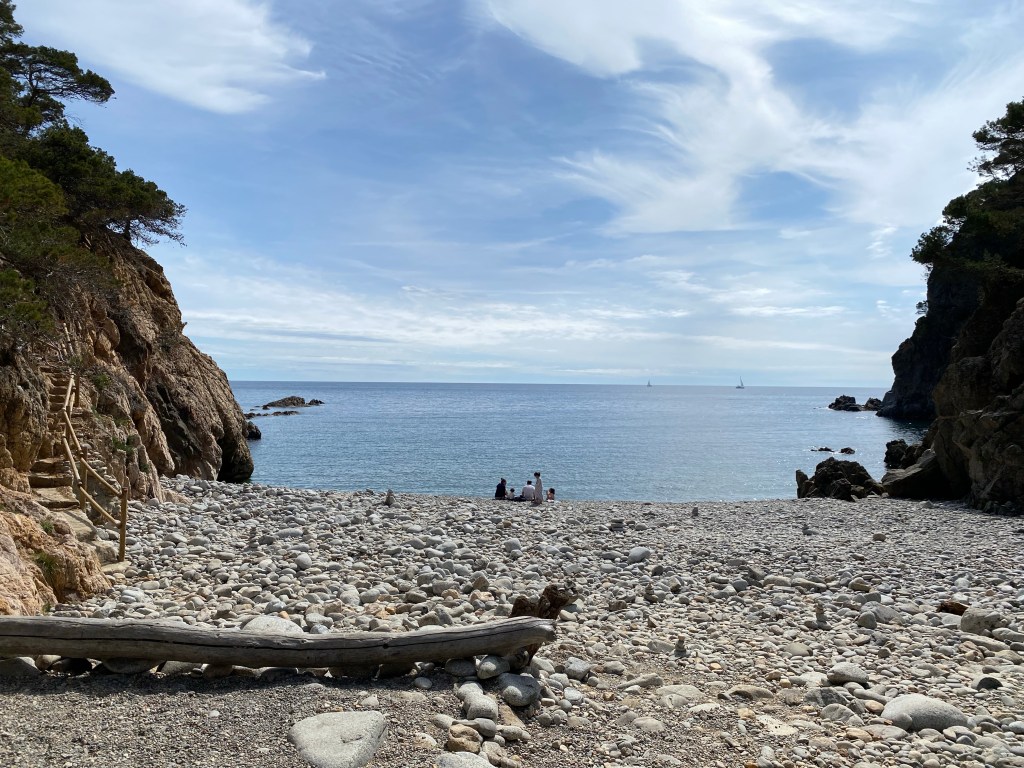
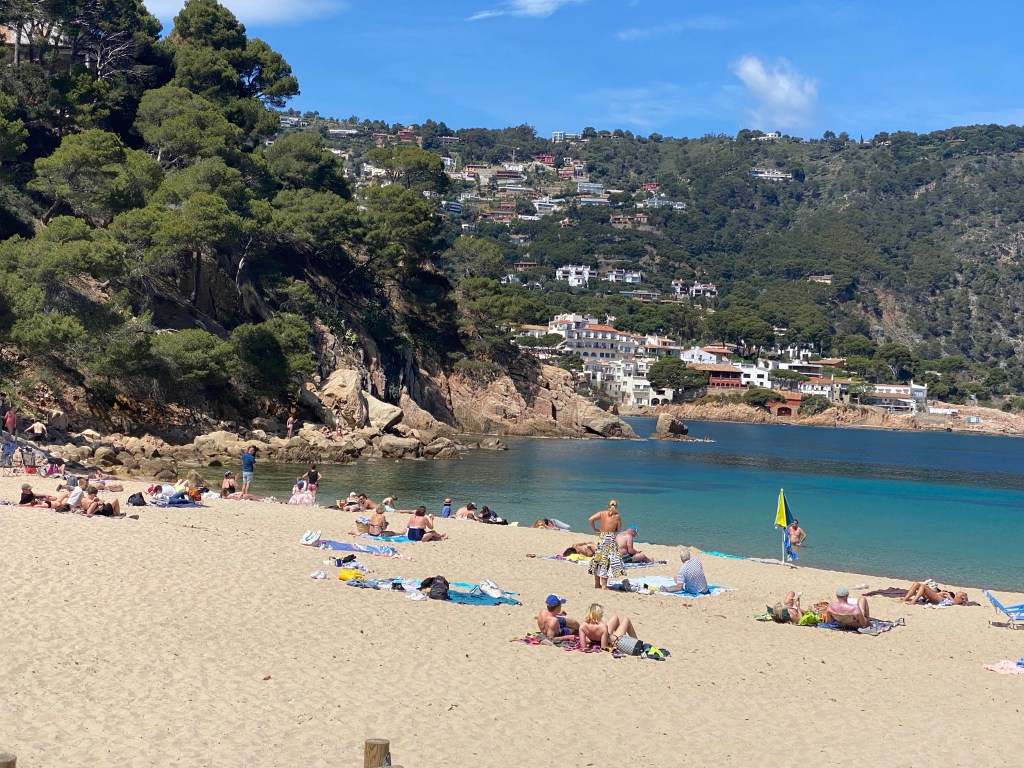
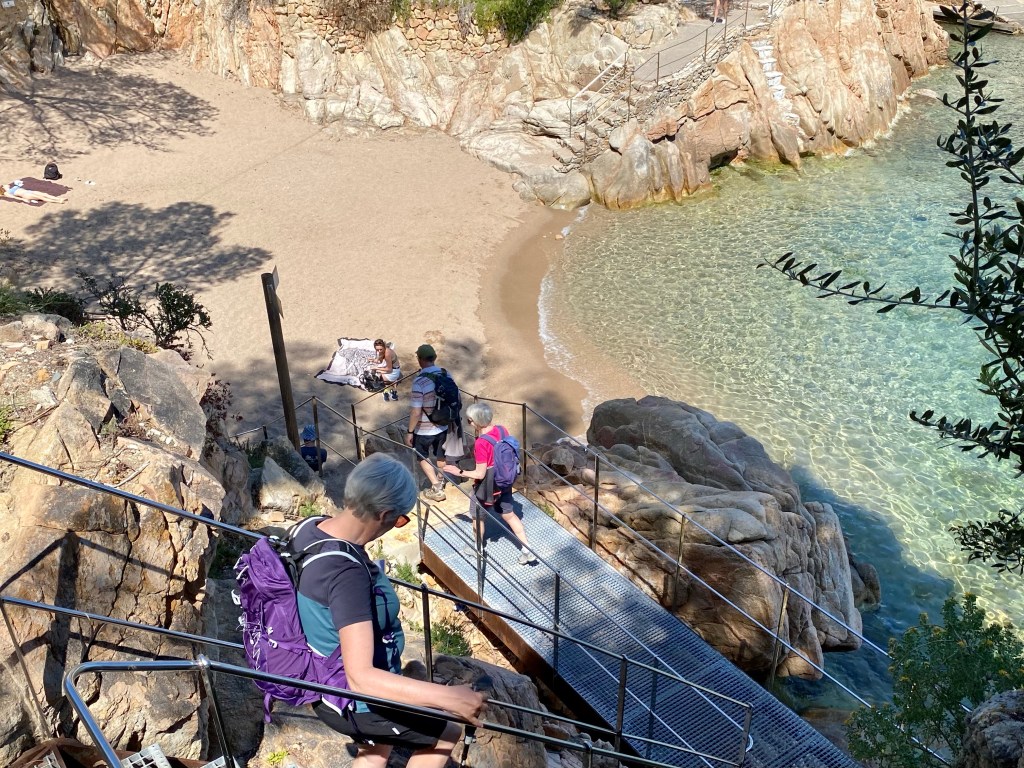
Back on track, the path took us out to Cala Pedrosa, a little secluded bay only accessible on foot. It was worth the hair raising descent on a path described as beautiful and shaded. Single file and scary would have been a lot more accurate. The cove was very pretty and we had a snack break under the shade of an old closed cafe before tackling the ‘steps’ up the other side.

The small town of Tamariu was a welcome lunch stop. We’d been walking for over 2 hours and were just over halfway. Our path from Cala Pedrosa had been described in our instructions as ‘occasionally vague’ suggesting we ‘just pick our way across the rocks’. It was a bit hairy in places but we made it.

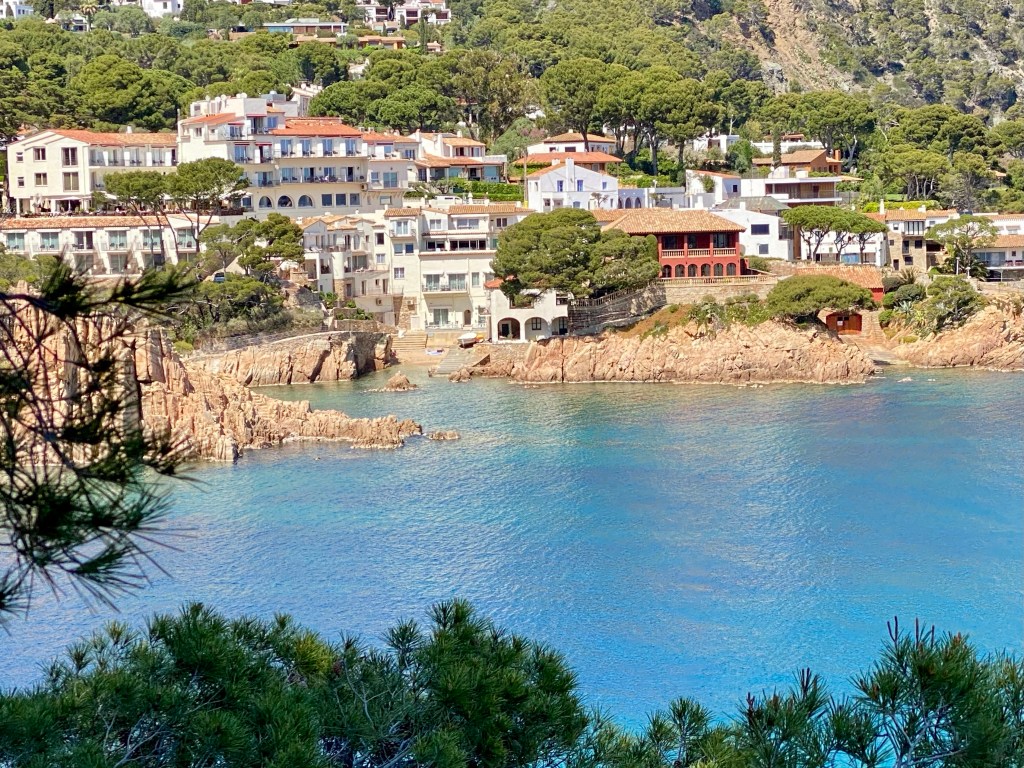
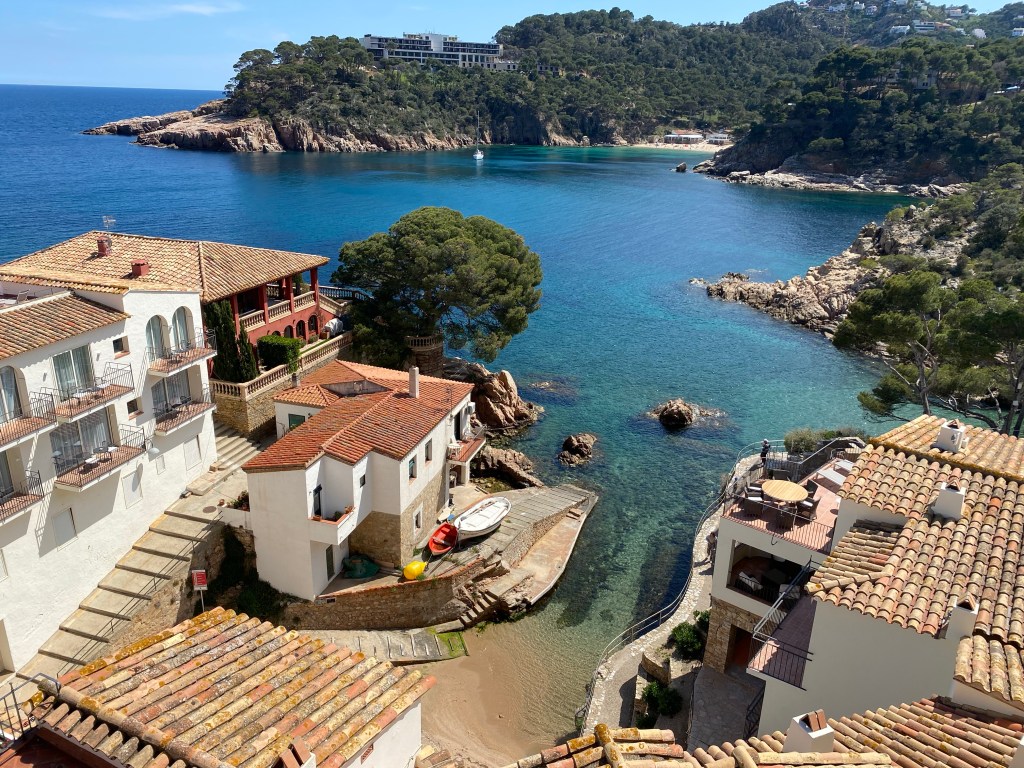
Our next climb began, long, slow and hot as we headed inland before reaching the top of the headland and the welcome shade of woodland. Of course, a long climb up was followed by a long descent back down to the beach at Aigua Blava. We were teased with distant views of our hotel across the bay, in Fornells.

More steps, up and down, narrow sandy paths and a couple more beaches were crossed. There was talk that we could have swam it quicker. Any way, we are here for two nights, the room and views are yet again truly amazing.

Finally, a big, belated welcome to our newest follower – Ada in Devon

Another day, another view

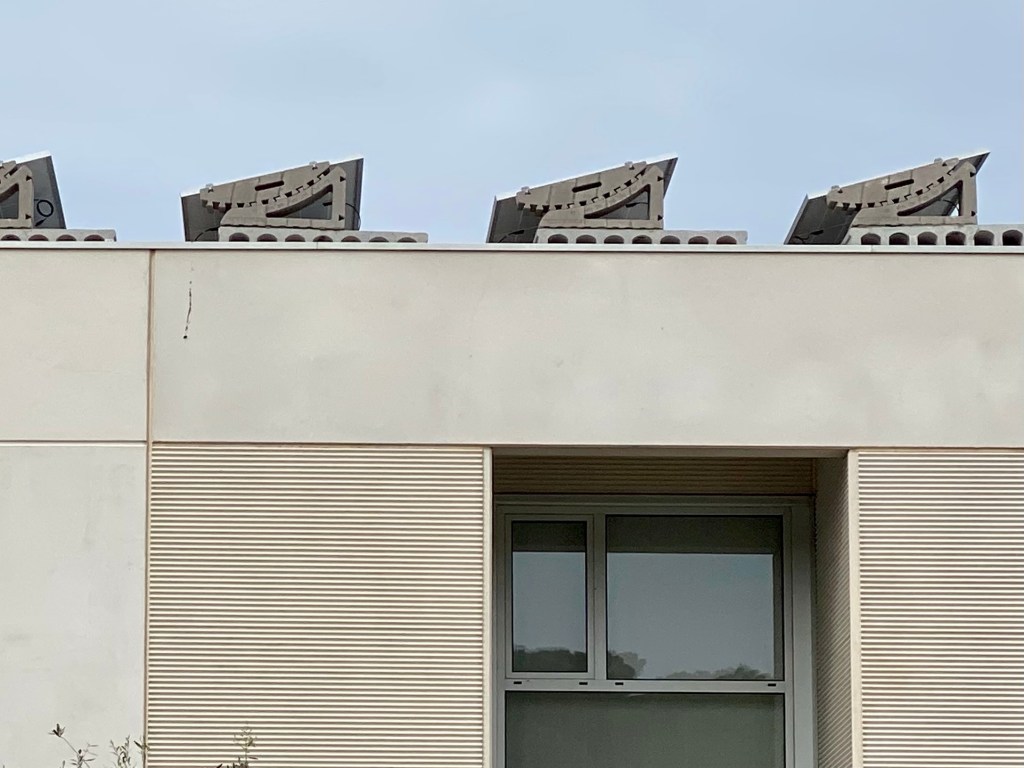
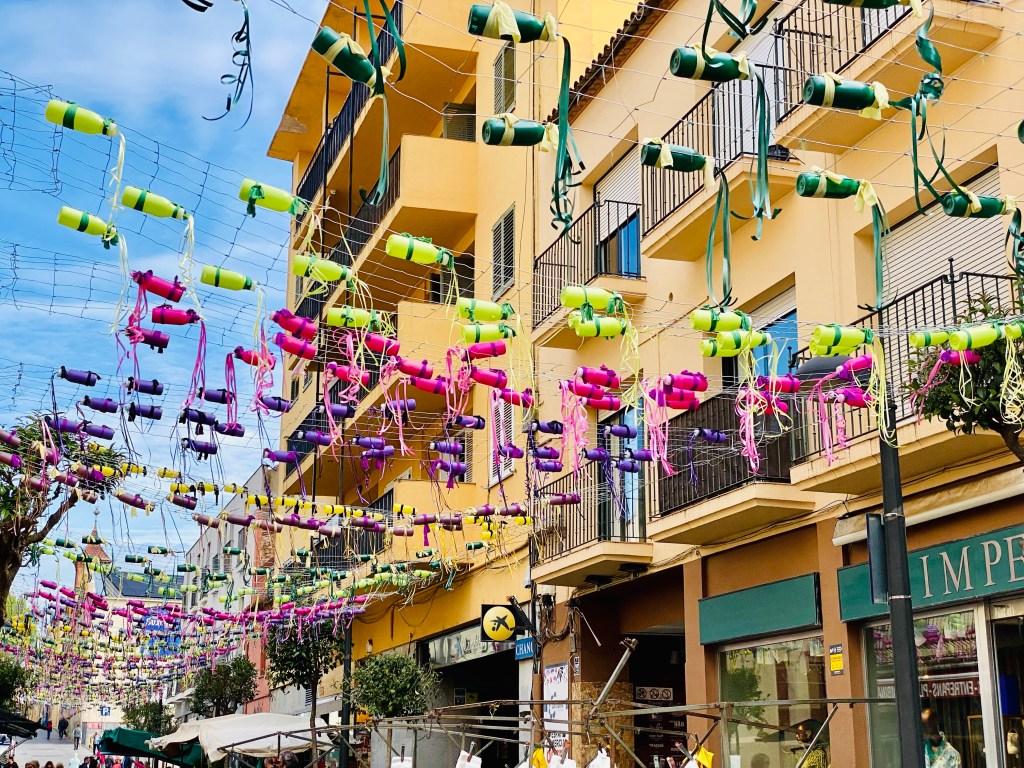
Today, InnTravel directions to our hotel in Llafranc were ignored and, instead, we created our own route via the town of Palafrugell. It added a couple of miles to our walk but we were keen to visit both the Cork and Contemporary Art Museums. It was a fairly flat 3 miles out through some lovely suburbs of Calella and, within an hour, we had arrived. John was rather taken with solar panels that track the path of the sun, but bunting made from old plastic bottles was just as noteworthy.

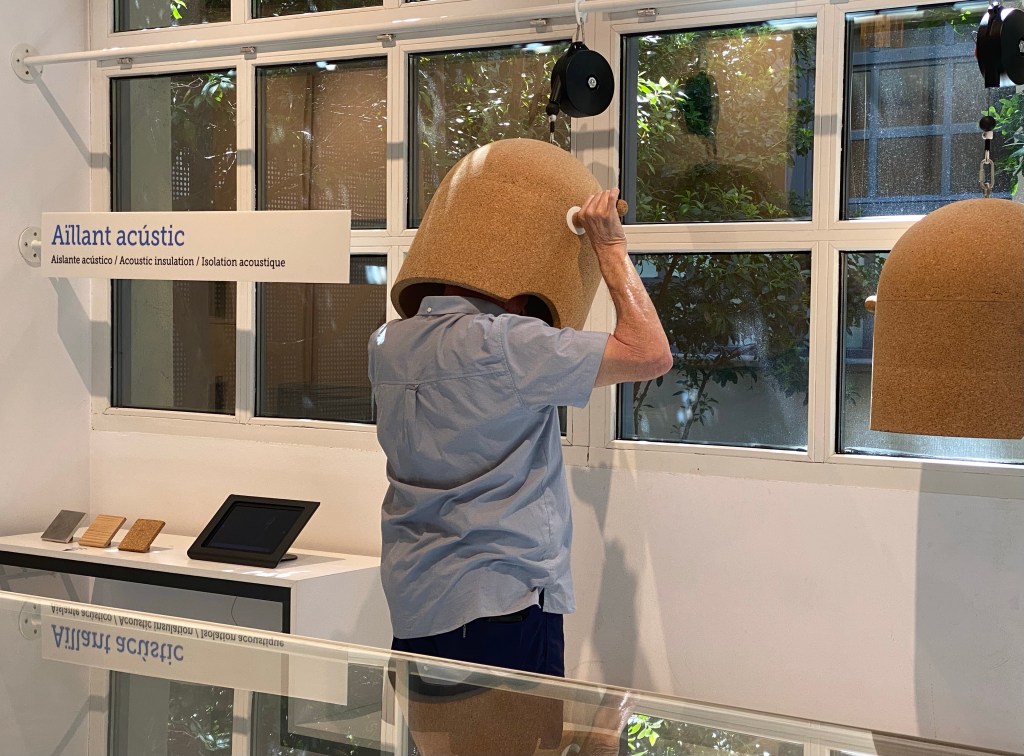
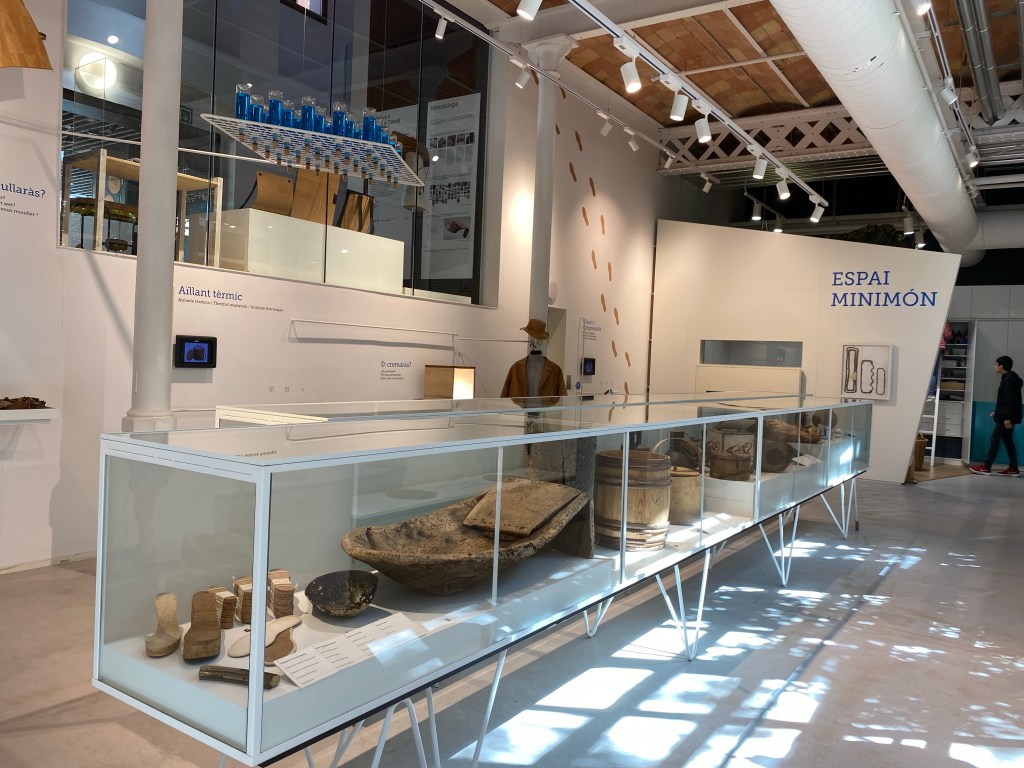
Palafrugell is a small, medieval town that has thriving markets most days of the week. It was renowned for manufacturing cork products in the 18th and 19th centuries with the final factory closing in the 1970s, leading to severe unemployment. The Cork Museum is housed in a former factory and was educational with plenty of interactive exhibits. John spent a few happy minutes setting up a microscope for a young Spanish family before testing out cork soundproofing and acoustic qualities. Cork oaks have been part of the economy for centuries, not only for harvesting bark but wood for furniture making and feeding livestock with acorns. You may think you know all about cork but taking time to hear about all its amazing properties was a joy – lightweight, waterproof, soundproof, fire retardant, renewable and, most importantly, the most environmentally friendly way to keep wine.

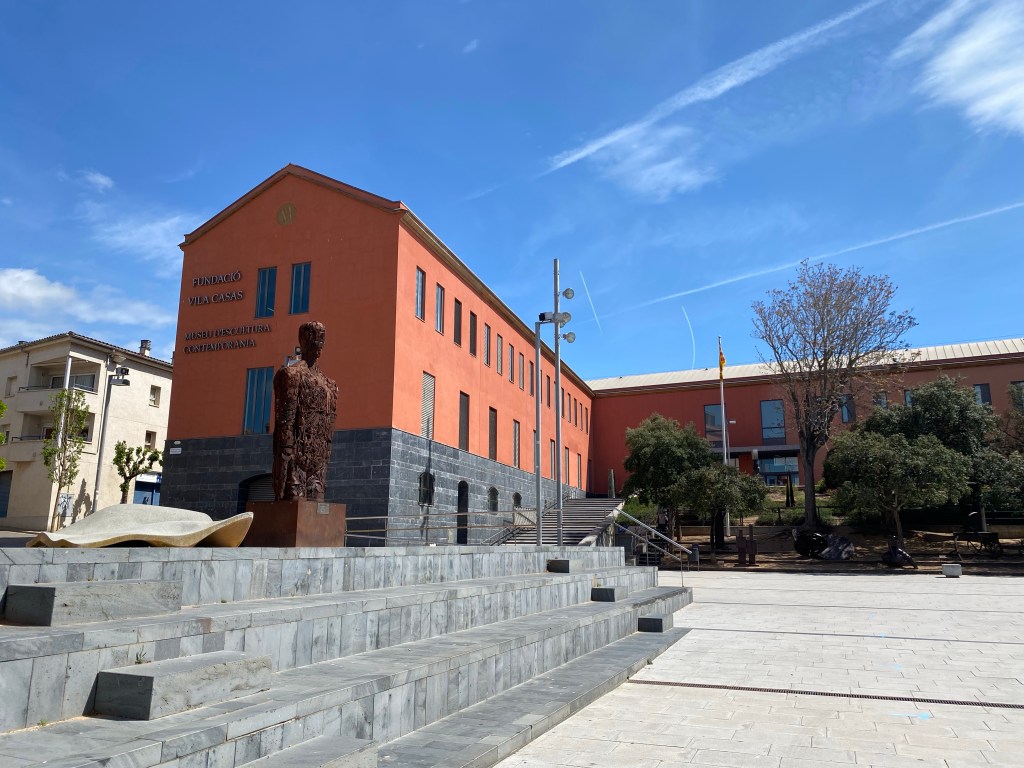
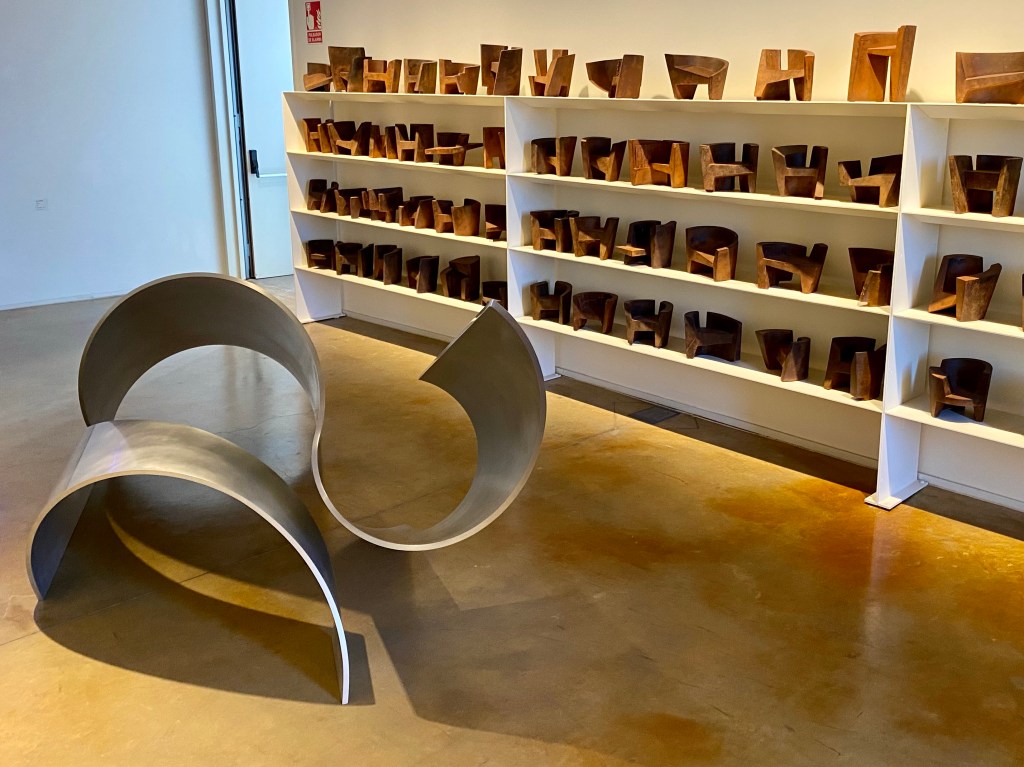
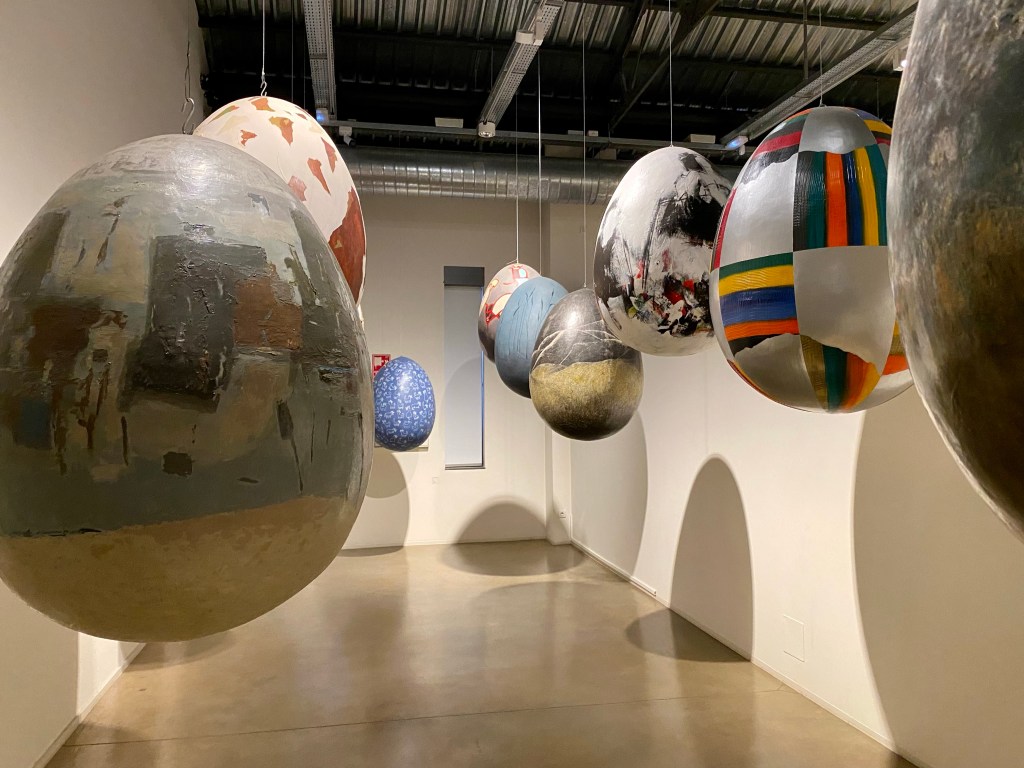
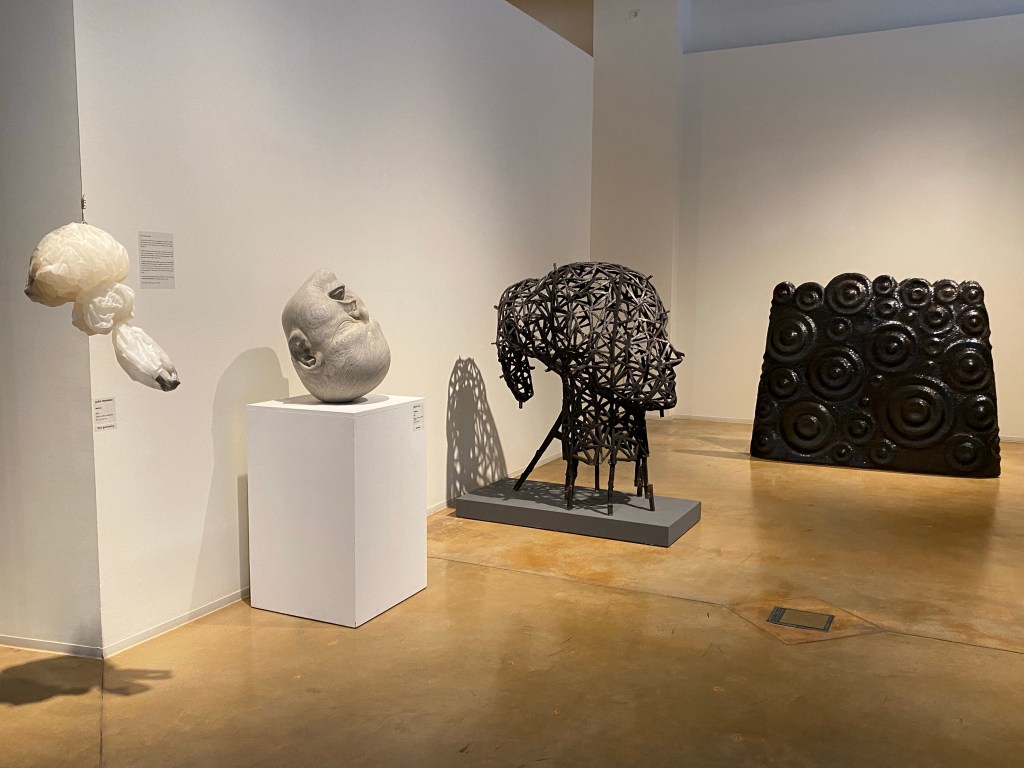
Next stop was the Museum of Contemporary Sculpture, also housed in an old cork factory building. All exhibits are by Catalan artists, ranging from the 1960s to the present day.

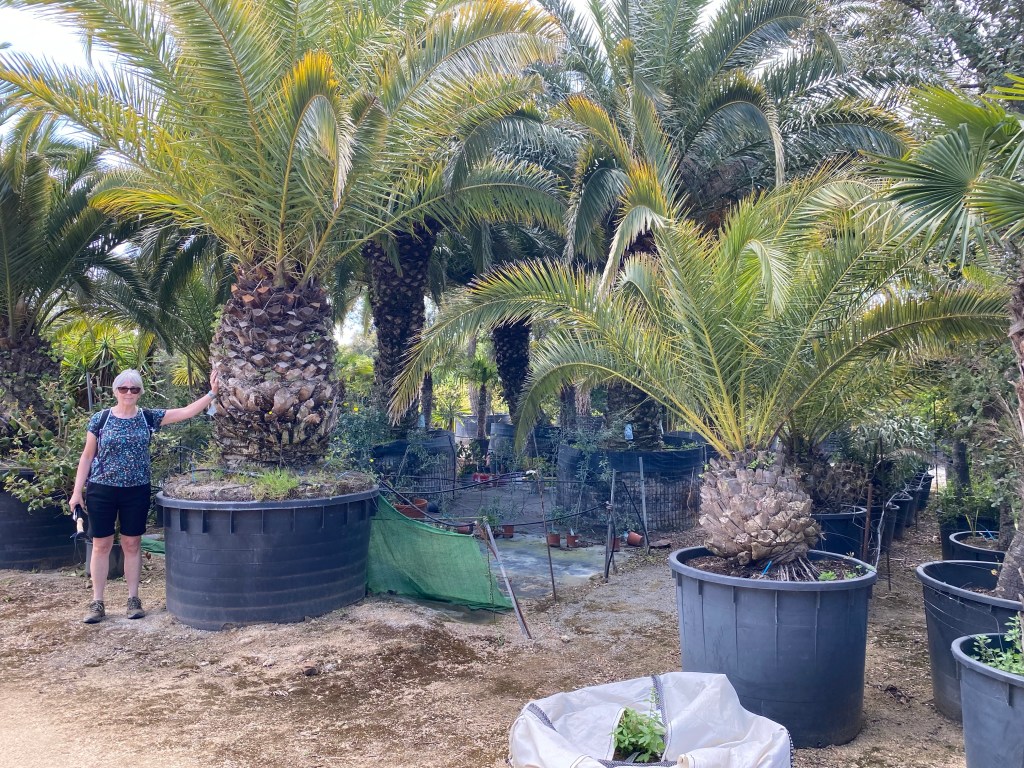
After a refreshment break in a shady square, we retraced our steps back to Calella de Palafrugell via a nursery selling the biggest plants in the world. Digging a hole for these would take a while!

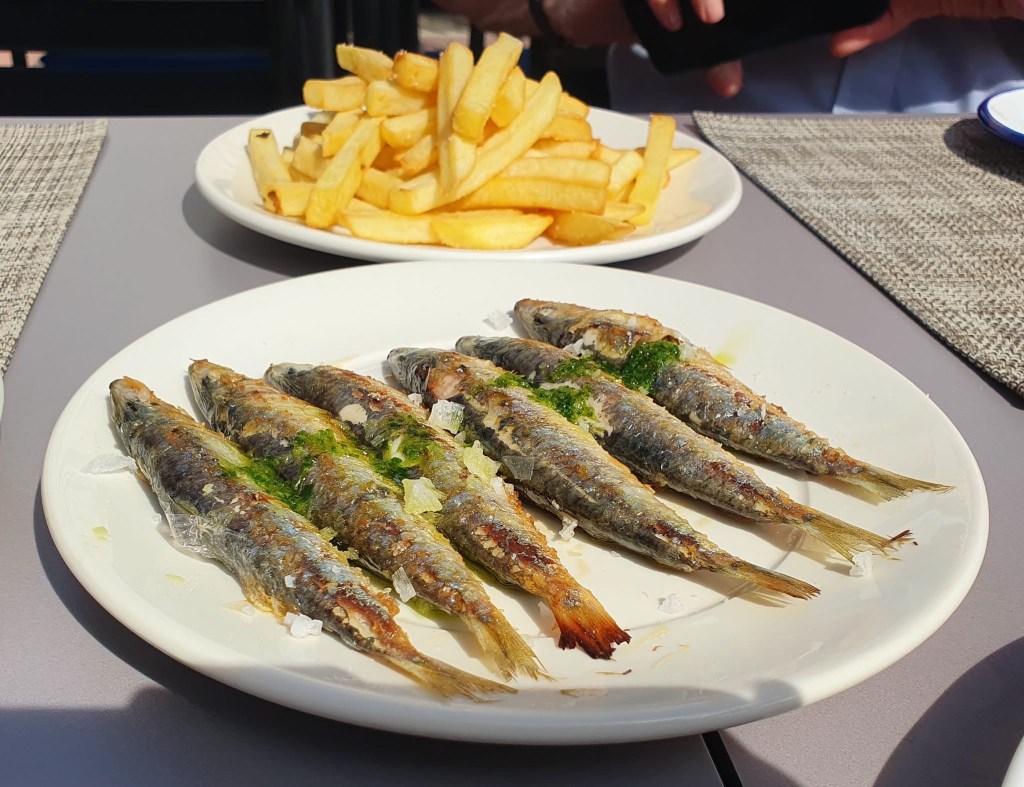
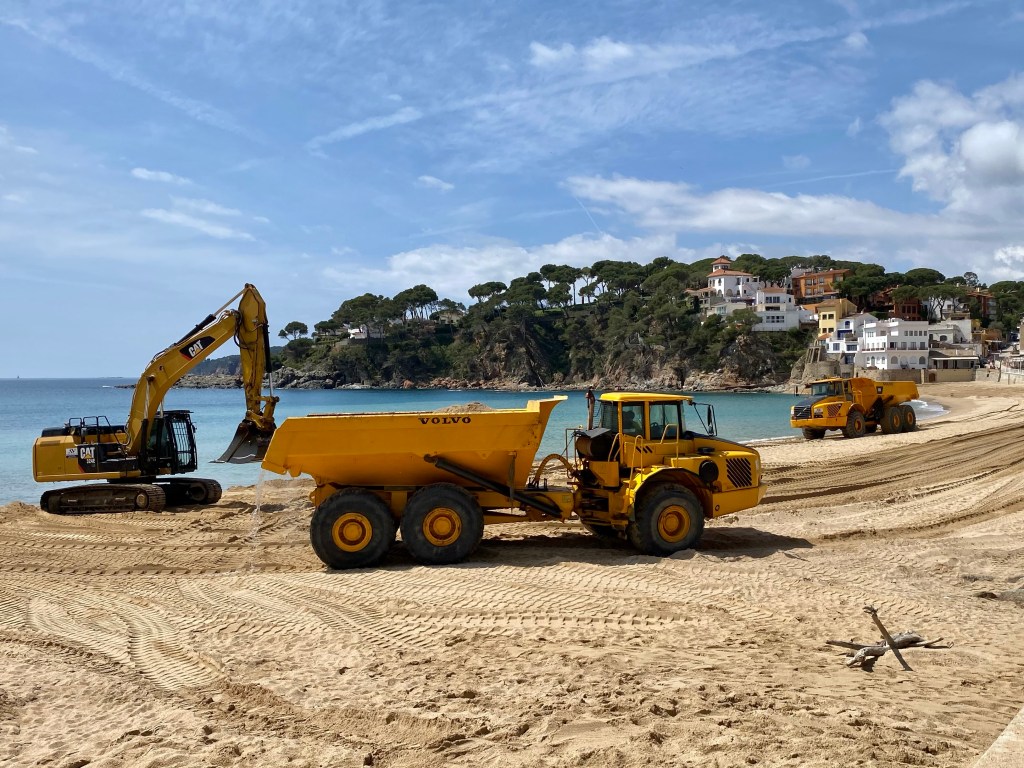
Our hotel in Llafranc is lovely, opposite the beach with spacious balconies. It’s a shame the diggers haven’t finished rearranging the beach, they are rather noisy. We wandered along the front for a repeat of yesterdays tapas, more olives and sardines for us. At least we managed a food photo today.

It’s been a lovely day. Culture, plants, a bit of exercise and some food. What more could you want especially as we’re by the sea and the sun has shone all day?

A day of rest

Activity holidays are fantastic, but the days you don’t have to get up and re-pack suitcases are a real joy. We don’t change hotels until tomorrow and took advantage of a leisurely start. Breakfast at 9am followed by reading in the hotel lounge and a short walk for lunch. Not only that, tomorrow, we are recklessly departing from InnTravel’s suggested walk and planning our own breakaway route.

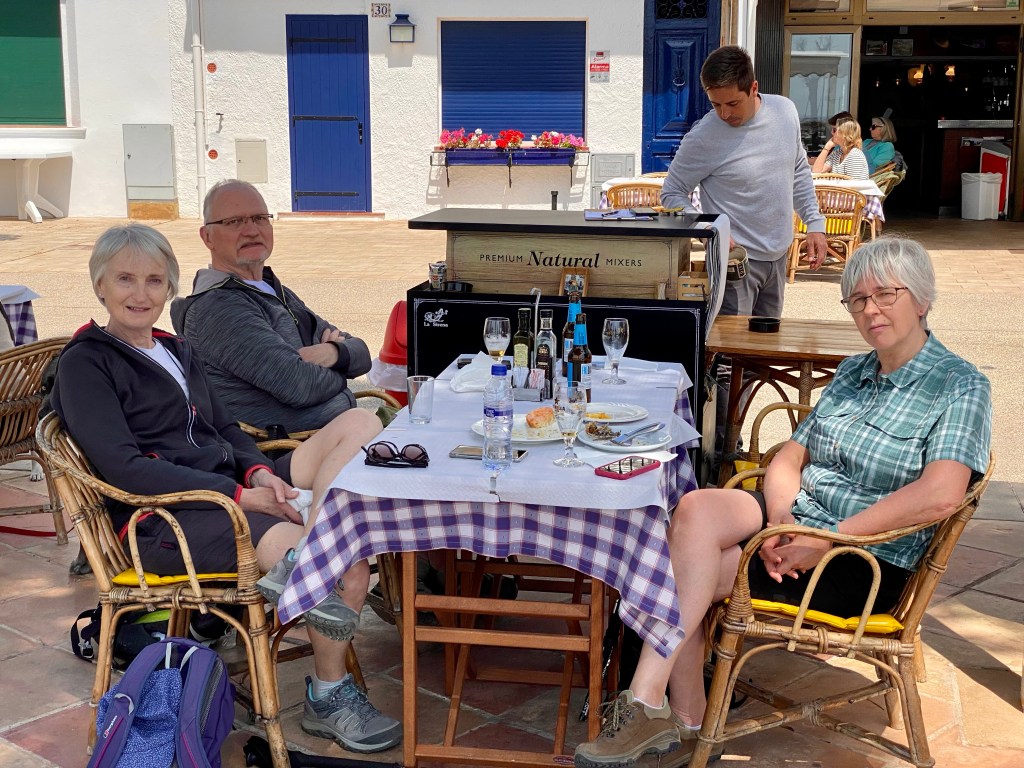
Our destination for lunch was Llafranc, 1.5 miles around the coast. We are all struggling with Spanish meal times. Restaurants don’t serve dinner before 8pm which is a long time after a midday snack. Today’s challenge was to eat lunch after 2pm! Sadly, we failed dismally. It took less than an hour to walk around the bay and find a beach side restaurant. Grilled sardines, chips and an omelette were shared while we watched heavy machinery re-arranging the sand on one of our favourite beaches. Hopefully they’ll be finished by the time we arrive for our night’s stay tomorrow.

Heavy rain had been forecast but the weather held out and sunshine kept us company as we wandered back to the hotel. As you know by now John has a view that no trip to foreign lands is complete without market research involving a local supermarket. Amongst the items of interest, today, were various products made from almond paste and gift packs of sardines. Most interesting find of the day was Bimbo bread, simple white bread with the crusts removed.

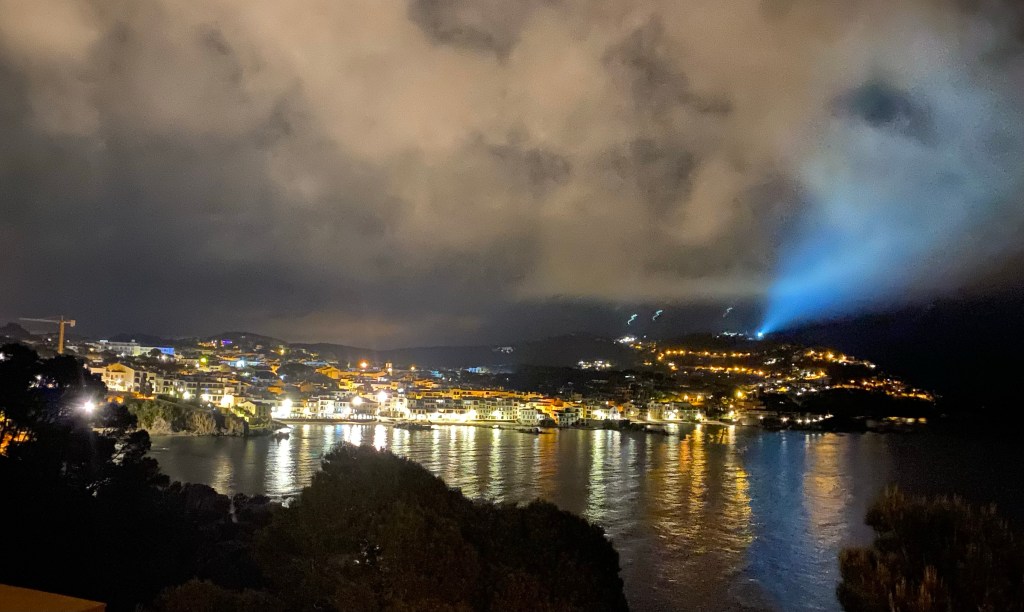
We couldn’t end today with a photo of ultra processed bread so here’s another night shot looking across the bay towards the lighthouse from our hotel.

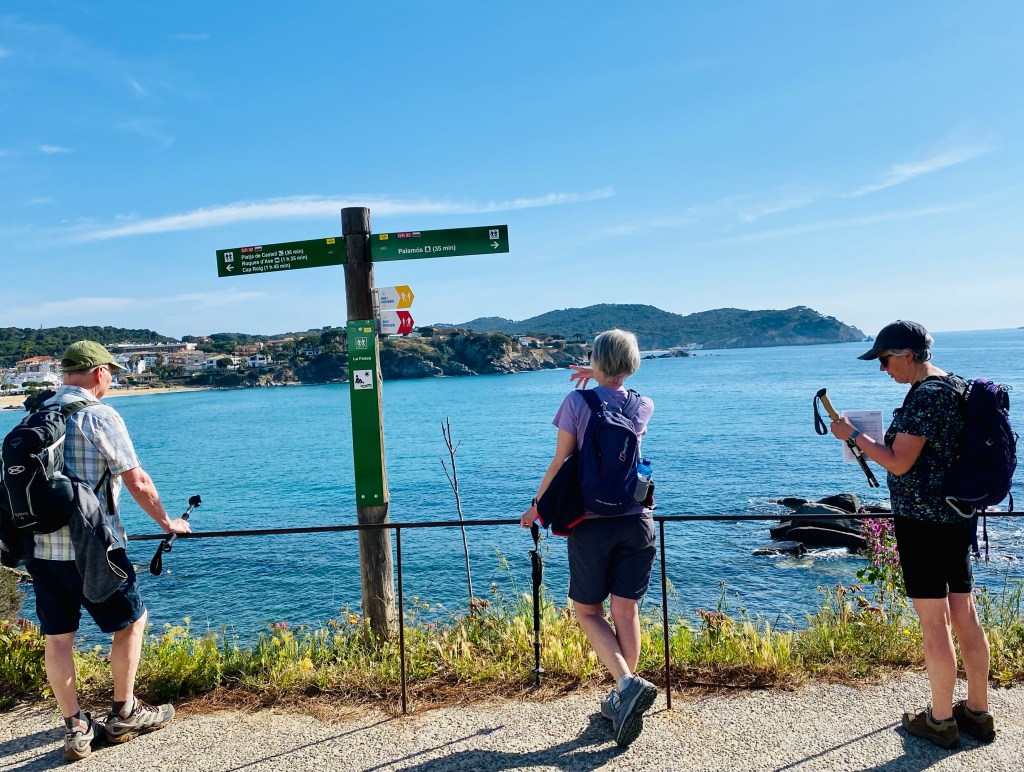
La Fosca to Calella de Palafrugell

Today reminded us that there is a gap between what InnTravel say in their directions and what we think they mean. Yesterday it was the ‘mostly flat’ description. Today it’s ‘a steady climb through woodland’. We strongly contest both! Our instructions promised a short, 5-6mile walk that would take 3 hours. Ha!
The family run hotel, in La Fosca, had been lovely, and very quiet, except for a cat chorus about 5am. My goodness, were they loud! We heard Jacky forcefully shut their balcony door and were deeply disappointed not to hear Ken throwing water over the fighting cats to silence them.

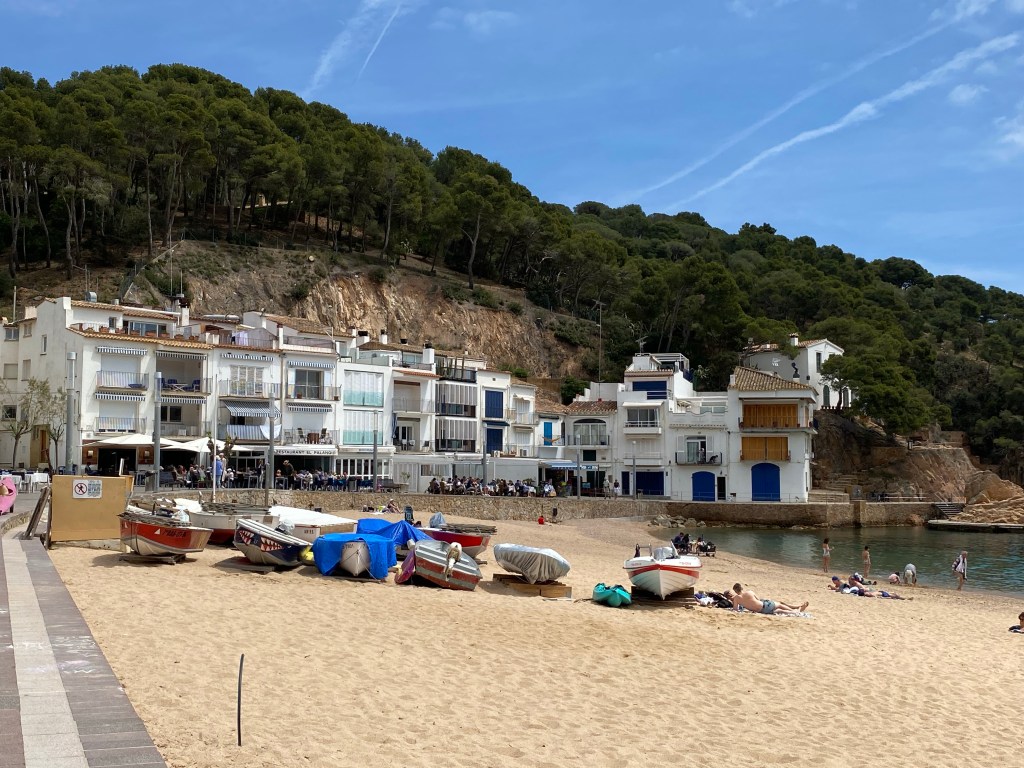
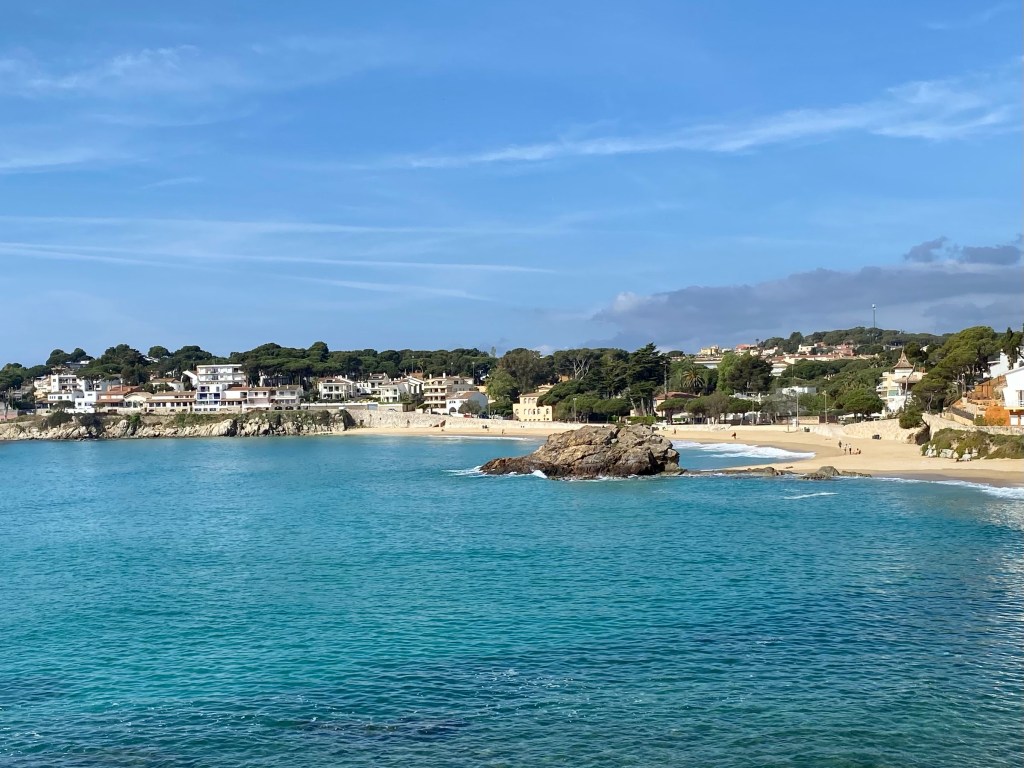
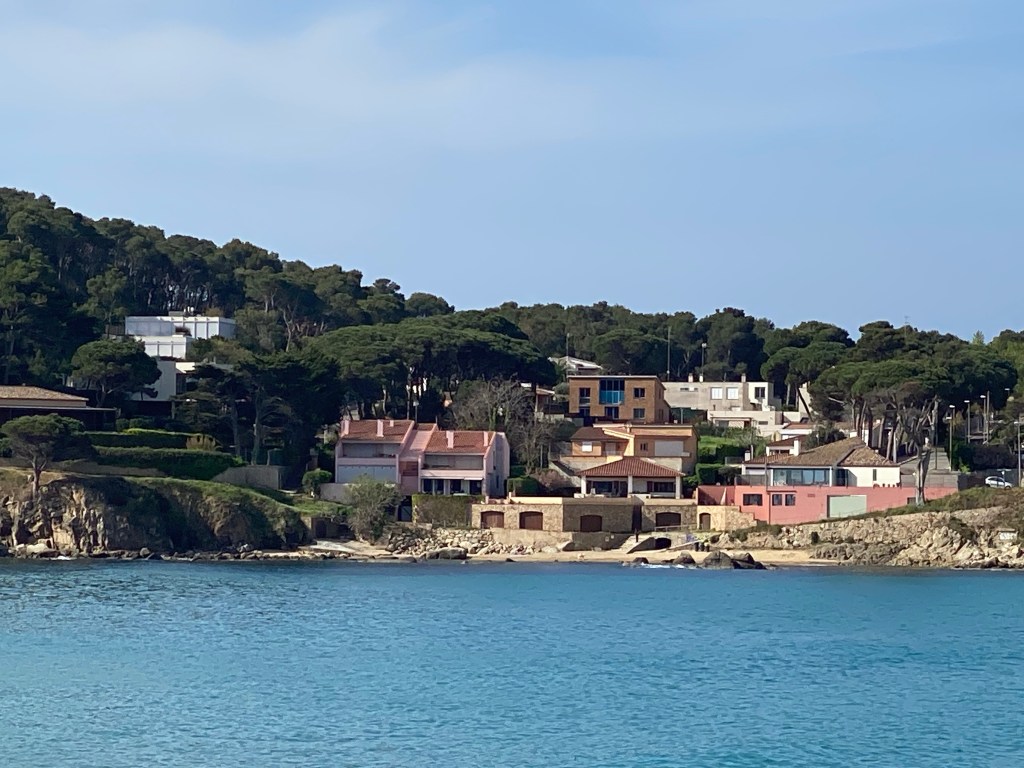
Fortified by breakfast we were off by 10 am. La Fosca appears to be rather unspoiled compared to its noisy neighbour, Palamos. In fact, back in 2016, our blog described Palamos as unpleasant which seems a little harsh. The area has a rich fishing heritage and, at the back of La Fosca beach, we came across some old boathouses with arched wooden doors.. These barracas are highly prized by local families, handed down through generations they are rarely sold.

Our route took us up our first steps of the day, out past Castell de Sant Esteve de Mar, built on Roman remains and the founding building in Palamos in the 13th Century

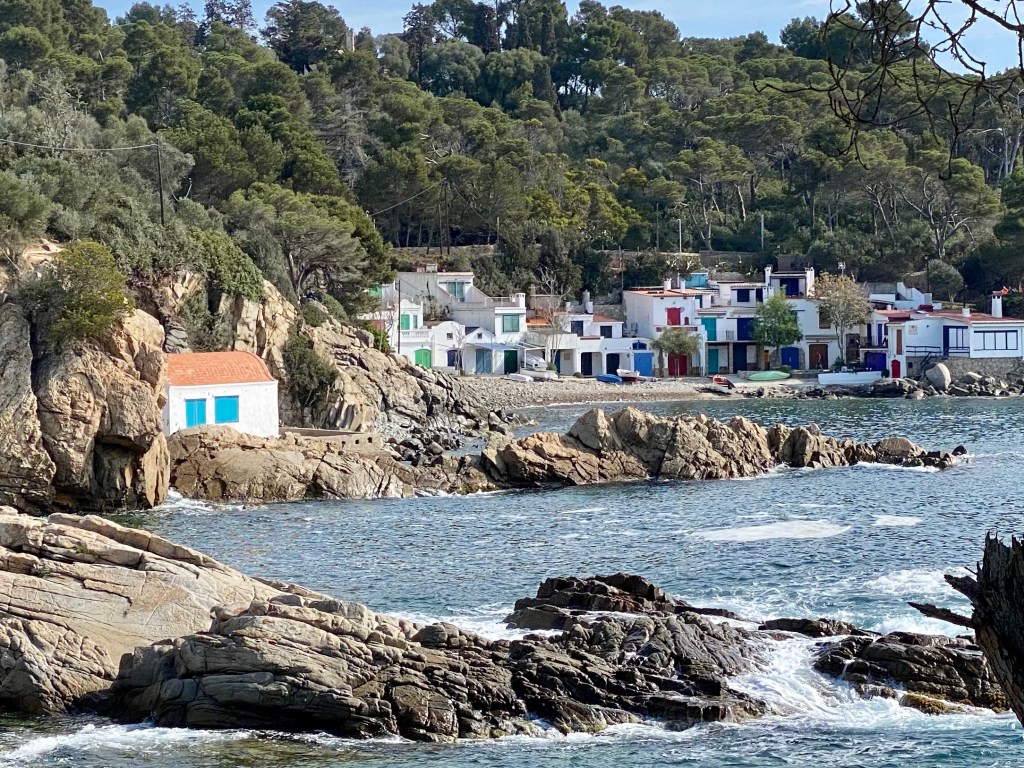
After a short walk through pine woods, Cala S’Alguer came into view. A very tiny, pretty cluster of fishermen’s huts with history dating back to 16th century. These huts are now protected as a Cultural Heritage Site and illustrate what the Costa Brava looked like before tourism arrived.

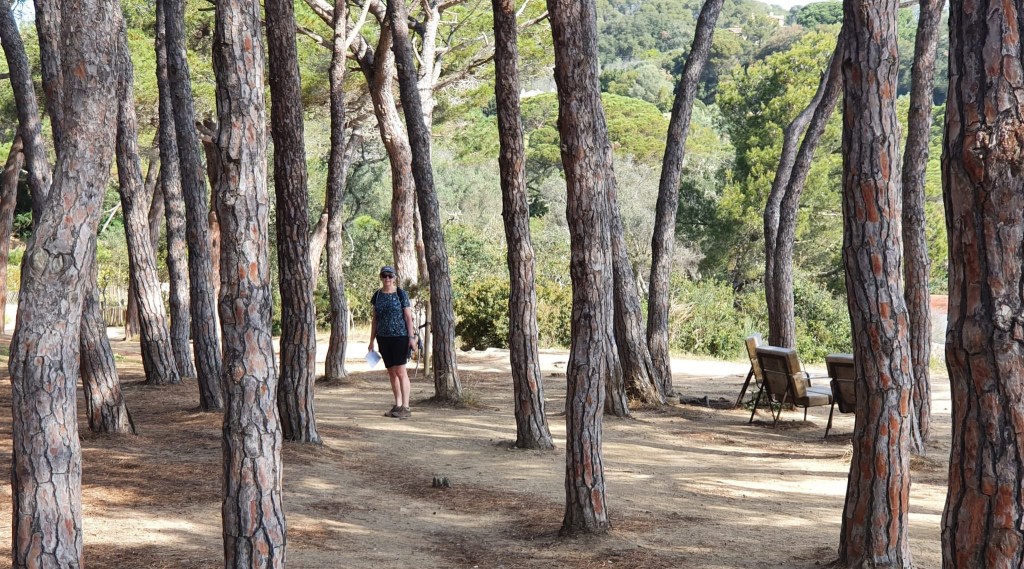
Next, we headed inland through cultivated fields before taking a forest track into the Espai d’Interes Natural de Castell – Cap Roig. Considering we are not mountaineering and this route is the lowest level walking classification there is, it was a long, tiring climb on stony, uneven tracks. Pine trees, cork oaks, olives and flowering cistus were a minor distraction from the effort.

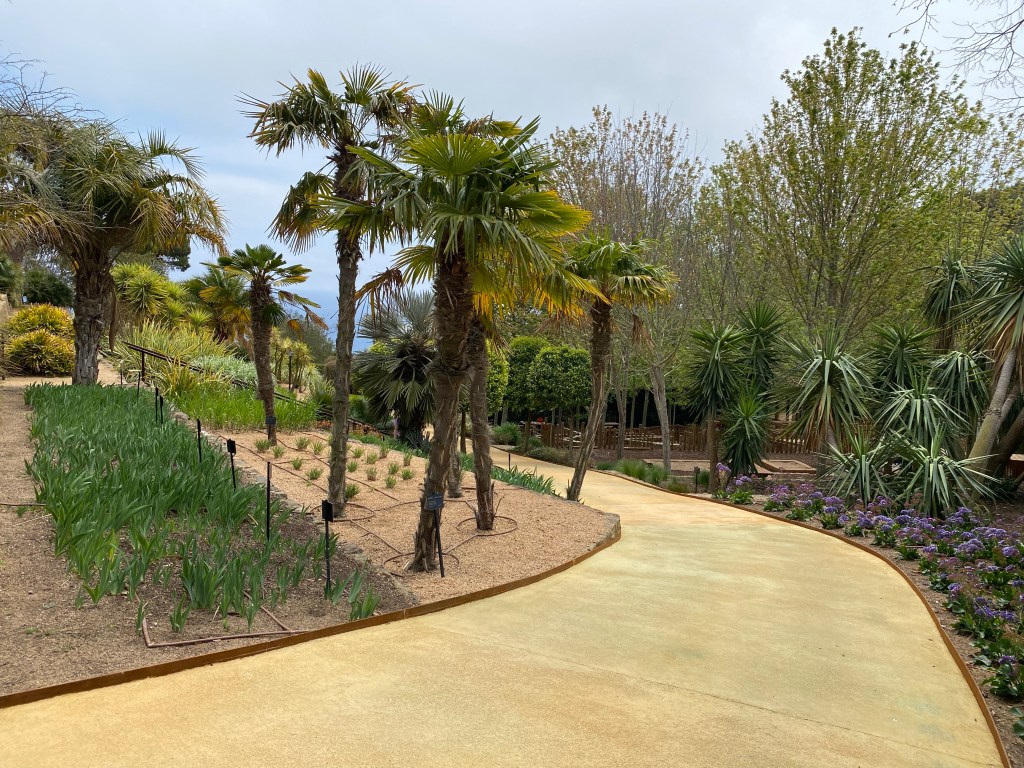
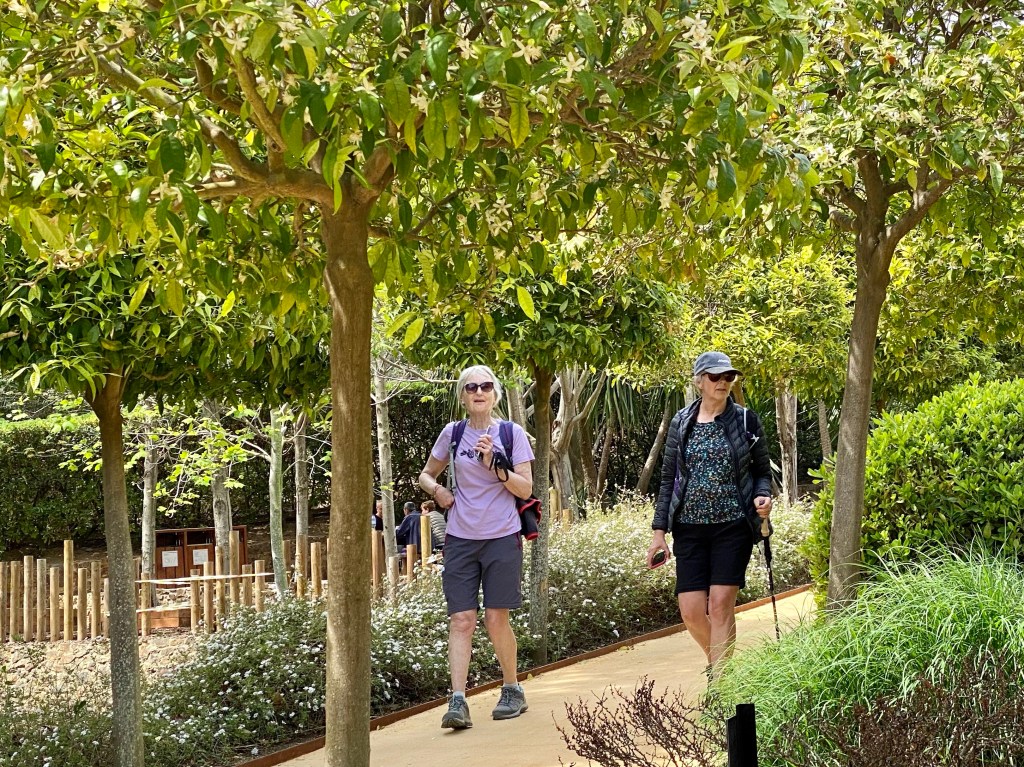
As we descended, we skirted around the boundary of the Cap Roig Botanic Gardens. We have visited these fantastic gardens a couple of times before and they are well worth repeat visits. The only trouble is it involved yet another uphill walk, the gardens are on steep terraces and the vending machine doesn’t sell tea. There wasn’t a murmur of complaint, this is a really rather special place.

Coincidentally, we bumped into an English couple walking the opposite route to us. Apparently, the hotel we are due to stay in at Aigua Blava serves the best cup of tea in Spain. Something to look forward to.
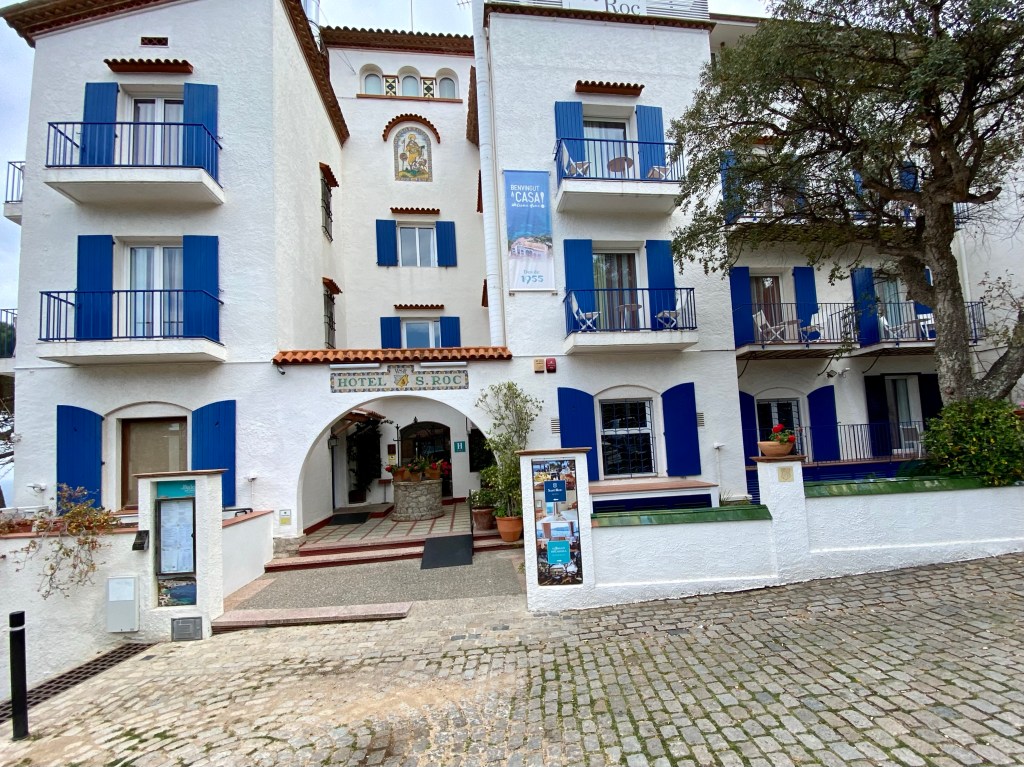
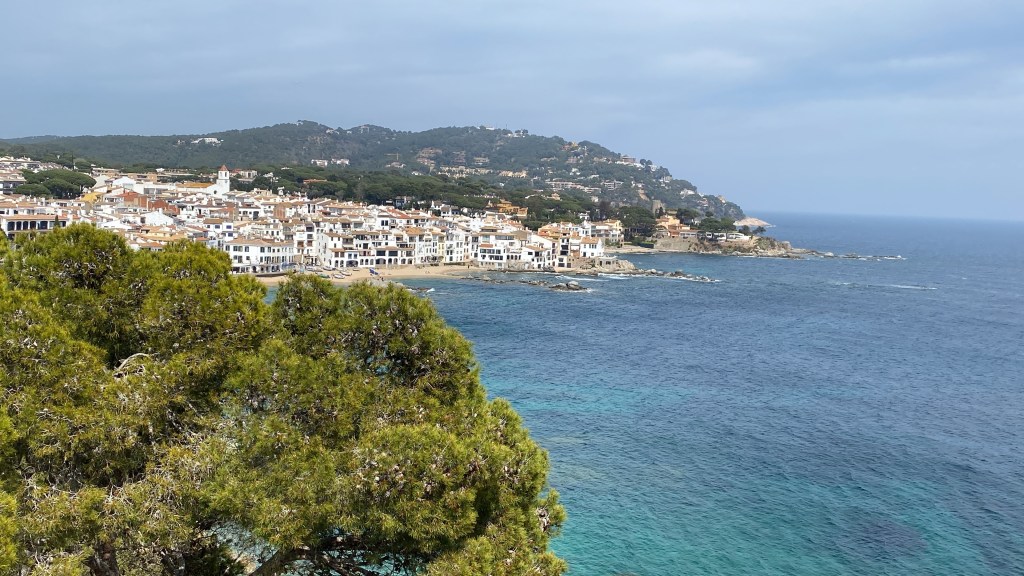
Luckily our hotel was less than an hour from Cap Roig and, although we have walked a far shorter distance than yesterday, our feet and legs have had enough for today. We are here for two nights with a sea view balcony. Are you taking bets as to whether or not we will do the suggested, optional walk tomorrow? 9 miles to a town that is pretty much closed Mondays?

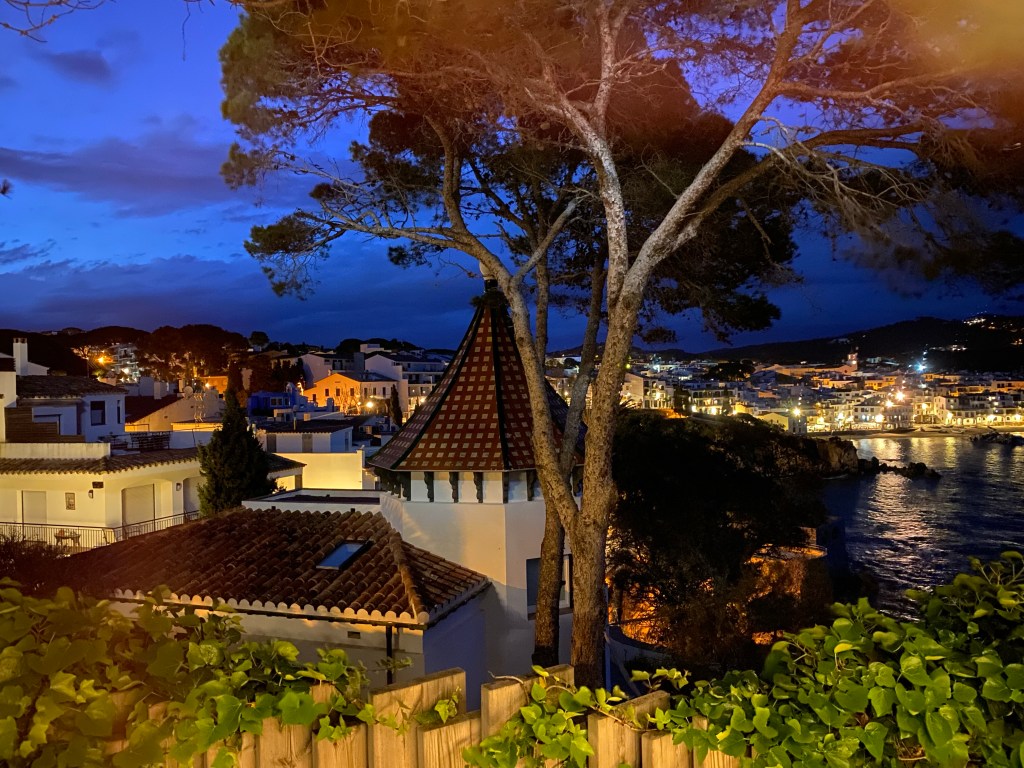
Our holiday includes evening meals at this hotel and we feel rather lucky. Our three course meal was delicious and, as night fell, this was our view across the town.

S’Agaro to La Fosca – mostly flat

We left S’Agaro, in hazy sunshine, along the nicely maintained Cami de Ronda with 10 miles ahead of us. Our route hugged the coastline all the way to La Fosca, our only concern was the length of the walk.

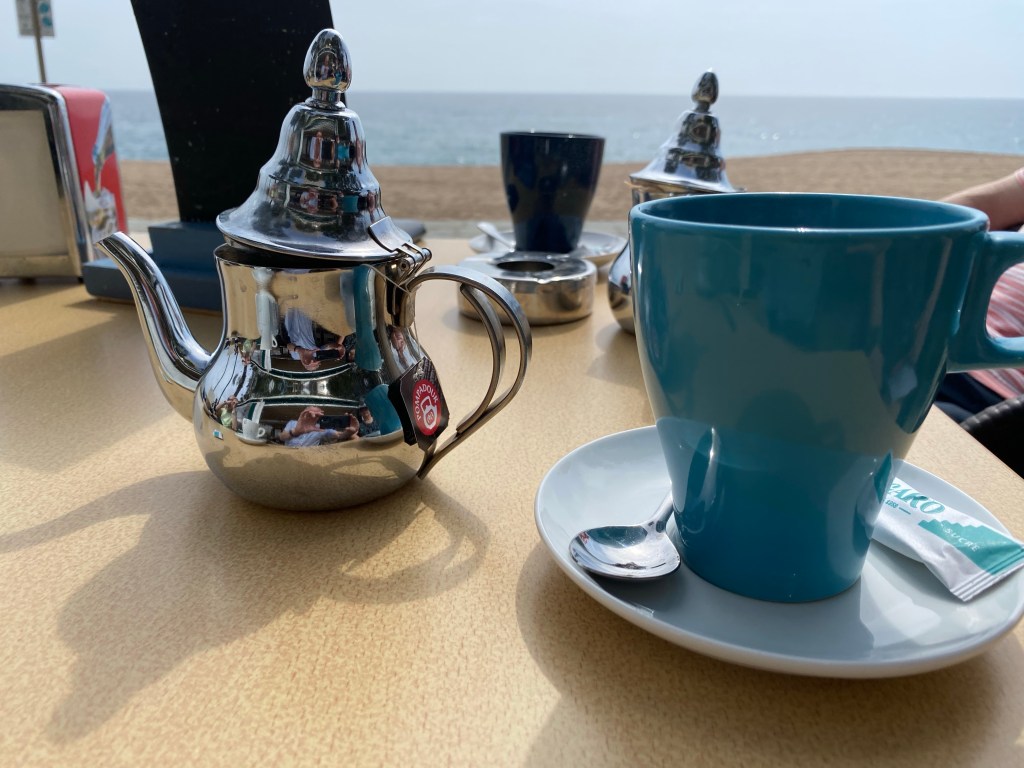
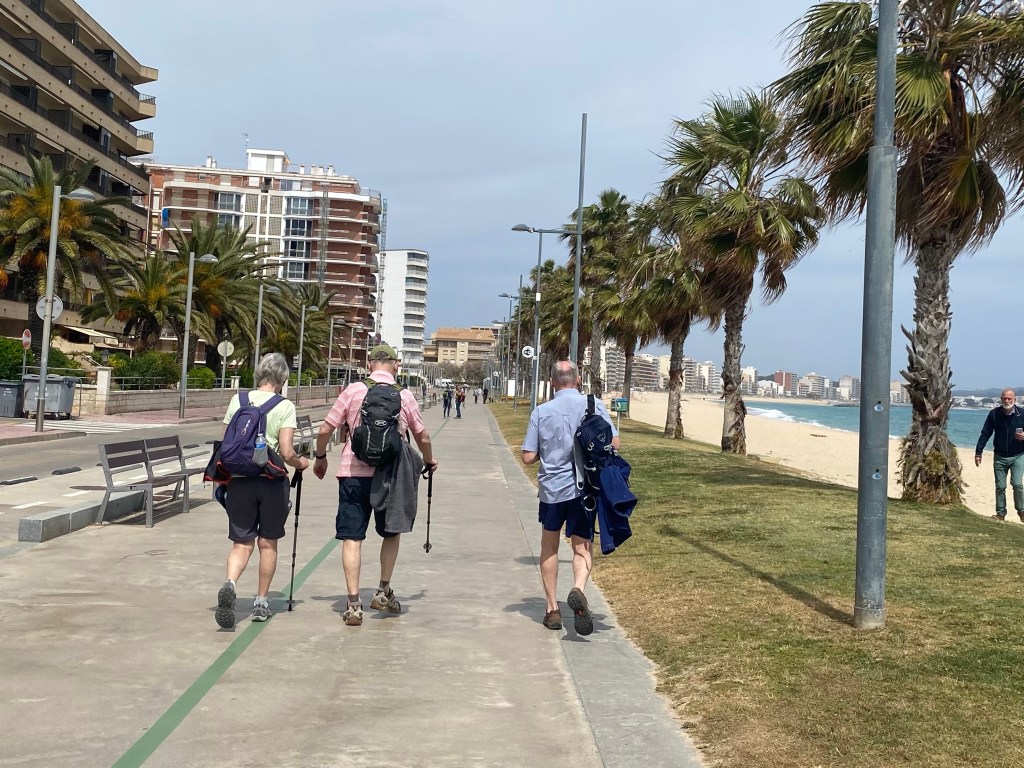
Our first 3 miles were straightforward, well maintained paths onto a mile long promenade at Platja d’Aro, where we stopped and admired the view while drinking tea from a very fancy teapot

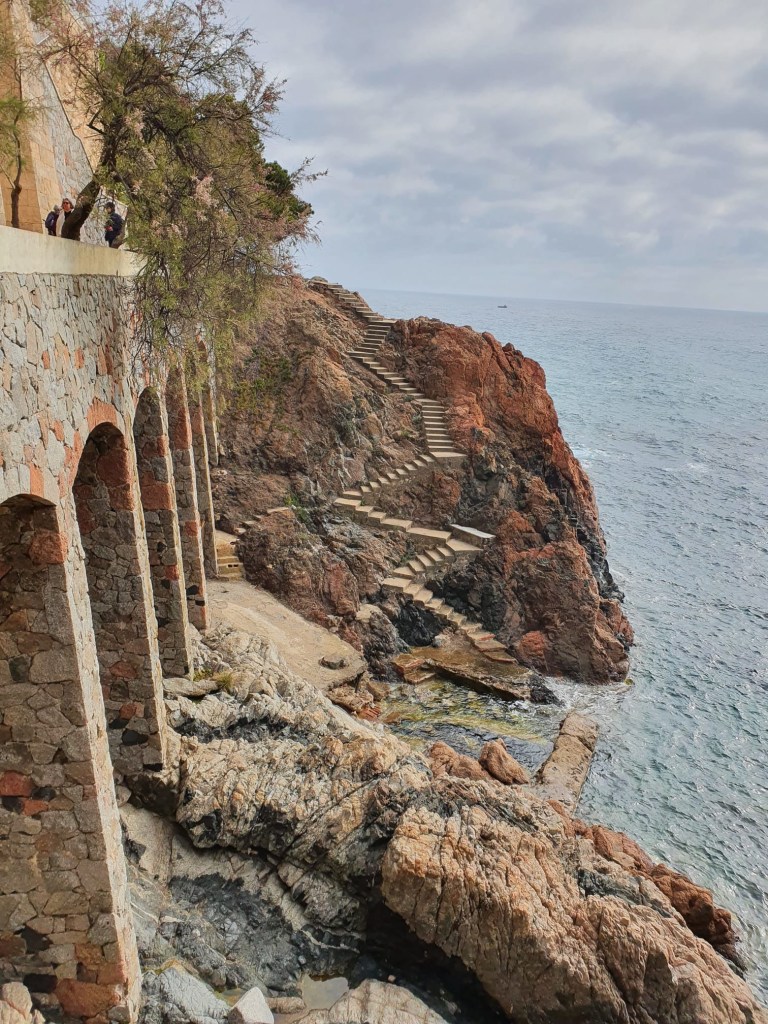
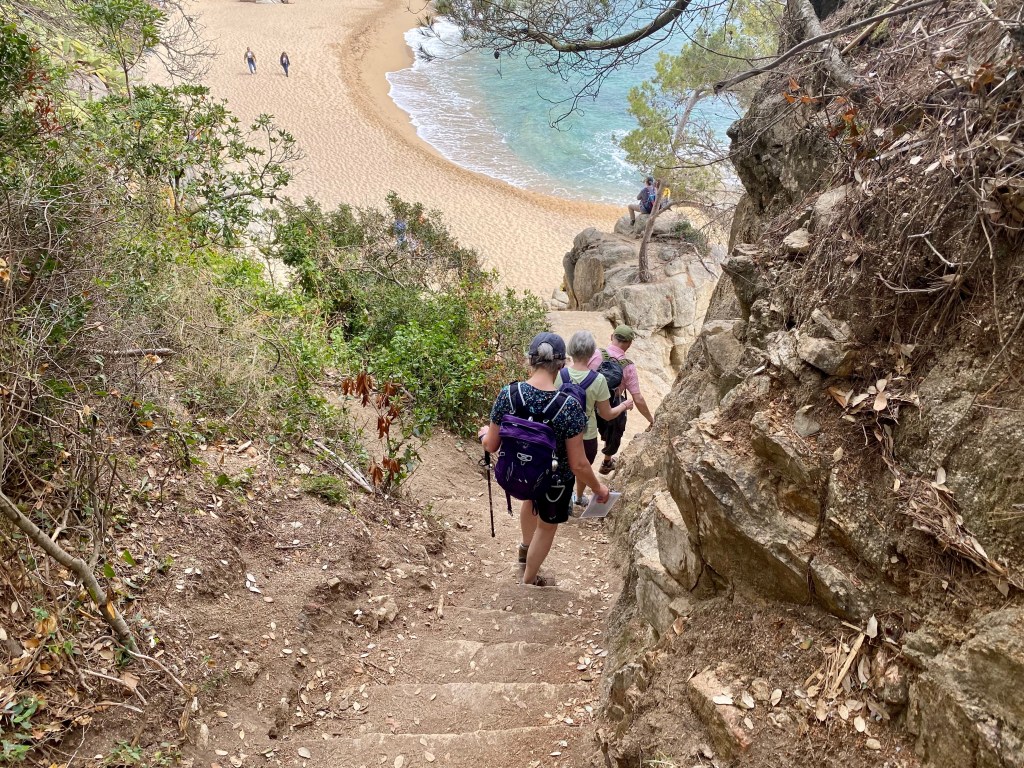
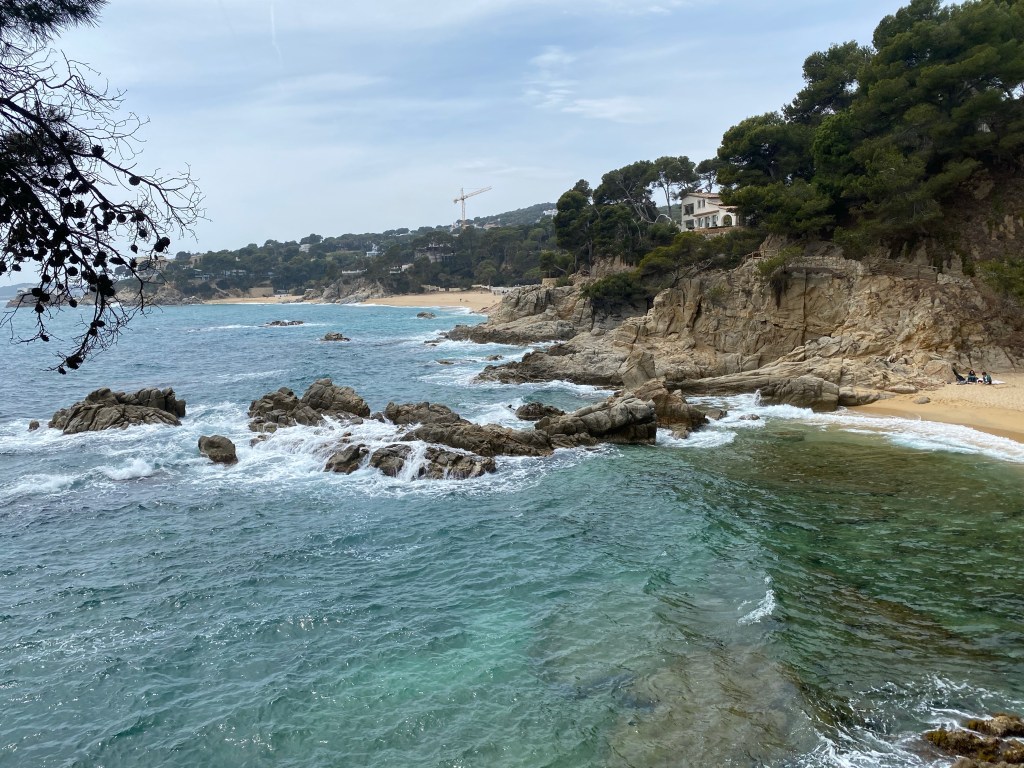
Little did we know that the route was about to become far more demanding. Up and down rocky steps into pretty little coves followed by more steep rocky steps up out again. The path narrowed to single file with blind bends in narrow tunnels. It was quite a challenge.

By 12:30 we needed a break and stopped for a picnic lunch at Platja Belladonna. The cove was lovely and quiet except for very over excited dogs shedding sand everywhere. It added extra crunch to our olive bread and cheese rolls.

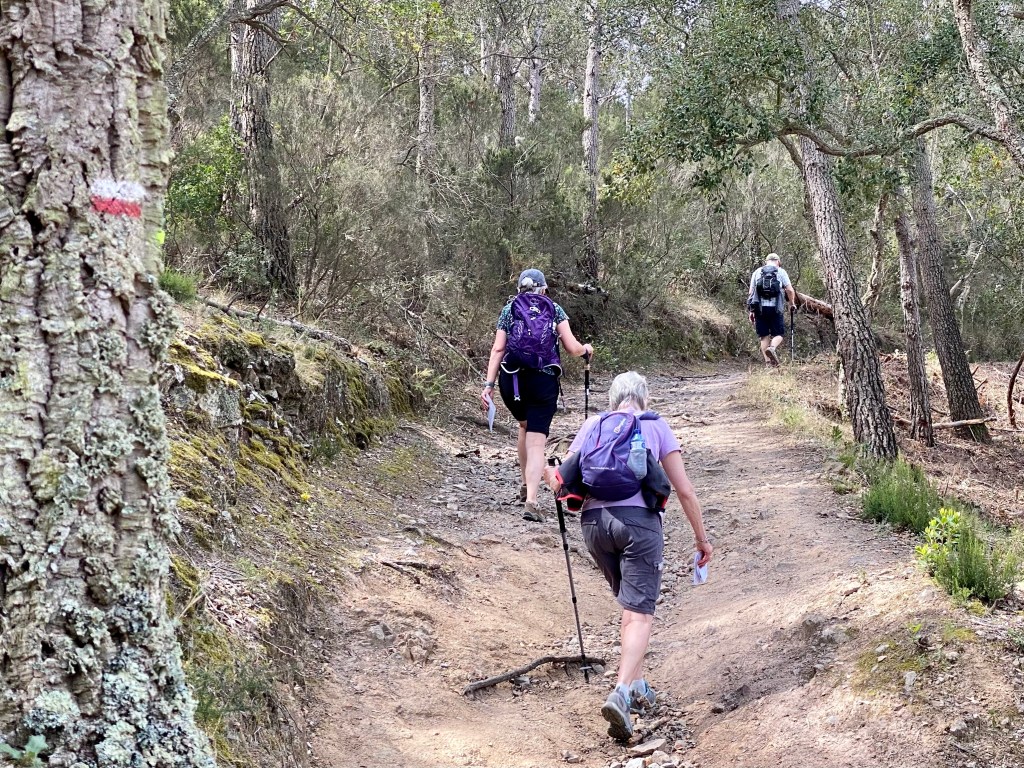
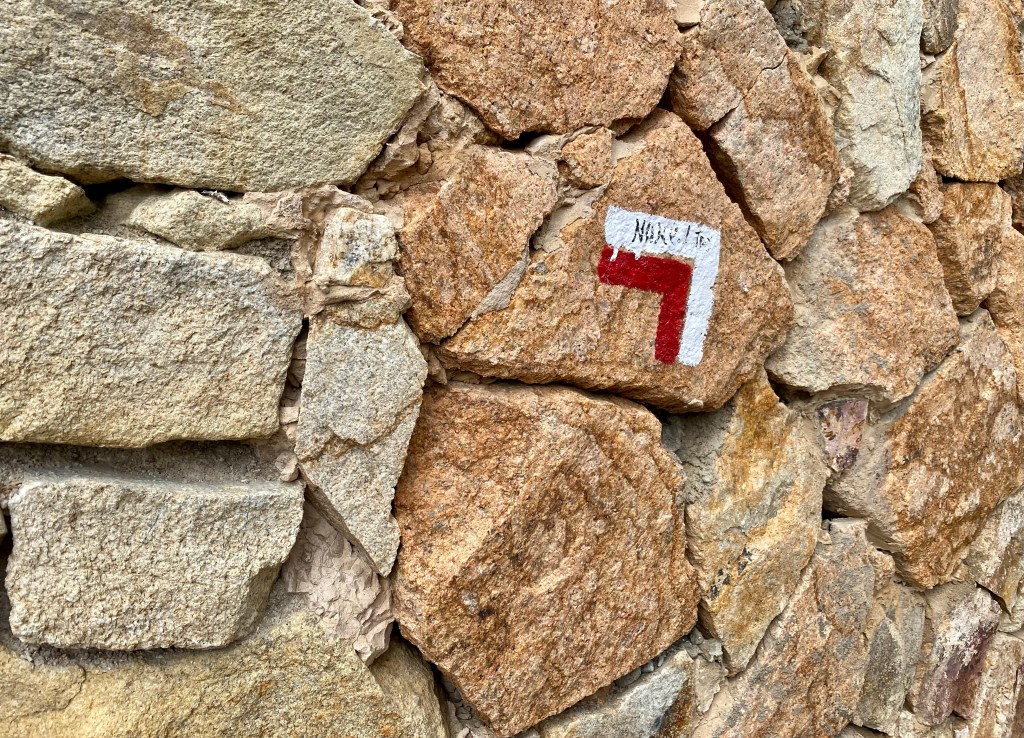
Three more coves and an unplanned detour up some vertical steps added to the challenge. Sadly, we only have ourselves to blame for the detour, we are still getting the hang of reading red and white marker points while paying attention to route instructions. I wonder why we never seem to remember this from one holiday to the next?

Finally we arrived at the two mile long promenade leading into Palamos and the long, flat concrete walkway was very welcome. Our walk had not been ‘mostly flat’ as promised.

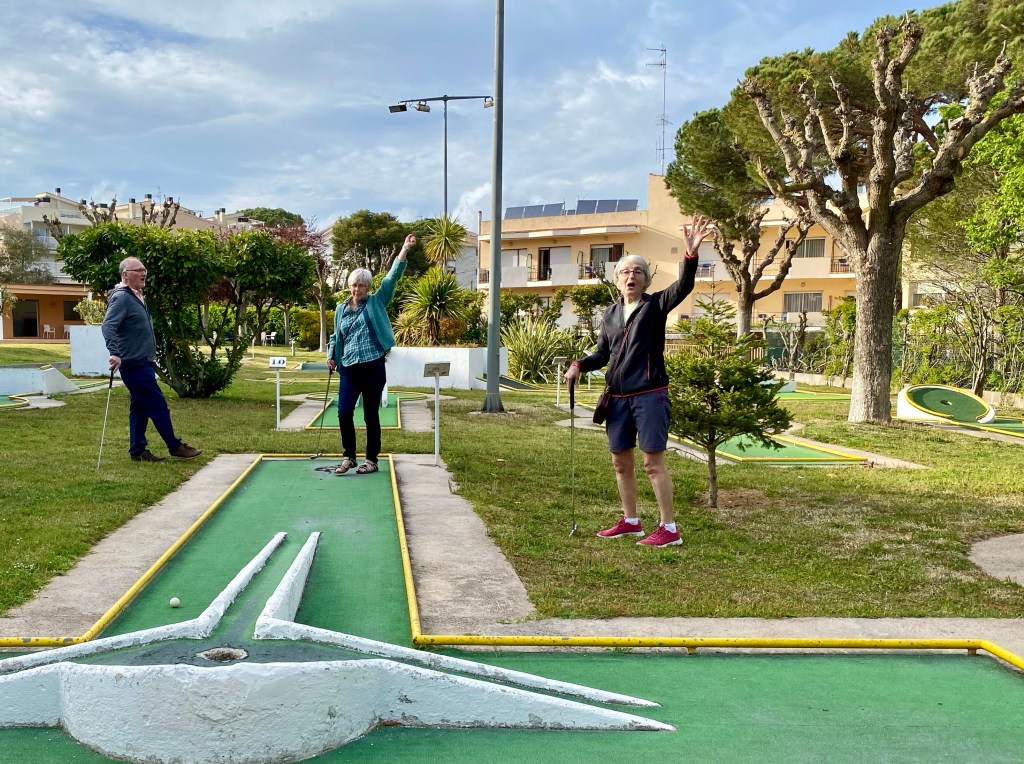
We were too weary to explore the town which has the feel of a real holiday resort. We climbed more steps up into the old town for the final mile to our hotel, tucked in a quiet suburb of La Fosca. No seaside views tonight but we did manage a competitive game of mini golf before dinner. After taking an unexpected early lead, Jacky was beaten by Ken. Kim trailed behind in third, despite a hole in one, and John was official photographer.

Walking the Catalan Coast

If you are of a certain age, Sunday night Top Gear would often feature a race. Typically Clarkson drives a car while Hammond and May make the same journey by plane, train or ferry. Our first adventure of the year began similar to a Top Gear Race. We are walking in Catalonia with Jacky and Ken and it should all be quite simple. Fly to Girona, walk North, keep the sea on our right. But Ken has dodgy ears and chose to take the train, the race was on.

Jacky braved Stansted and RyanAir with us, which turned out to be surprisingly hassle free with plenty of time to spare. At this stage of our trip, Ken was ahead. He was already in Paris and we hadn’t left Essex but he still had to negotiate his way across Paris, to Gare de Lyon, for another train.

As we landed in Girona, Ken had barely left Paris so we won…. which is all that really matters!

Our six day walk takes us along the Costa Brava from S’Agaro to Aigua Blava. The weather is looking rather cloudy but it’s warmer than at home and the view from tonight’s hotel is lovely.

Finally, for anyone concerned about Ken’s wellbeing, he arrived safely at 10pm. Only seven hours after us!

Homeward bound

Our final morning in Holland started grey and dismal. We love Holland and the Dutch but the weather has really let the country down over the last couple of days. Our Eurotunnel booking wasn’t until 4pm, so what to do on a damp day with not much time to spare?

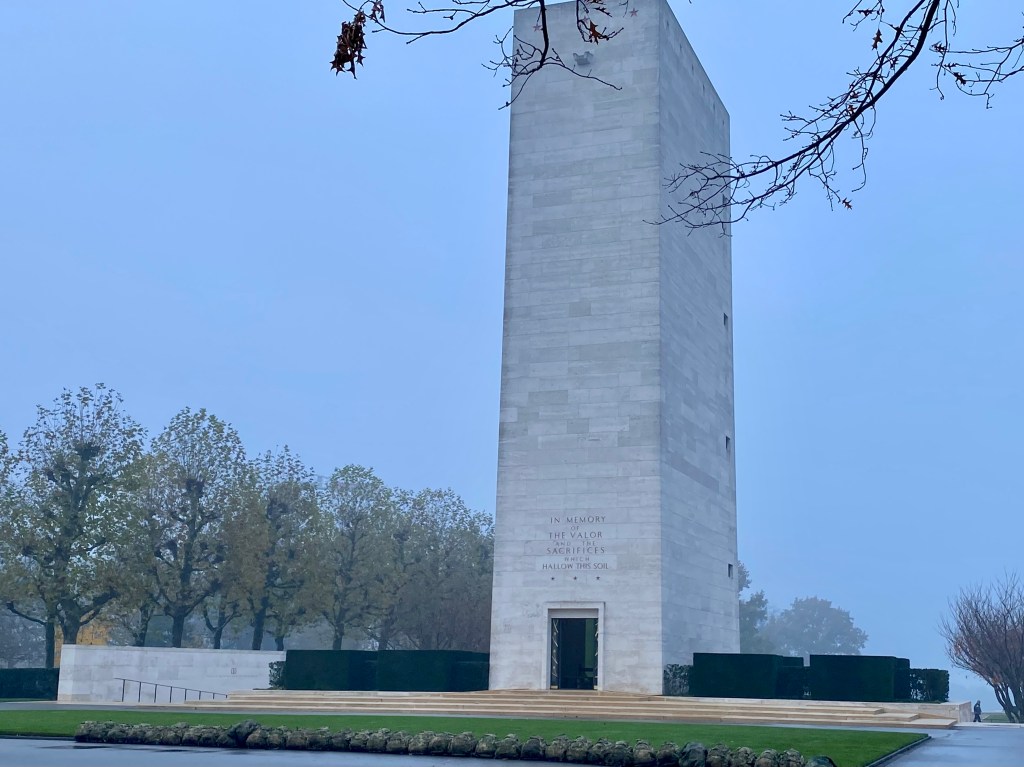
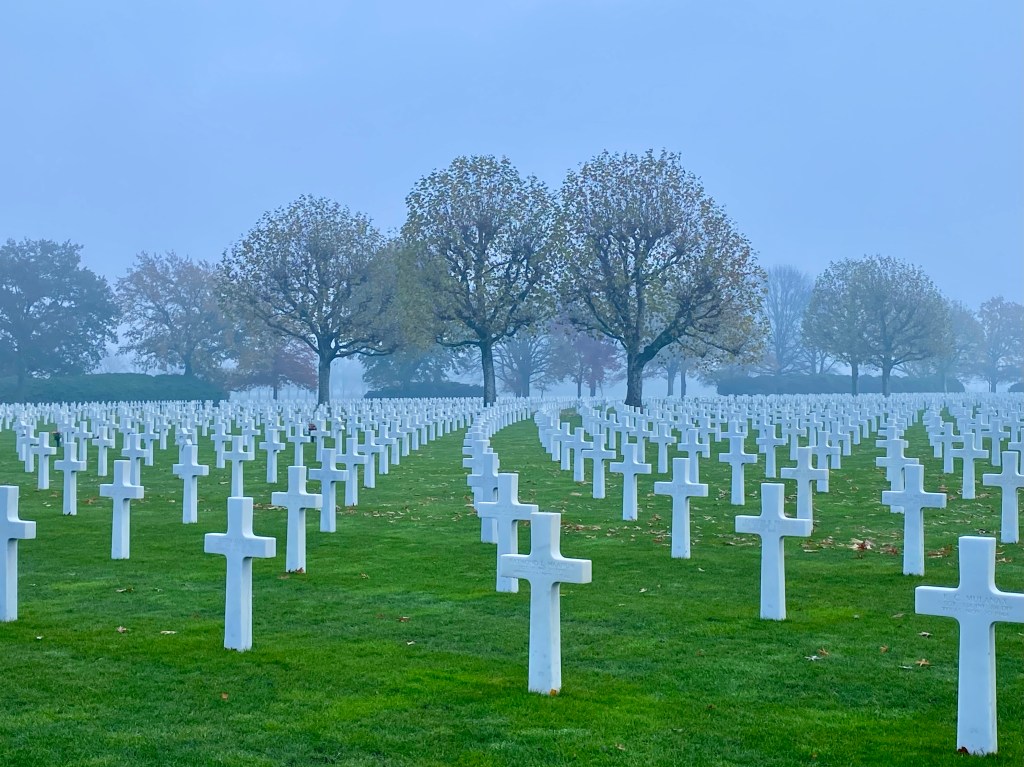
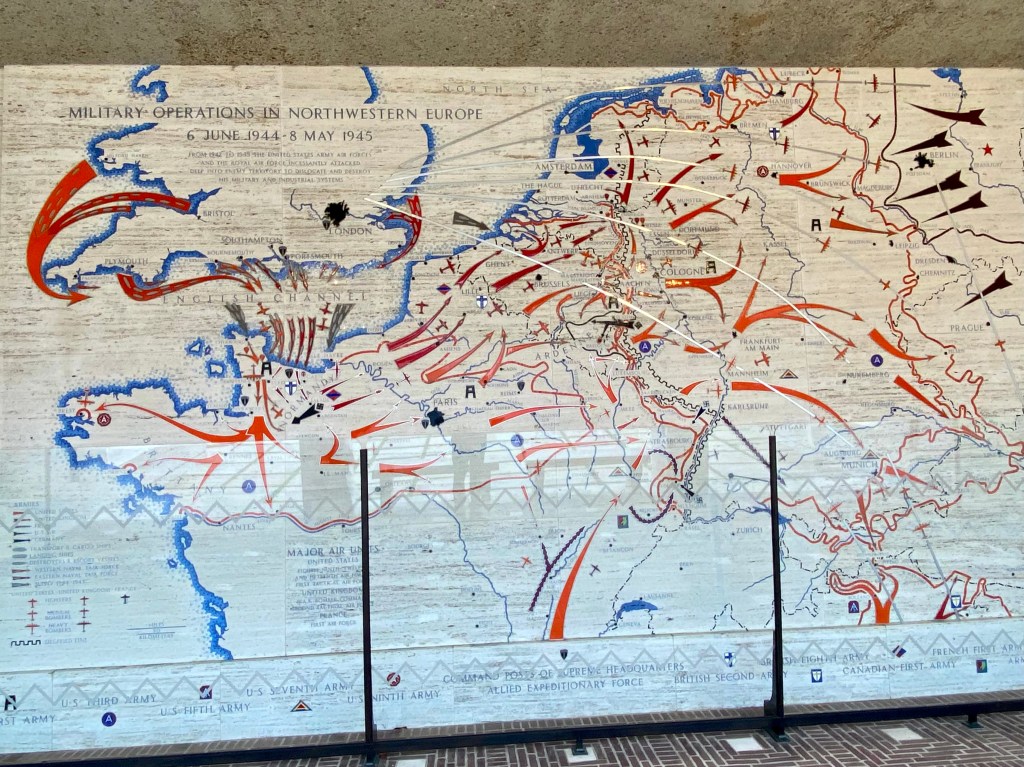
The Netherlands American Cemetery was 6km from Maastricht and, as the only American Military Cemetery in the country, was worth a visit. The site has a rich historical background lying near the Cologne – Boulogne Roman highway. In 1940, Hitler’s troops advanced over this route, overwhelming the area. In September 1944, German Troops used the same route for retreat.

As you would expect from a Military Cemetery, it was impressive. Stylish architecture and immaculately kept grounds gave it an air of peace and serenity. An unimaginable contrast to what was endured by troops and residents alike. A sobering experience as always.

Our journey back to Eurotunnel was dull motorway driving, much through thick fog. As we crossed the border into France the sun came out and it was glorious. It would have been nice to have seen it sooner.

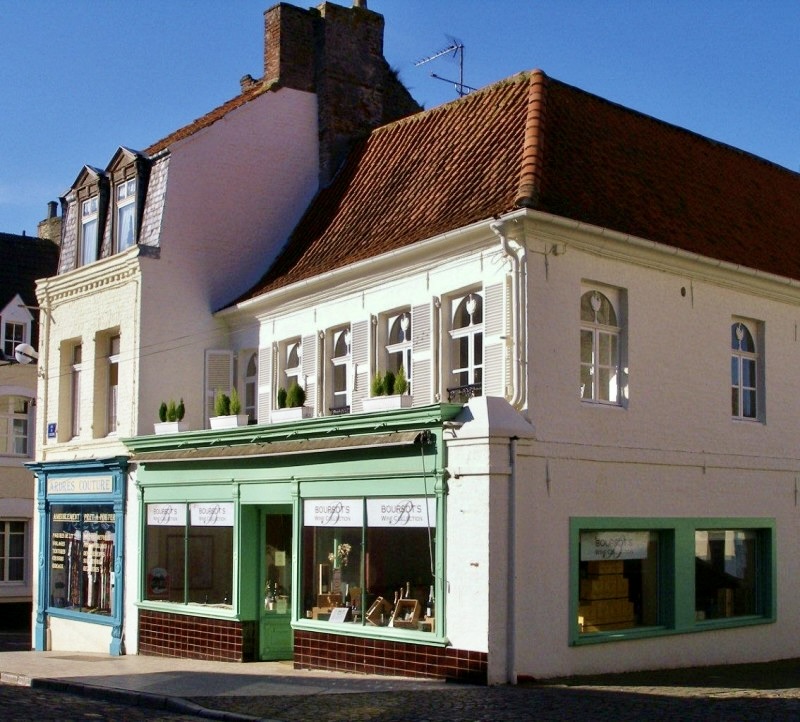
Somehow, we had only bought one bottle of wine and that wouldn’t see us through until Christmas. Begrudgingly, we settled on a trip to Citie Europe when Google came to our rescue. John discovered a wine shop, highly recommended by Decanter magazine in the town of Ardres. A short 15 minute detour from Calais and we were in a 250 year old building, home to Boursot’s Wine Collection with prices ranging from 3 – 80 euros. It was a joy. The salesman took time to establish our tastes and make recommendations. We left with three cases of wine and will return on our next trip to France. A far cry from French hypermarkets although they also sell crisps.

So what we have learned about Kerst in Holland?

For most children in The Netherlands, the most important December day is 5th ‘Pakjesavond’ (Gift Evening), when Sinterklaas (St. Nicholas) brings them their presents. Dutch folklore says that St. Nicholas lives in Spain and every year he chooses a different harbour to arrive in the Netherlands accompanied by his servants the ‘Piets’ who help deliver presents. Christmas Day is still the 25th December and is a quiet time when families attend church followed by a simple family meal. There are very few presents given at Christmas as these are exchanged earlier on St. Nicholas Day which is the more celebrated festival.

We have also learned a lot about Christmas Markets. Disappointingly, many stalls sell cheap tat made in China. In amongst those, if you look really carefully, you can find one or two local producers. A far cry from our rose-tinted expectations. The caves at Valkenburg were unusual but seemed to be missing some of the atmosphere of an outside market. Perhaps it was the lack of the scents of gluhwein and bratwurst.

Kerstad Valkenburg

Our exploration of the Dutch bus system continued today as we successfully negotiated the 6 miles into Valkenburg. Years ago, we wouldn’t have had the confidence to use public transport in a country whose language we don’t understand. However, that was before the magic that is Google. We entered our destination and Google Maps gave us three alternatives, including the name of the stop where we were to leave the bus.

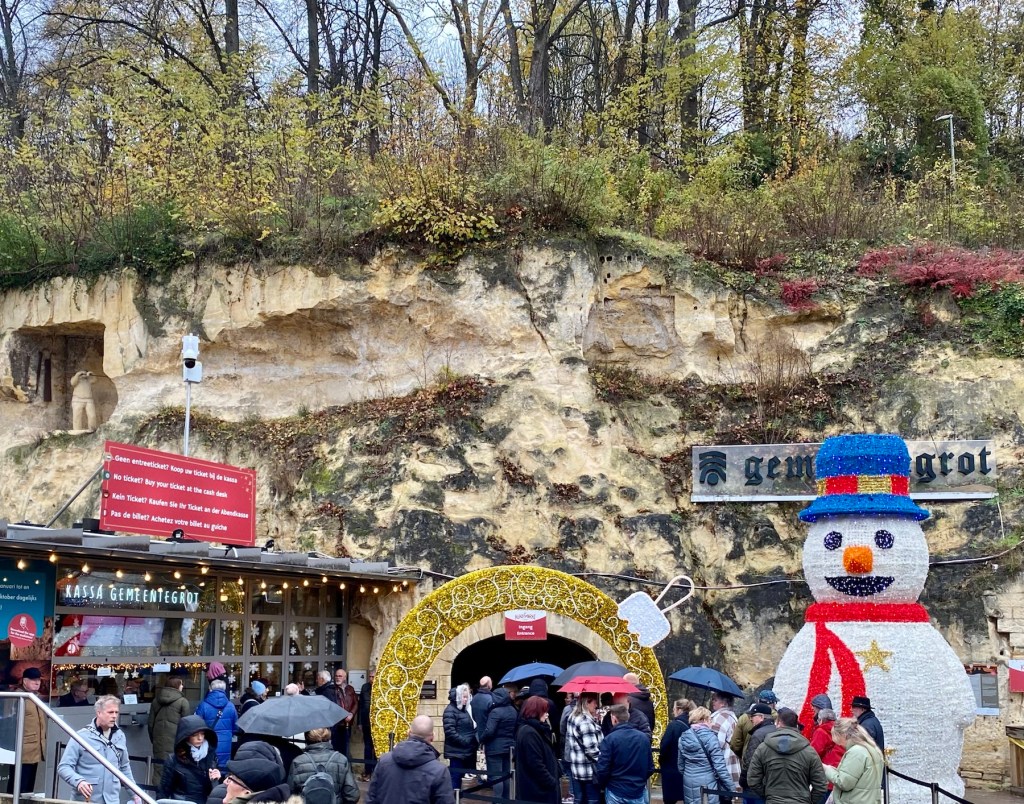
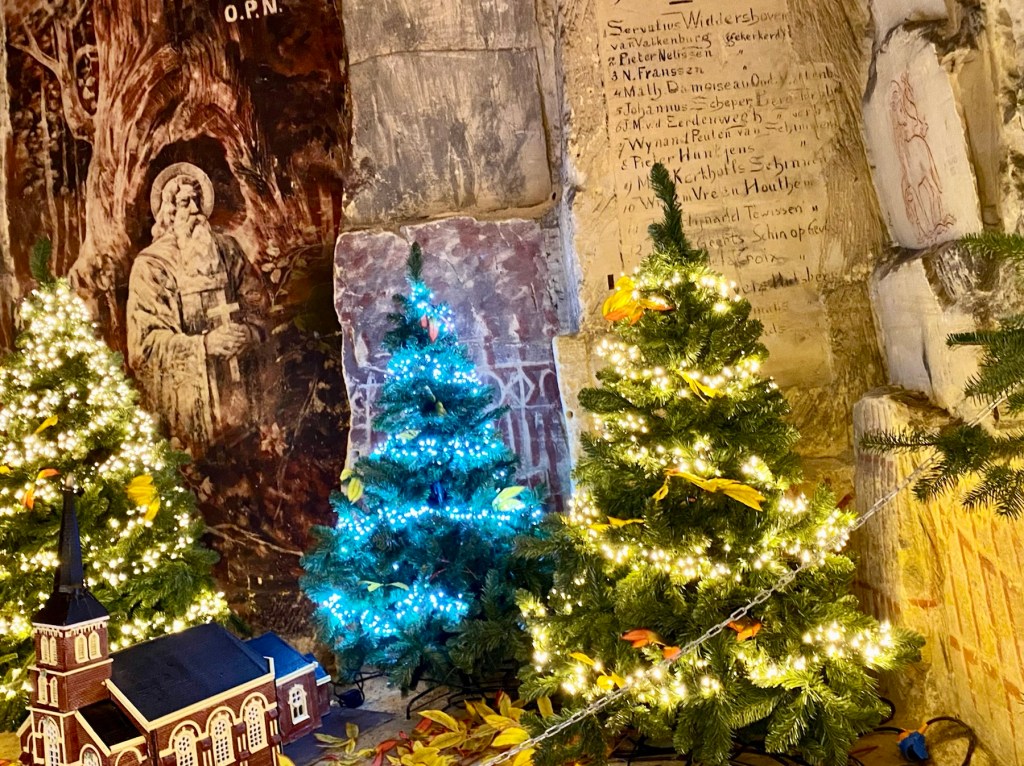
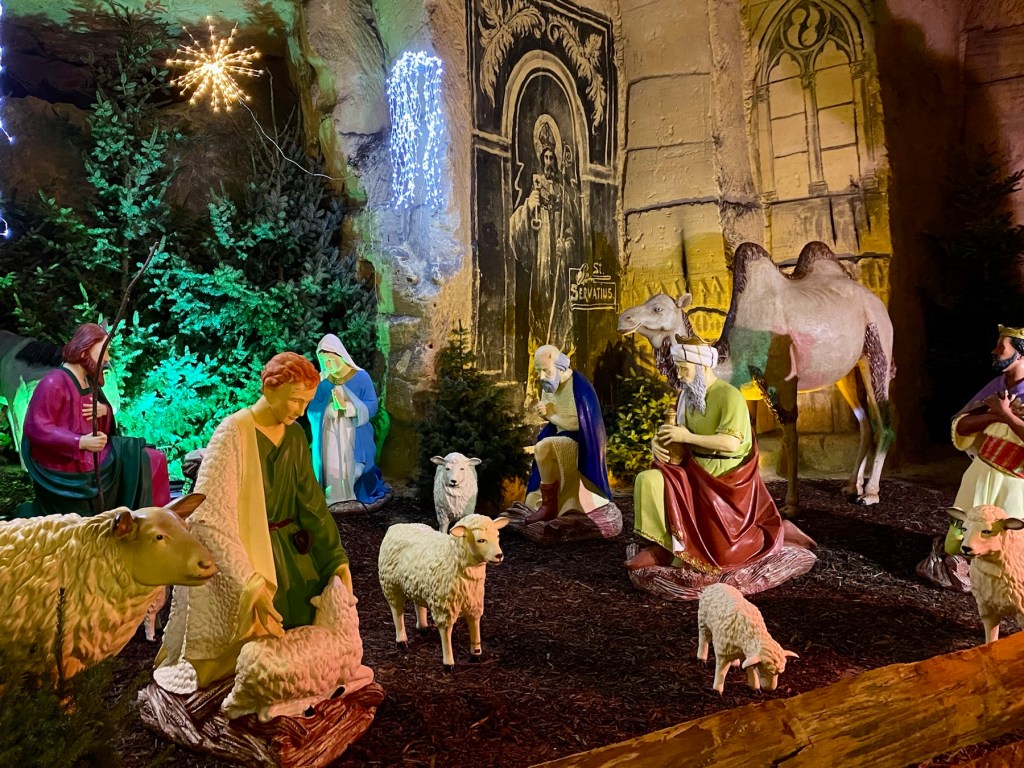
Valkenburg’s Christmas Markets are rated so highly because they are held in the towns labyrinthine marlstone caves. The local hills have been mined for stone leaving 70 kms of corridors which provided shelter and refuge during times of conflict. Excavations date back to the Romans and in more recent times provided a safe haven for the town’s Jews and other residents during WWII.

In our eagerness not to be late, we arrived an hour early for our pre-booked entrance into Gemeentegrot (Municipal Cave) and whiled away the time with a cuppa, watching tourists walk up the hill ahead of us, before we joined the queue.

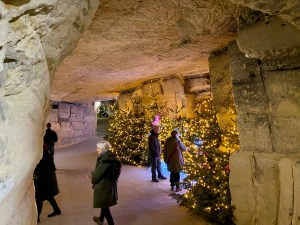
The cave was beautifully lit and dressed for Christmas with stalls selling everything from fleece pants (don’t ask) to ornaments hand carved from local stone. There were plenty of samples on offer – we managed to taste handmade chocolates, peanut butter, cured meats and cheese all before lunch!

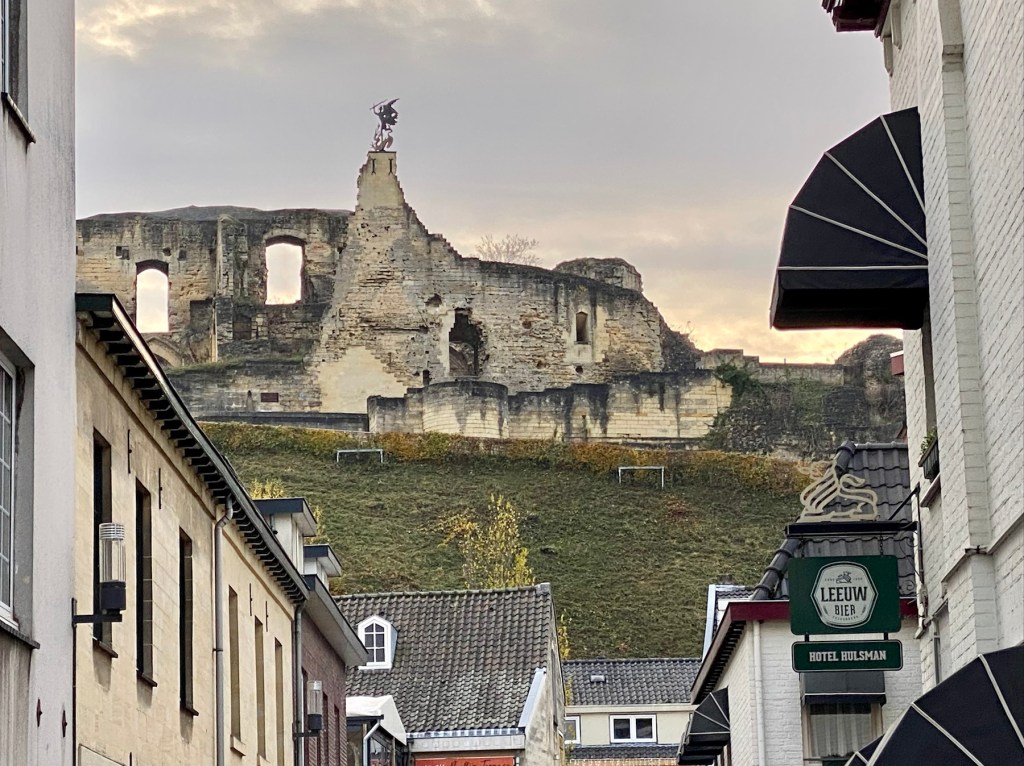
After almost two hours underground, we emerged back into daylight and thankfully it had stopped raining. With time to spare before our next visit to Fluweelengrot (Velvet Market) we walked up to the castle. Not just any old castle, the only Dutch castle to be built on a hill. For centuries, the Lord of the Castle had authority over the trade route between Maastricht and Aachen. The House of Valkenburg ended when, with no male heirs, the quarrelling females enabled the Duke of Brabant to seize the land. No comments required on quarrelling females!

The Velvet Cave was a far simpler affair, which initially felt a little disappointing until we noticed the paintings and etchings on the walls. This cave, particularly, shows it’s long and eventful history.

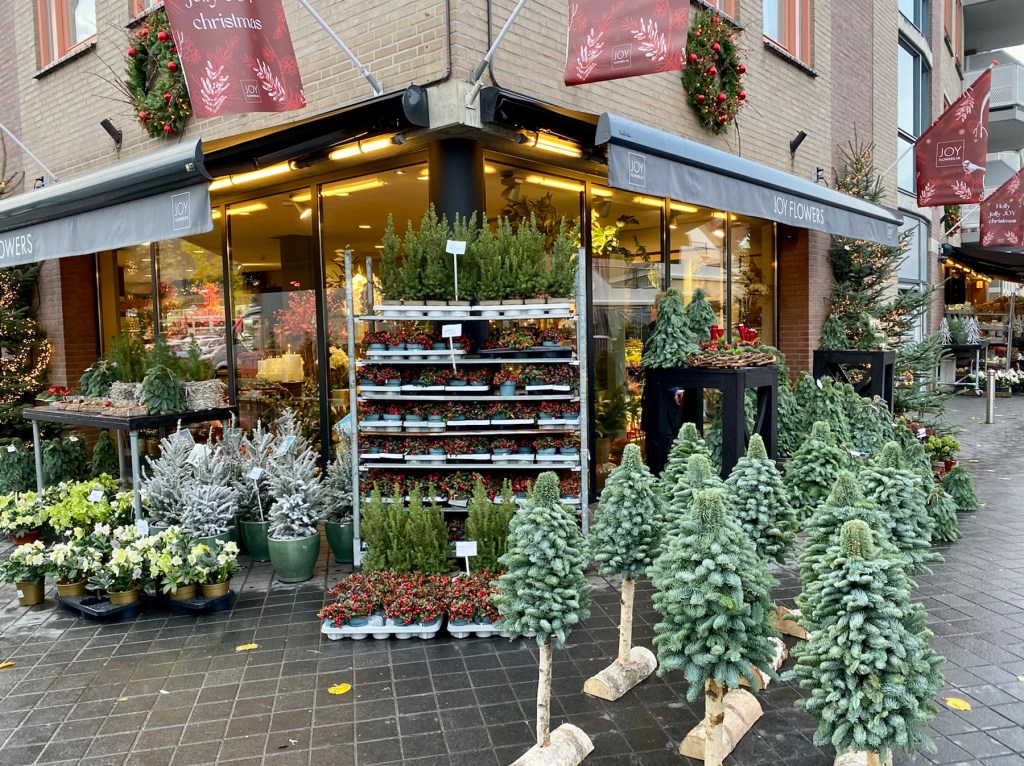
During the Second World War, Velvet Cave served as shelter for 700 residents of Valkenburg until after six days of heavy fighting the town was finally liberated by the Americans with the aid of the Dutch Resistance. Unfortunately the town museum where we had hoped to learn more was closed on Mondays, so we visited a florists instead!

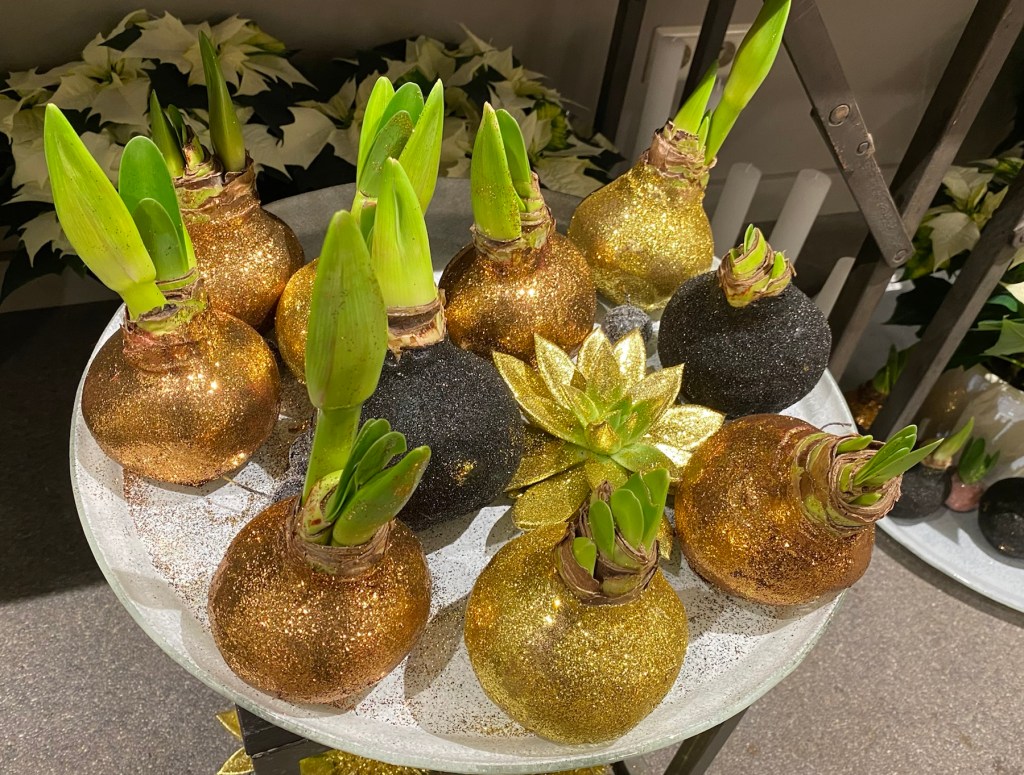
We all know that the Dutch know a thing or two about plants but we did question the need to chop up perfectly good Christmas tree foliage to turn it into fake trees and spray bulbs with glitter.

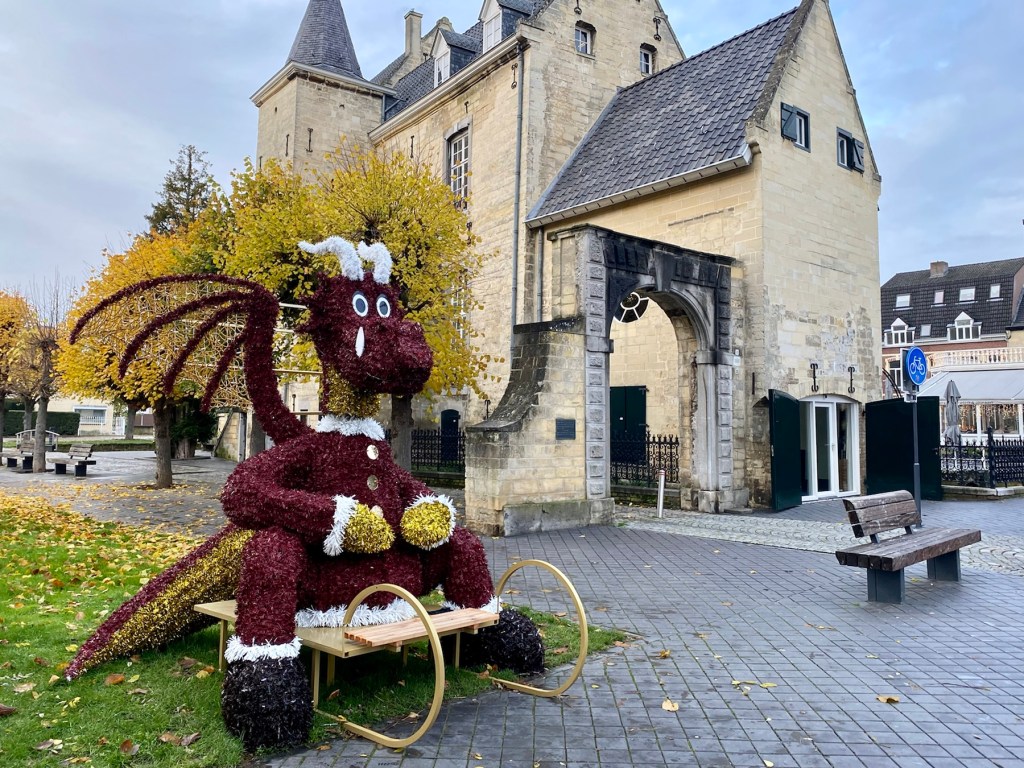
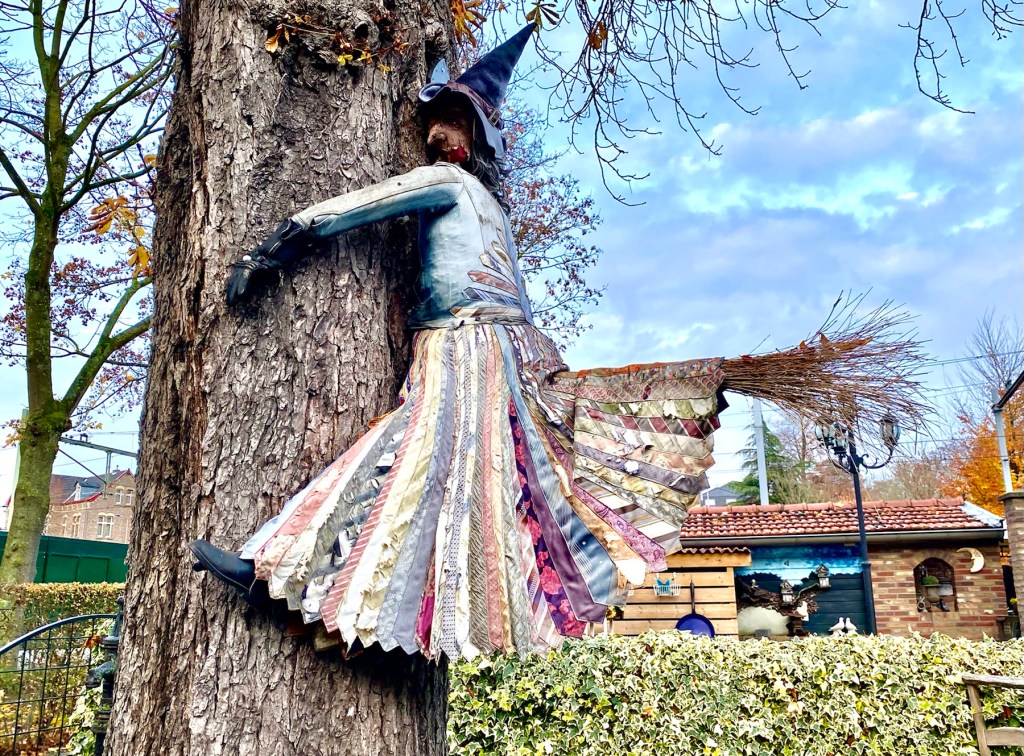
Walking to the Railway Station to catch the bus, we passed an unattended dragon. He seemed fairly harmless perhaps waiting for a witch? Also a lesson in not riding your broomstick while drunk?

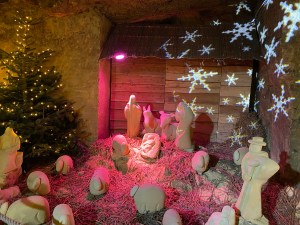
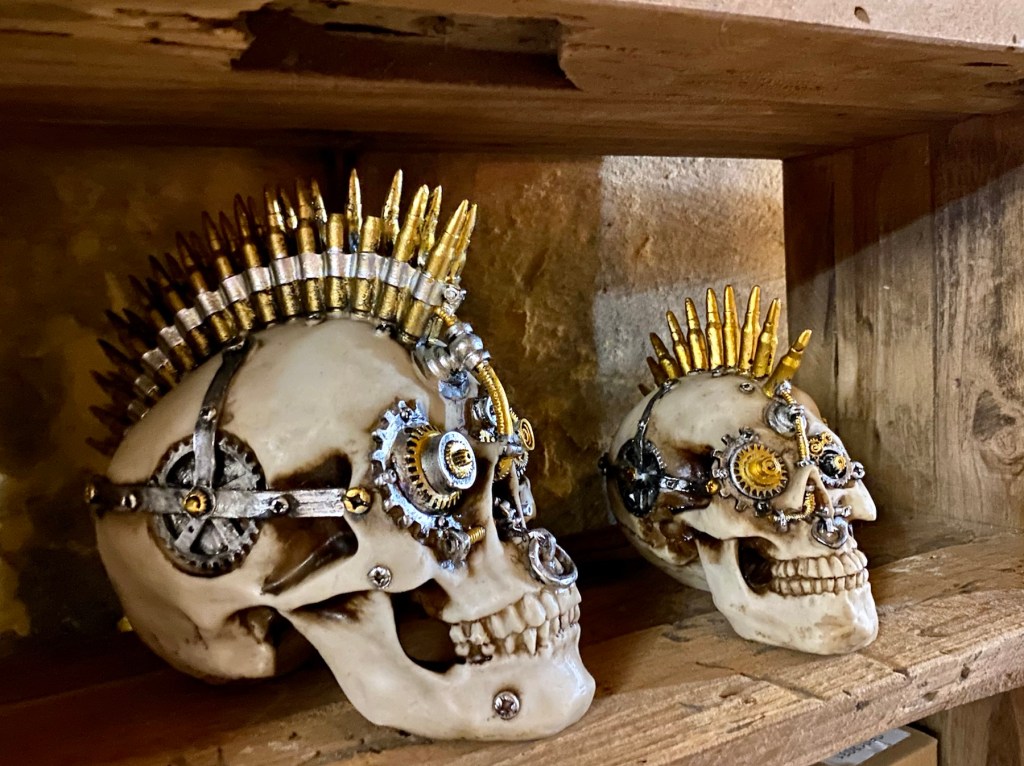
Finally, nothing says Christmas quite like this couple does.

Back to a land of good manners and liberal attitudes

We haven’t had enough holidays this year and decided we could manage another micro adventure. What started as a seven day driving trip to some interesting French museums has been condensed to a few days experiencing the build up to Kerst in Holland. Although, quite frankly, we are here for the Christmas Markets. We visited one in Monschau the year we spent Christmas at Auderath and they are just not the same at home.

It was pouring with rain when we left at 3am and that weather kept us company until we reached Maastricht. Thankfully, it decided to give us a break and became a faint drizzle.

Our plan was to visit the Maastricht Christmas Market today and Valkenburg tomorrow. According to The Guardian, Valkenburg’s Market is the second coolest in Europe. We will leave you guessing why until tomorrow.

Our Maastricht adventure started with a bus ride into the town centre. At every stop, the bus driver announced ‘hotel Valk guests remain seated’ until finally allowing us off the bus at the correct stop with clear instructions on how to catch the bus back.

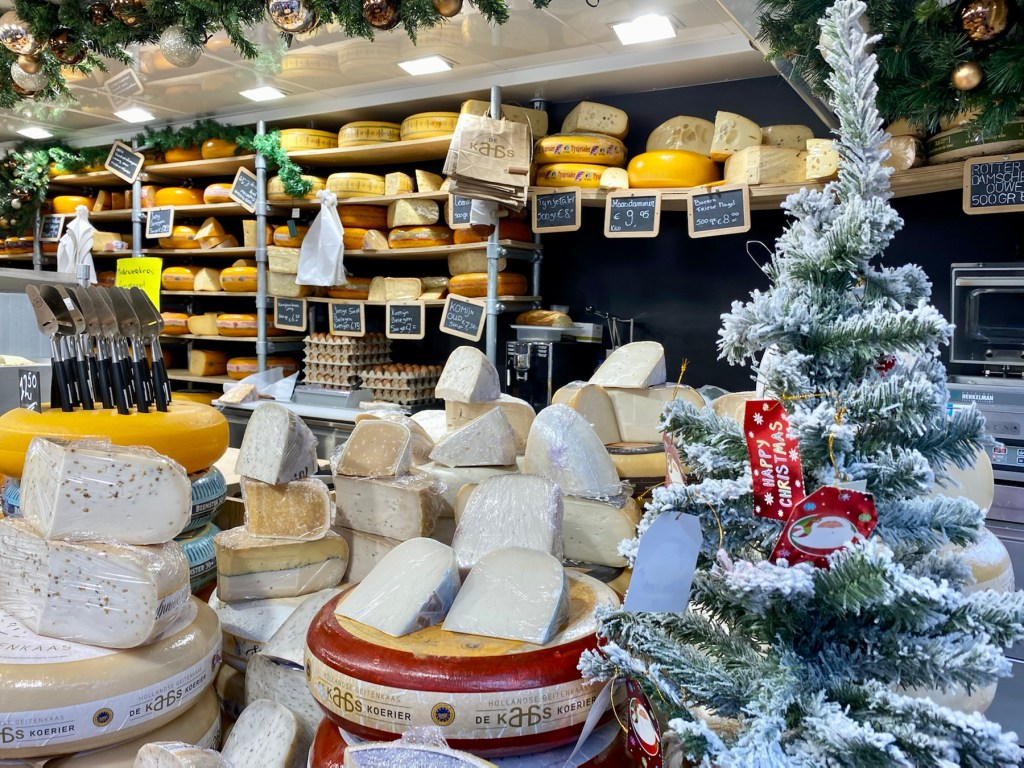
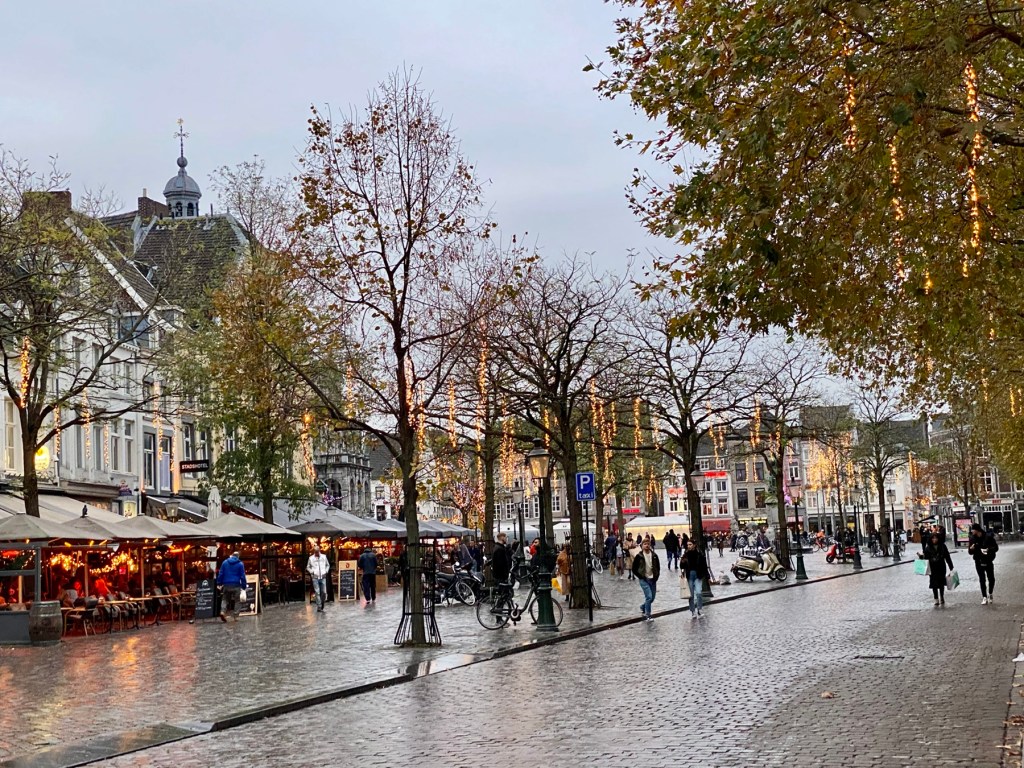
Our first stop was Vrijthof, the square where Andre Rieu hosts his famous concerts, expecting to see a traditional Christmas Market. To be fair, we could see it behind hoardings. Despite double checking our dates, it doesn’t fully open until 1st December and we made do with some fantastic cheese stalls instead.

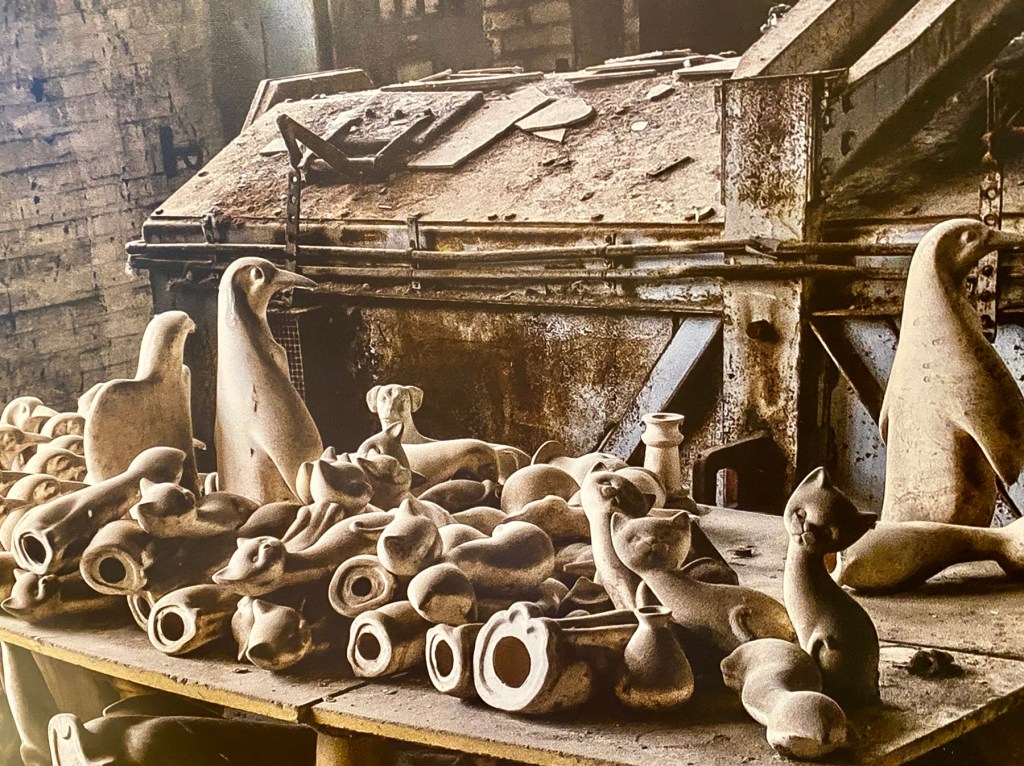
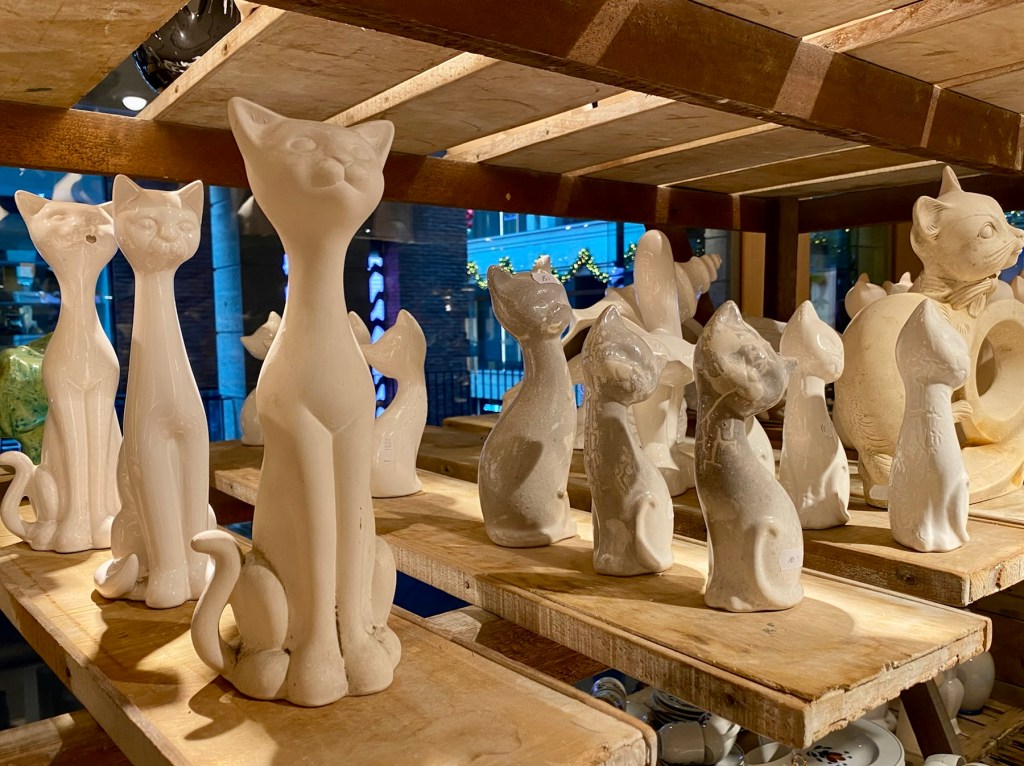
Walking back into the pedestrianised area, we came across an unusual looking pottery shop and wandered in for a browse. The shop is run by volunteers raising money for a Children’s charity. The stock comes from a derelict ceramics factory in the town. Decades ago, the owner literally locked the doors and left everything as it was. A ceramics factory had been on the site since the early 20th century as JEMA making lustreware figurines. A useless fact – JEMA made figurines that were very like Hummels until the German Goebel manufacturer sued them.

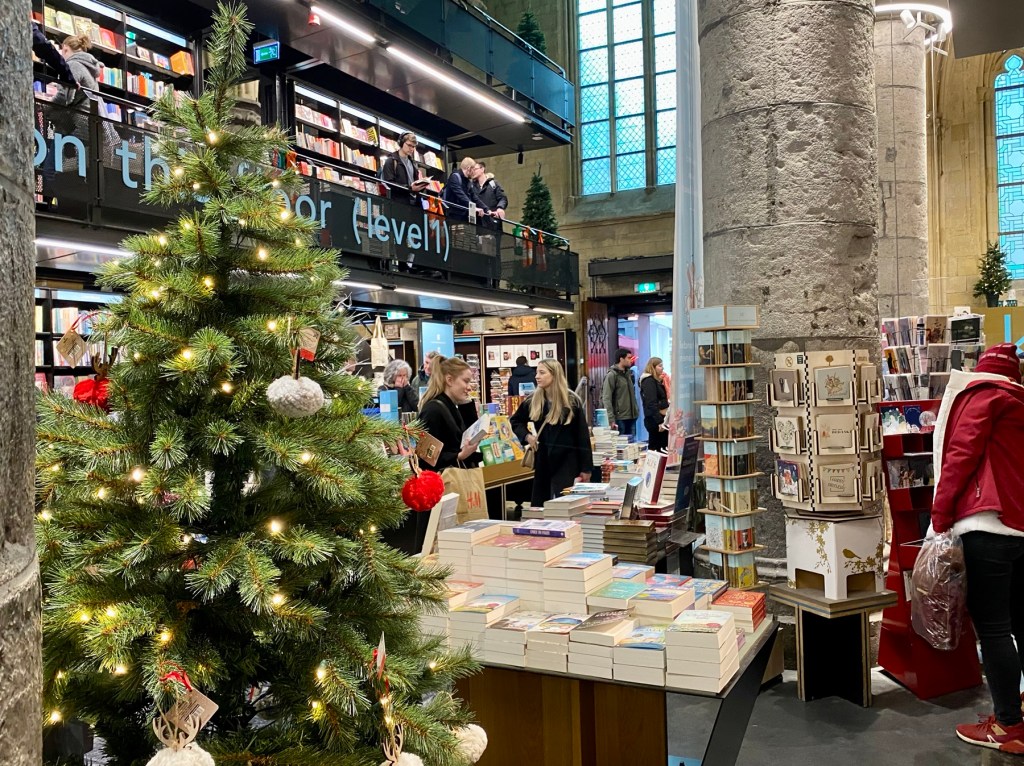
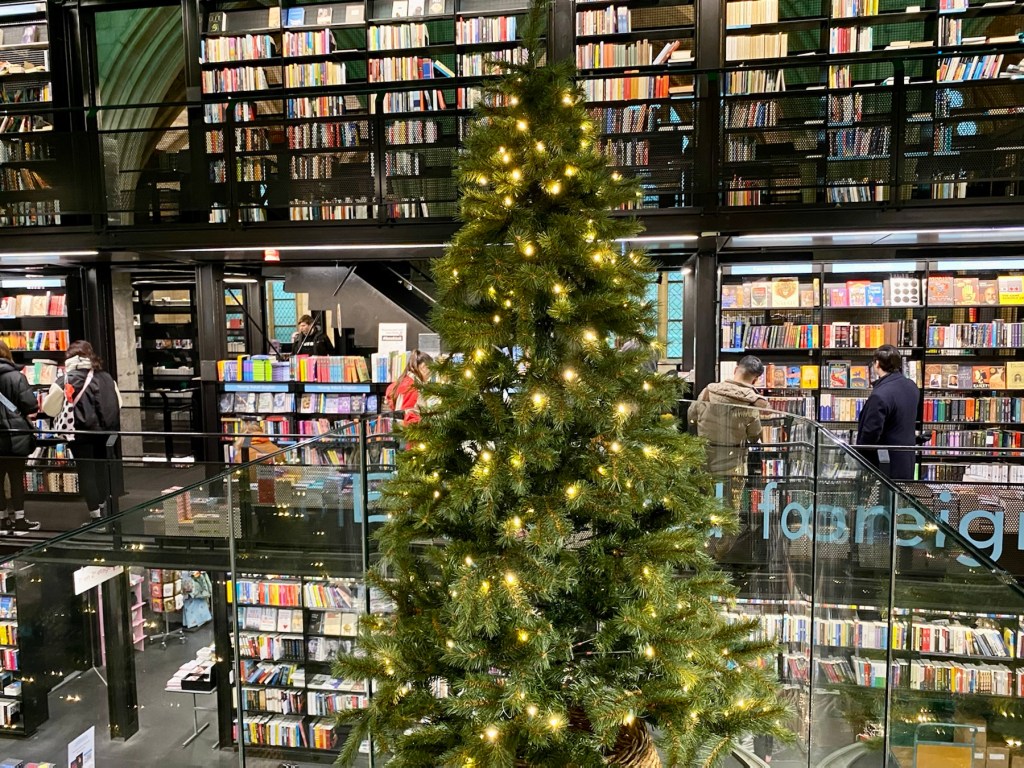
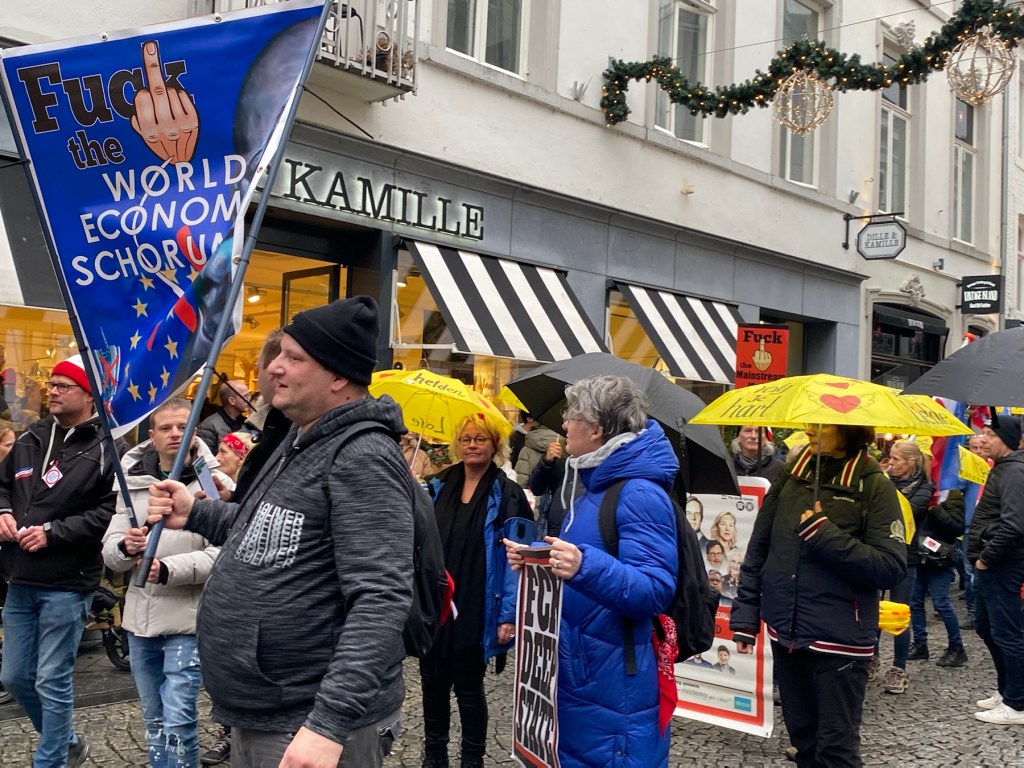
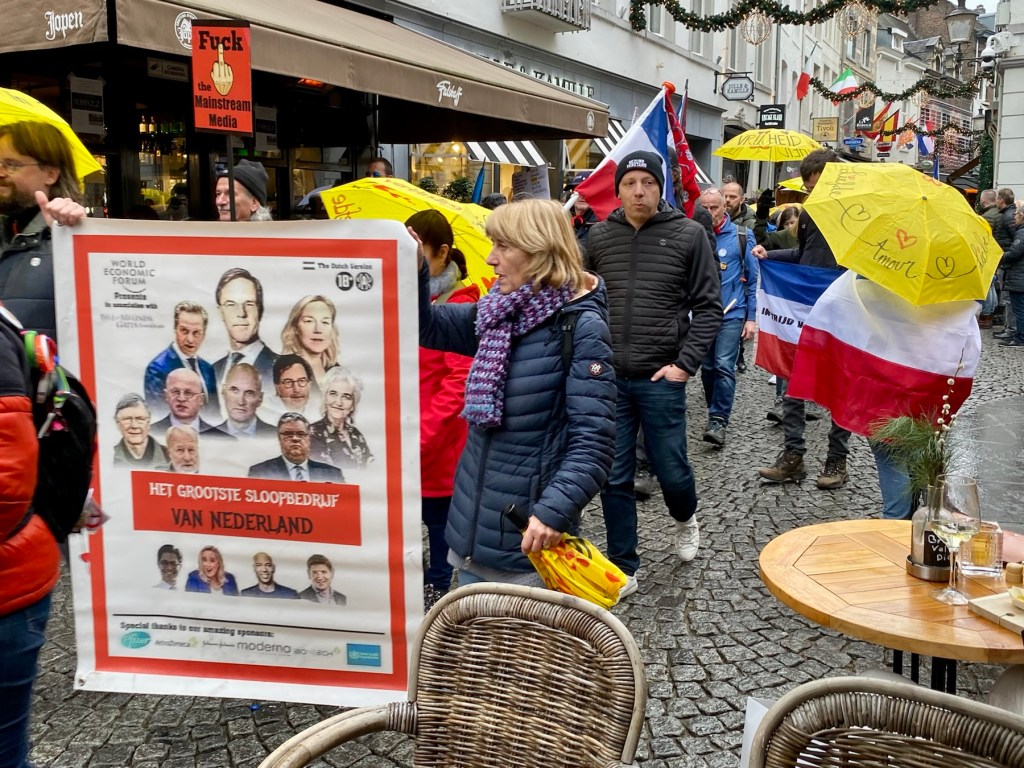
Next stop was Bookshop Dominicanen. You could lose yourself for hours in this converted church which we resisted. As we left we were caught up in a protest March which was very peaceful despite their flags, drums and posters. Of course, we don’t actually know what they were saying but the police officers on their bikes , escorting the participants, weren’t perturbed.

Exploring the back streets away from the tourist ‘Magical Lights Trail’ we came across a cafe advertising ‘the best coffee in the world’ so John had to stop and try some. We were greeted by a very helpful lady who had obviously been indulging in the local Wiet. Various options on how best to drink espresso were provided followed by a long ramble about the correct way to orientate a table fork. John agreed it was one of the best coffees he has ever tasted and we are now fork etiquette experts.

We do love Maastricht and not just for the free samples we have indulged in – cheese, pancakes filled with lemon and fruit compotes, fruit teas. Friendly bus drivers are included too. Unfortunately, frites and mayo weren’t free so points have been deducted.

Final thoughts from Europe!

So, we stayed in five countries while we’ve been away, starting in France, ending in the Netherlands and fitting Germany, Austria and Switzerland in the middle!

There was much coverage of the death of Queen Elizabeth, on televisions and radios. We weren’t expecting that, neither did we expect expressions of sympathy from people that crossed our paths. It really brought home how highly regarded her majesty was outside the UK.

I think we made it clear that cycling in mainland Europe is generally a joy. As to the roads? I’m not sure we saw a pothole. The journey home from Harwich, while not a joy, was more pleasant than the M25 but the state of the A120 meant we knew we were home!

Since we left, almost two weeks ago, probably 90% of our meals have involved cheese. Porridge is a bit of a shock for breakfast, as is making our own meals and clearing up after ourselves.

As has become usual, we thought we’d record our most memorable thoughts.

Starting with Ken. He pays tribute to his car for its fortitude and resilience in transporting them to a place of great infrastructure maintenance and putting up with the potholes on the M20 on the return journey without complaint. All more exceptional because Ken does not have a great track record of caring for his cars

Jacky just loves the Bodensee, the weather was fantastic, the scenery stunning and, she believes, she was blessed with good company! She will also remember the many lengthy debates over which route to take!

John gives the award of ‘Best cleanliness and maintenance’ to Germany and he quite likes that you can tell when you leave Germany for Belgium. It has nothing to do with border signs and everything to do with a significant change in the quality of the road surface.

As to Kim, she had carefully worked out where she could put her bike on a train at every stage of the holiday and didn’t consider it once.

And, although a day late in publishing, happy birthday to Ken

Harwich here we come

Despite our best intentions, traffic was against us today. We could see continuous tail lights from our hotel window, but instead of making the sensible decision and having a lie in, we headed out and queued along with everyone else

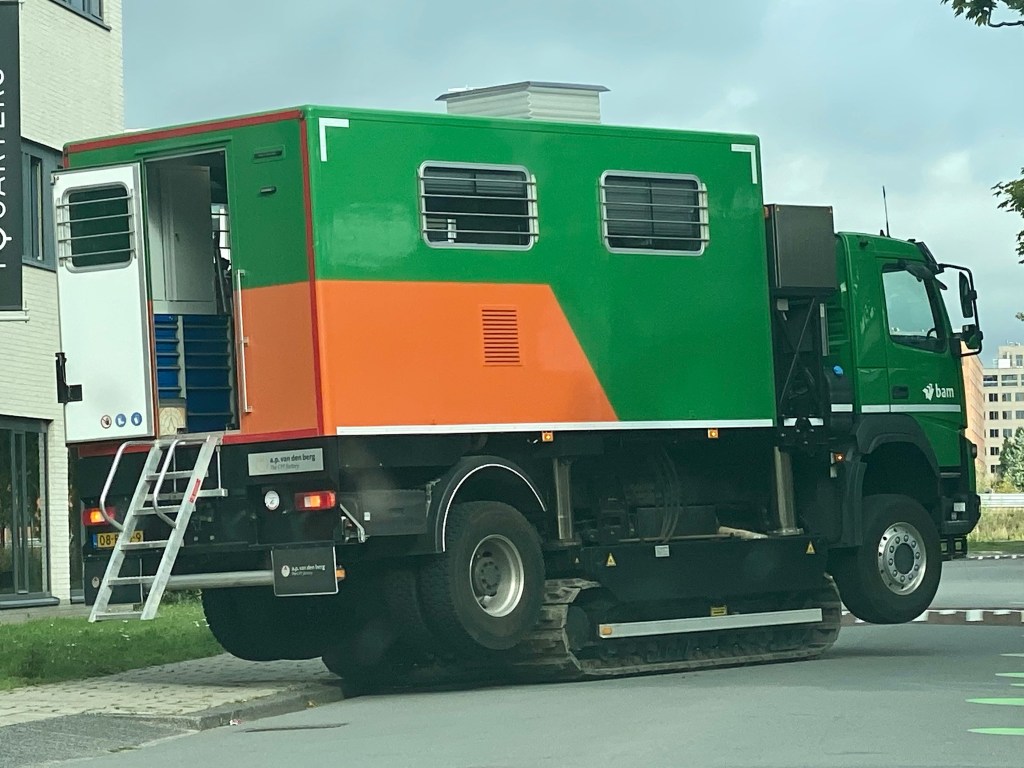
Tip of the day – never trust Google to take you to a supermarket in a foreign country, particularly one not known for its out of town hypermarkets. We found ourselves illegally parked in an Amsterdam suburb while John got his supermarket fix in a store smaller than our dining room table, The upside was that Kim stayed with the car and watched a truck transform, from wheeled to tracked. A vehicle Thunderbirds would be proud of.

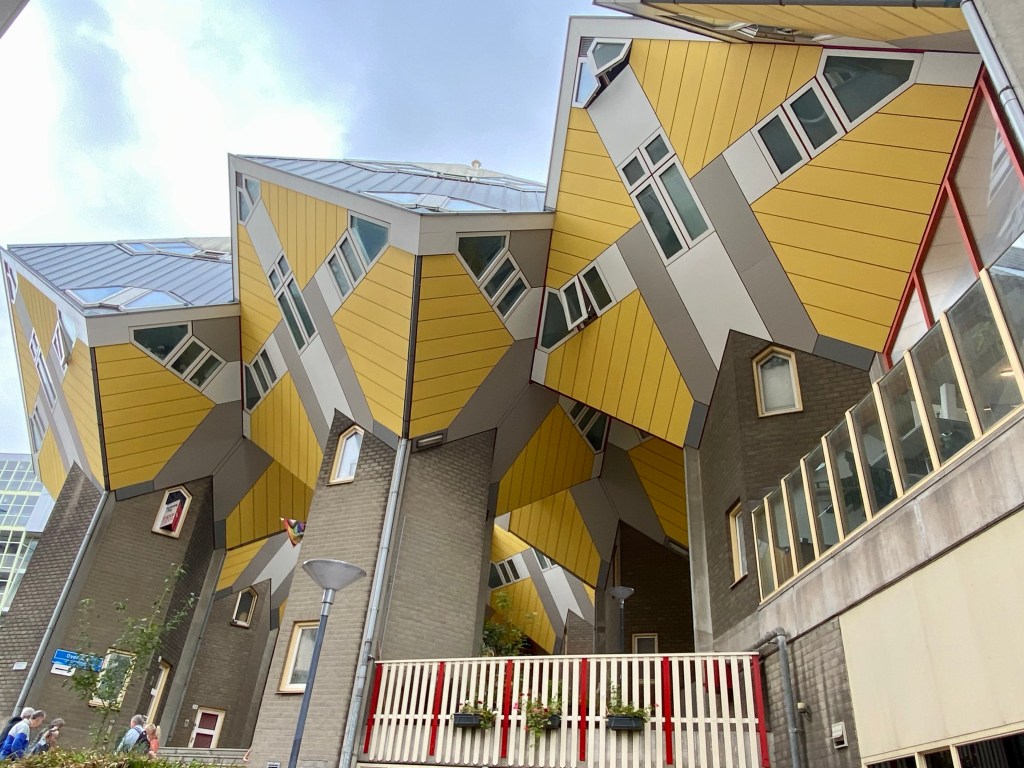
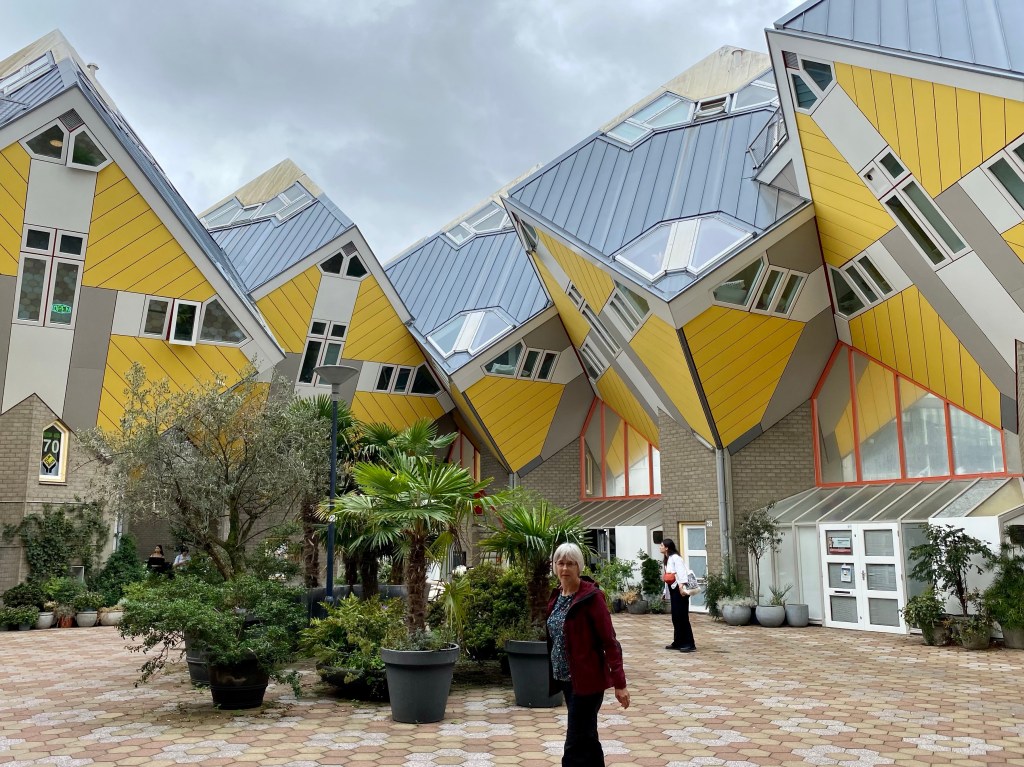
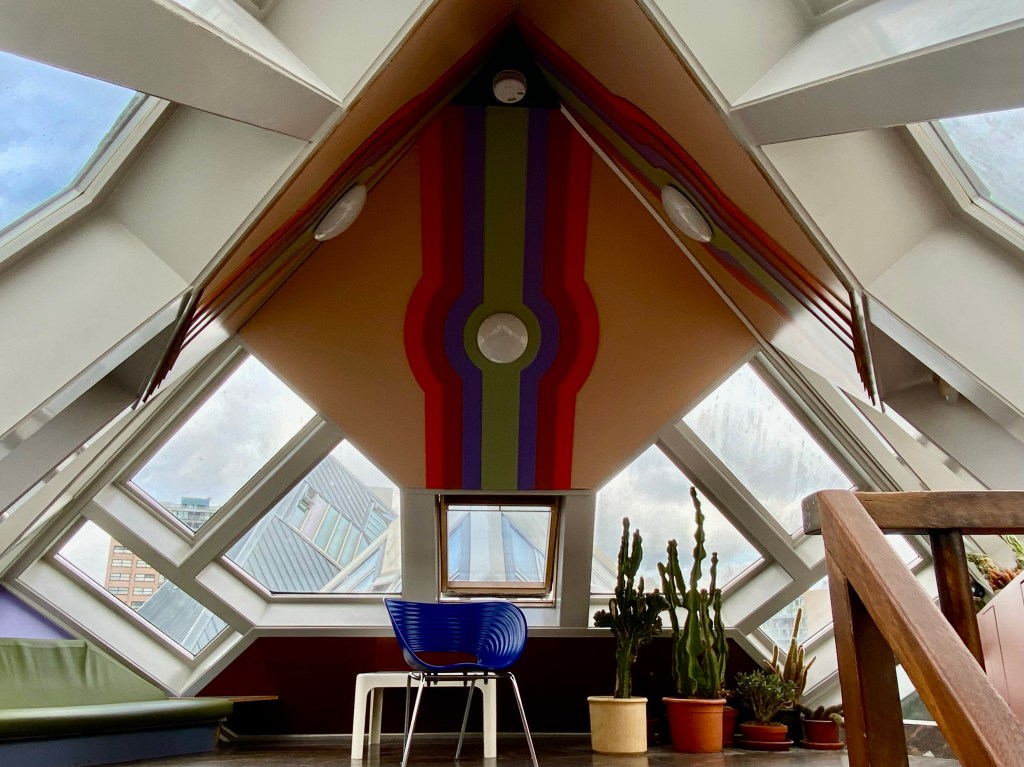
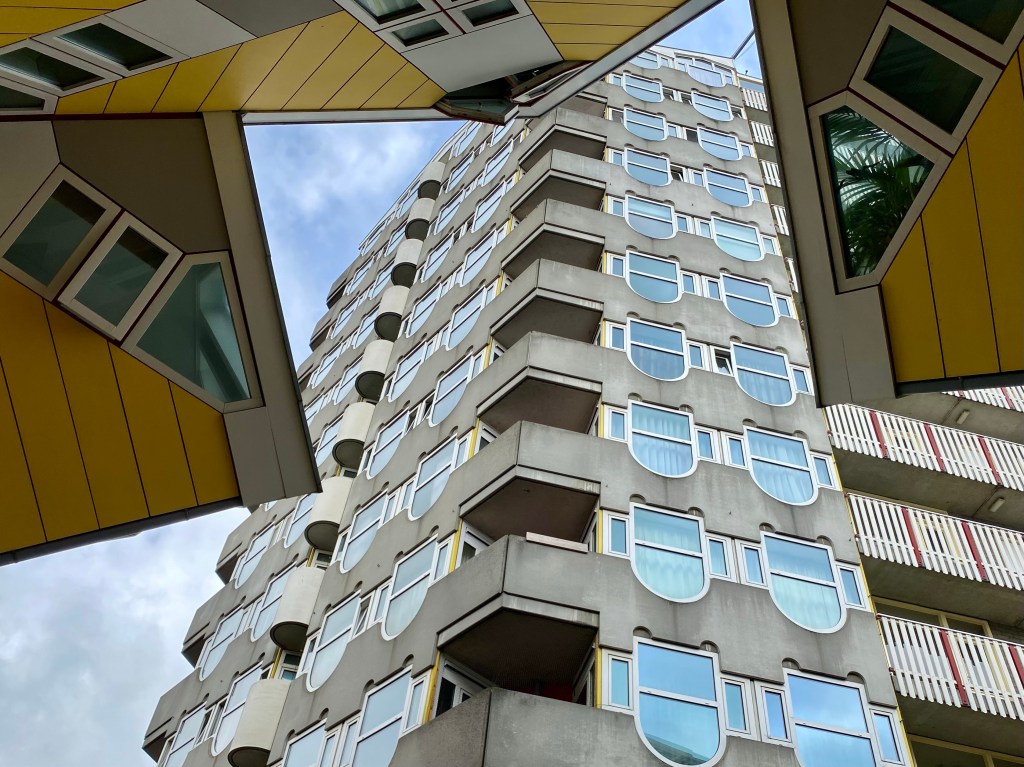
Our main stop took us into the centre of Rotterdam, to the Cube House museum. Yesterday, there was a Tiny House exhibit at the Floriade, today it was cubes balanced over a main road. Both have a similar philosophy, how much space (and stuff) do you actually need?

Architect Piet Bloom’s design revolves around cubes tilted at almost 45 degrees to create high density housing on a smaller footprint. The cubes maximise internal space and light with the design intended to represent a tree. The row of trees then become a forest

The idea didn’t really take off and only 38 out of the original 74 were built. According to the museum’s FAQ, the cubes are inhabited by people who are creative, open-minded and flexible – we think that means you’re able to negotiate tight spaces and steep steps without injuring yourself.

Floriade Expo 2022 – Growing Green Cities

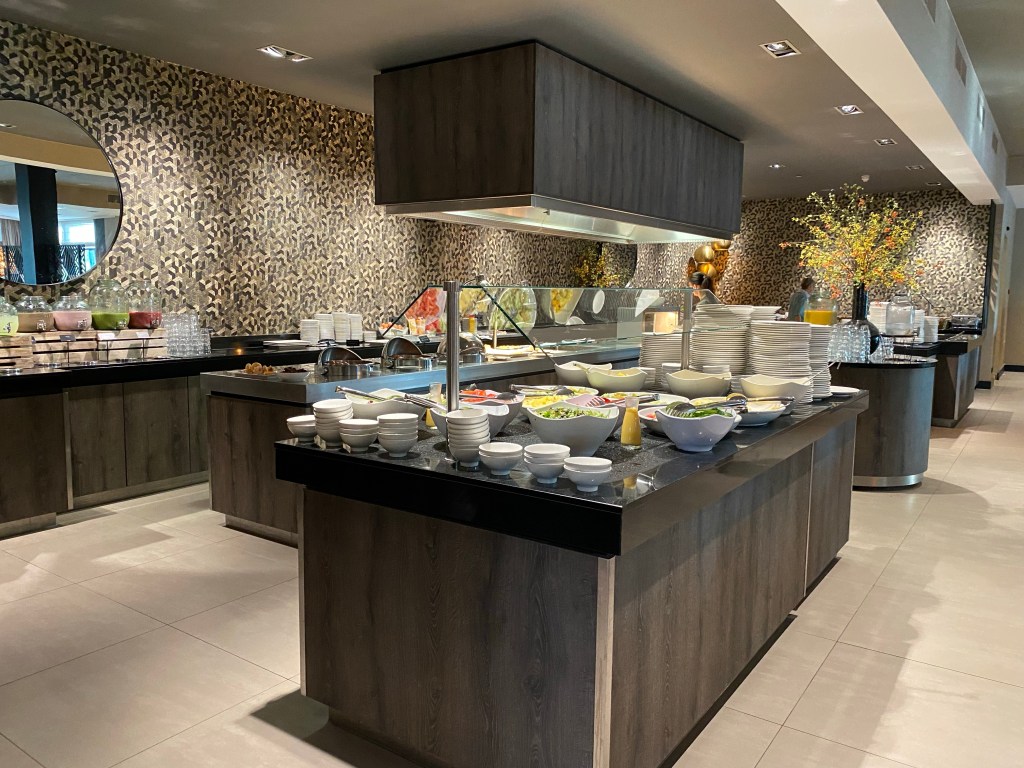
Today was our ‘once in a lifetime’ trip to the Floriade. It’s been held every 10 years since 1952 and we thought ‘it’s now or never’. The site was a short ride along dedicated cycle routes – shall we stop mentioning how lovely cycling is over here? To add to our joy, there were blue skies and the biggest breakfast buffet ever!

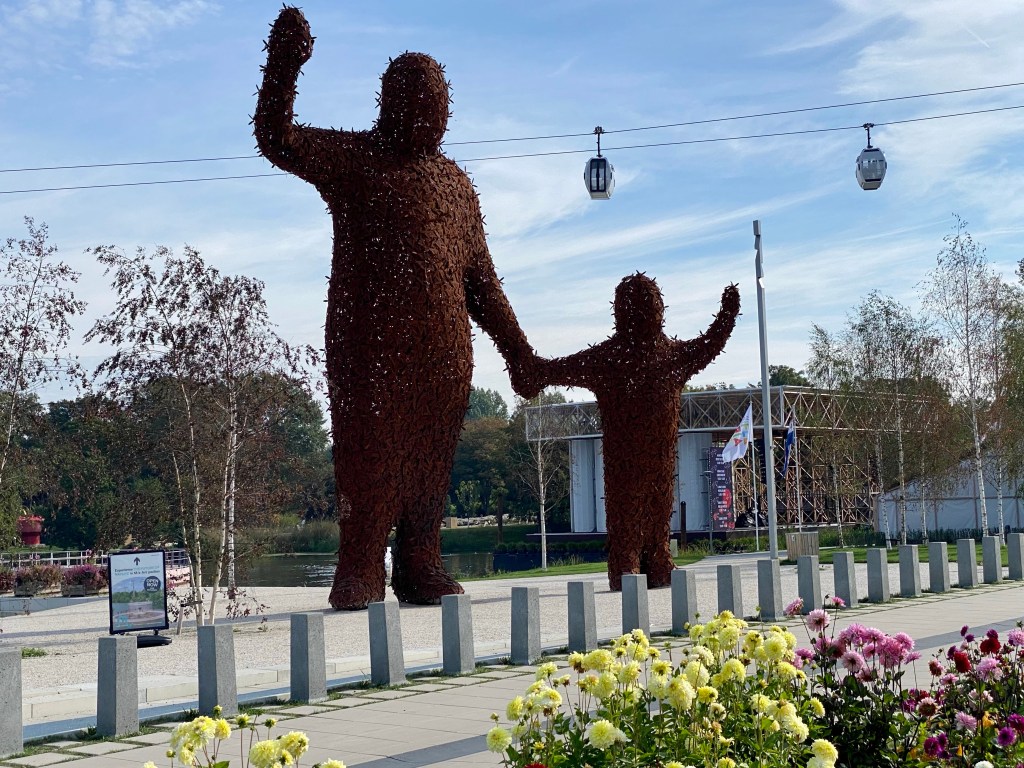
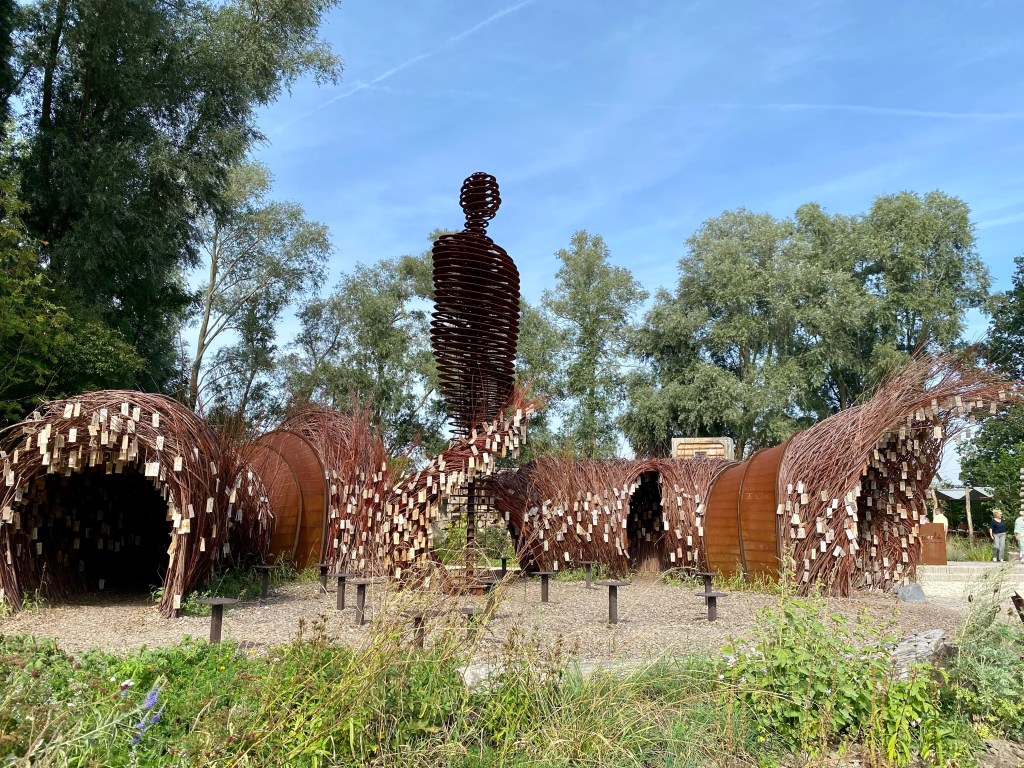
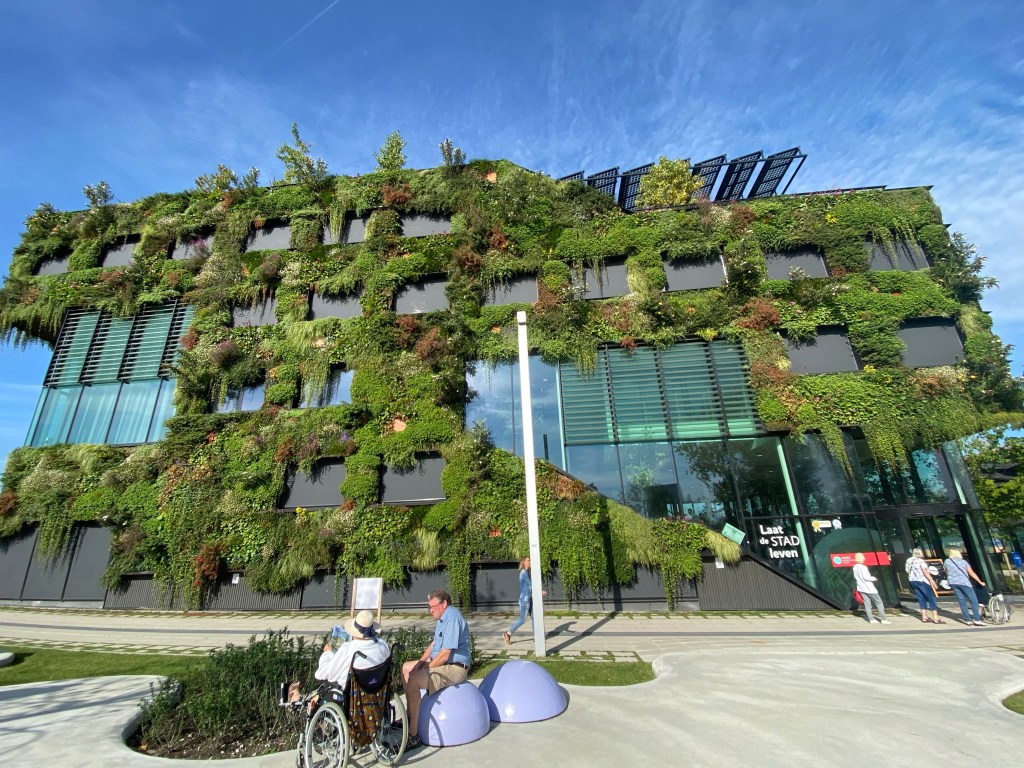
Anyway, how to describe the Floriade? It’s like an RHS flower show on a significantly larger scale with less attention to perfection and a greater focus on both environment and sustainability. It has been on since April and finishes in 3 weeks, some of the exhibits are tired and/or closed. Saying that, it was well worth the visit. The two giant figures greeting visitors are covered with 10,000 corten steel bees, setting the tone for our visit

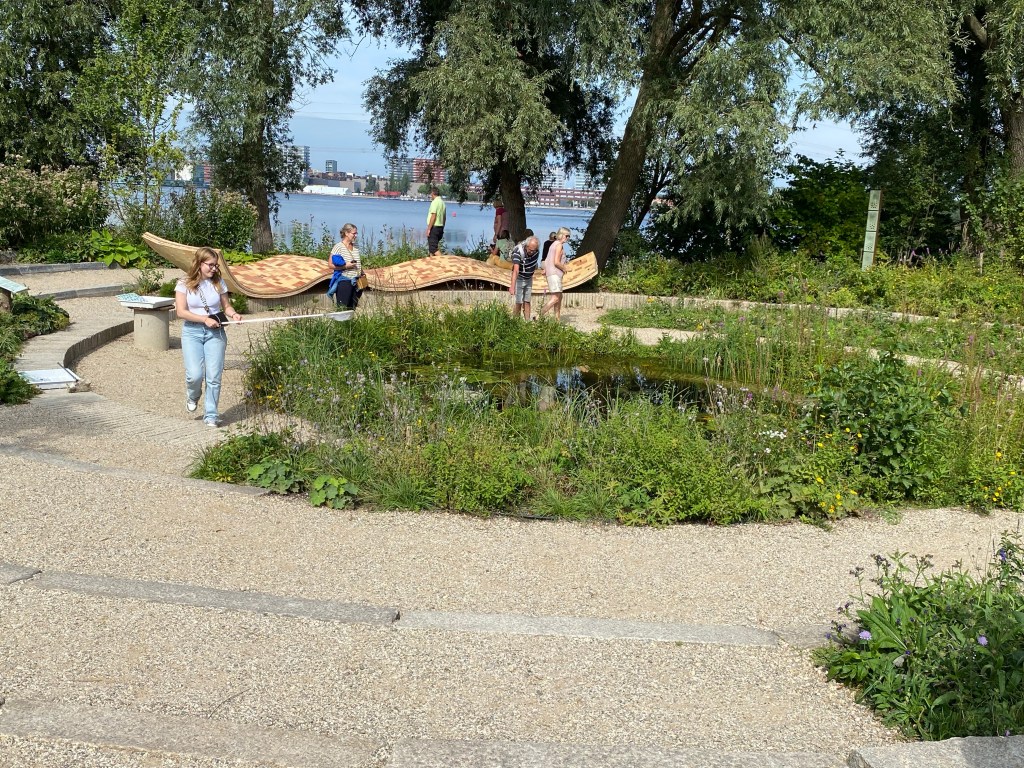
When the exhibition finishes, much will remain as infrastructure and green spaces for a residential development planned over the next few years. There are paths and roads already in place as well as existing mature trees that have been incorporated into the layout. Some of it seemed a little strange and disjointed until we understood what we were experiencing.

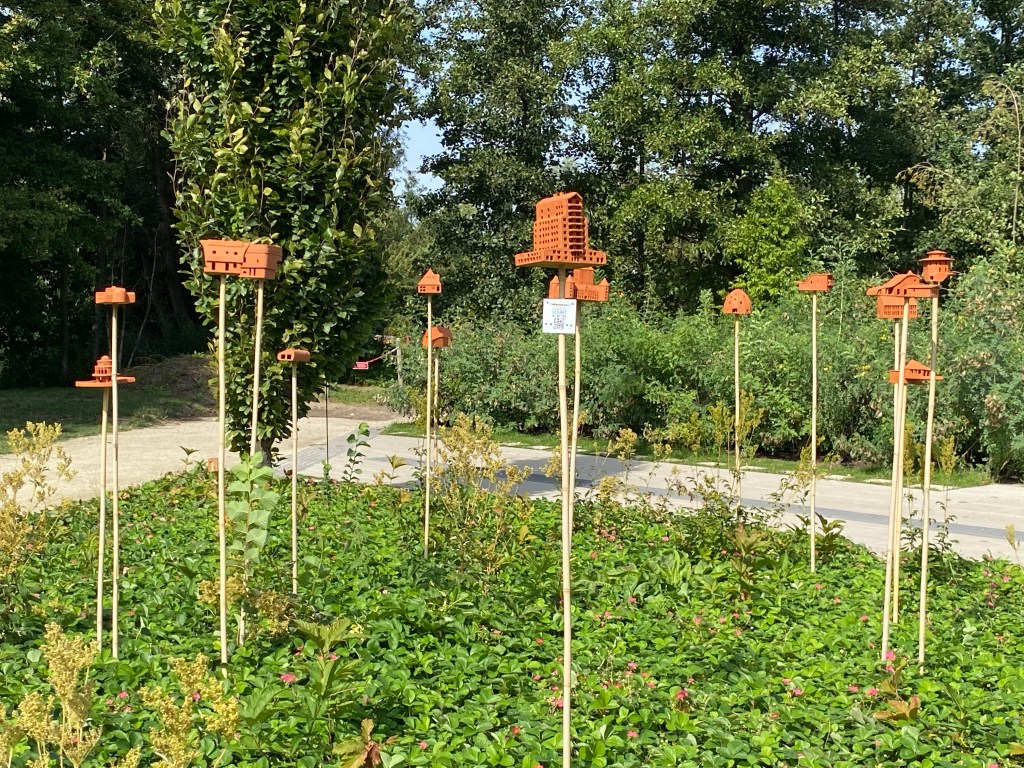
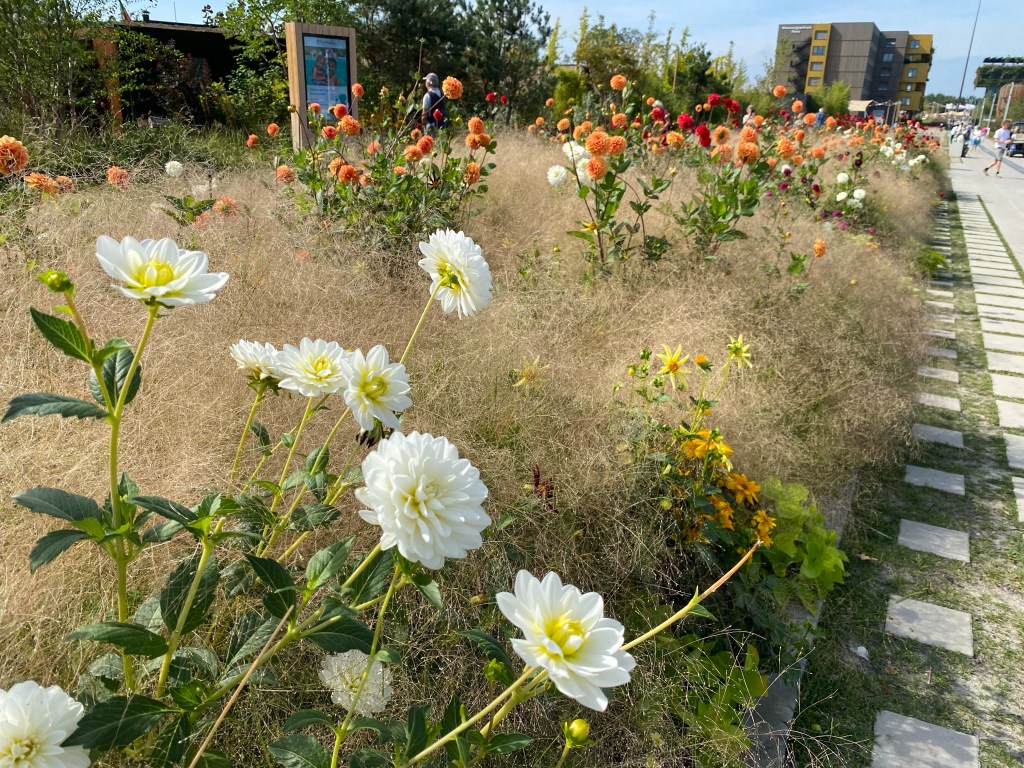
The theme around caring for your environment and building spaces for communities whilst support health and well-being was evident and the planting was humming with wildlife. There is a 3.2km bee corridor around the exhibition which is planted to ensure there is something to pollinators and birds throughout the year.

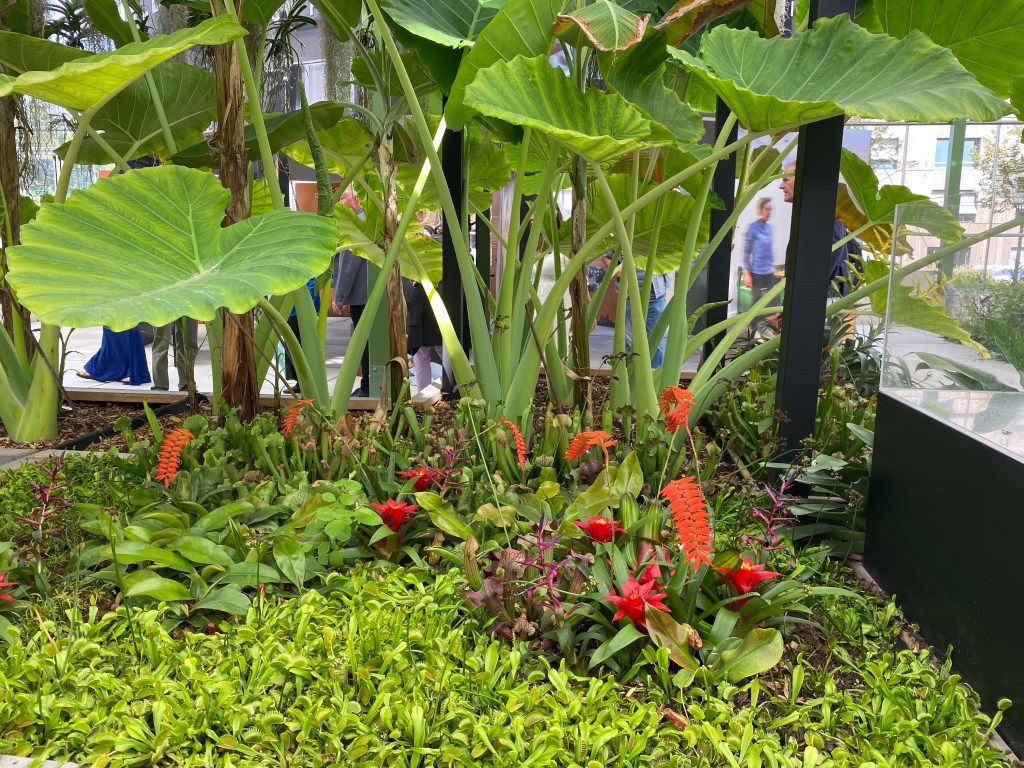
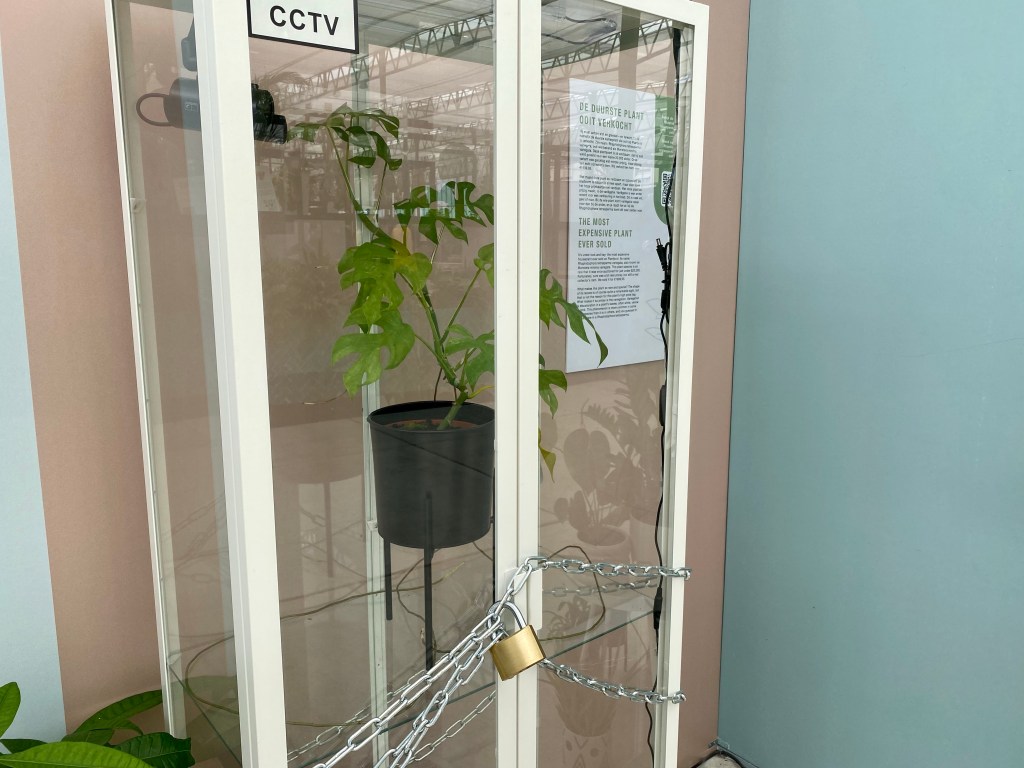
On our way out, we detoured into the Greenhouse. There were some colourful displays of indoor plants as well as rooms filled with foliage. We were rather puzzled by an IKEA display cabinet padlocked shut. John thought it was a safety issue until we noticed it was the only one in a long line of cabinets. Then we saw two cameras recording us and read the accompanying notice. The solitary plant inside was a Monstera minima variegata, the most expensive houseplant ever sold with one selling for almost $20,000 at auction. The phrase ‘more money than sense’ springs to mind.

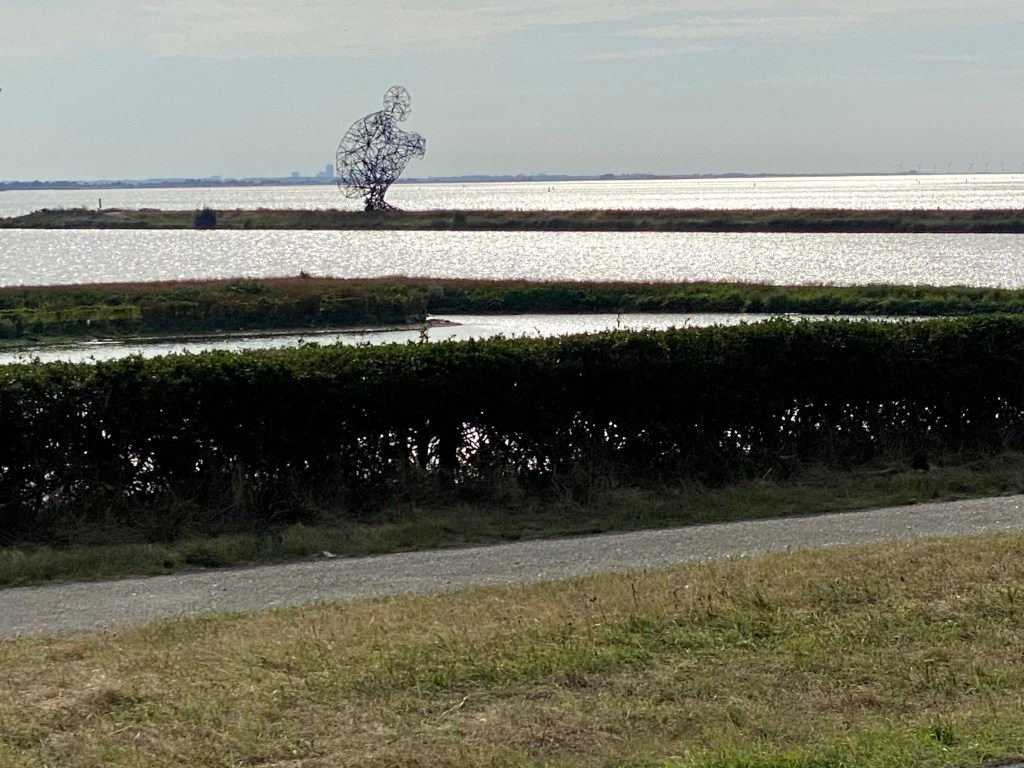
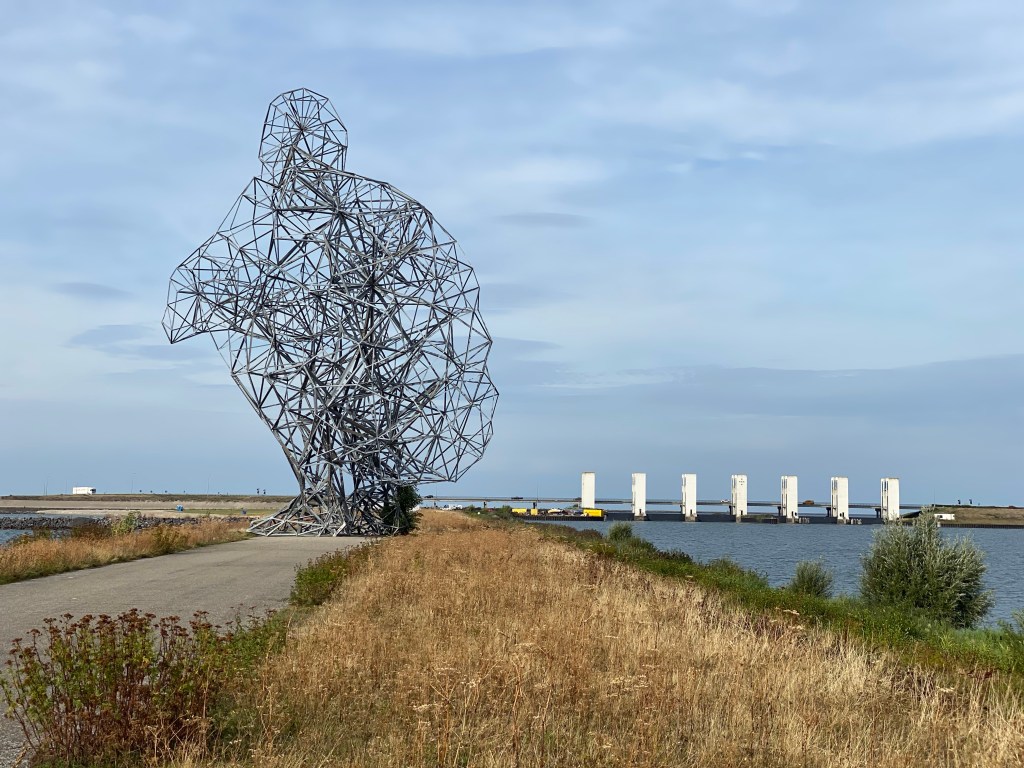
There is only so much time you can spend at an exhibition this vast so, this afternoon, we drove north to Lelystad to see Anthony Gormley’s ‘Exposure’ a steel structure that resembles a crouching human figure looking out over the Markermeer. But the closer you get the more abstract it becomes, once you reach its feet – your head are at only ankle height and you can see the structure is made from straight sections of Scottish power pylons that resemble the straight roads and canals in the area. The concept relates to being a fixed point in a moving world and as climate change causes sea levels to rise, the dike it is built on will be raised, slowly burying the work.