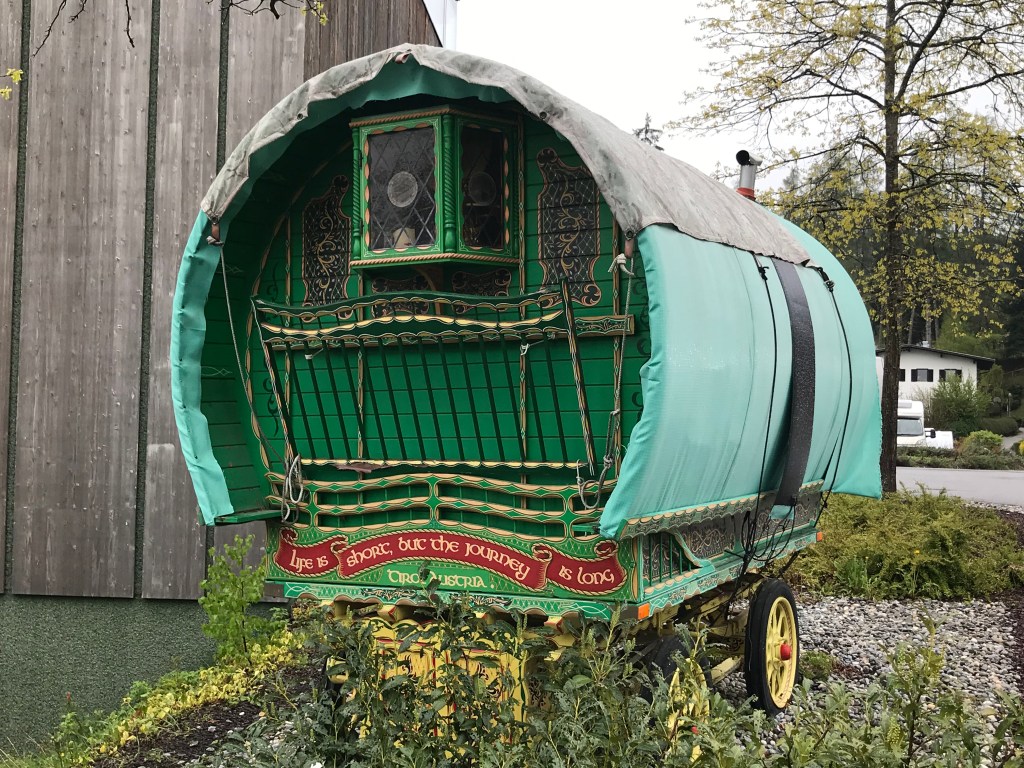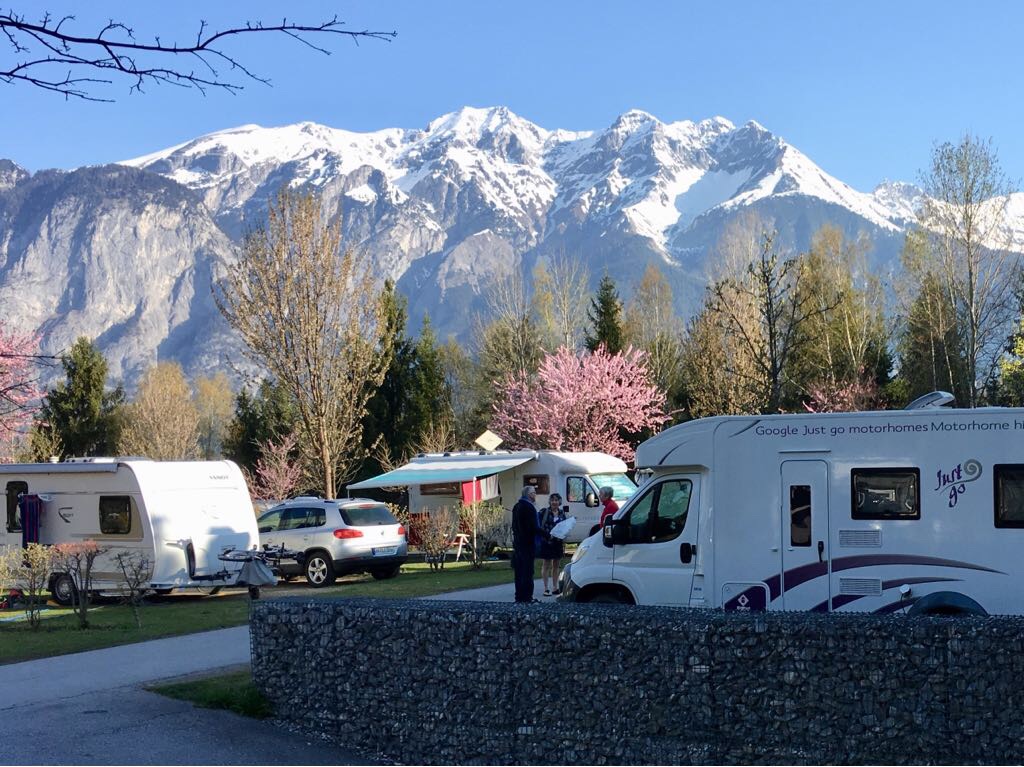
Luxembourg here we come…

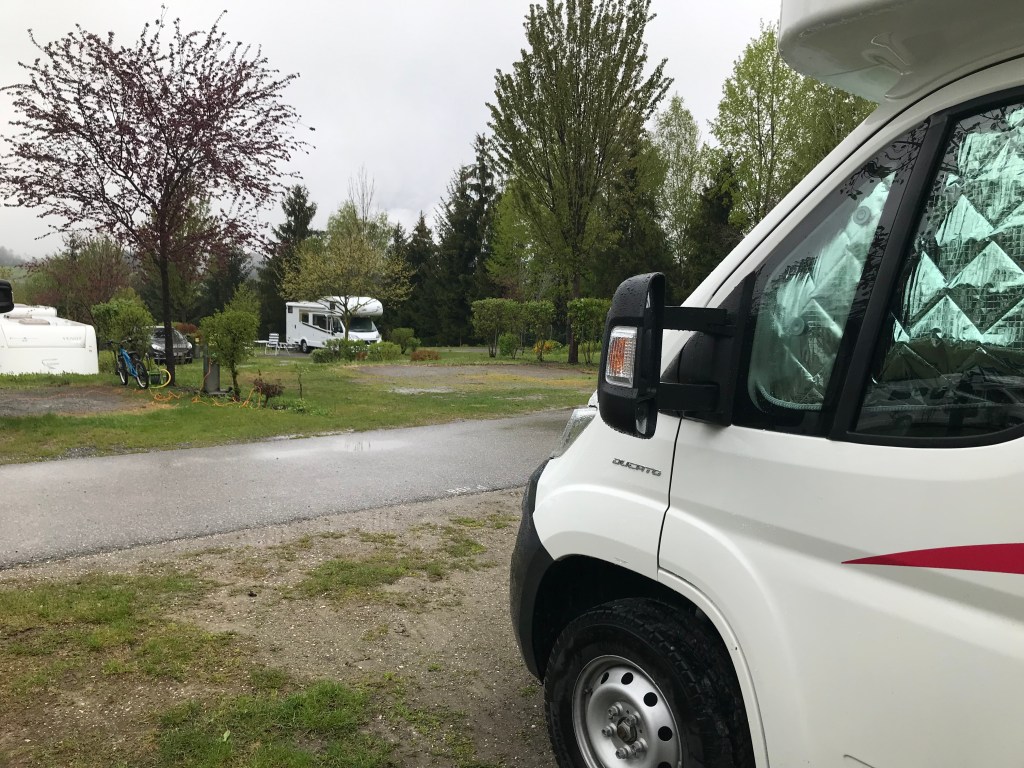
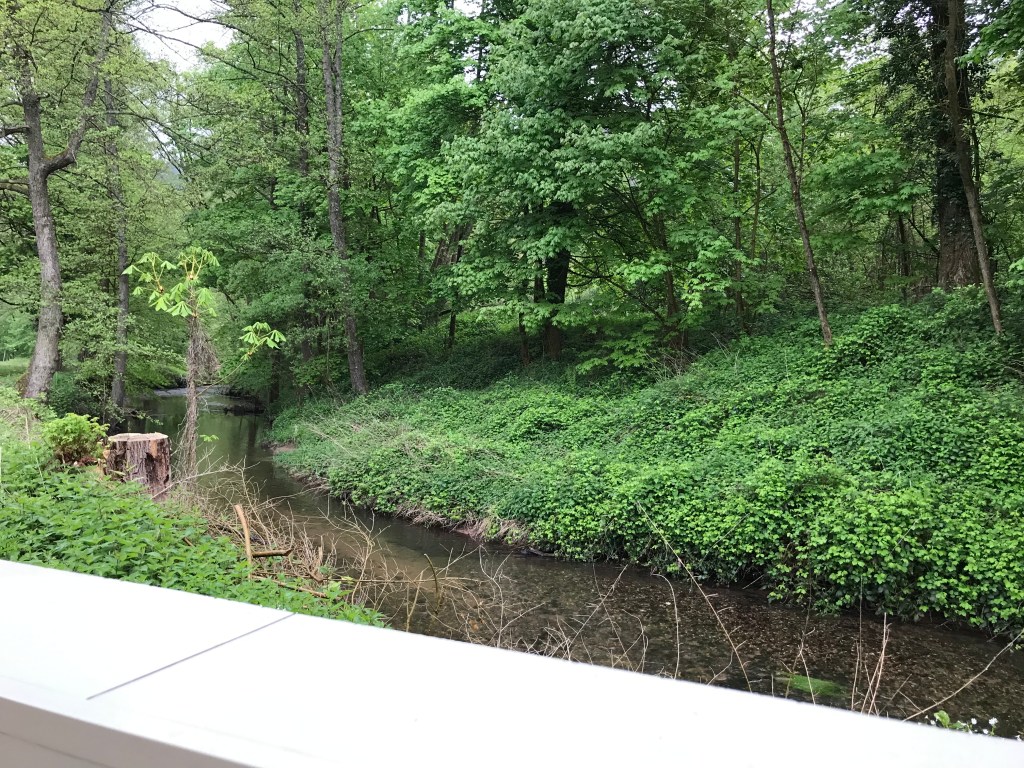
Another rainy night, and the downpour eased up just long enough to do the washing up and the view wasn’t too bad. It’s very rural and must be quite magical when the sun shines.

Kim thought she saw a stork this morning, apparently they have been reintroduced into the Alsace area around Strasbourg. There’s no photographic evidence but ‘it was definitely too big to be a heron’!
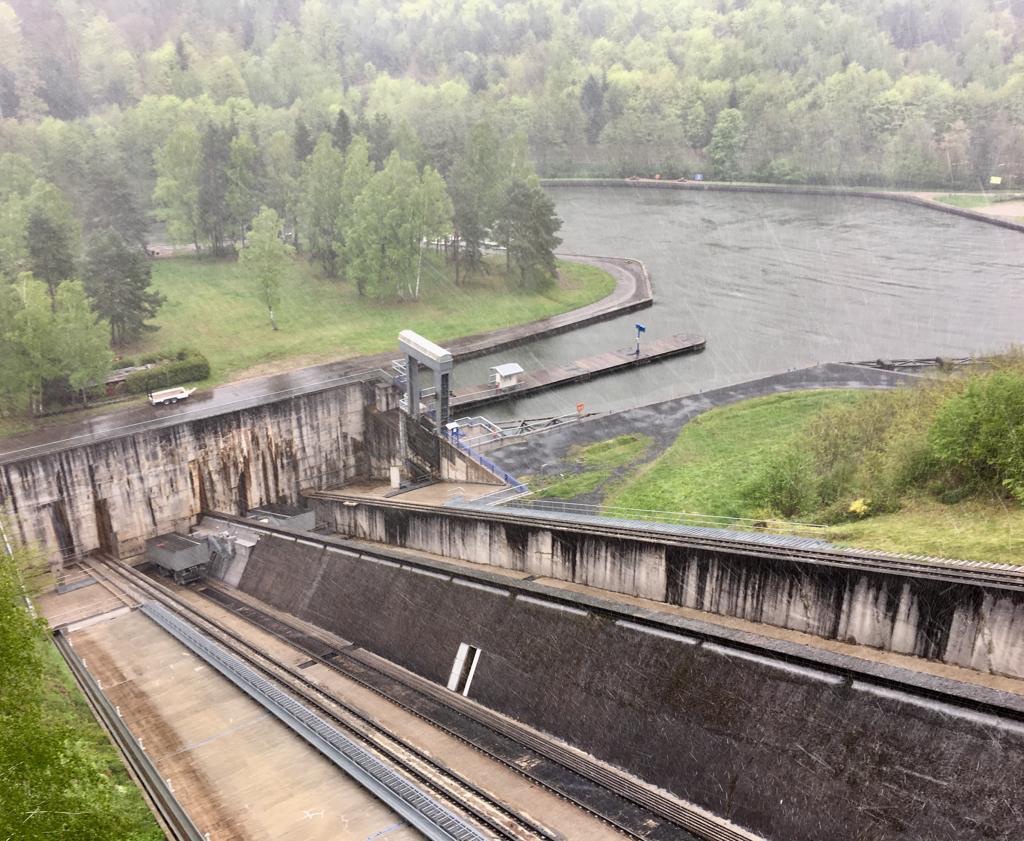
Next was the visit John had been waiting for, the St Louis-Arzviller inclined plane, An almost vertical boat lift located on the Marne au Rhine canal which enables the canal to cross the Vosges Mountains. It opened in 1969 replacing a run of 17 locks.

Google promised us a 15 minute walk along the canal, very cold and wet!
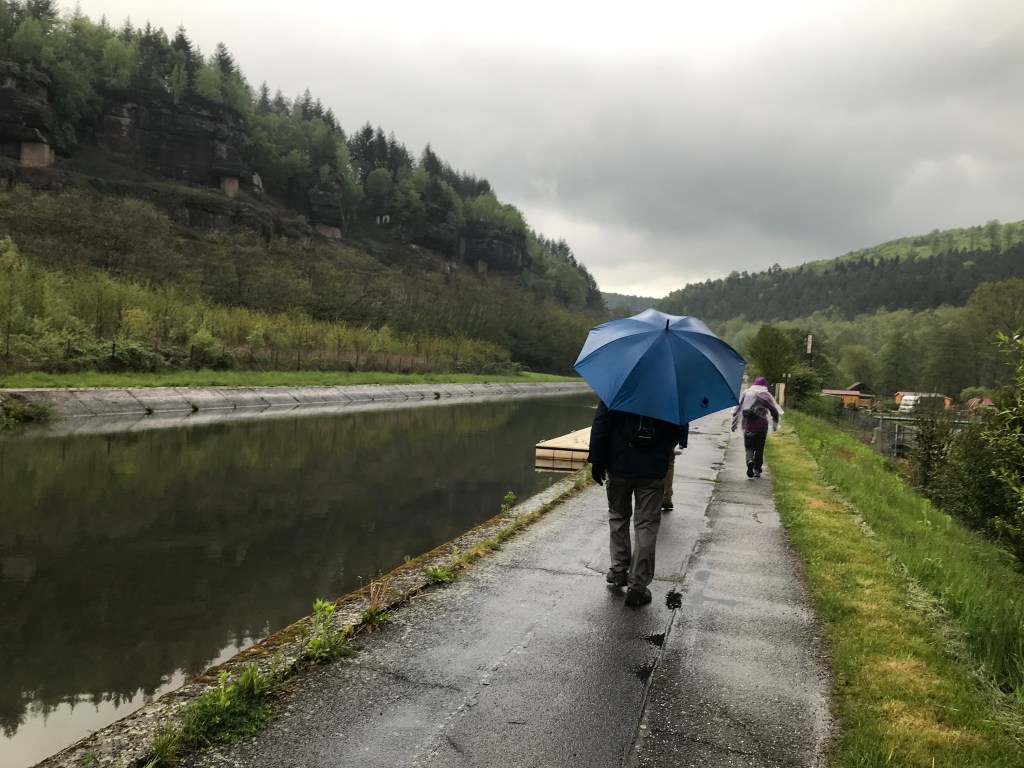
We couldn’t find a way through but were tantalisingly close.
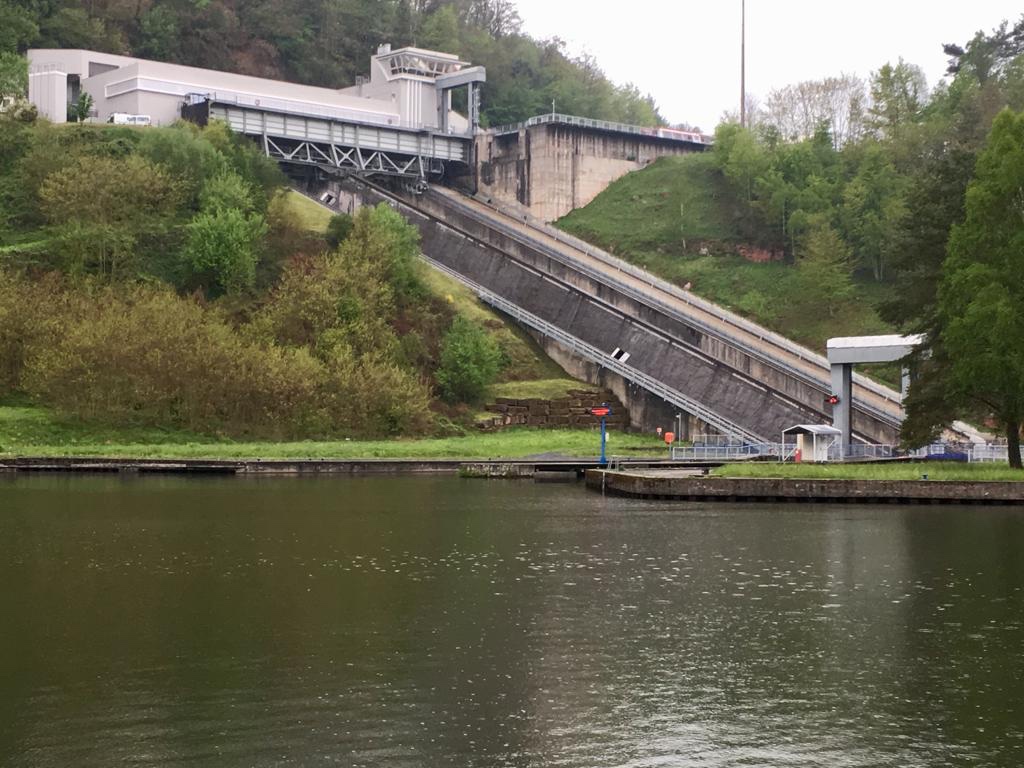
Finally our walk was abandoned and we drove up the hill. Caution was thrown to the wind and we parked as near to the entrance as we could in an area reserved for buses, It was very wet!
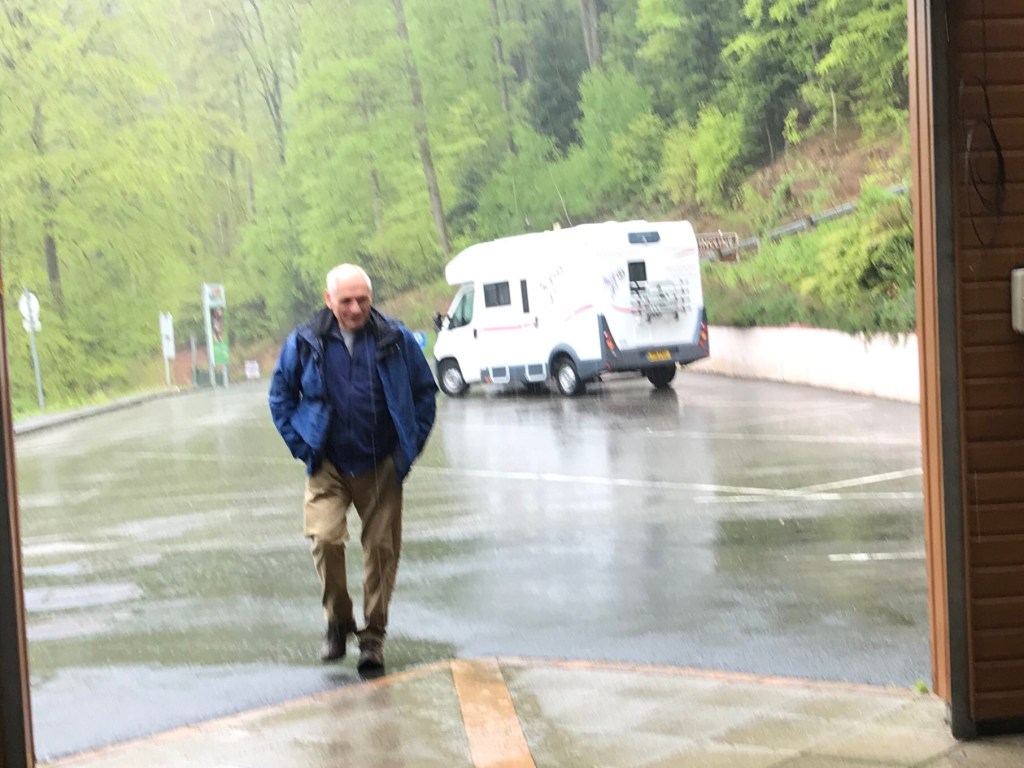
The weather was so bad, we didn’t have to pay to wander round.

This extraordinary piece of engineering lifts boats up a 44.5m climb across the Vosges Massif threshold in minutes.
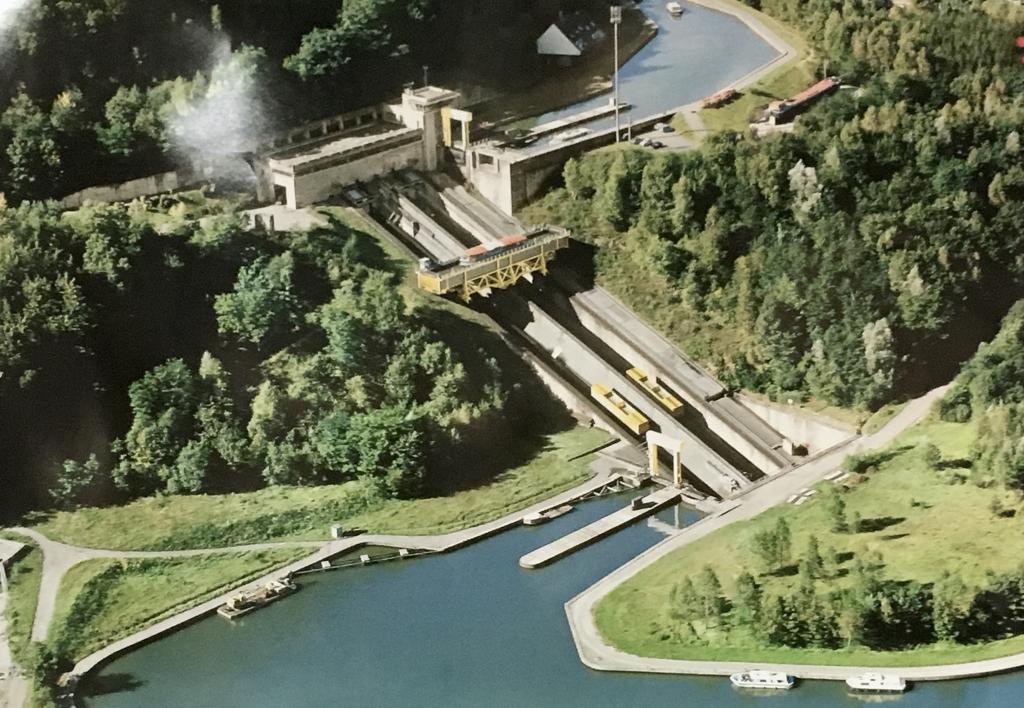
We’d hoped to do the boat trip but it was very cold and raining hailstones, have we mentioned the weather?
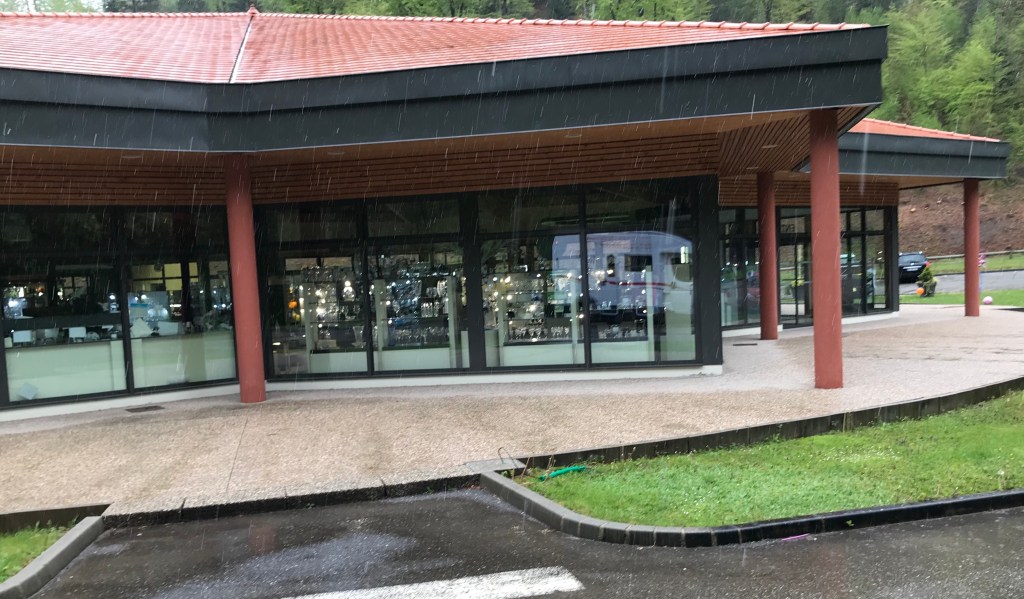
Just before reaching the Plan Incliné, we’d noticed a very shiny glass crystal shop and cafe and that was where we chose to dry off.
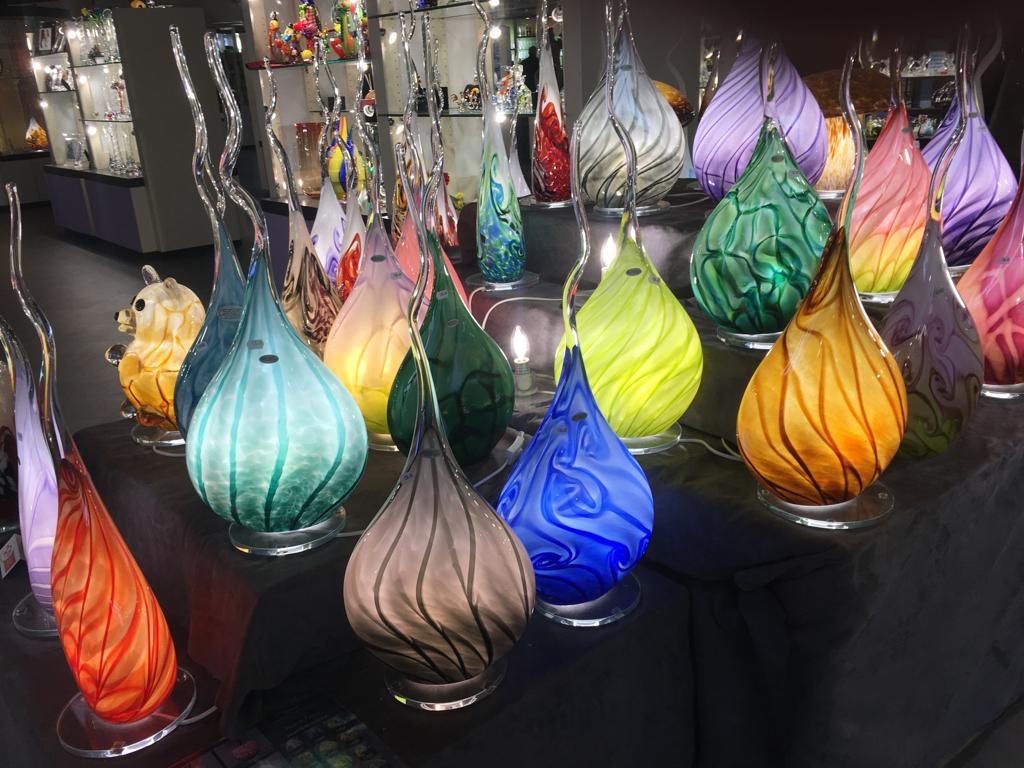
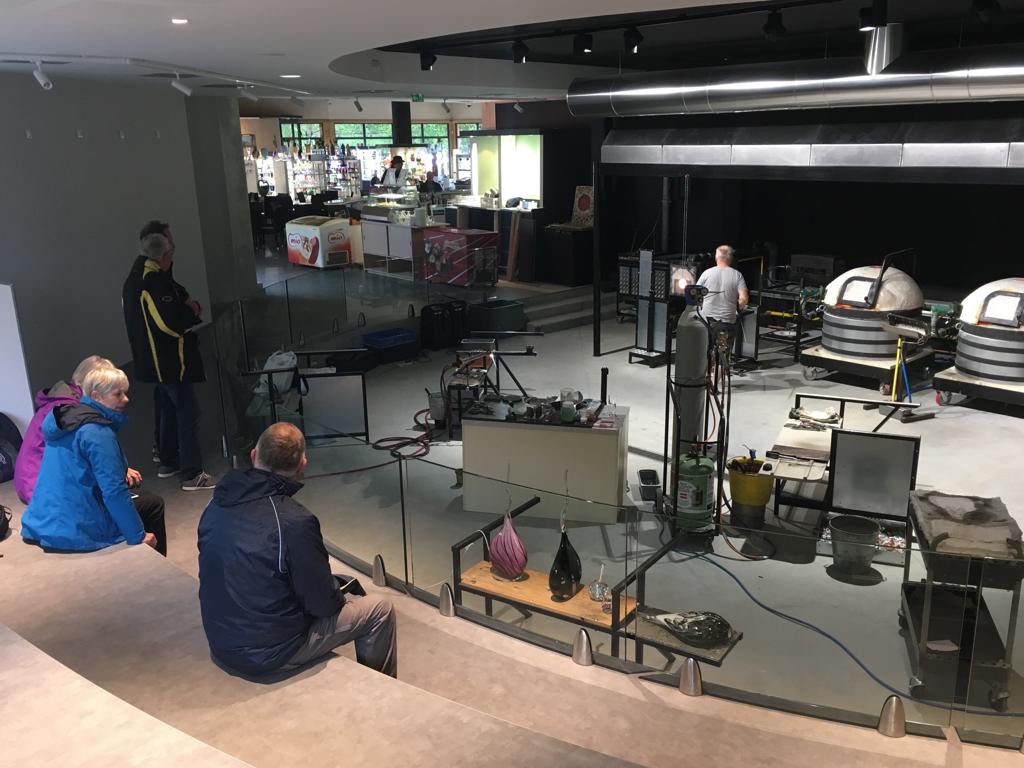
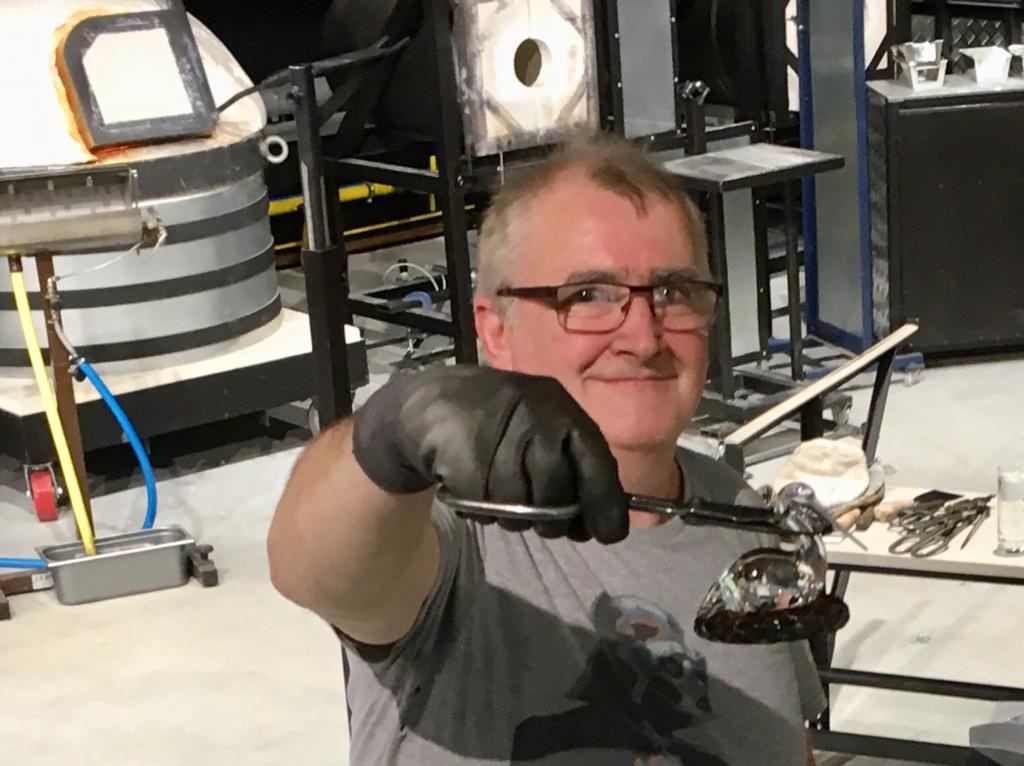
We arrived just in time to see a glass making demonstration. In about 10 minutes this talented man had made a very quirky glass stork. The best bit? It was warm in front of the furnaces and we started to steam gently as we dried out. There was a debate as to whether to stay there and make a mad dash to Calais on Tuesday!
Some of the glass was truly stunning. Kim was taken with the spiders which were about the size of your hand. Luckily we didn’t need to bring one home
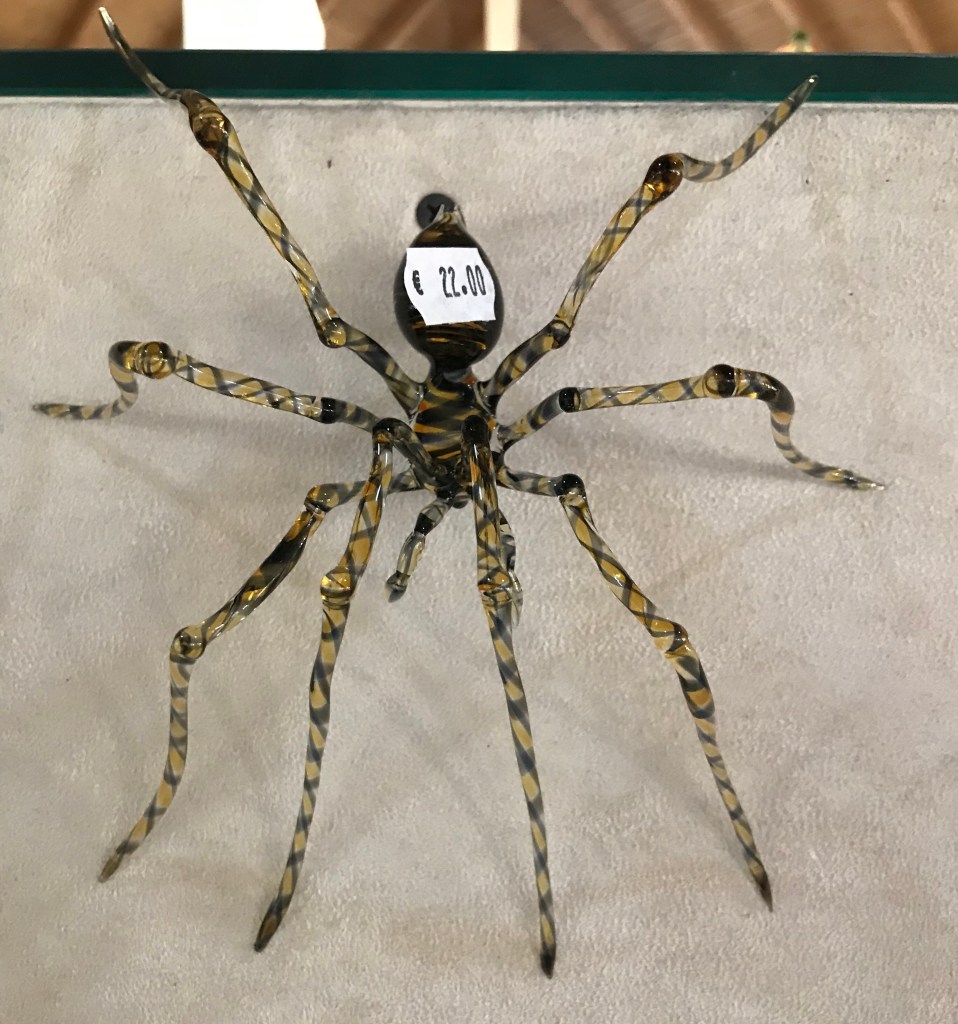
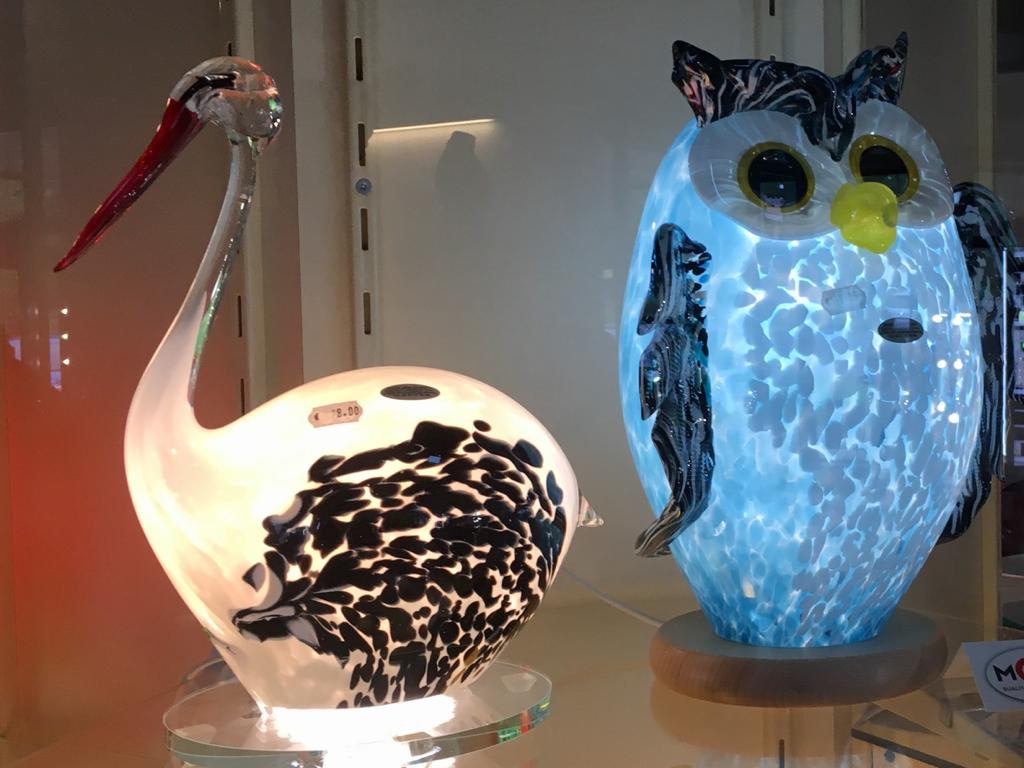
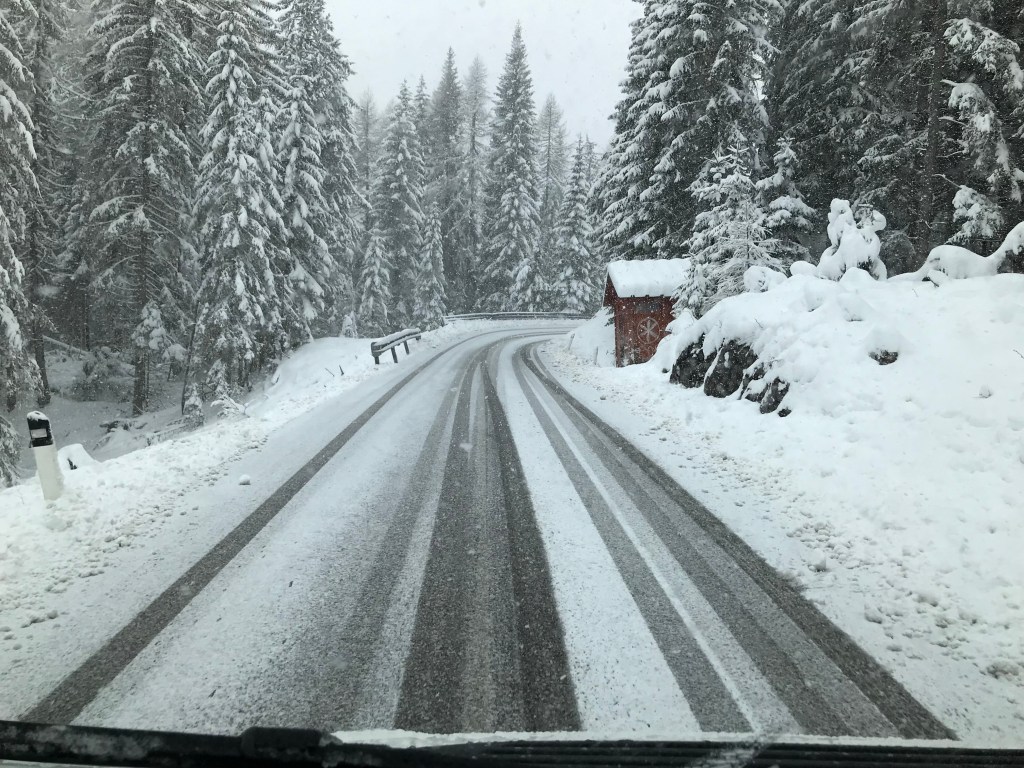
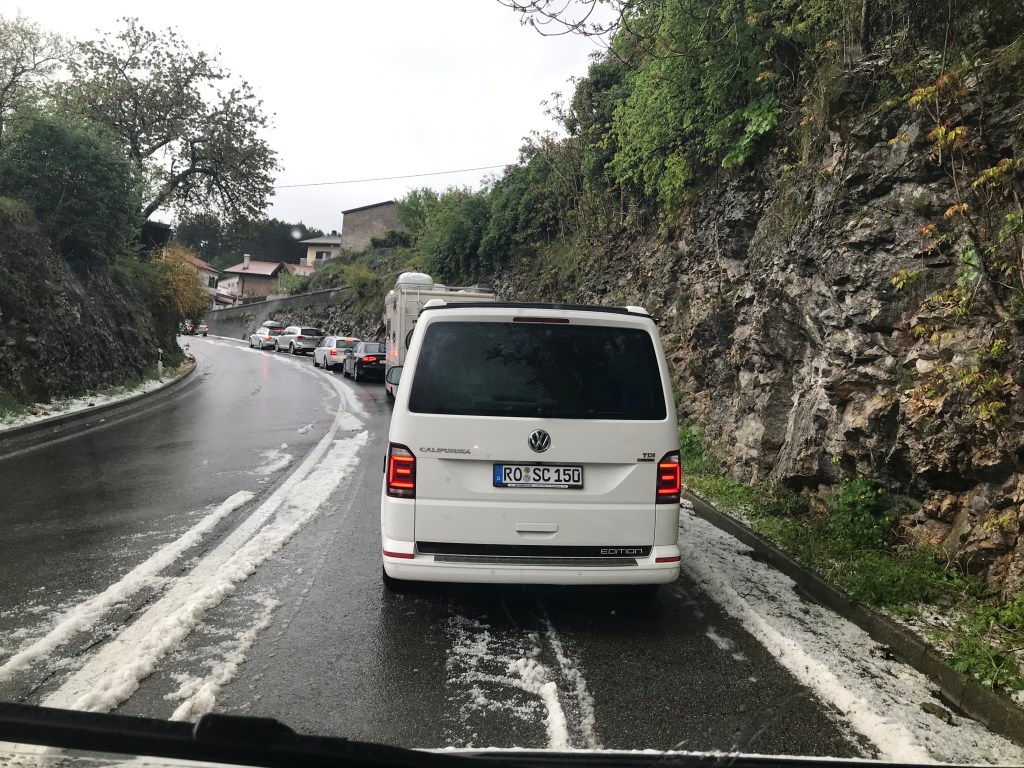
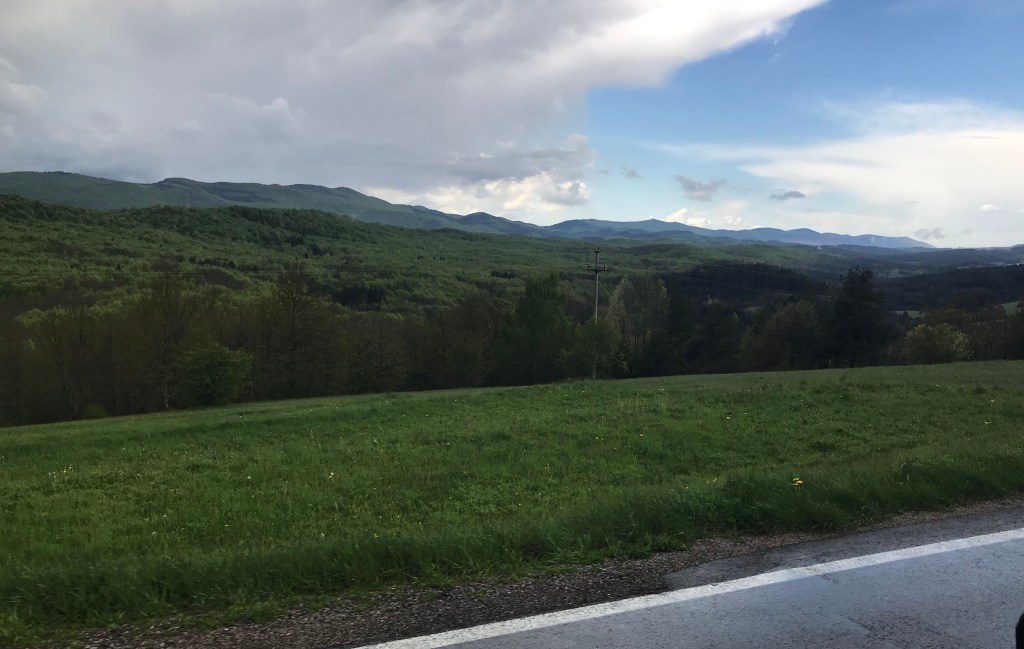
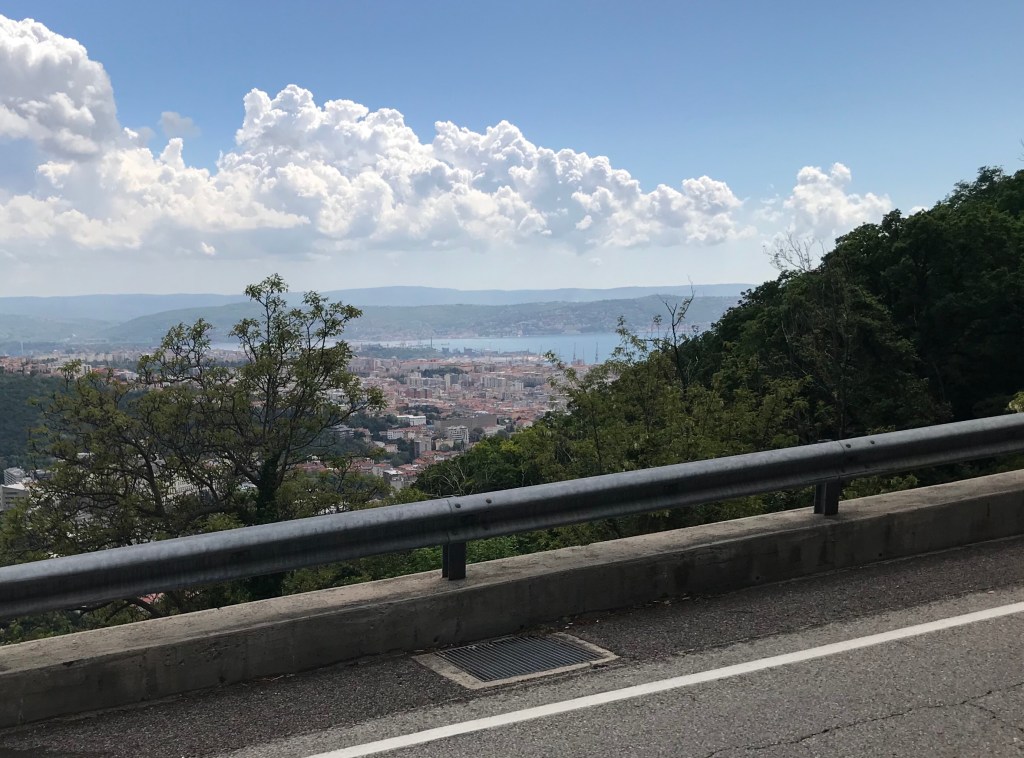
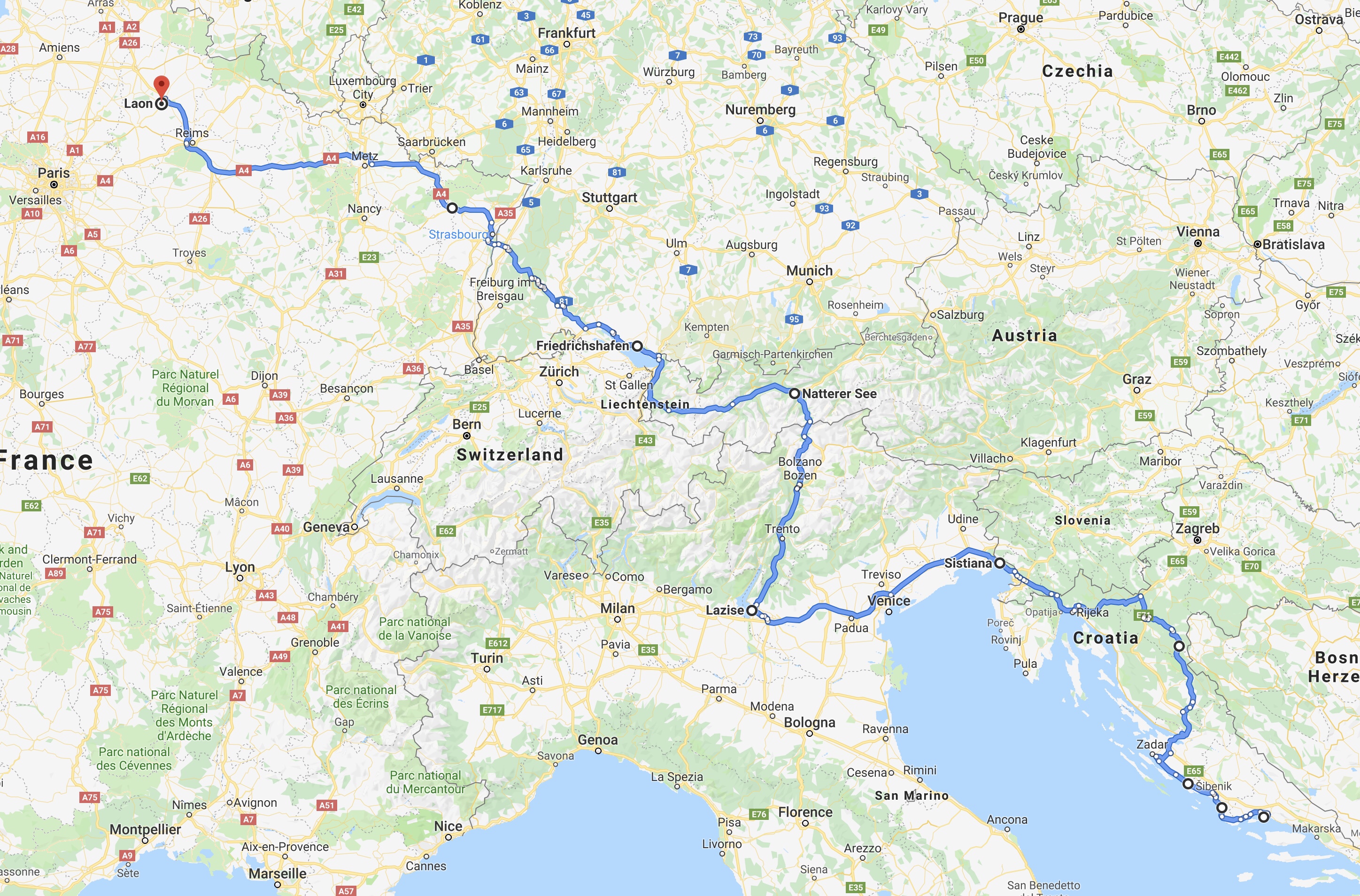
Our route to Luxembourg avoided motorways and tolls. We drove through more rain, hail and snow.
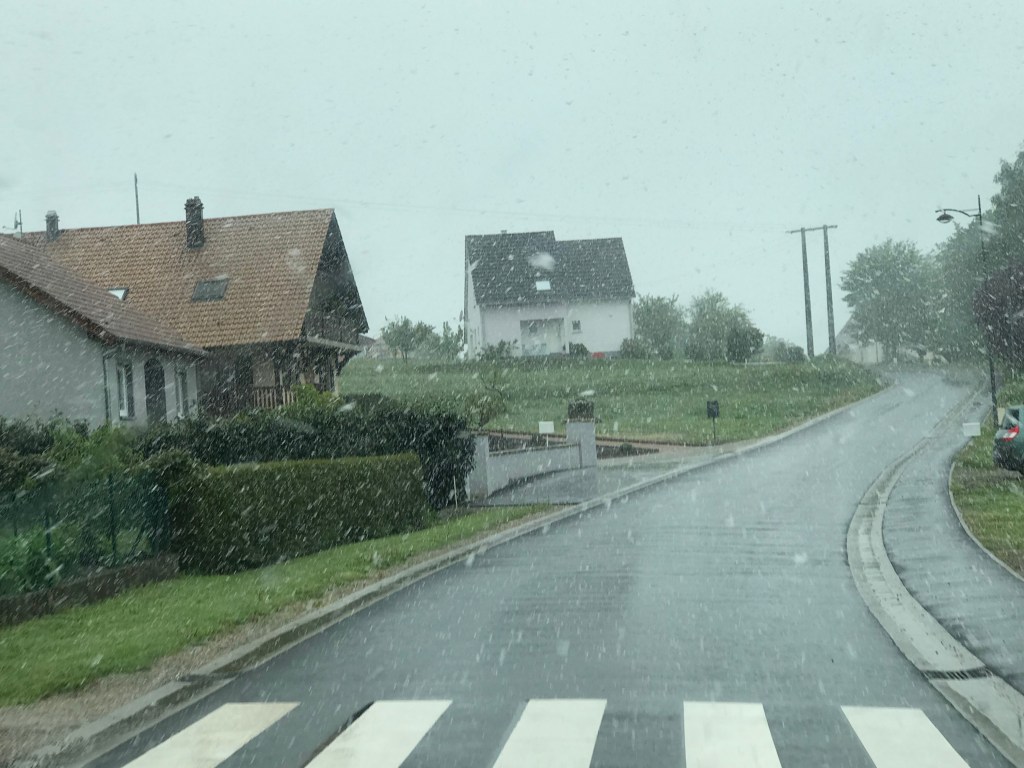
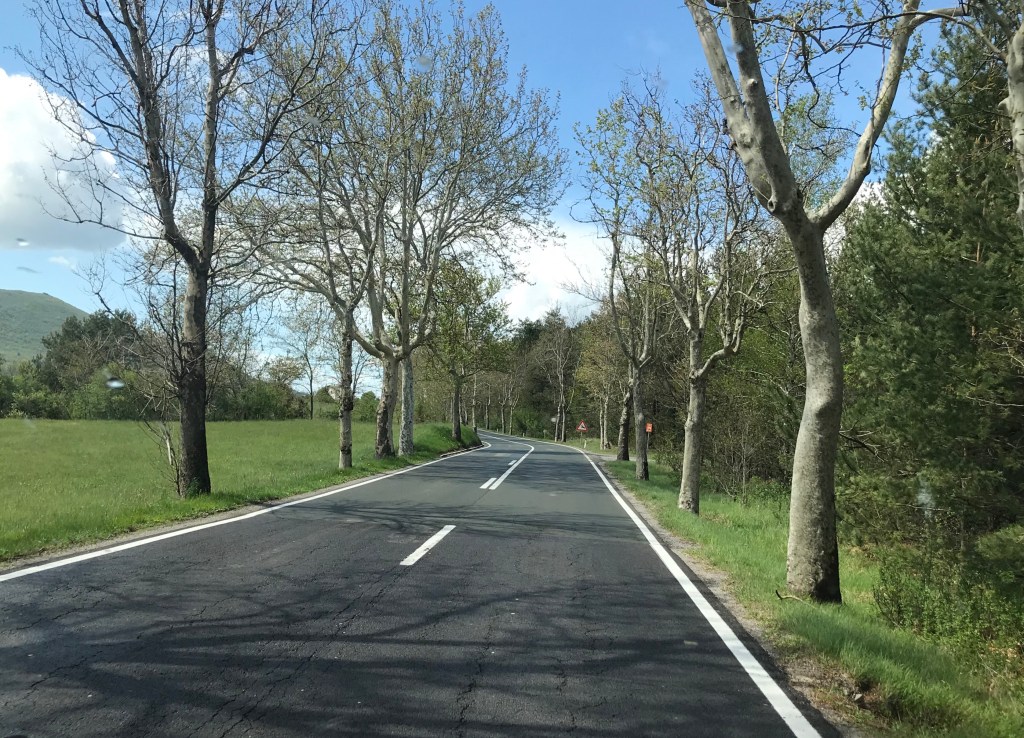
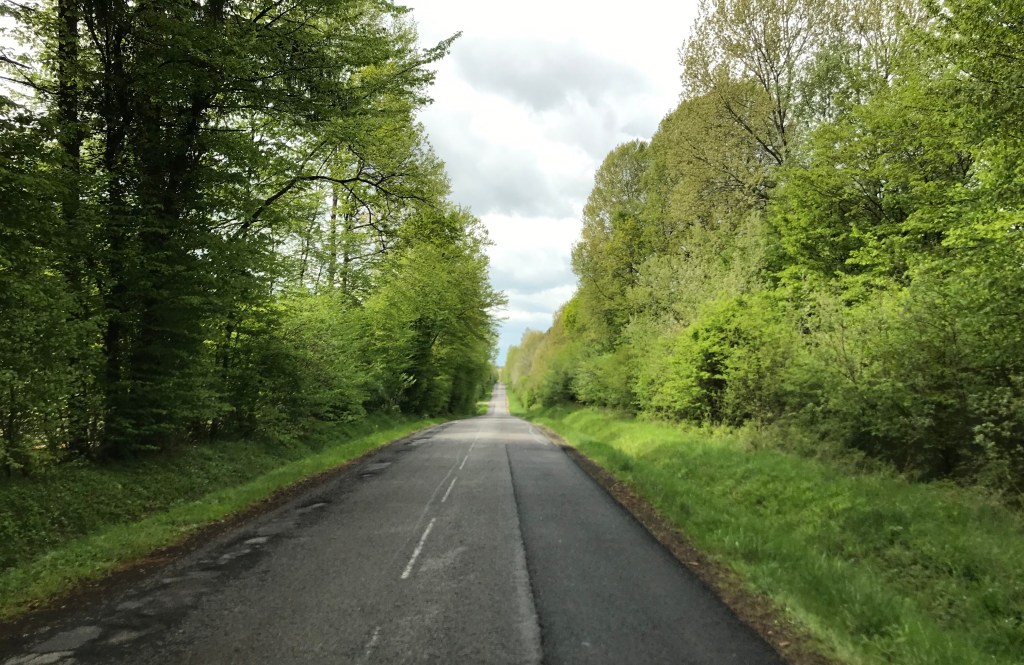
Roads were narrow in places but often perfectly straight and really quiet which helped our journey along
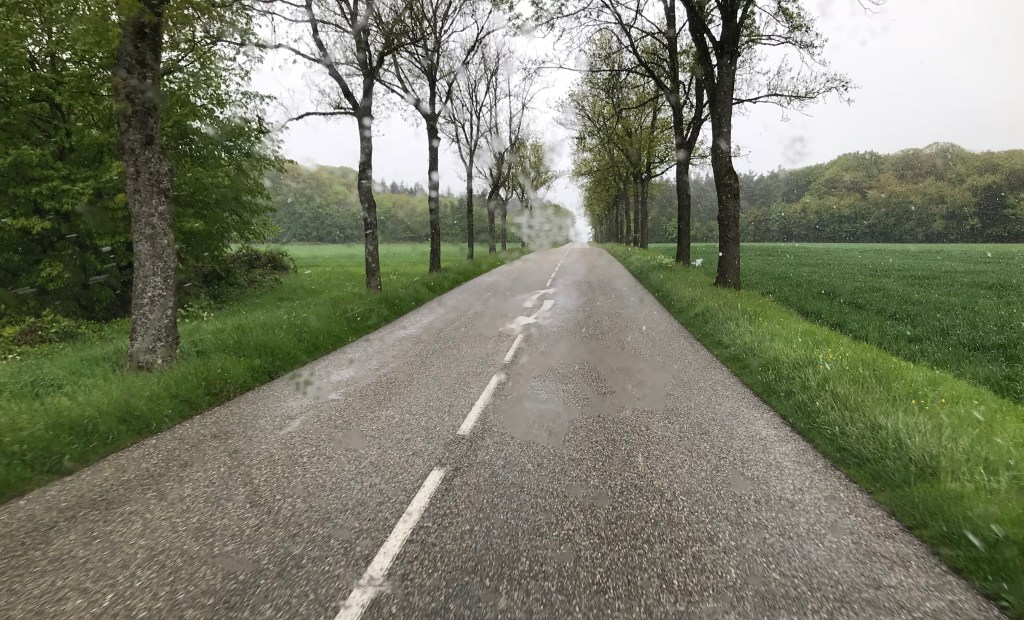
The sun put in an appearance, but not for long
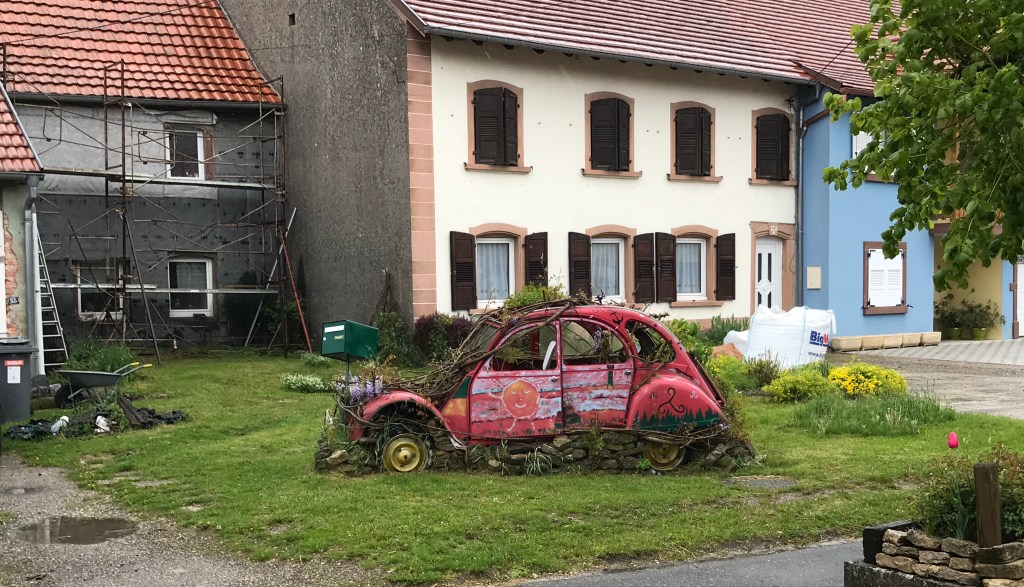
We passed through the village of Rauwiller and we’re surprised to see this unusual rockery feature.
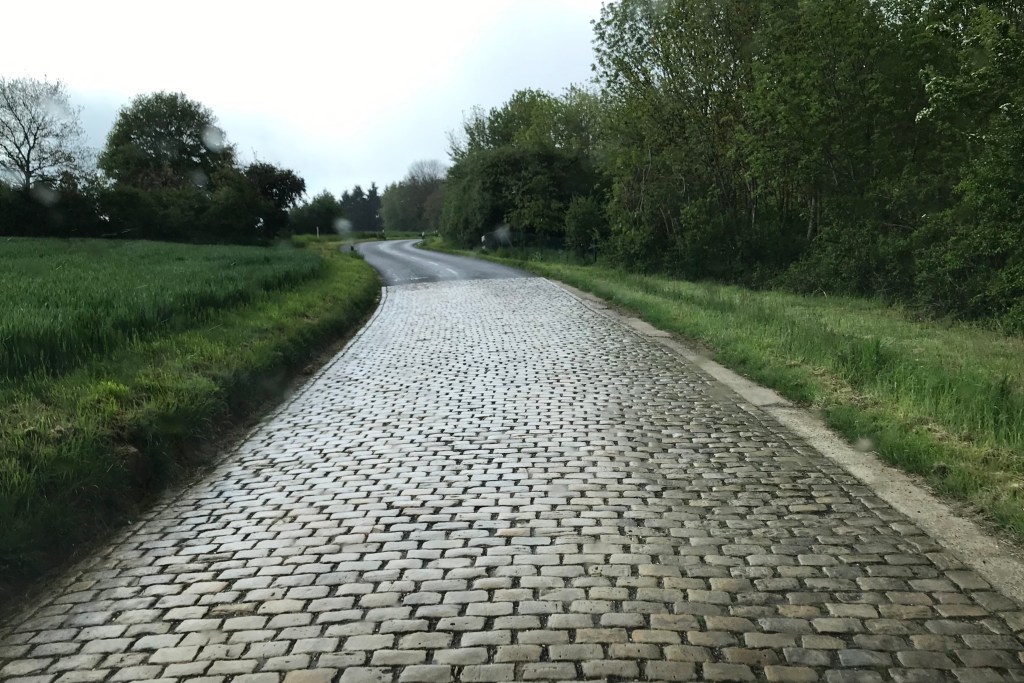
We snuck into Luxembourg on a minor road, over the Moselle River via a bizarre section of cobbles. It was hard work in the camper.
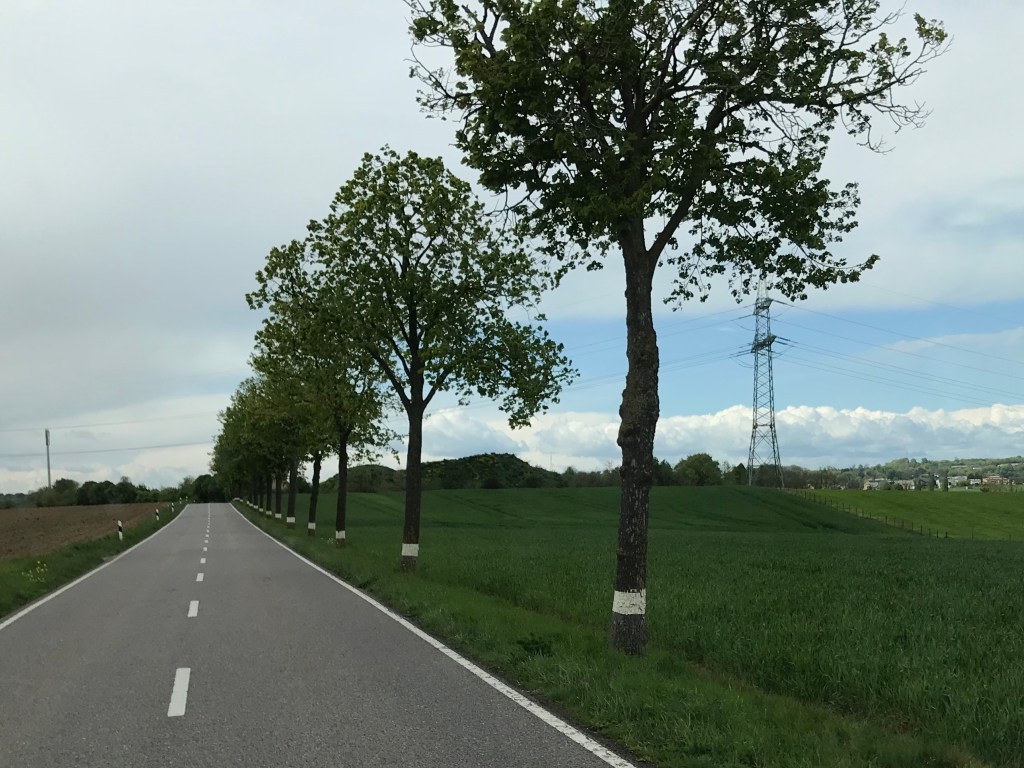
Finally, why use bollards when you can paint trees white
Initial impressions of Luxembourg are that it’s very expensive apart from fuel which is only just over £1/lite. Our camp site is very smart and organised, we have even been issued with a set of site rules that must be followed.
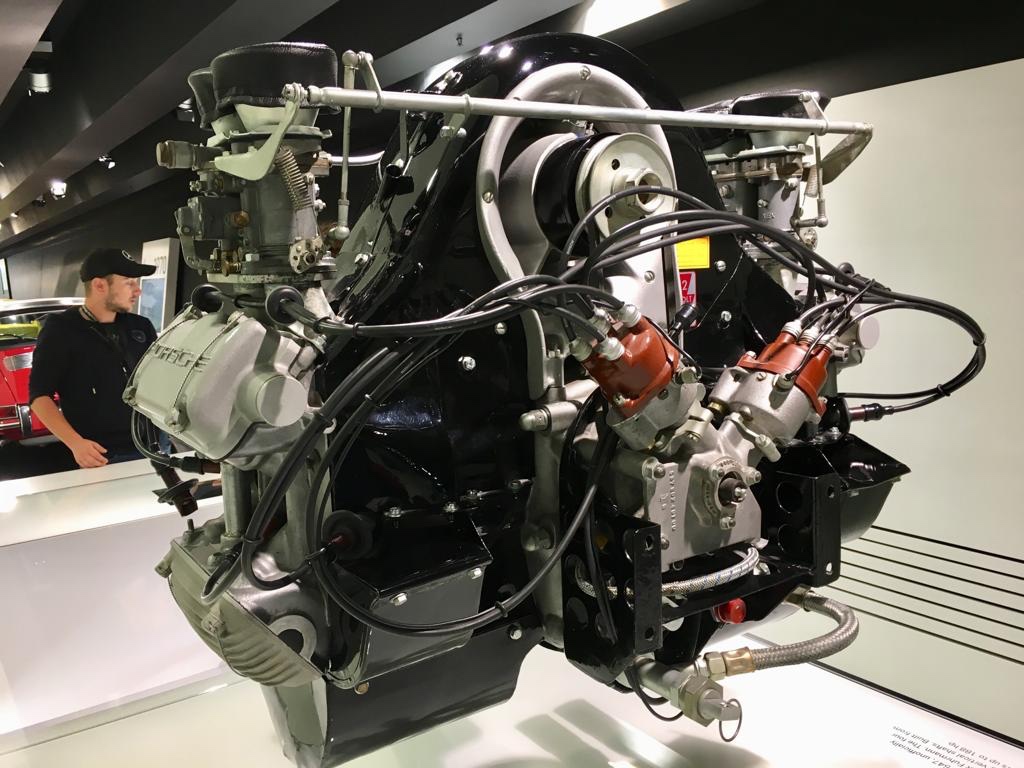
John’s best day…..

Guess where we have been?

It rained heavily all night and we slept in a tin can disguised as a motor-home, you can imagine the noise!

We packed up and waved goodbye to the Bodensee with France as our next destination. Then John saw signs for Stuttgart and Google told us it was only a 30 minute detour to the Porsche Museum so that’s where we went.

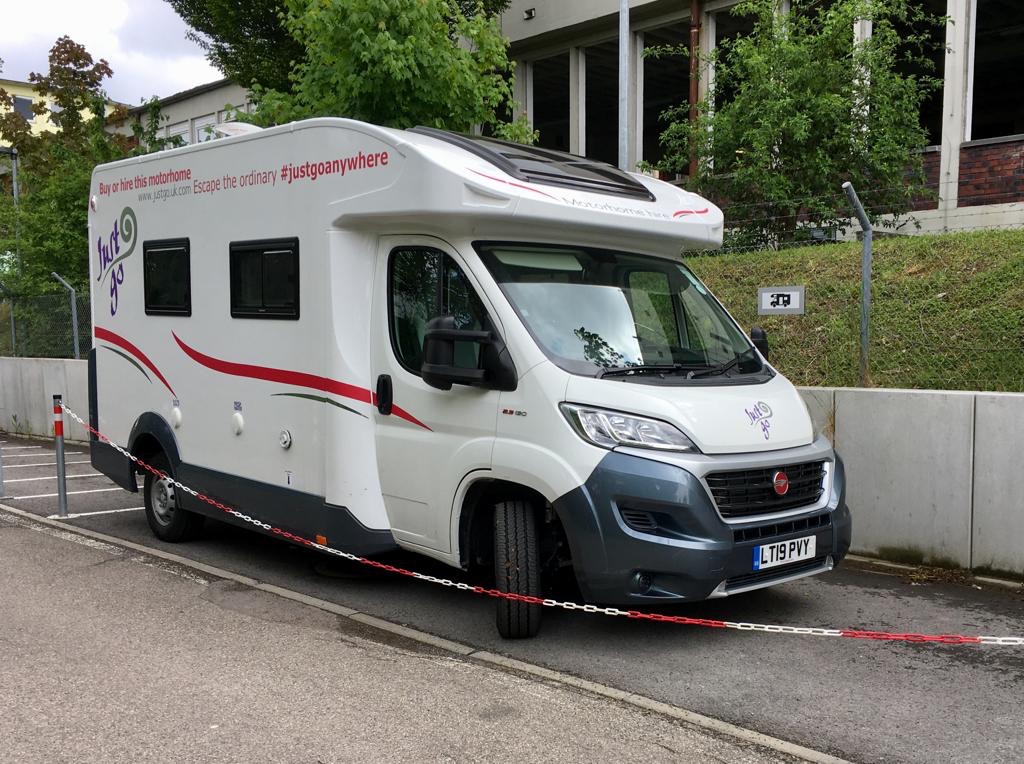
Kim emailed the museum, requesting camper parking. There was at least a 10 minute delay in responding, shoddy we thought. With typical German efficiency, the reply came back with detailed instructions, photos, and a map – absolutely amazing!

The instructions were spot on, the camper was corralled in a dedicated space and we did the 2 minute walk to the museum. It’s not often it’s that convenient to park and we were very grateful.

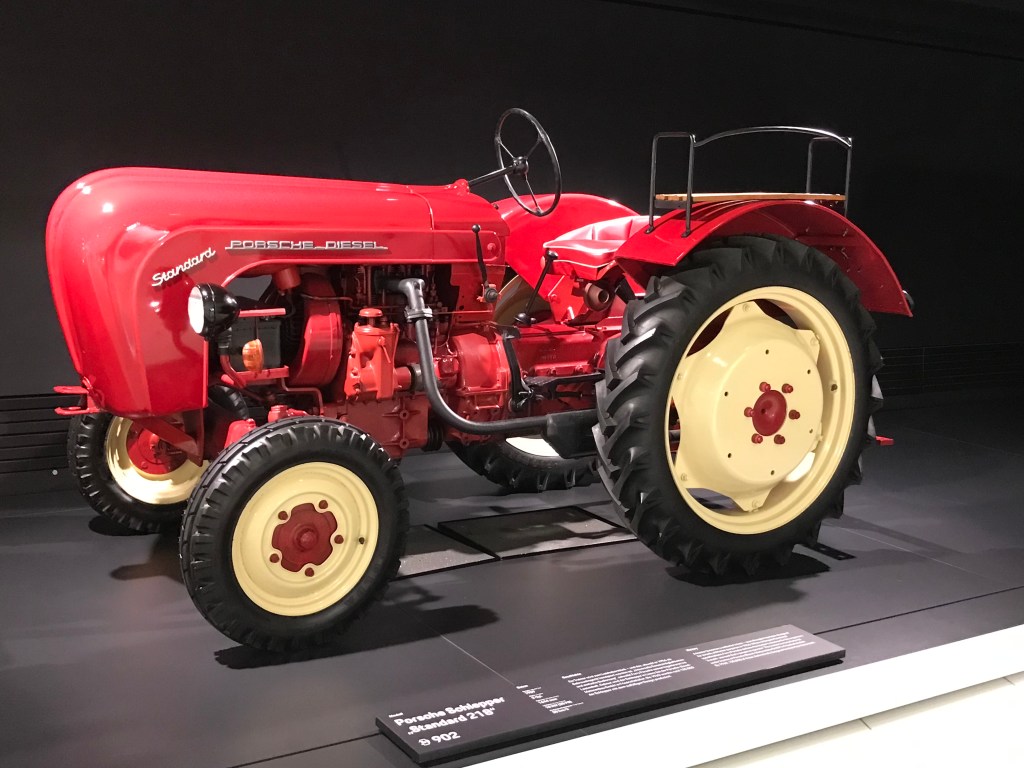
As museums go this one deserves a return visit, we didn’t have time to do it justice. Attention to detail and a desire to provide visitors with a quality experience is wonderful. Every exhibit is in full working, drivable condition. Exhibits change regularly and there is a real sense of pride in Porsche’s history, development and current standing in the racing and motoring world.

Kim chose her car of the day….

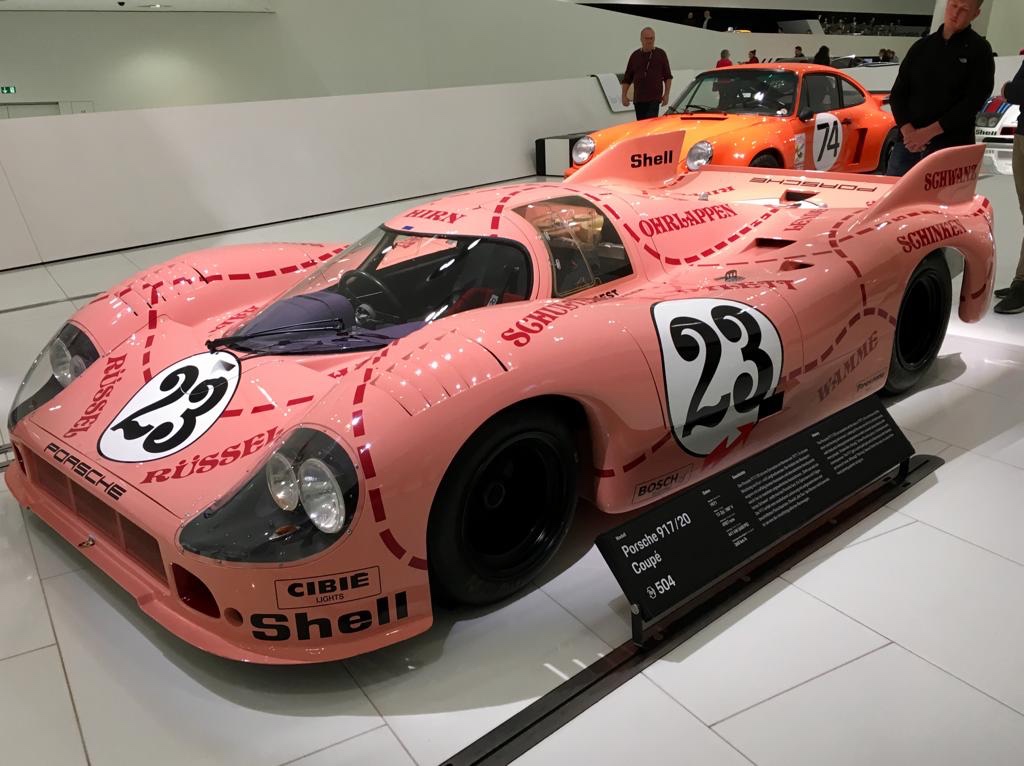
John chose his two favourites. The “Pink Pig” from the 1971 Le Mans 24 hour race.

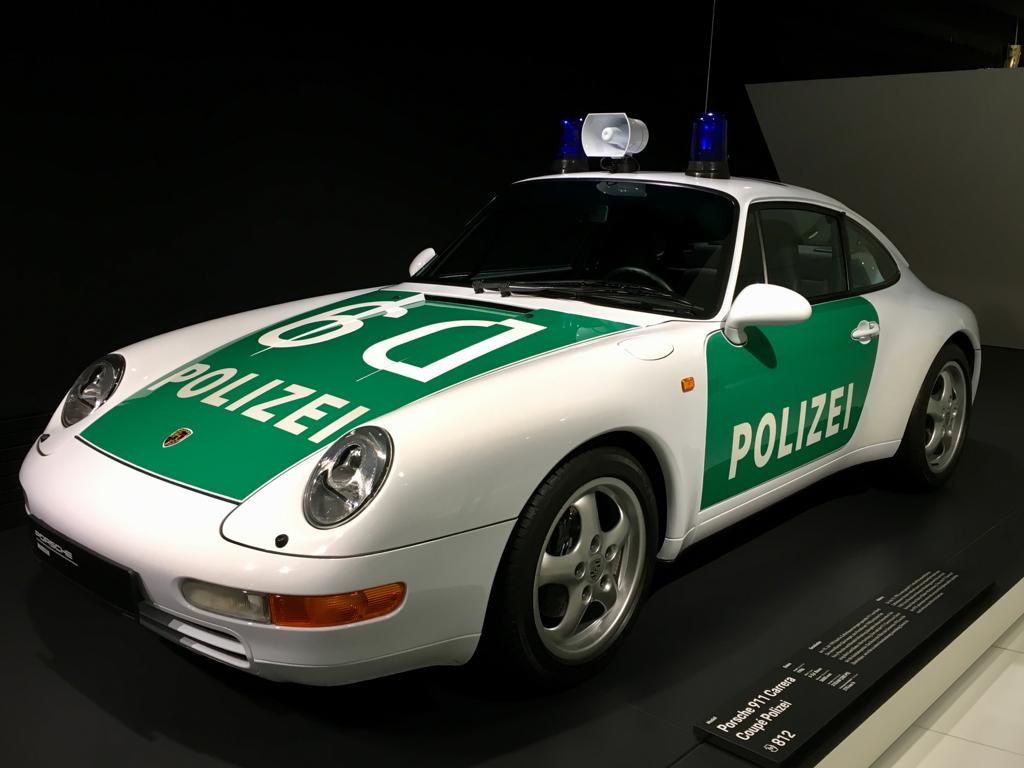
And a German State Highway Police 993, slightly more cool than a diesel Vauxhall Astra.

Kim hadn’t quite thought through our 30 minute detour. We came out of the museum with 130 miles and 2.5 hours driving still to do. As we left, the Porsche Factory closed for the weekend and we were swamped by workers…. think Vauxhall at clocking off time! It was busy.

Leaving our dedicated parking was a challenge. We’d been warned the road was narrow, and that was without parked cars on either side. It was a hairy 500m drive but we came through unscathed, as did all other vehicles.

We hit the motorway and arrived at the campsite at Hofmuhl at at 5:30.

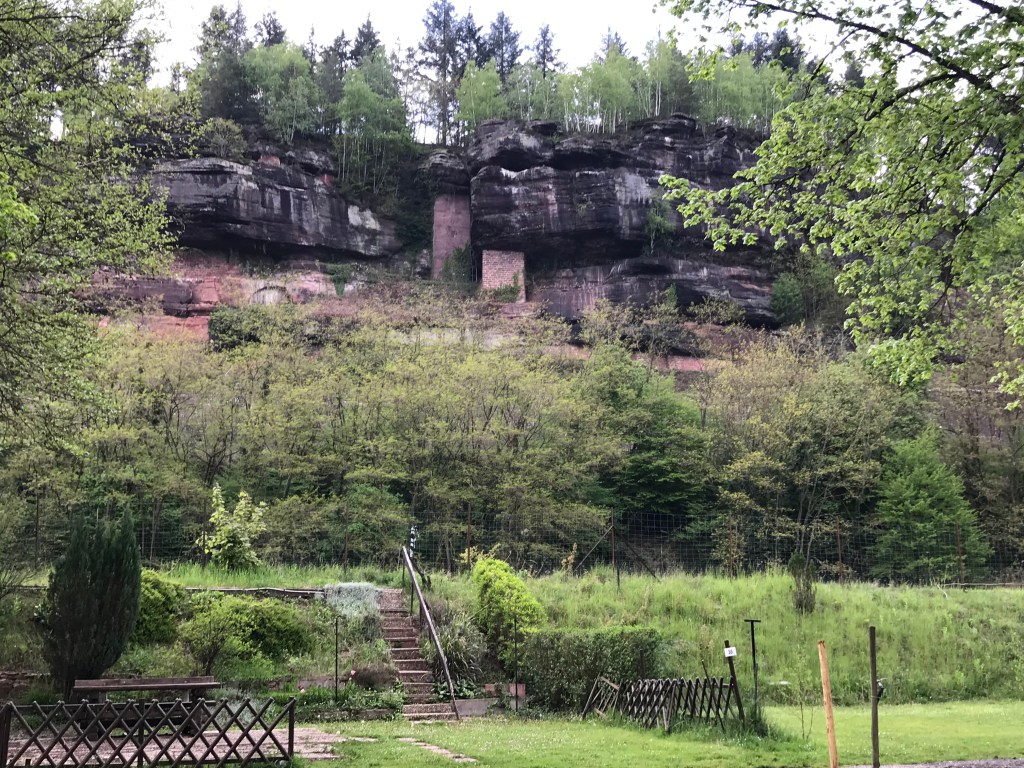
It’s easy to tell we’re in France, campsites are not a patch on those in Germany or Austria. We are sandwiched between a road, river, canal and railway. Facilities are very French and the cliff opposite is propped up with brick pillars.

It’s a little unfair to grumble , the young man on reception was lovely, spoke perfect English and couldn’t have been more helpful.

Tomorrow, we visit the St Louis Arzviller Plan Incliné before wandering of to Luxembourg.

Hagnau to Uberlingen and back….. on a bike!

Yesterday’s sunshine continued so we stayed on at Hagnau and decided bike hire was a good idea for travelling the 7 miles to Pfahlbauten (Pile Dwellings Museum) at Unteruhldingen.

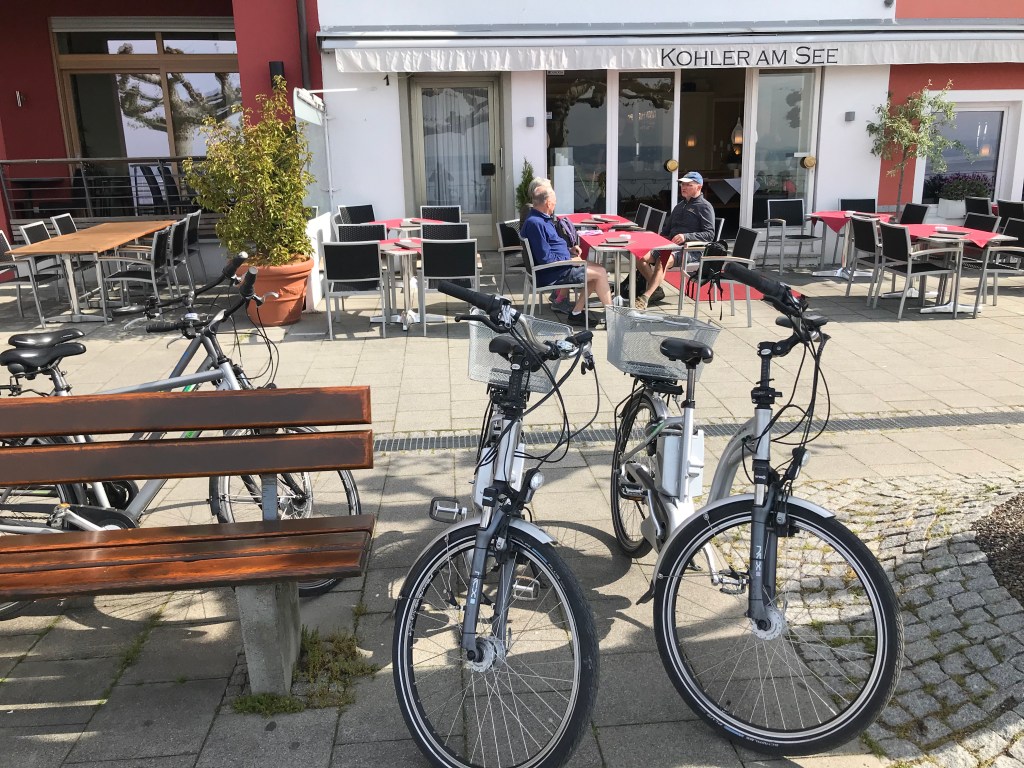
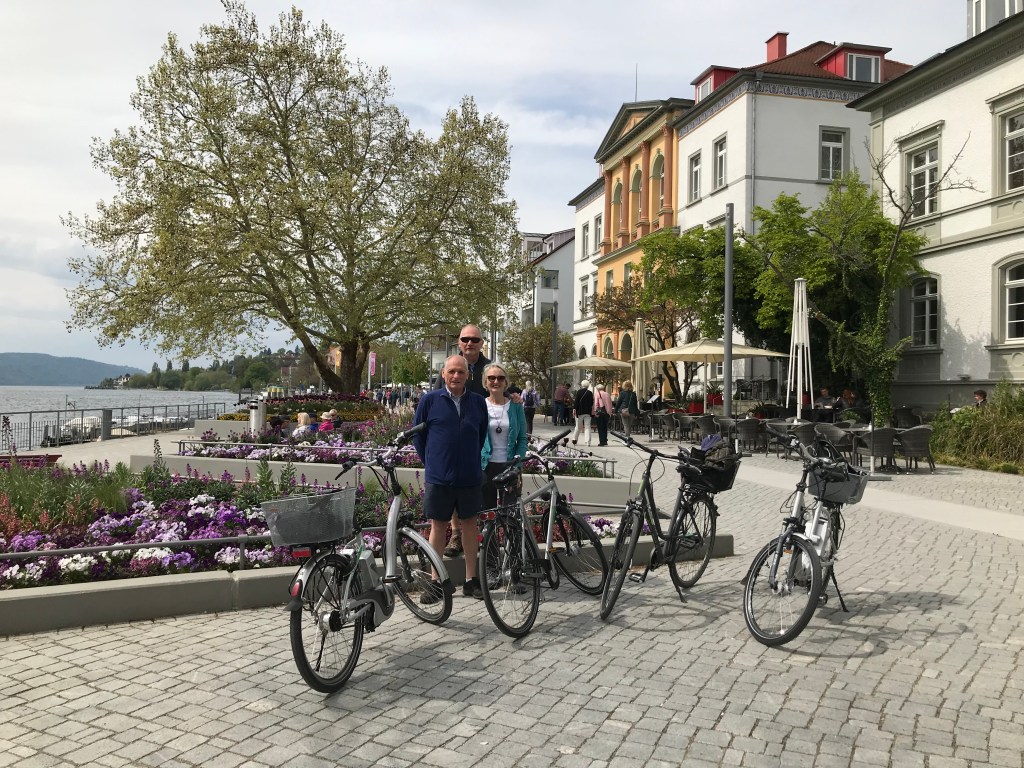
Kim and Ken opted for e-bikes – Ken had a good excuse with his bad back, Kim just dislikes hills.

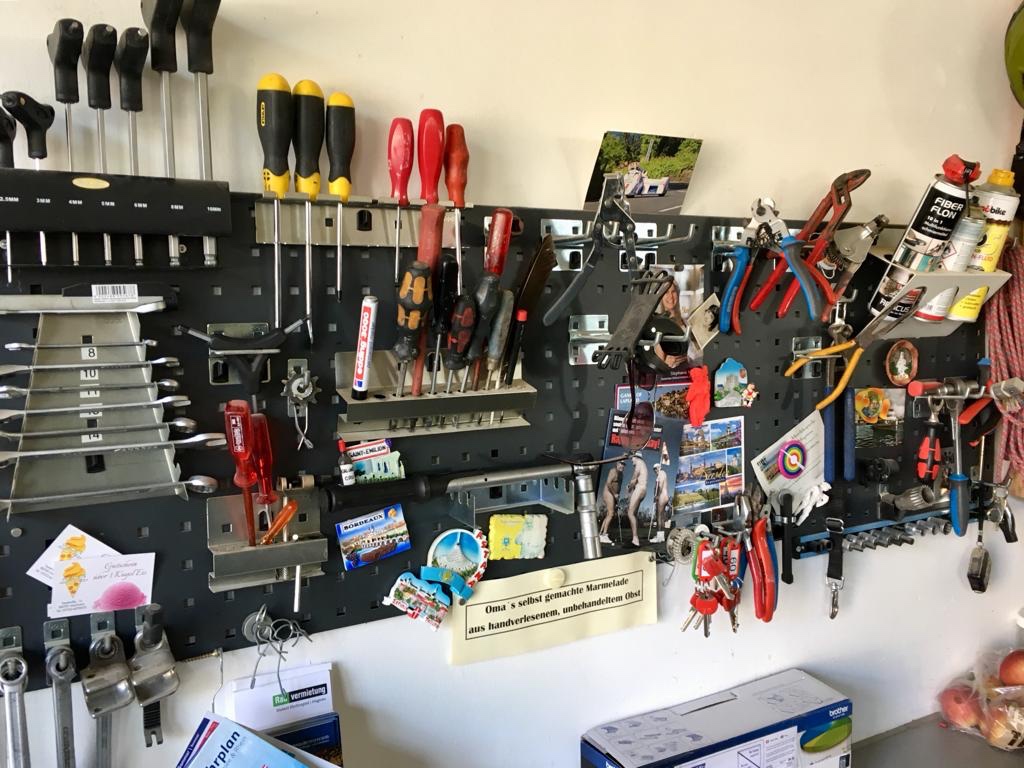
John was most impressed with how the cycle hire shop organised their workbench and tools.

As we set off the owner told us to enjoy our trip as after Brexit we were unlikely to be able to return!

We managed 3 miles into Meersburg before a coffee stop was deemed necessary.

Kim was all set to stay there, when it was pointed out that she had proposed the museum. As we left the owner of the Cafe came running after us, although Ken had asked for the bill he’d forgotten to actually pay it!

Cycle routes around this part of the Bodensee are reasonably flat, wide and well signposted, they meander through pretty lakeside villages with a mixture of older established properties and crisp modern houses most with a view over the lake.

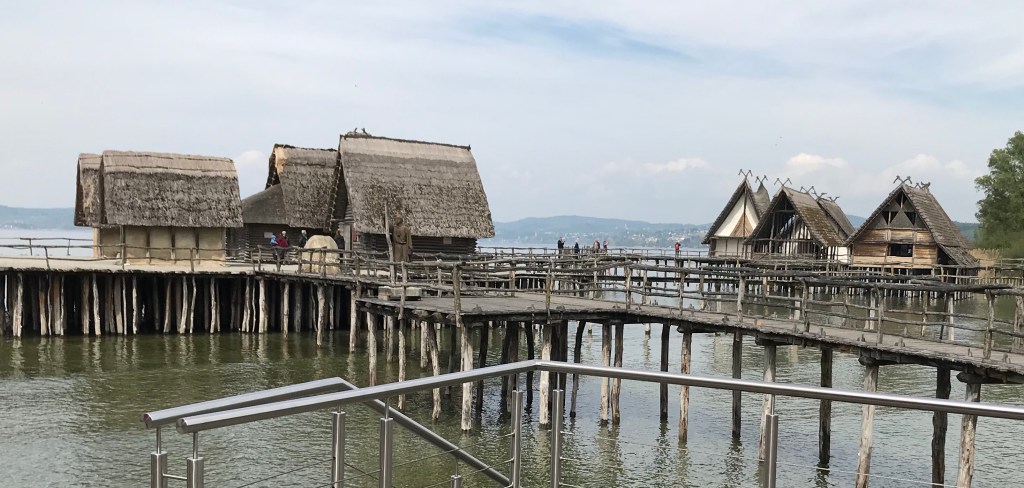
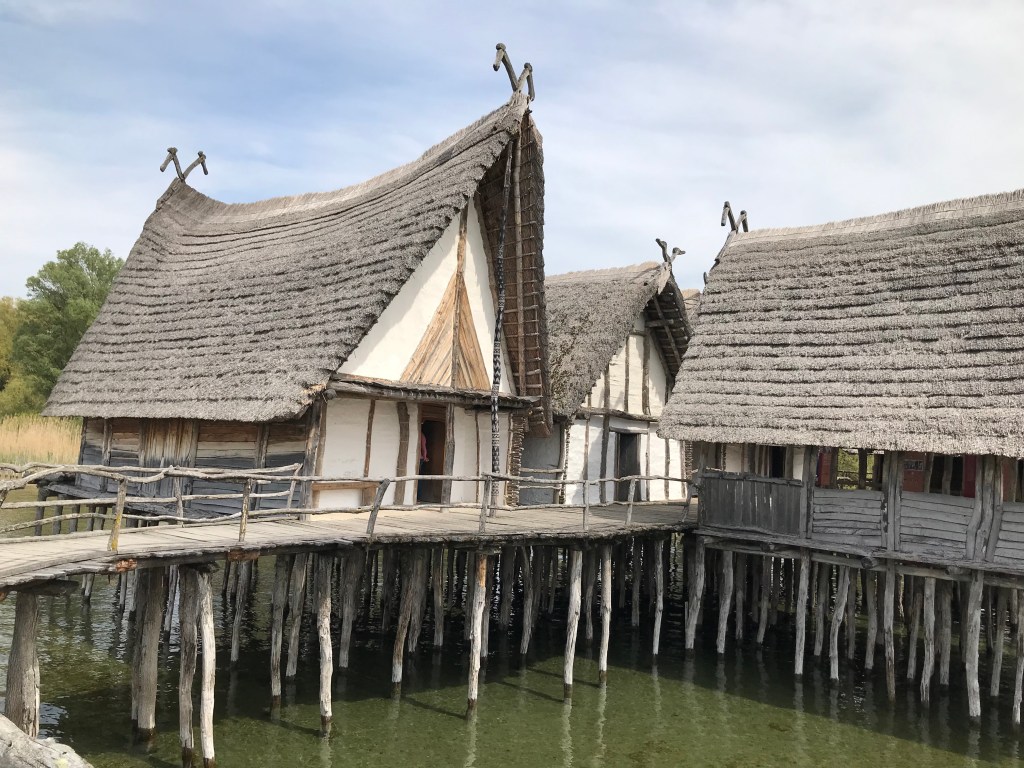
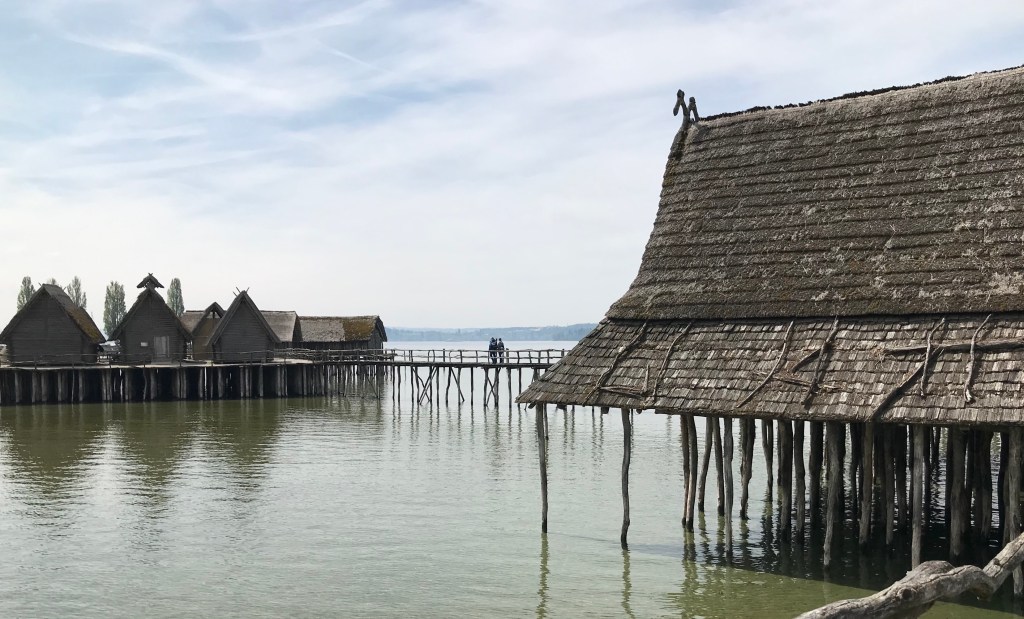
Pile dwellings on the Bodensee date back to Stone and Bronze Age times. Over 100 settlements have been discovered around the lake and the museum recreates 23 houses from 4000-800 BC.

These early farmers, who settled by the lake, often built their shelter in the water possibly for easy access to fishing and protection from wild animals.

Houses were built on stilts, which were driven 2-3m into the silt – all without the help of a JCB.

These settlements are quite astonishing when you consider how few tools were available. They also had fantastic views across the lake and would command quite a price these days.

UNESCO has declared 111 Prehistoric Pile Dwelling Settlements as part of the World Cultural Heritage of Mankind. 11 of them can be found on Lake Constance.

It was well worth the visit and we were obviously slightly lightheaded when we decided to cycle another 5 miles on to Uberlingen. It was another pretty German town with glorious views.

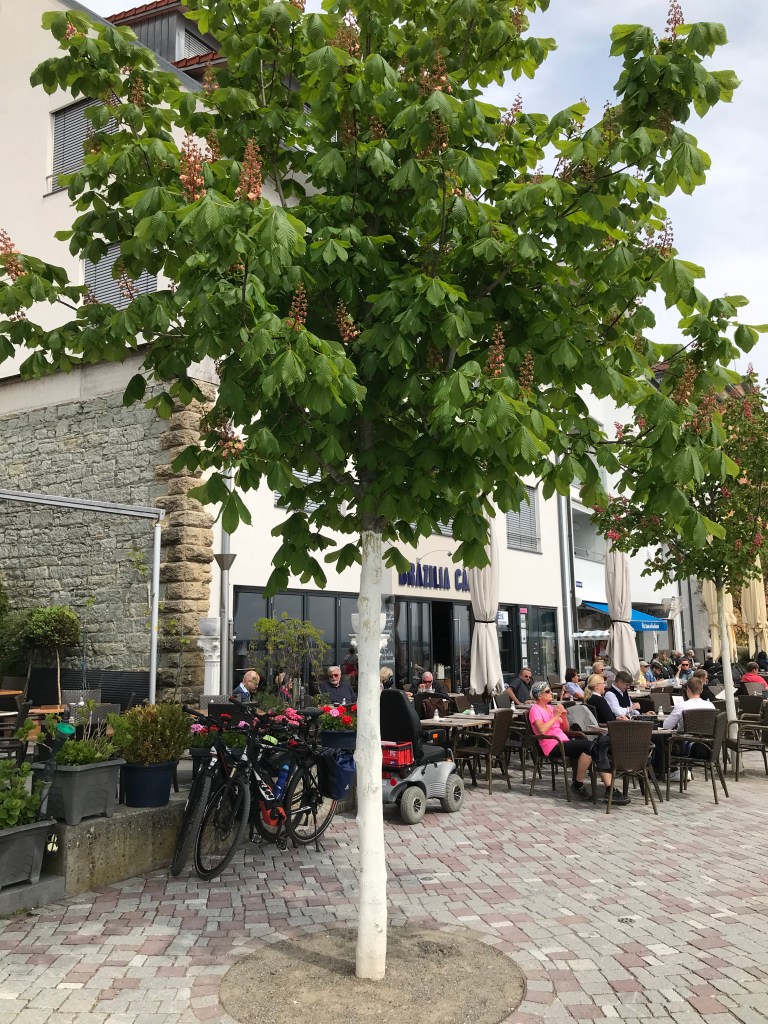
One thing we haven’t mentioned before are the painted trees.

We saw painted fruit trees in Italy and google told us that it’s chalk, often mixed with latex, to deter ants and boring insects. That’s insects that make holes rather than dull, dreary insects!

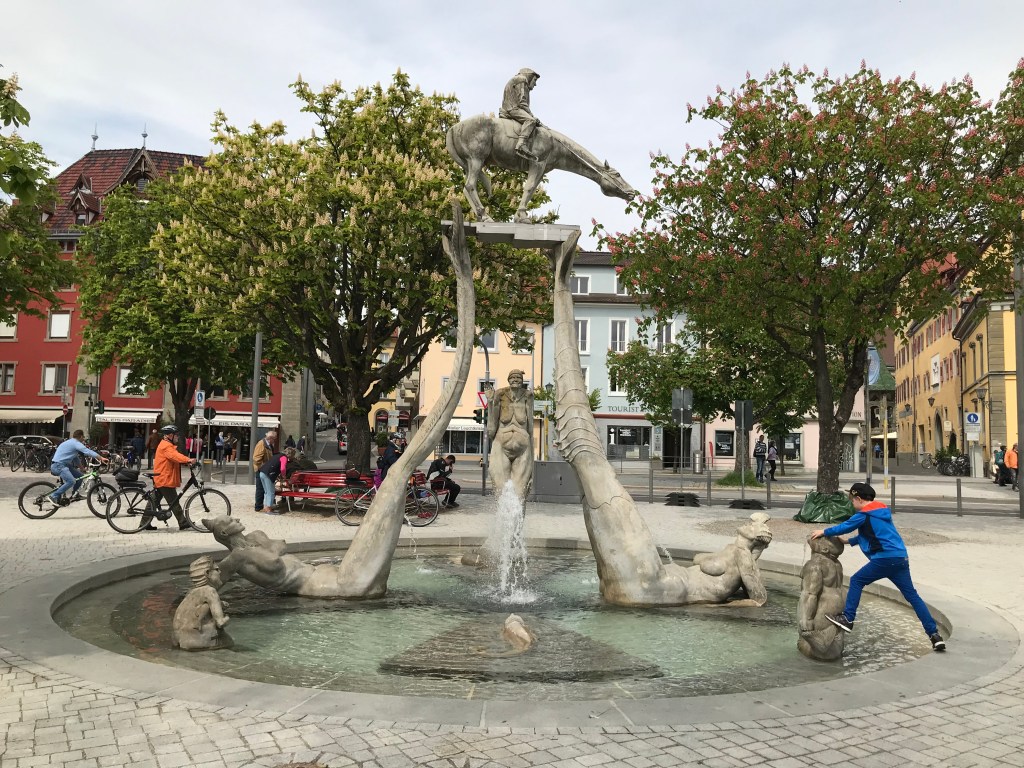
The fountain in Uberlingen famously depicts a 16th legend and was sculpted by Peter Lens. We were more interested in the young boy playing with the water and wondering at what point he’d fall in.

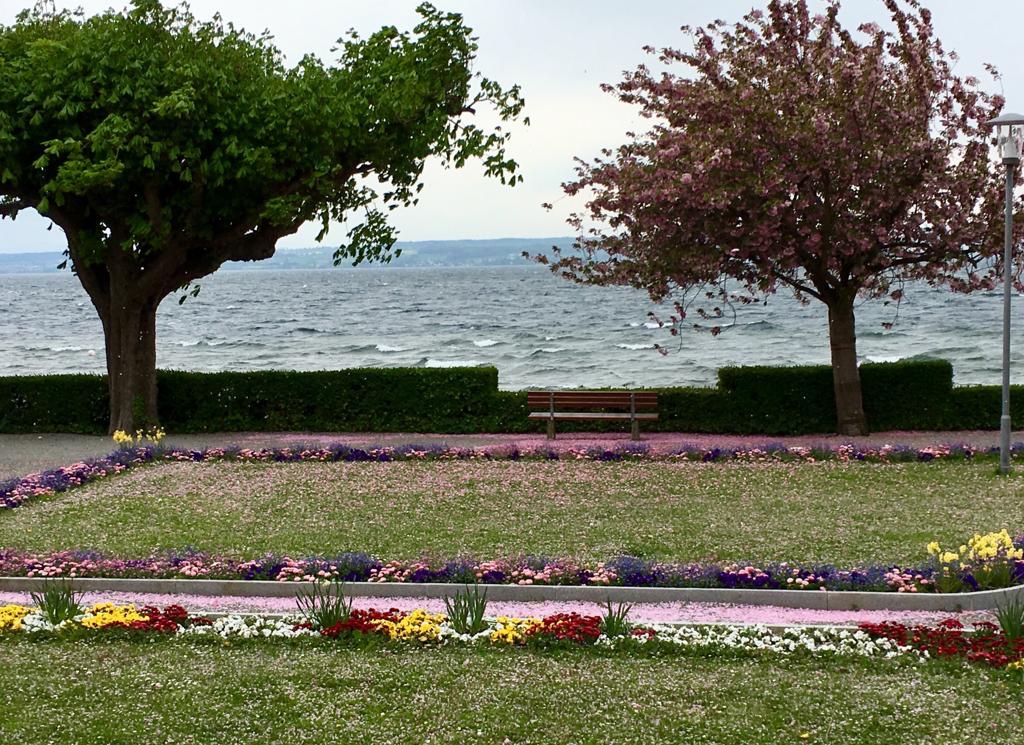
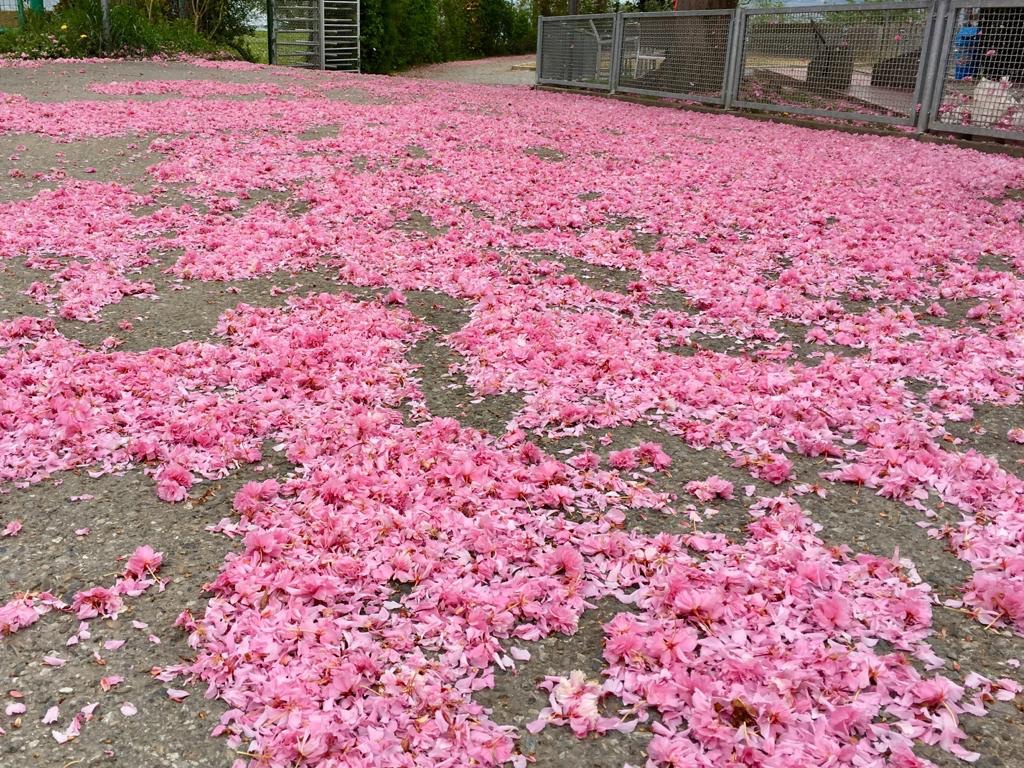
As we cycled back, the weather changed. Skies darkened, the calm lake became agitated and the wind became stronger. Beautiful Cherry blossom was blown from trees onto the ground creating pink paths.
Our cycle hire shop was a 700m climb up a steep hill which after cycling 25 miles was hard work. Kim however was suitably smug being able to cycle all the way thanks to the assistance of the e-bike, normally she would get off and push!

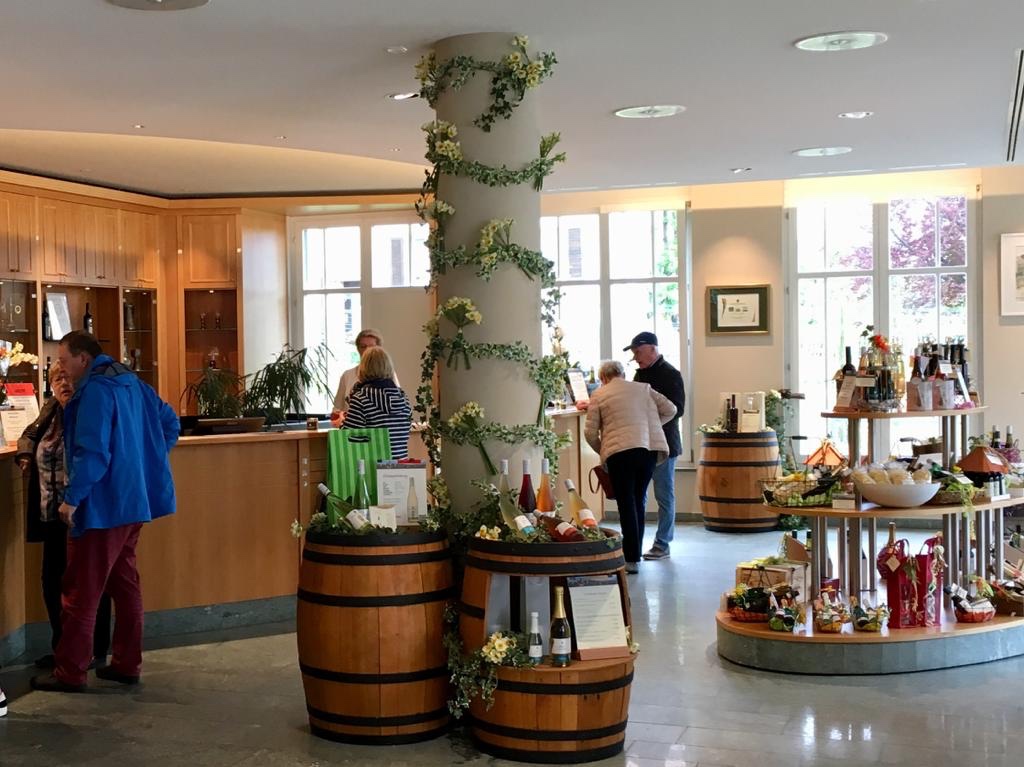
The Bodensee area where we are stopping is well known for fine wines and any spare piece of ground no matter how small is covered in well tended vines. John decided to visit the Hagnauer vineyard on the way back. The rest of us didn’t appreciate it was a free wine tasting and headed straight back to the campsite for a cuppa!

Rain has set in so it was a case of dining in this evening. Another banquet using up left over food found in the fridge.

Tomorrow we are off to France.

Meersburg and other wanderings

Before we start, an apology. WordPress sent a notification a couple of days ago congratulating us. We have officially wittered on about our travels in over 200 posts….. sorry and thank you for reading.

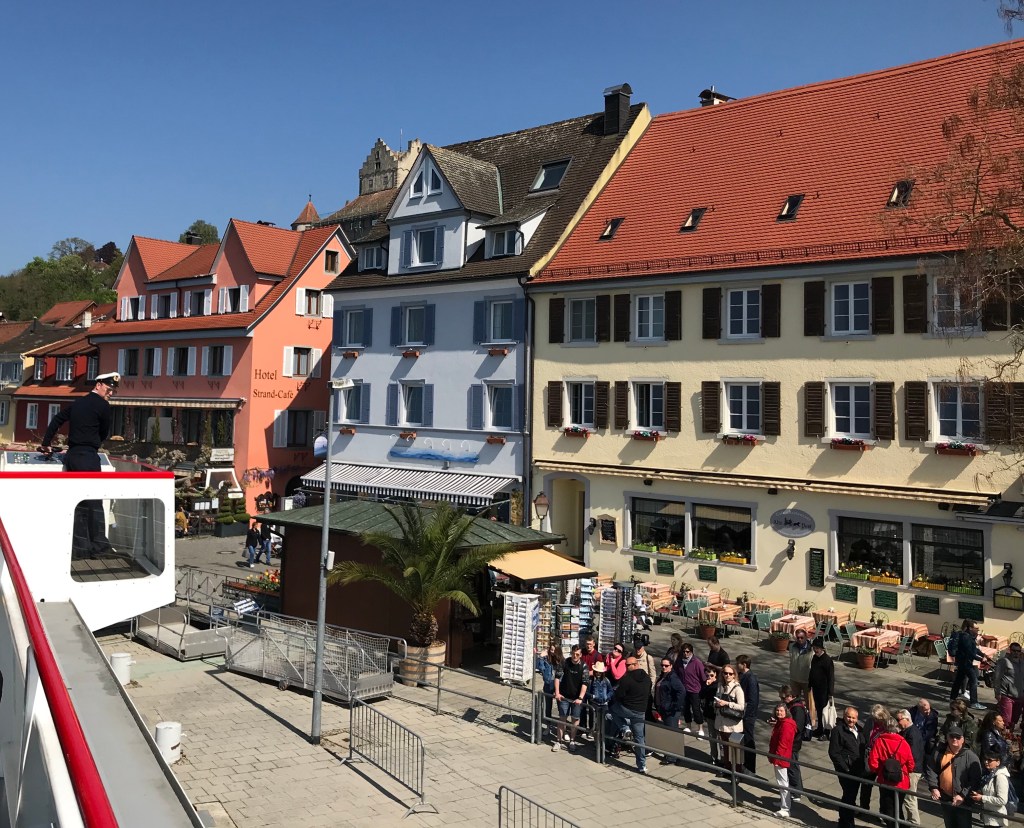
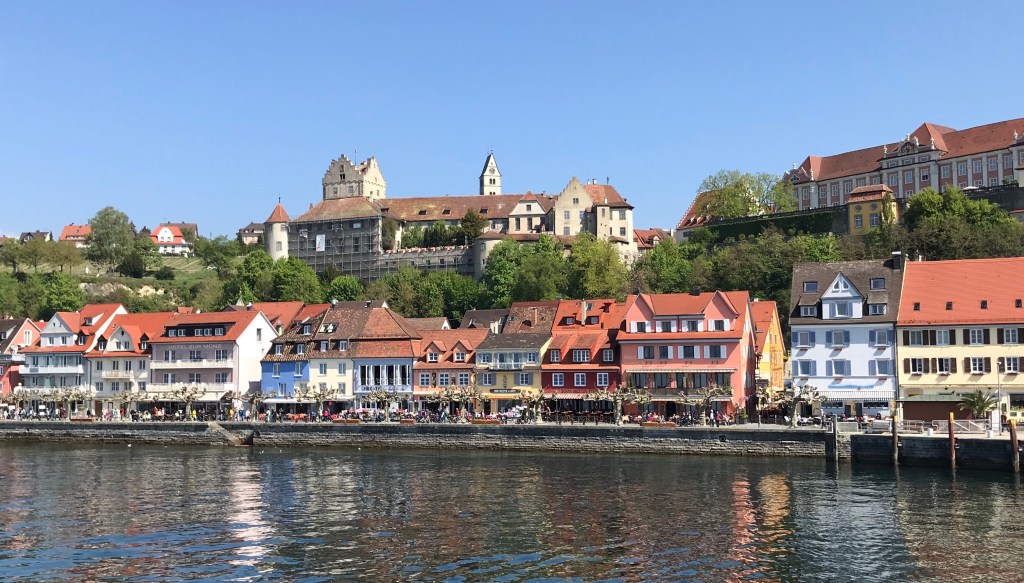
The sun came out, John put his shorts on and we caught the ferry from Hagnau to Mainau, via Meersburg.

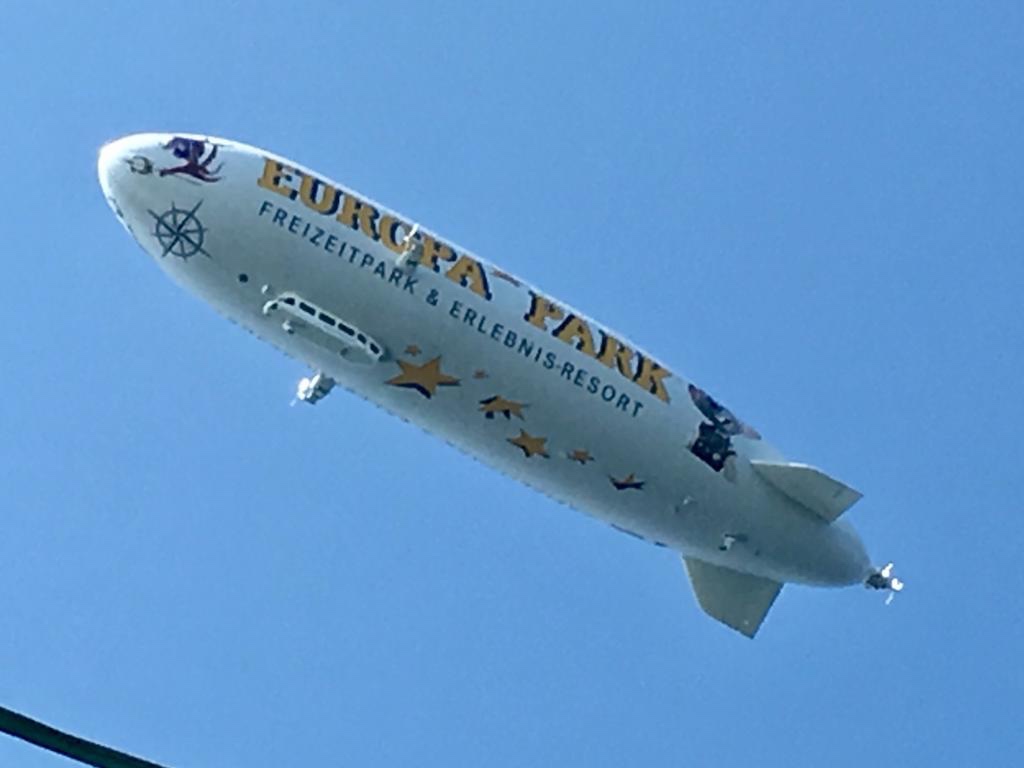
Cruising silently at an altitude of a 1000 feet, the Zeppelin NT on one of its sightseeing passenger flights kept us company for part of the voyage. Should you be tempted a 45 minute flight costs €370

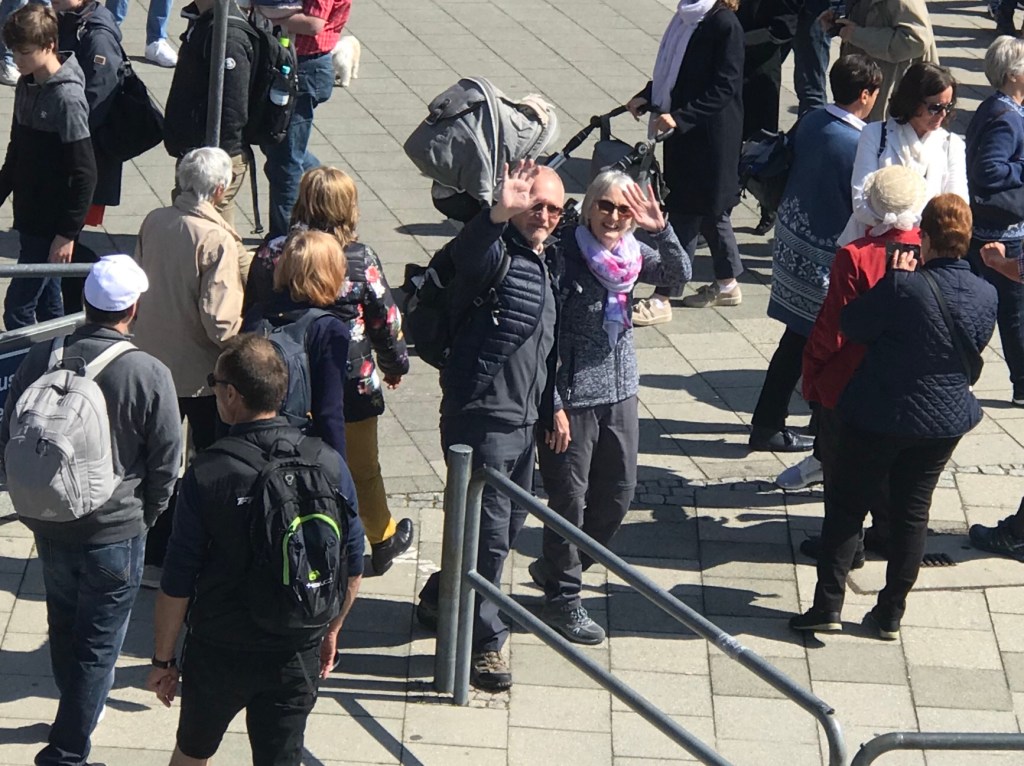
Ken and Jacky waved us off at Meersburg.

The town looked interesting and will have to wait for another day.

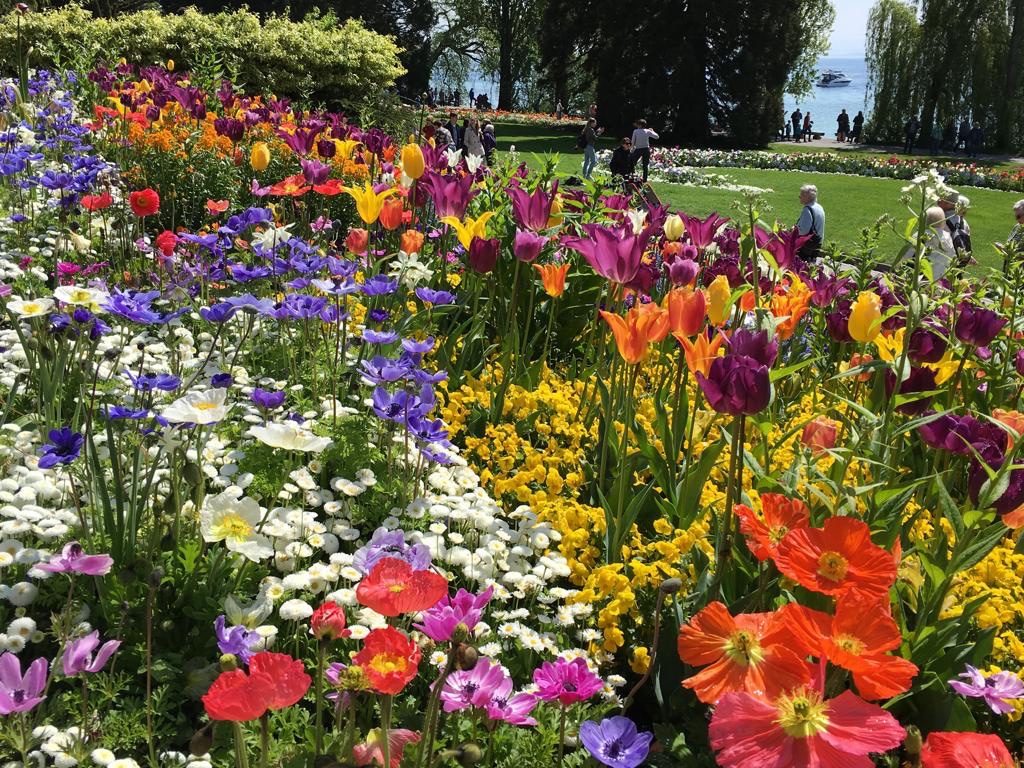
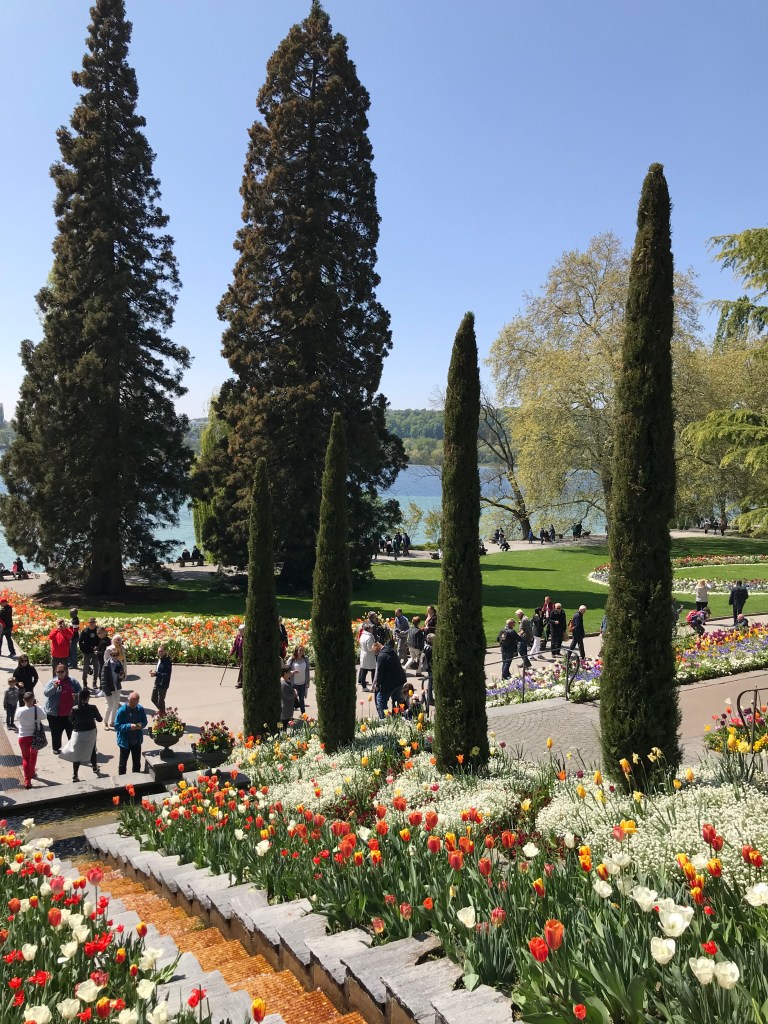
Mainau is maintained as a garden island and model of environmental practices. Managed as a foundation, by decedents of the original owners the gardens both in location and planting were stunning.

Gold of the Italian Floral Water Cascade glowed as the water tumbled down.

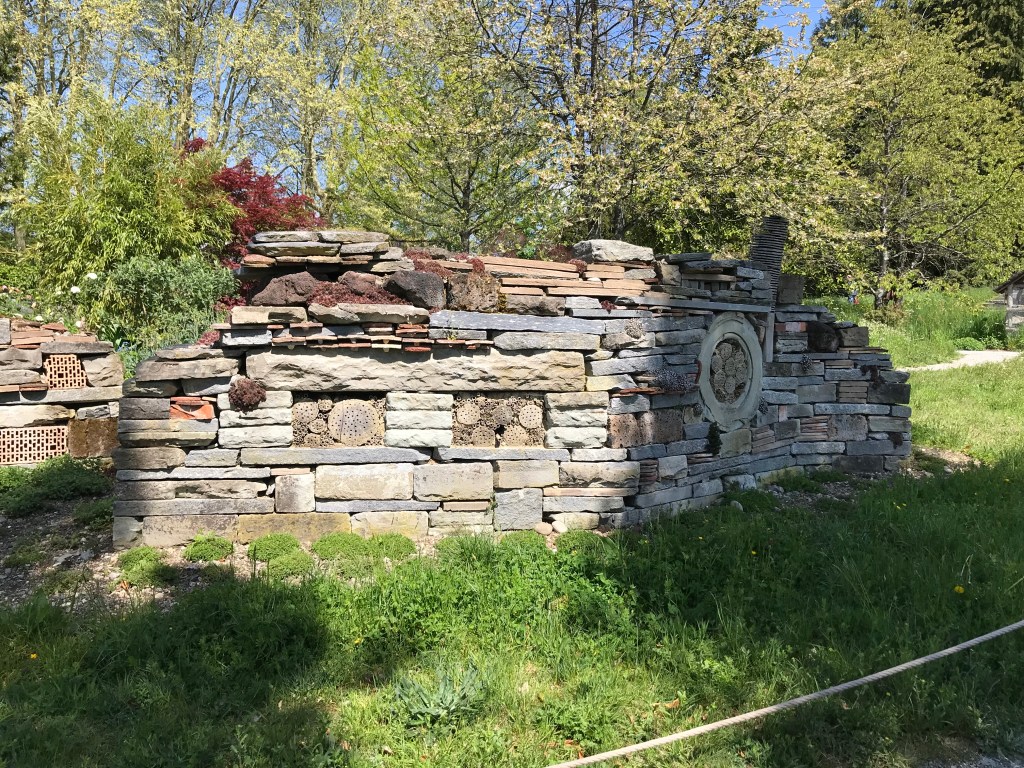
An unusual Insect Garden with some clever and amazing habitats.

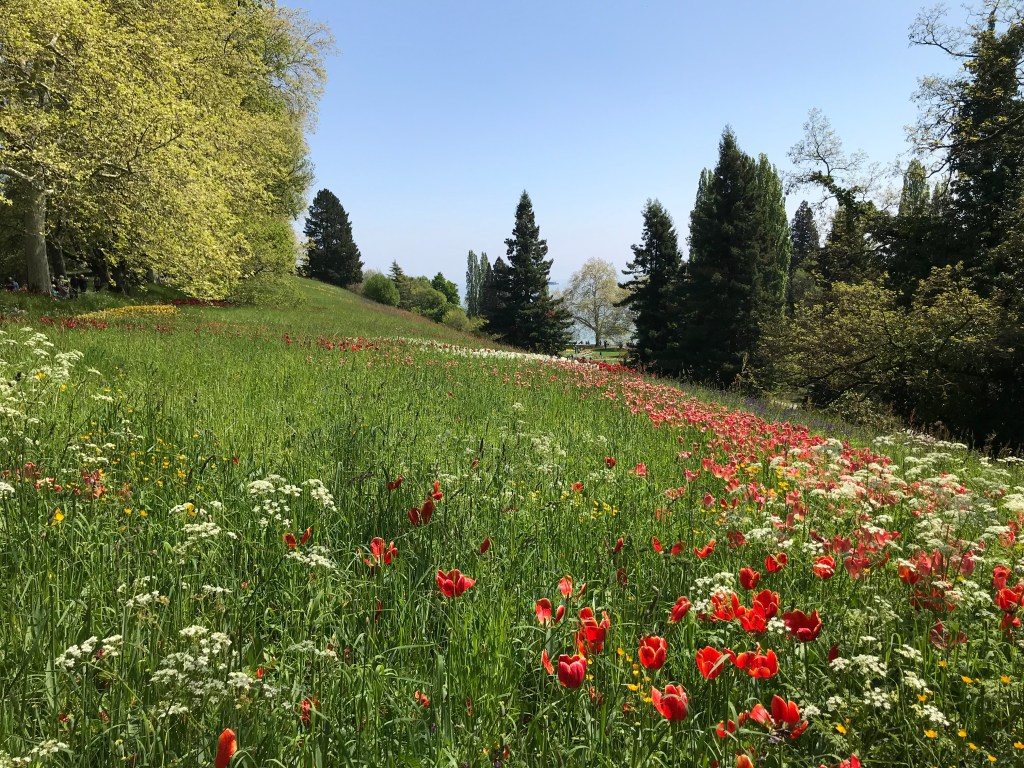
There are over a million flowering bulbs across the site in spring, in formal beds and woven through meadow planting.

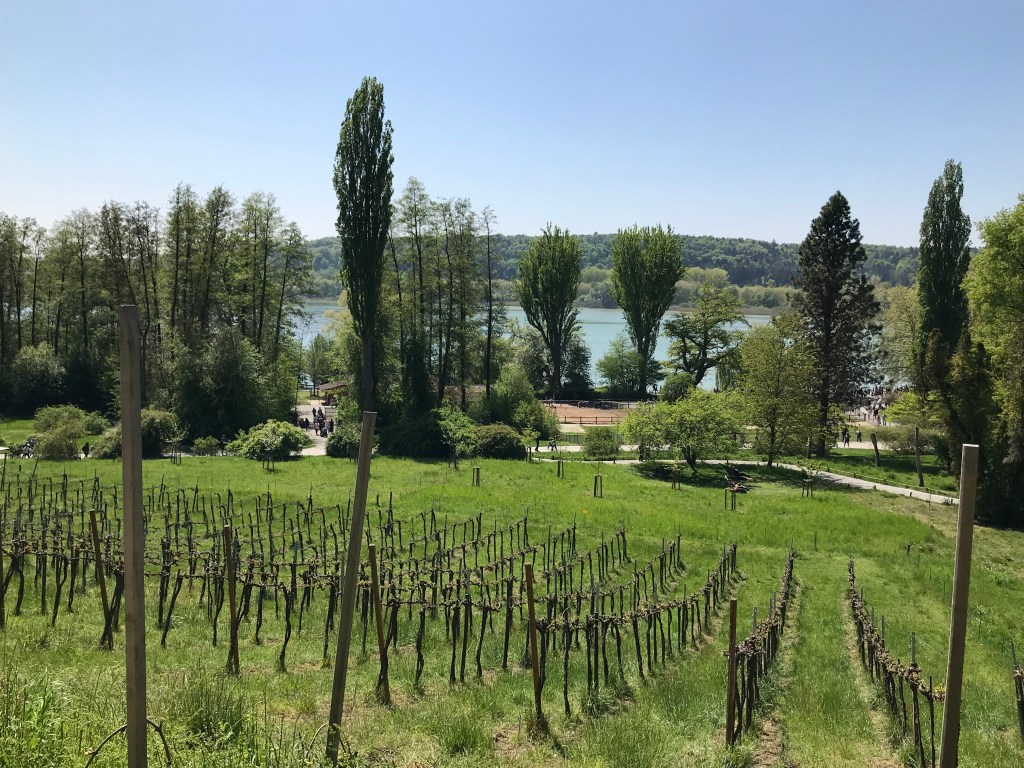
A stroll through the vineyard. Wine has been produced on the island for centuries and is now only available for special guests and tastings, which didn’t include us.
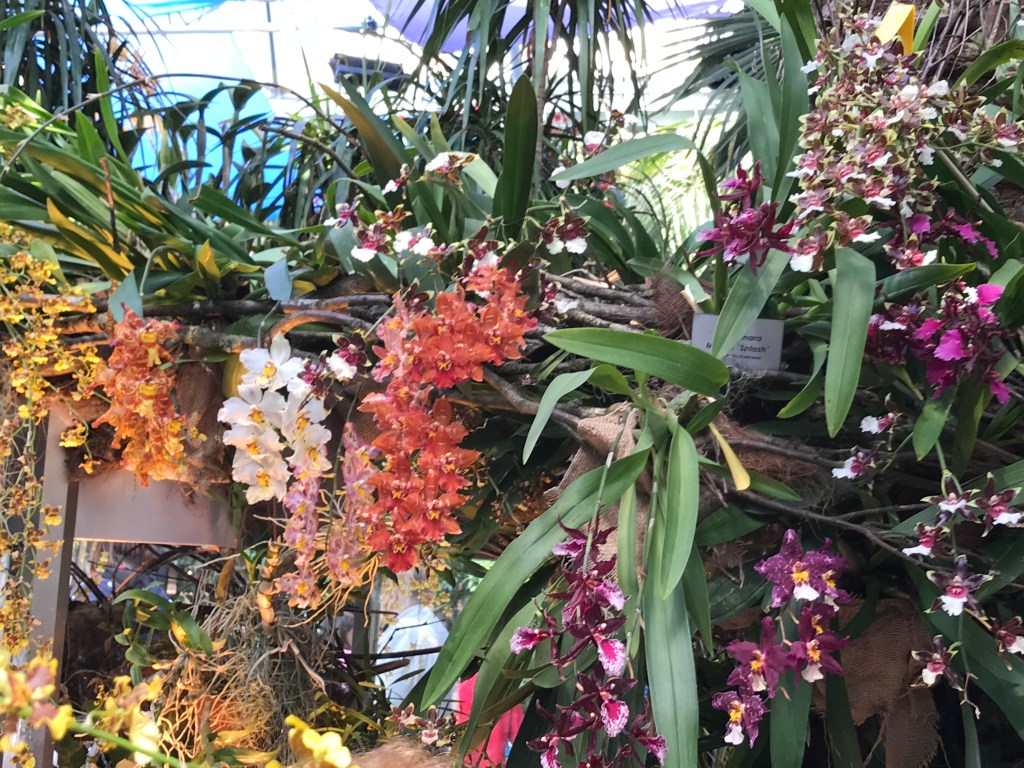
Our final stop was the Palm House which hosts an Orchid Show until later in May. The Palms were completely hidden by orchids and people. We hadn’t realised today was s bank holiday and the whole island was very busy.

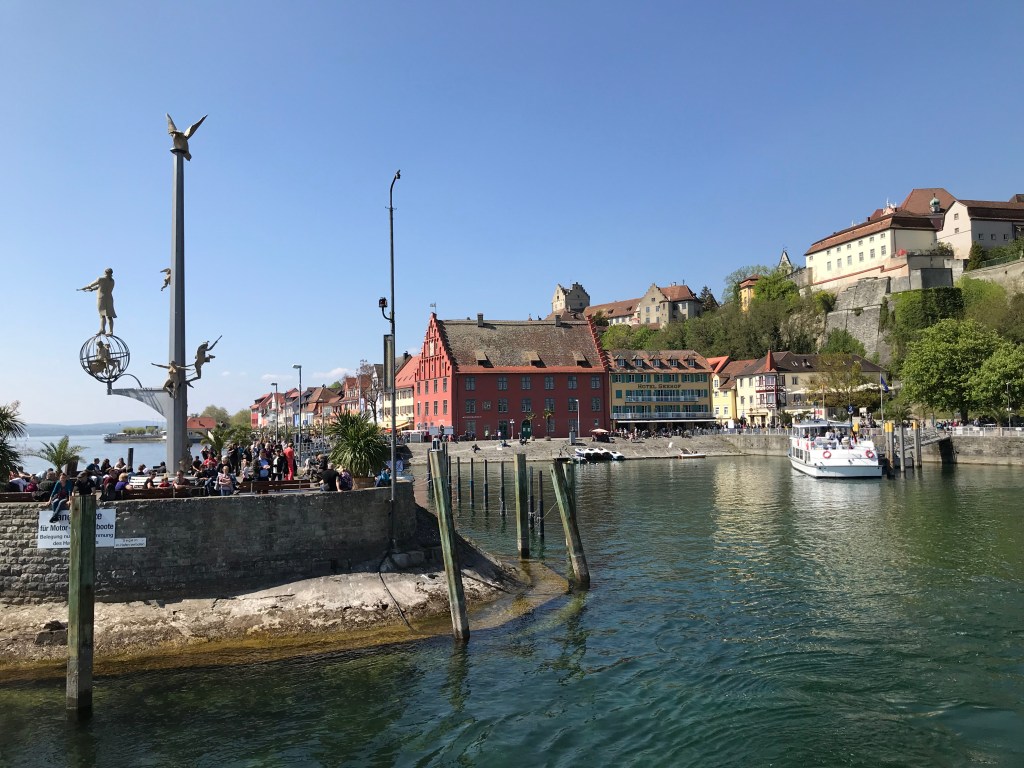
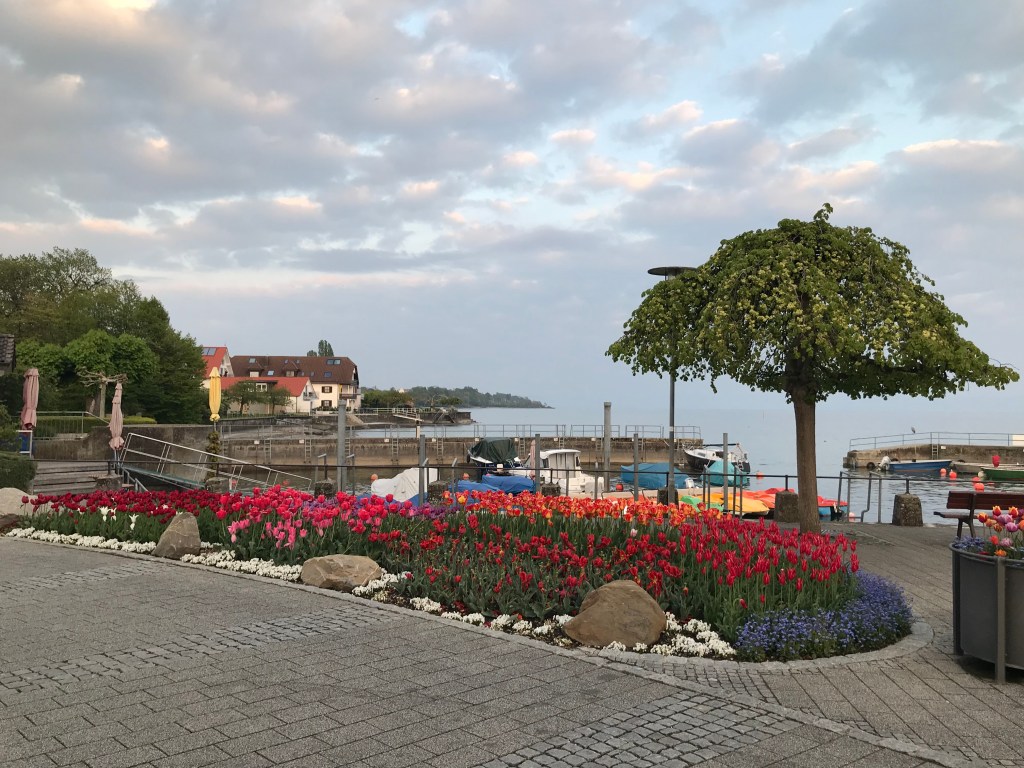
The ferry route back was slightly different and we left from the quaint harbour.

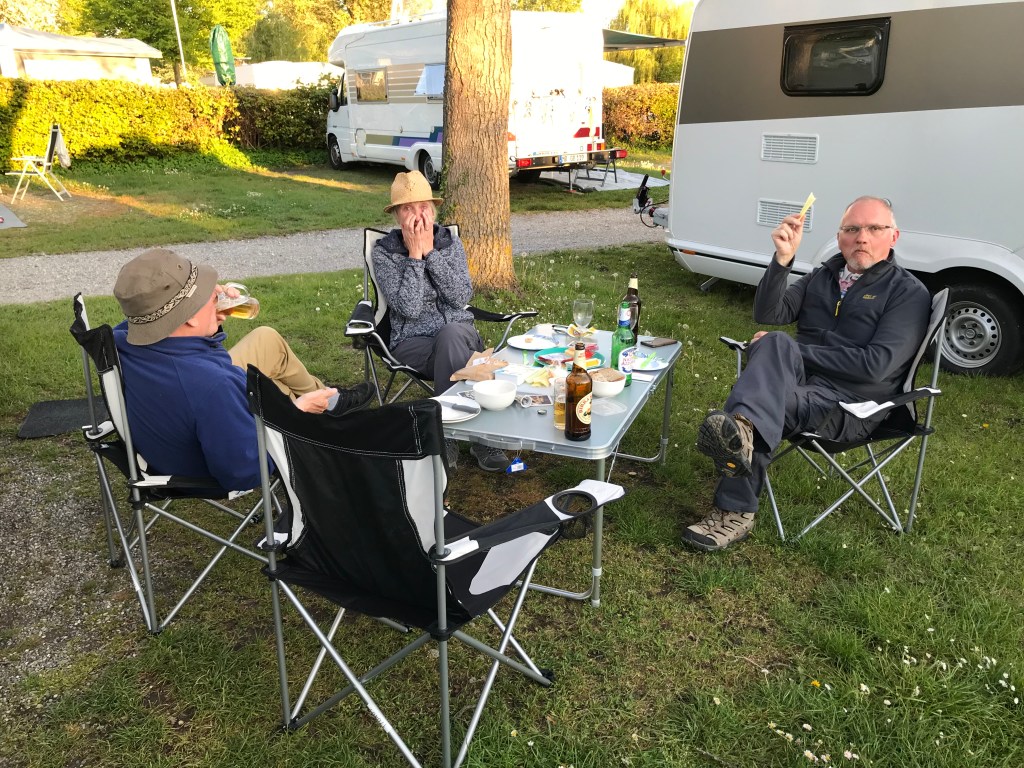
Our evening was spent relaxing by the lake at the campsite before al fresco eating. This is the first time we’ve managed it this trip and it was a real treat.

From Austria to Germany

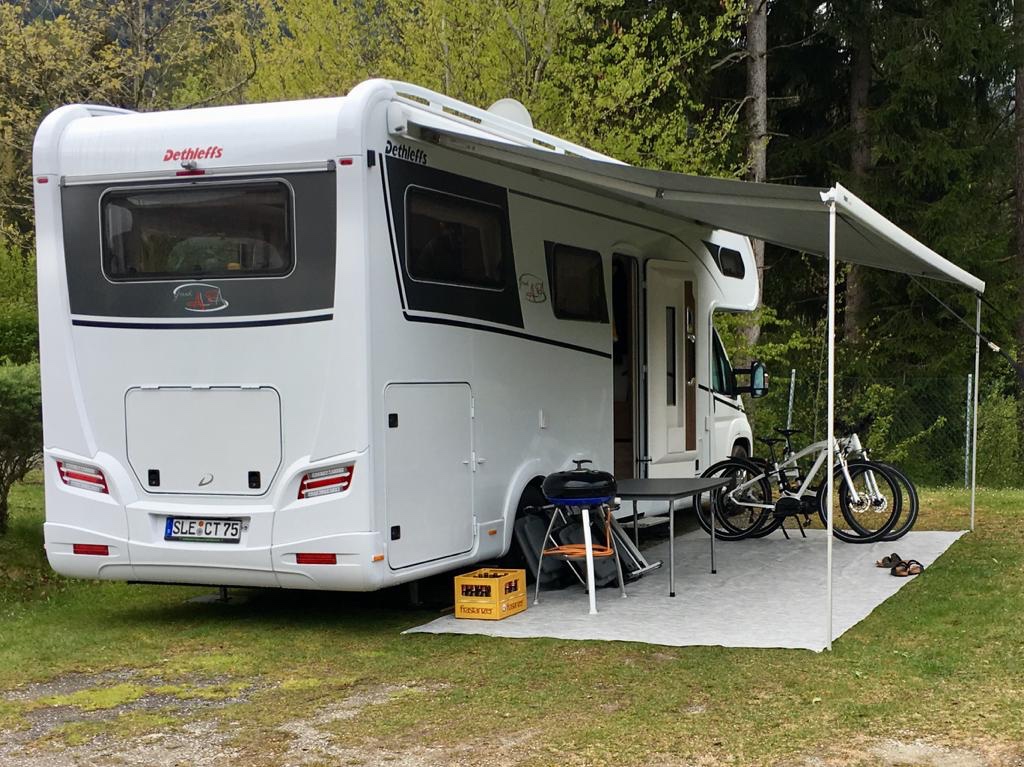
As we left site today we noticed this German camper van demonstrating how it should be done, spotlessly clean with full-width awning and ground cover, bikes carefully positioned one side and a barbecue the other. They even have a beer crate for empty bottles.

Only 150 miles covered today and we managed to make it last 7 hours. John was determined to enjoy the drive by avoiding motorways. We did and the drive would have been even more stunning if the skies had cleared.
It started with Google taking us an unexpected route out of Natterer See, we thought there was only one way in and out so this was a surprise.

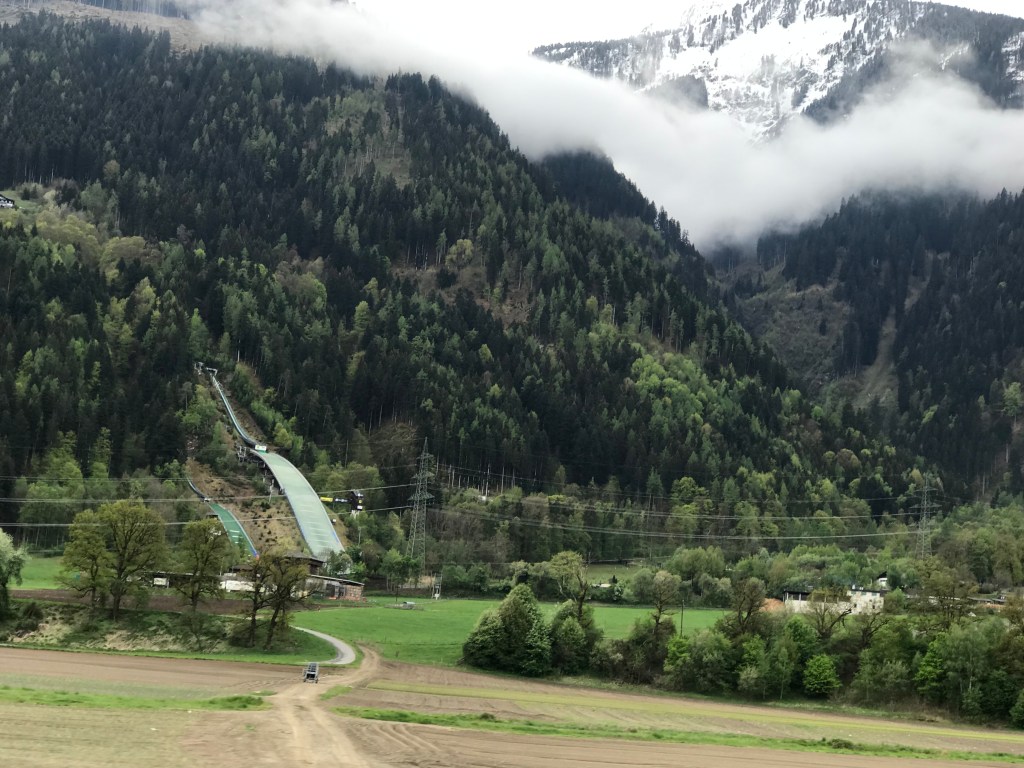
We followed the D171 Tiroler Straße through pretty Tyrolean villages and past the Stams ski jump.

Followed by the D189 which was fine other than rocks the size of footballs started rolling down the hillside into the road. Luckily we were able to avoid them but it was rather a shock.
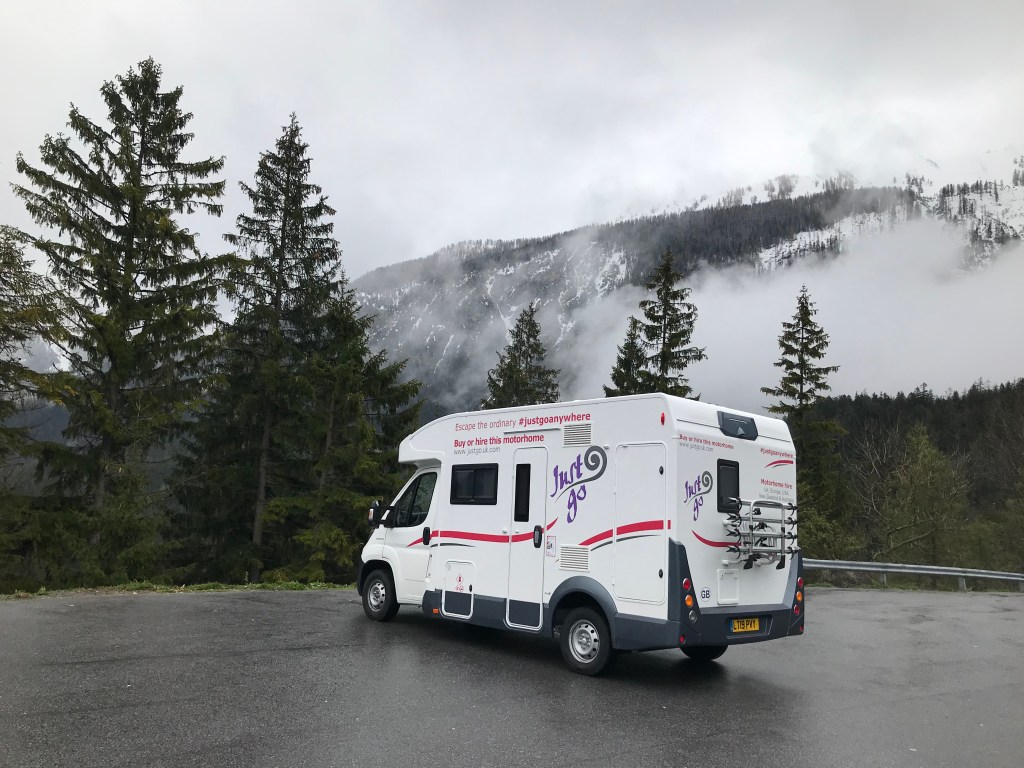
Elevenses was at a remote mountain top restaurant in Biberwier, overlooking Blindsee, where a cup of tea was eyewateringly expensive. There was a chance for an atmospheric photo though

Past Ehrenberg Castle and it’s 400m footbridge suspended across the gorge. The footbridge was an amazing site as we drove under it and we were too surprised to take a photo, sorry.

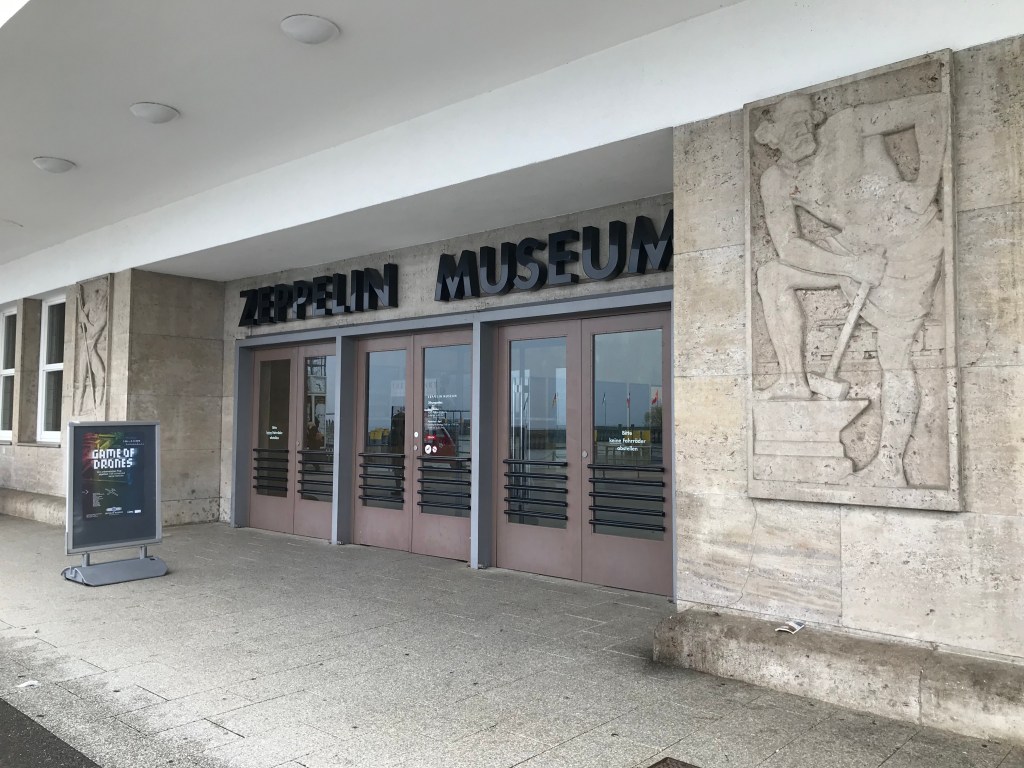
We arrived in Friedrichshafen to visit the Zeppelin Museum. We’d failed to do so last year having been spooked by low bridges and unable to find anywhere to park last year’s monster van. No such problem this year with Kim’s new friend, the Campercontact App.

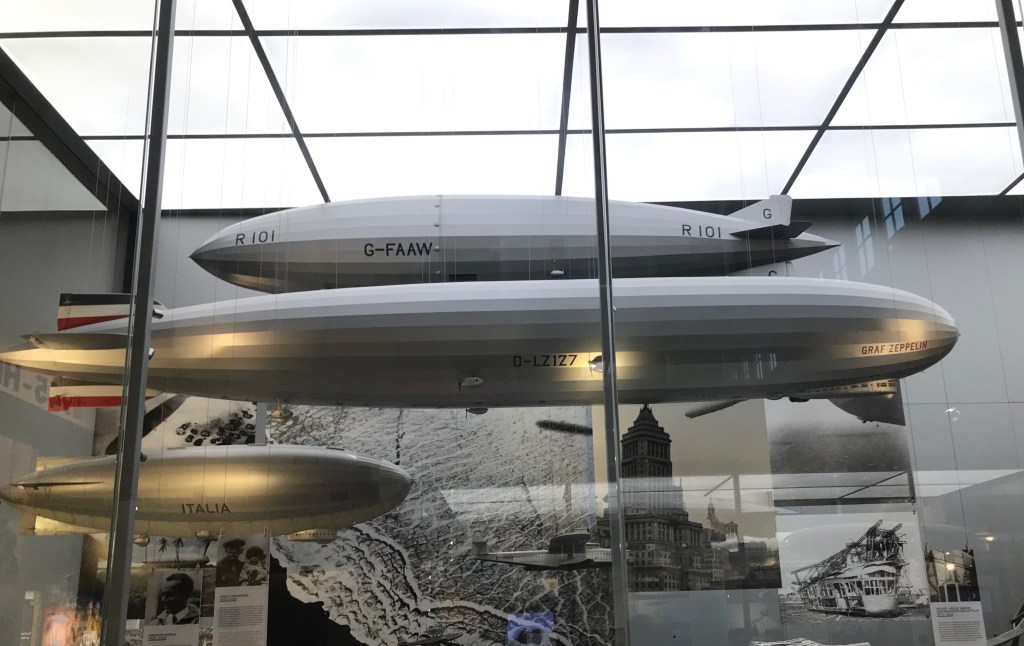
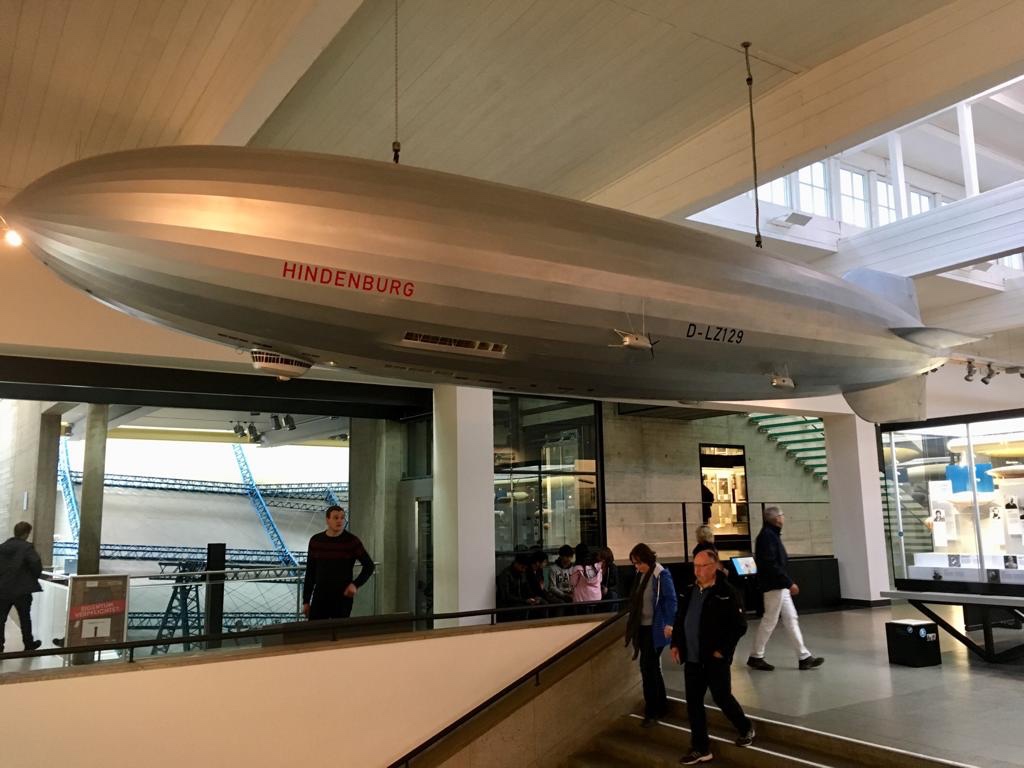
The museum was fascinating, charting airship history from early 18th century with the first powered flight taking place in 1852.

Scale replica models accompanied the history and it was interesting to see how airships were further advanced than aeroplanes of the same era.

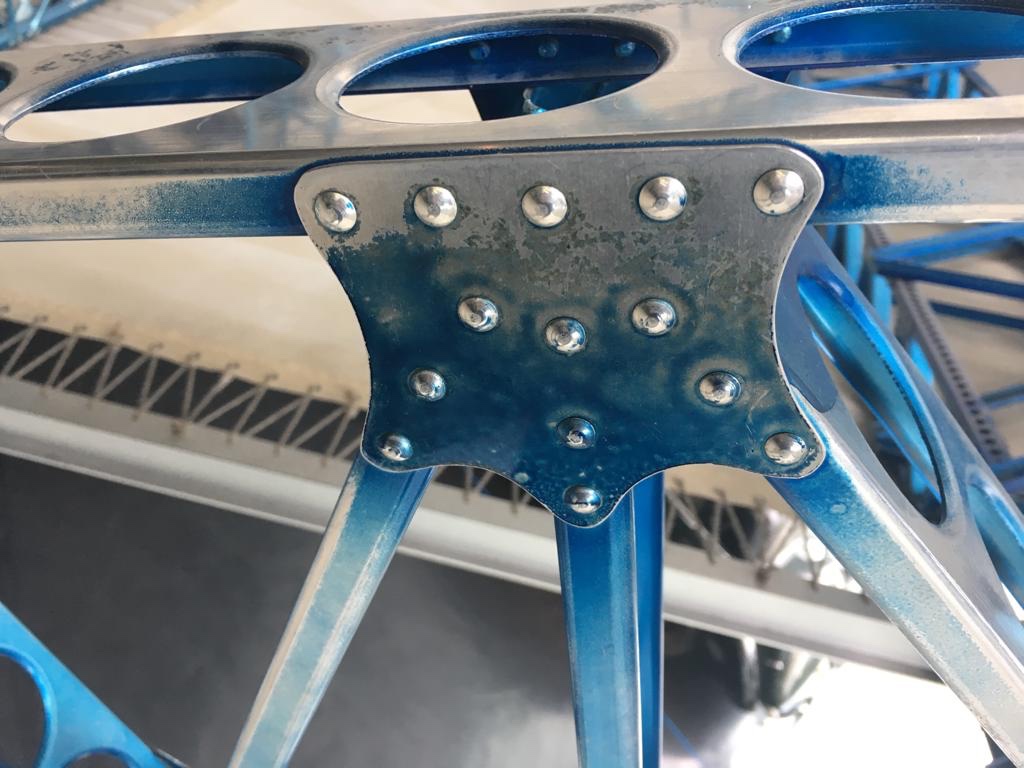
Sections of omega shaped aluminium were still being riveted together by hand until the 1990’s although the latest airships now use carbon fibre.

During WW2 the Zeppelin factory was used to produce V-2 rocket propellant tanks resulting in the town of Friedrichshafen being heavily bombed by allied forces. It seemed surreal looking at photographs of damage to the town we had inflicted.

Our next couple of nights are at Hagnau on the Bodensee. Hagnau’s a 15 minute walk along the lakeside and is very pretty. We have high hopes of some sunshine.

A day in Innsbruck

Firstly, we’ve had our most comfortable night by far. Who knew that leaving the heating on overnight would keep you warm?!?!

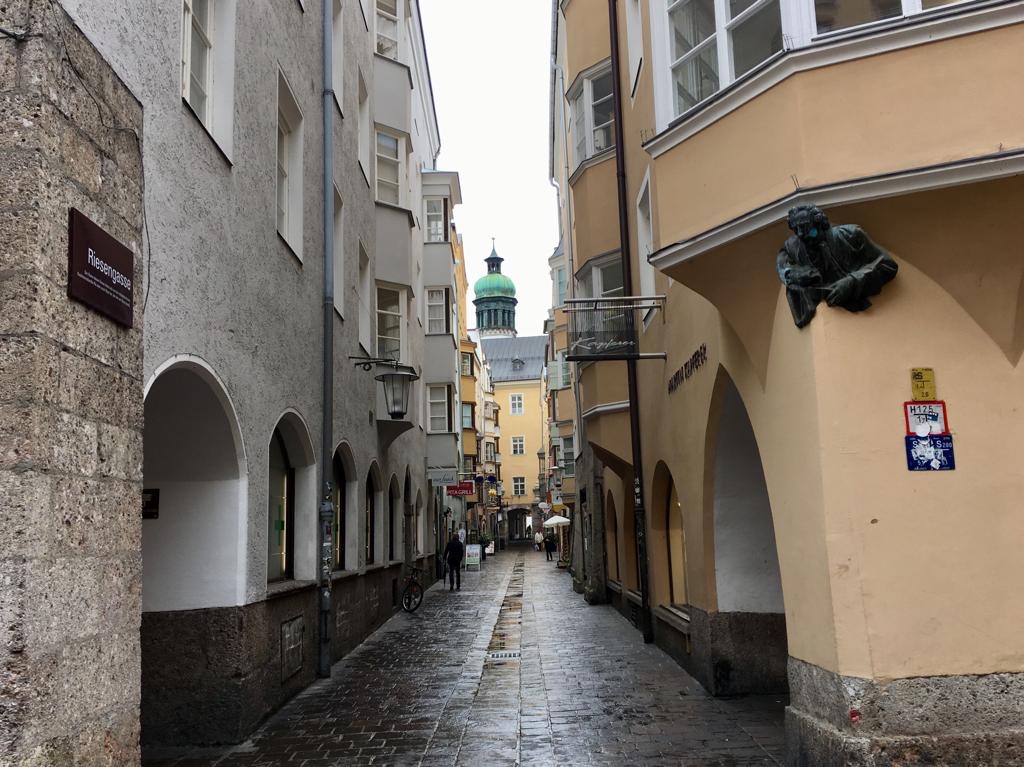
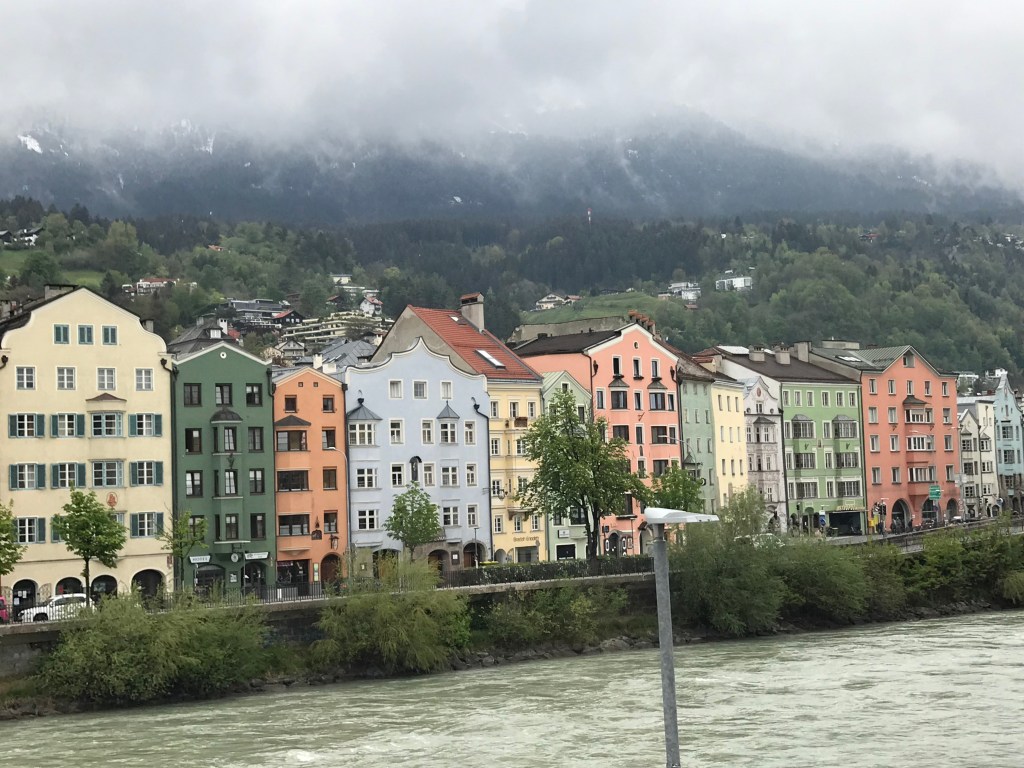
Our van was abandoned at the campsite as we caught a bus into Innsbruck, with a map of the city and no real objective other than to find a riverside cafe and make a plan.

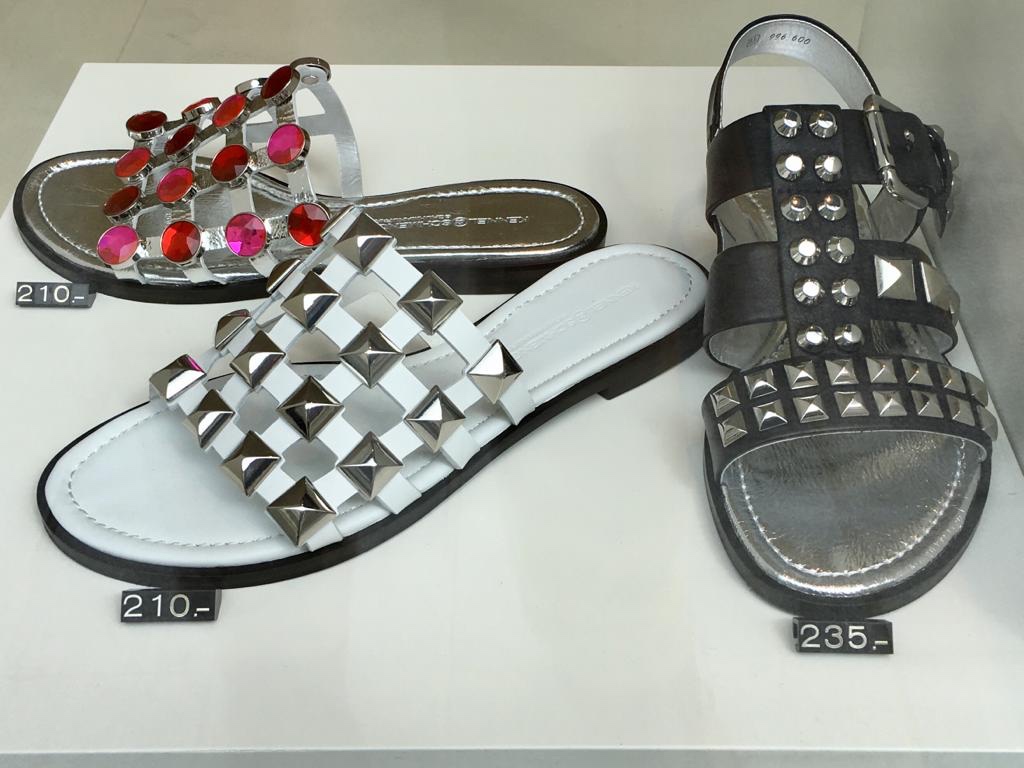
John held on tight to Kim to stop her disappearing into the shoe shop. Prices were eye watering but the shoes were very sparkly.

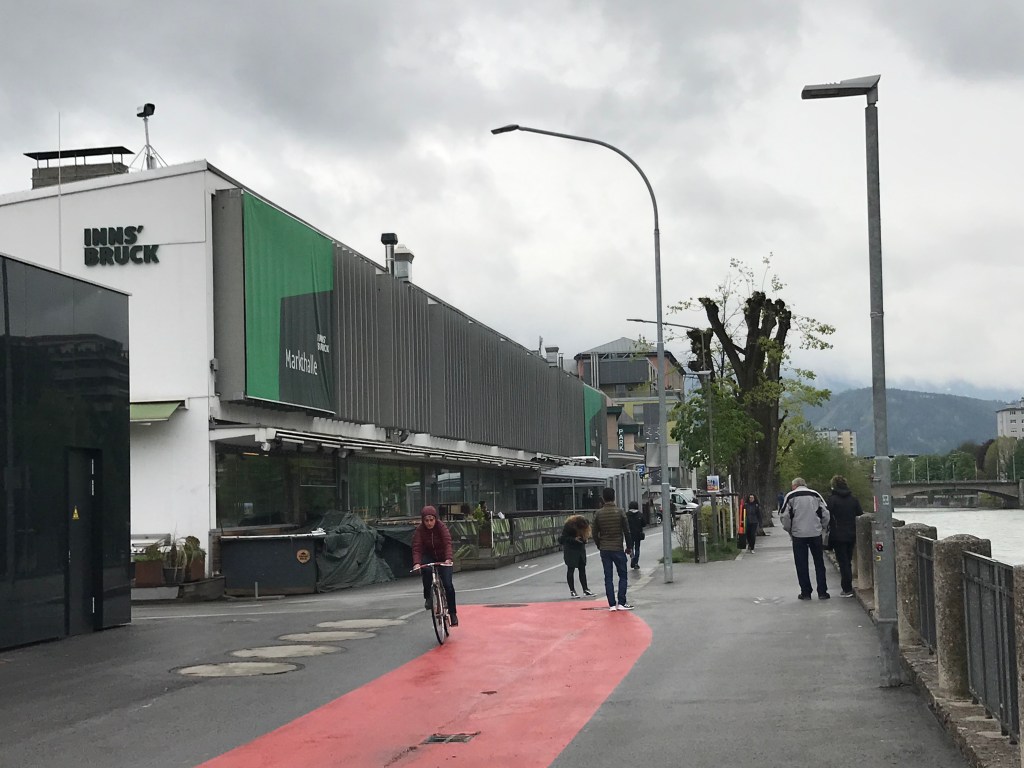
Situated on the outskirts of the old town, the cafe we found was opposite Markthalle.

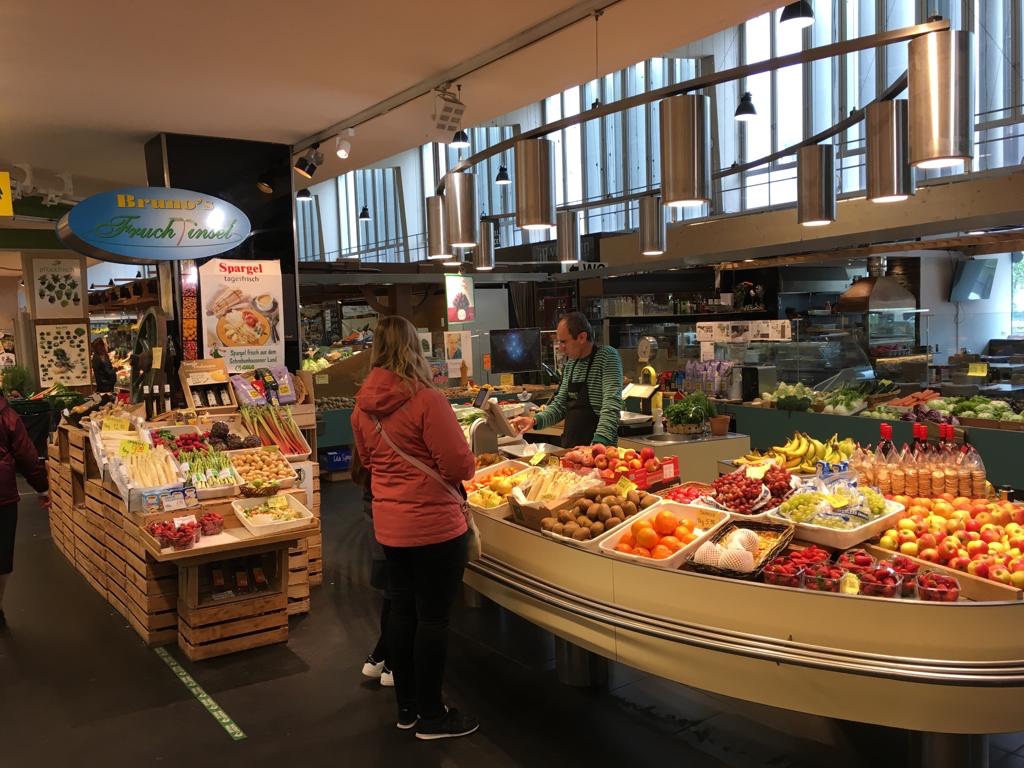
There has been a market on this site since 1460. These days you can have a Tyrolean breakfast which seems to consist of bacon or cheese dumplings while watching local farmers sell freshly picked fruit and other produce with each stall offering free samples. We opted for delicious Apfelbrot, a soft dark bread with apple and walnuts.

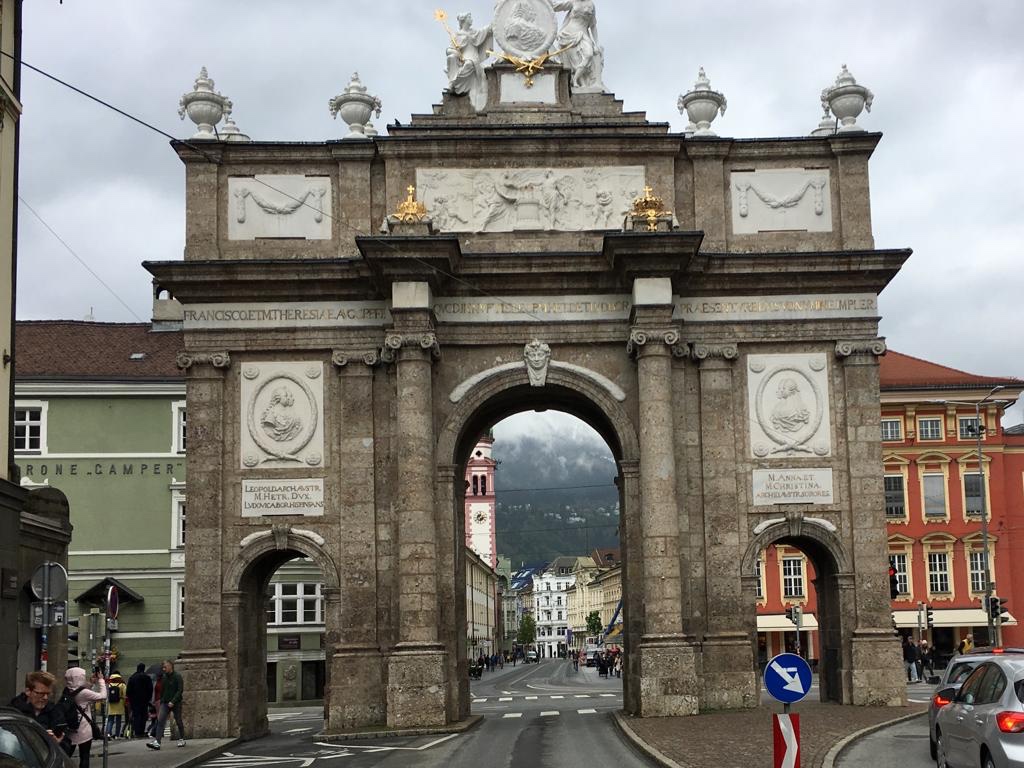
John liked the idea of visiting the Anatomy Musuem and the Tyrolean Railway Museum. Both were closed, so the Bell Museum located at the Grassmayr Bell Foundry became our destination, via the Triumphal Arch.

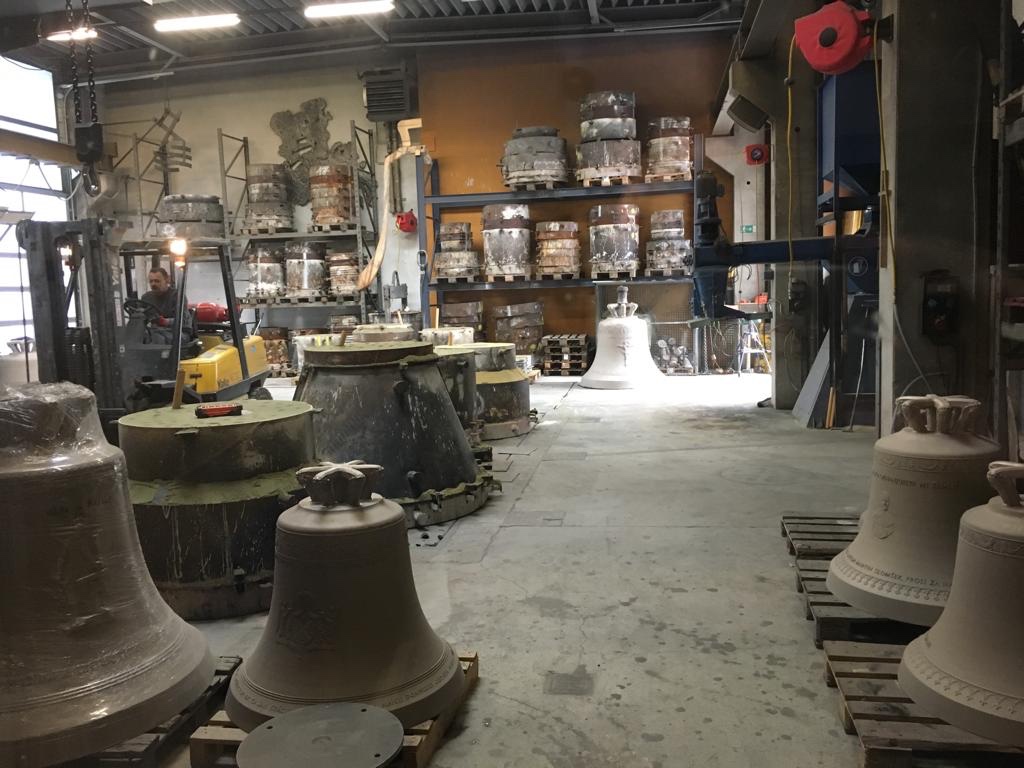
Grassmayr has been casting bells since 1599 and obviously have the hang of it. As museums go it was tiny but fascinating. John was disappointed to see that the first bell ever cast was by the Chinese even if it was 5,000 years ago. We watched a short film showing the casting of a commemorative bell in 2017 and wandered into the foundry. You would not have been allowed to do this at home…

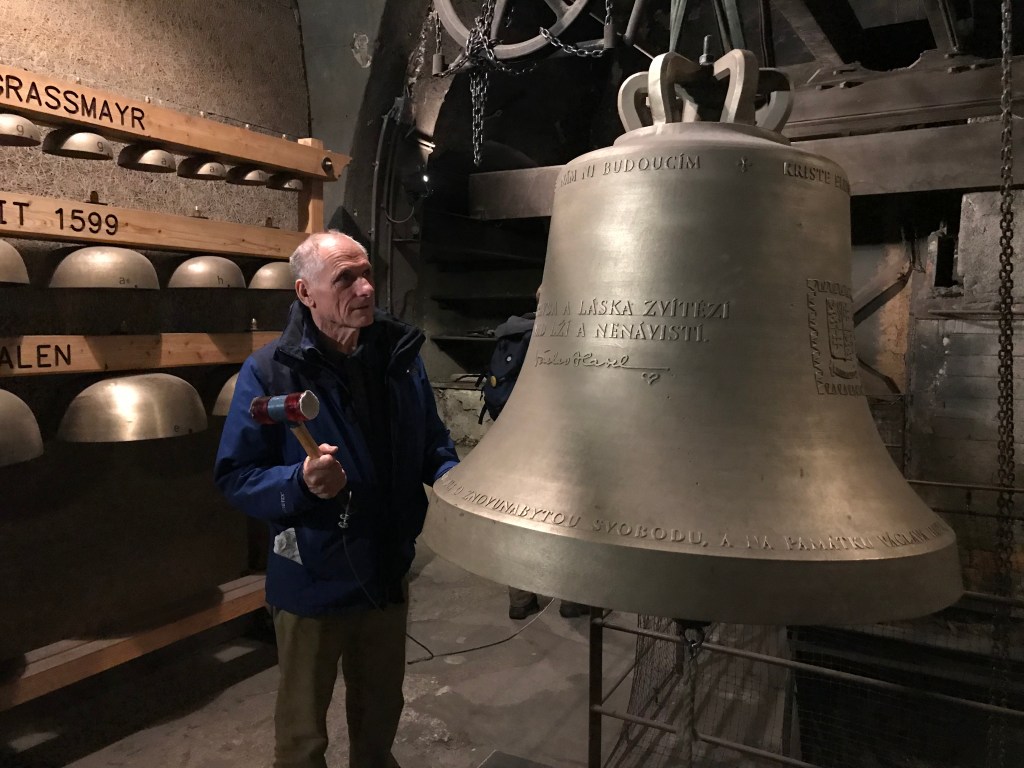
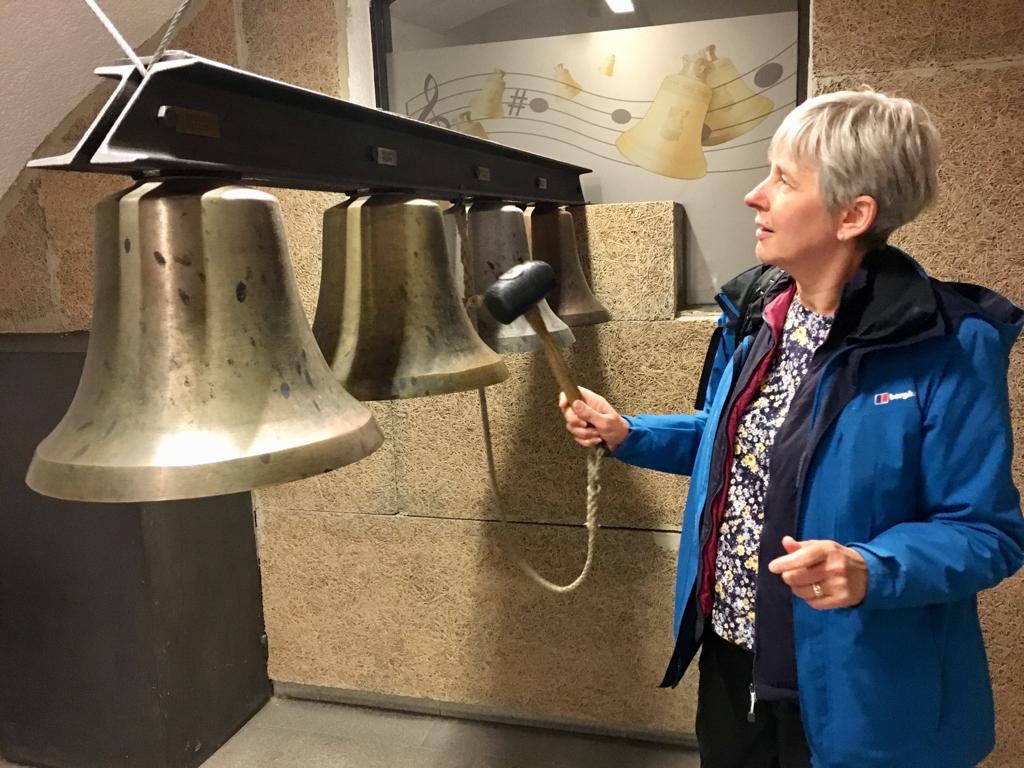
Bells could be struck with mallets to hear different tones and notes!

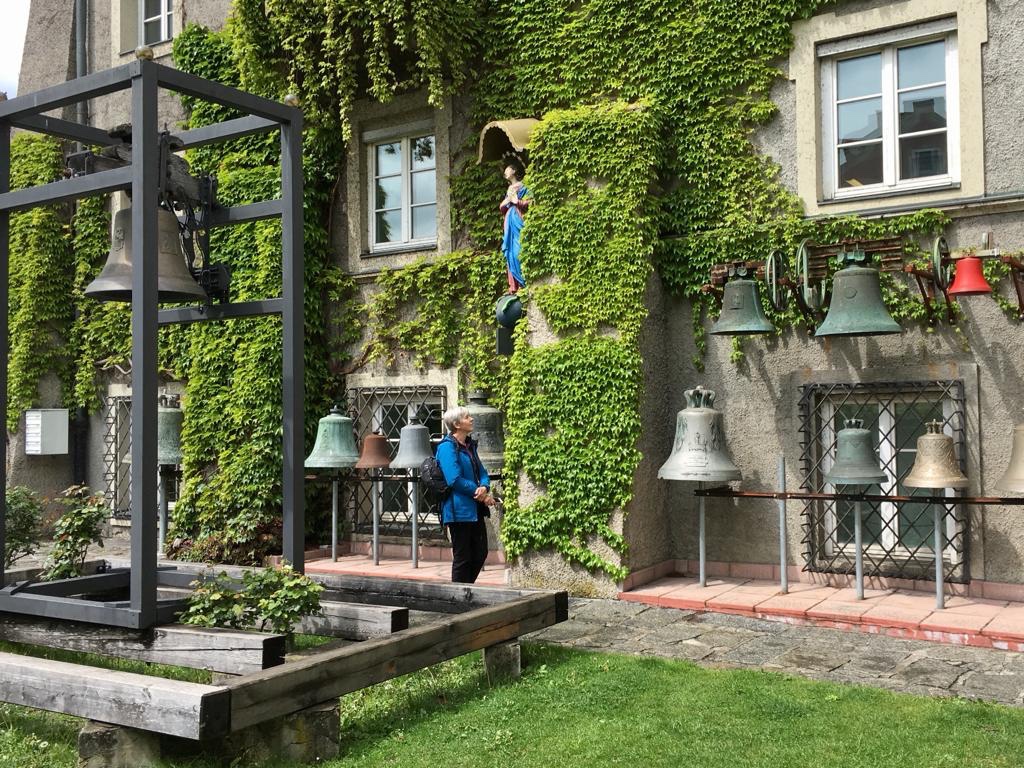
And view a selection of bells displayed in a small garden.

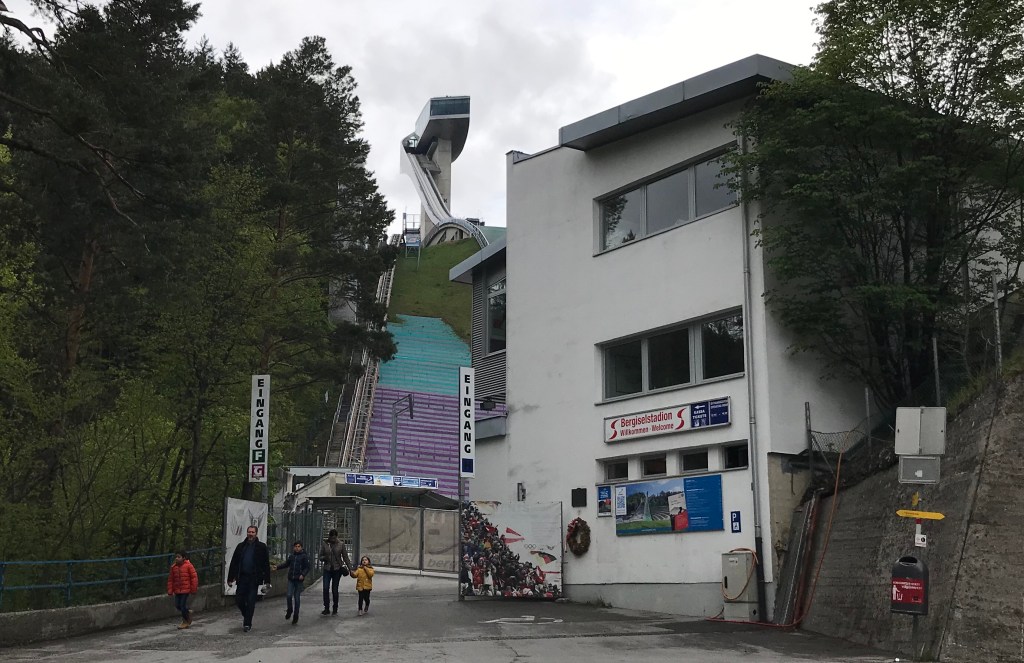
John then turned his attention to the Bergisel Ski Jump, which we could see towering above the city. Google Maps said a 20 minute walk so we were off, hard work as of course it was all uphill.

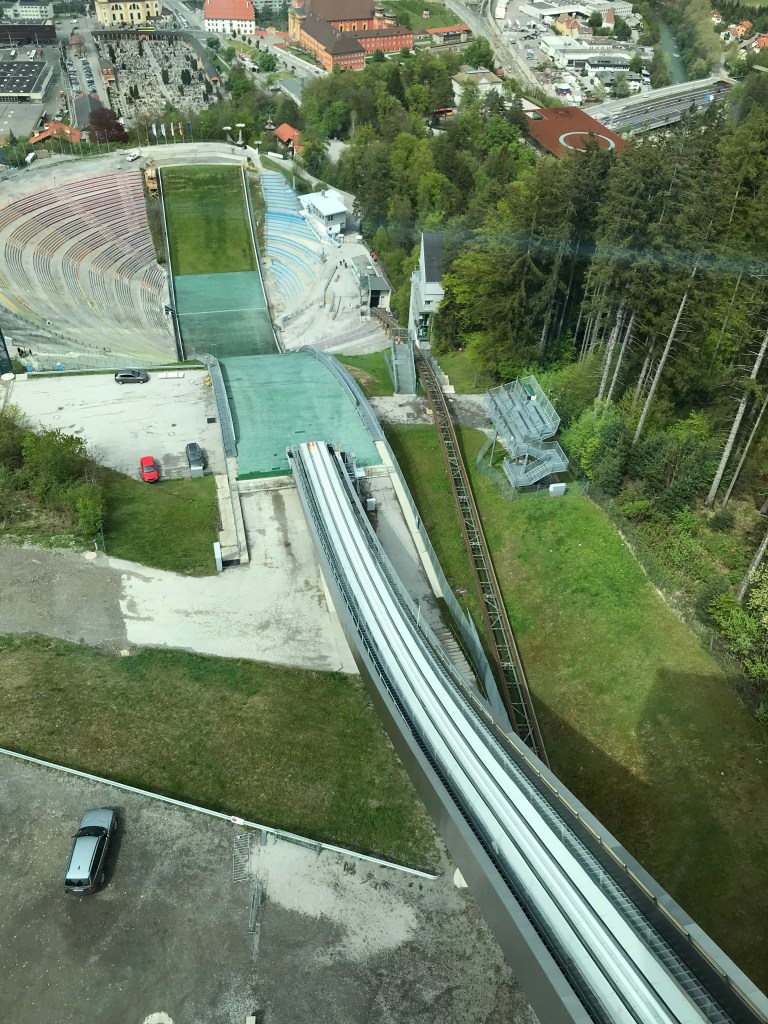
We bought our tickets and took the small funicular up to the viewing platform at the very top where the ski jumpers make their descent.

‘Why would you do this?’ is the question that sprang to mind and it became more incomprehensible the higher we went!

Those of you who know Ken and Jacky will appreciate, plans often have a habit of changing, and following yesterday’s tearful farewells in Italy we’re all still together. Ken is walking almost upright although it takes him most of the day to achieve this and he has purchased a walking stick to assist.

We leave for Helmsdorf on the Bodensee tomorrow and wait to see what happens next.

Life is short….

Please forgive any repetition, we stayed at Ferienparadies, Natterer See last year and just had to come back. It is the land of magical showers (underfloor heating, spotlessly clean – the list goes on)

We are on the same pitch as last year and here’s the photos to prove it

It’s a shame we don’t have the weather but underfloor heating more than compensates!

P.s. other campsites in Austria are available (apparently).

A change of plan

Sadly, Ken and Jacky have made the difficult decision to head for home. Ken’s back is worse, there’s a 45 degree roll to his walk and he does look rather comical. We’ve been very good and not laughed.

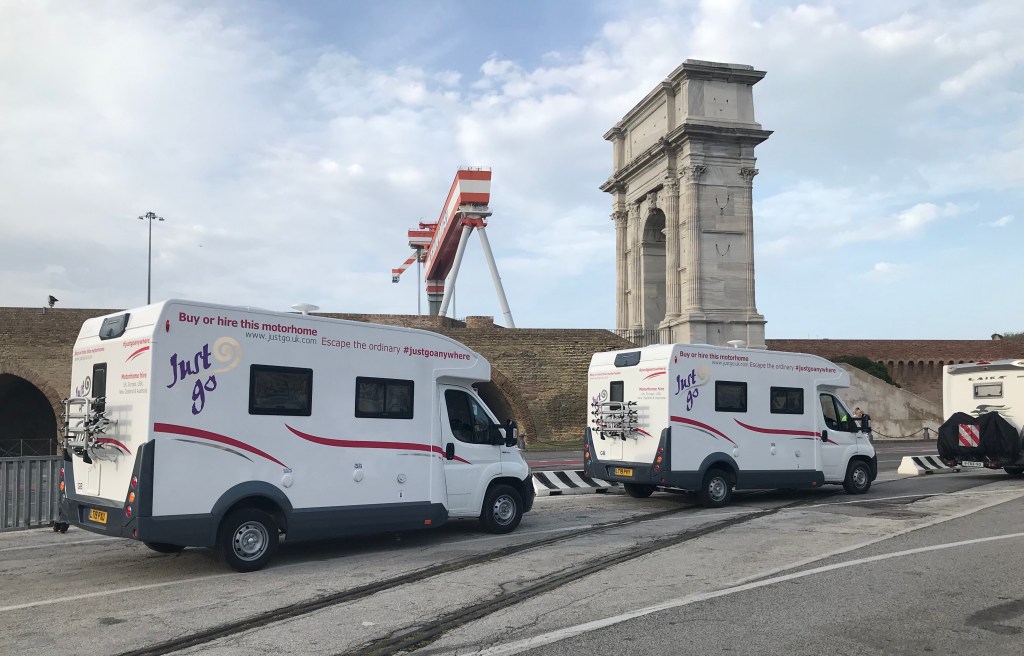
Before leaving Sistiana, we spoke to a Scottish couple, Brian and Shirley, who are on the road for 4 months and heading to Croatia. There was a long chat about vignettes in Slovenia (we hadn’t paid!) and the merits of different size motorhomes. The small Rollerteam Rainbow has been by far our best choice but even Kim doesn’t want to own one anymore!

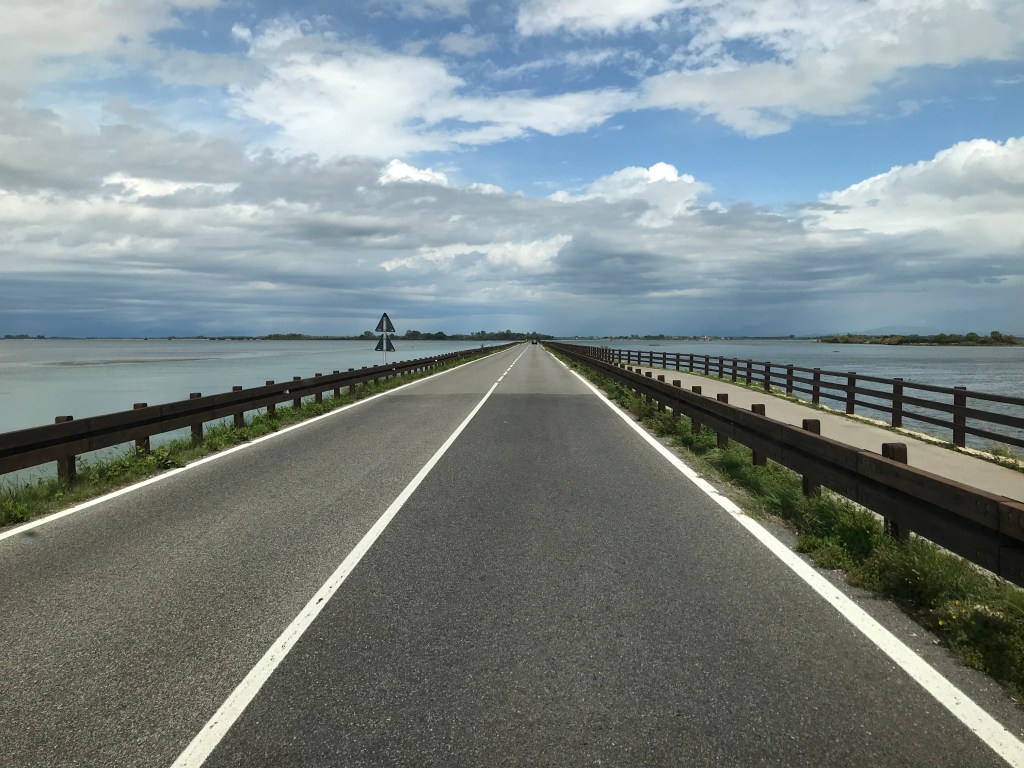
The seaside town of Grado had been recommended to John and was only a 30 minute detour on our way to Lake Garda.

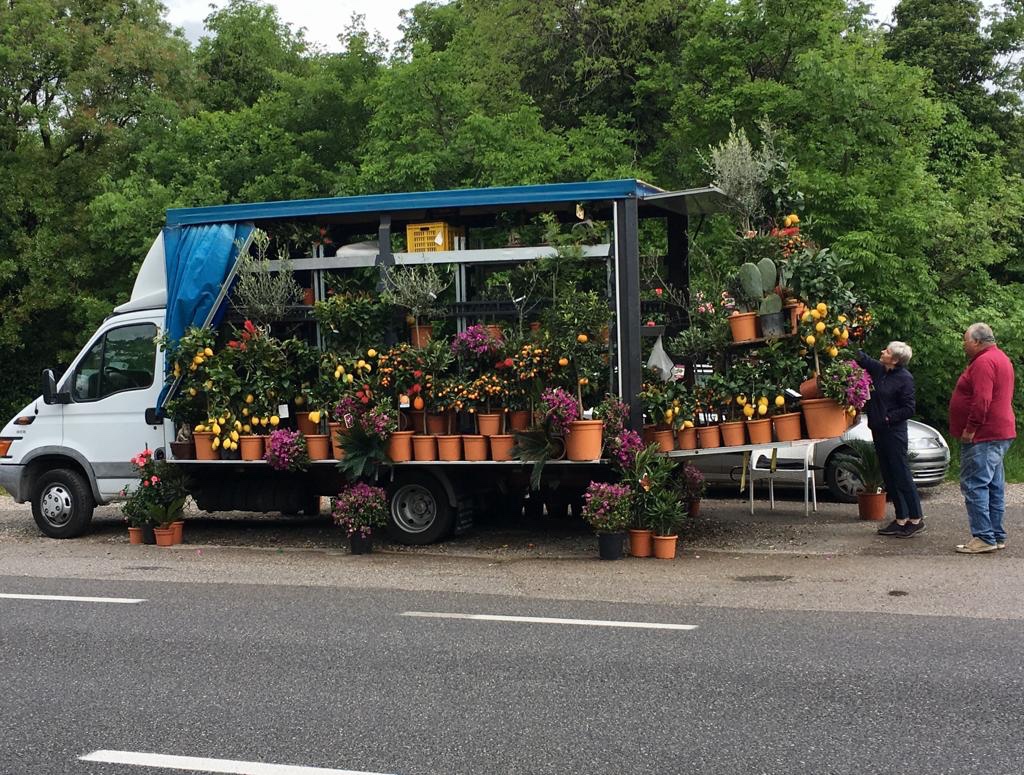
En route, we were distracted by the plant seller at the roadside and Kim couldn’t resist purchasing an Oleander.

She’s researching if it will have to be abandoned before leaving Italy, because it carries a risk of Xyllela pathogen and we’ll have to disinfect the van. It’s currently living in the van’s garage.

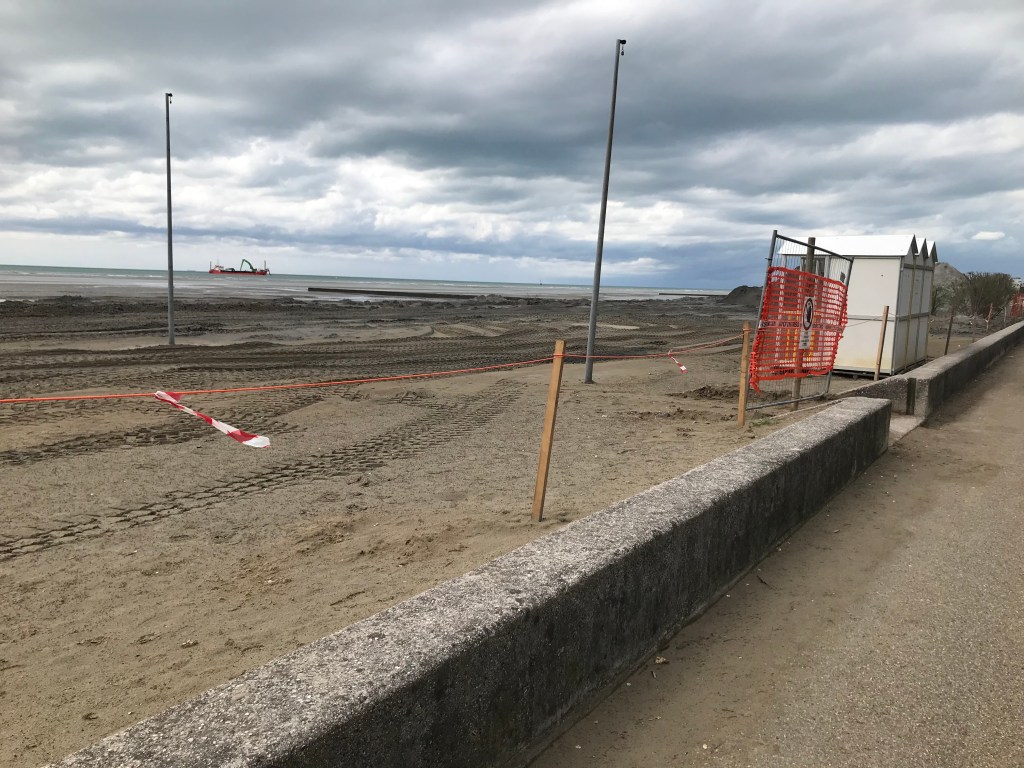
The drive into Grado was worth the effort but the walk along the seafront was completely underwhelming.

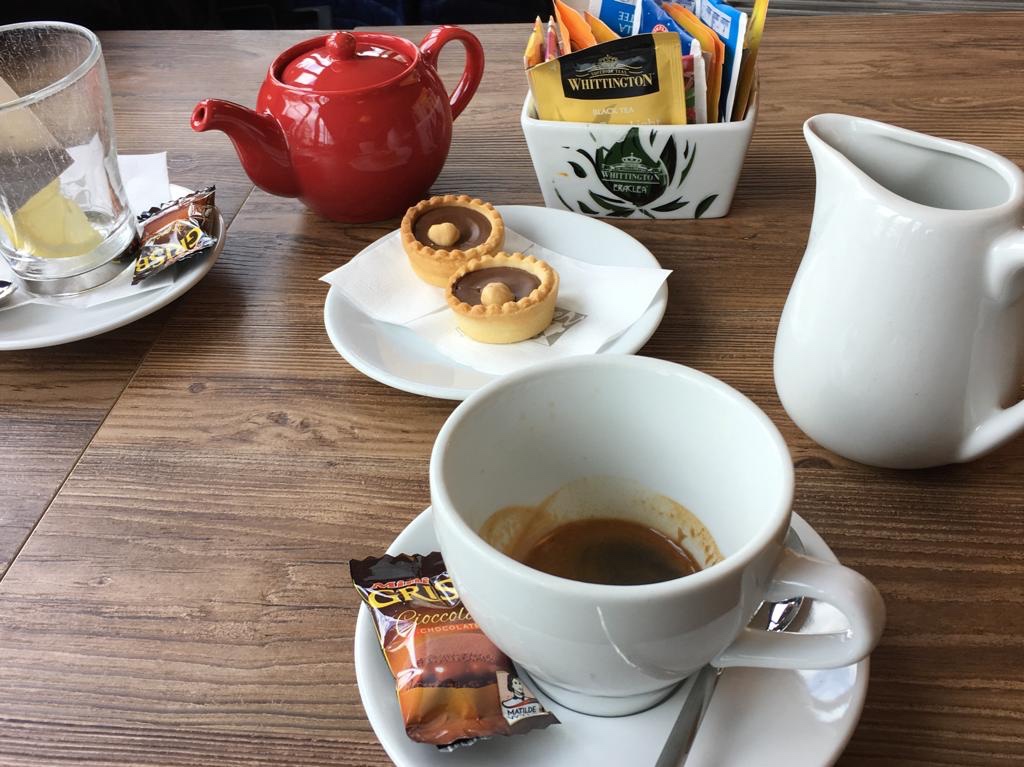
To recover from our disappointment, we stopped for elevenses in a small bar.

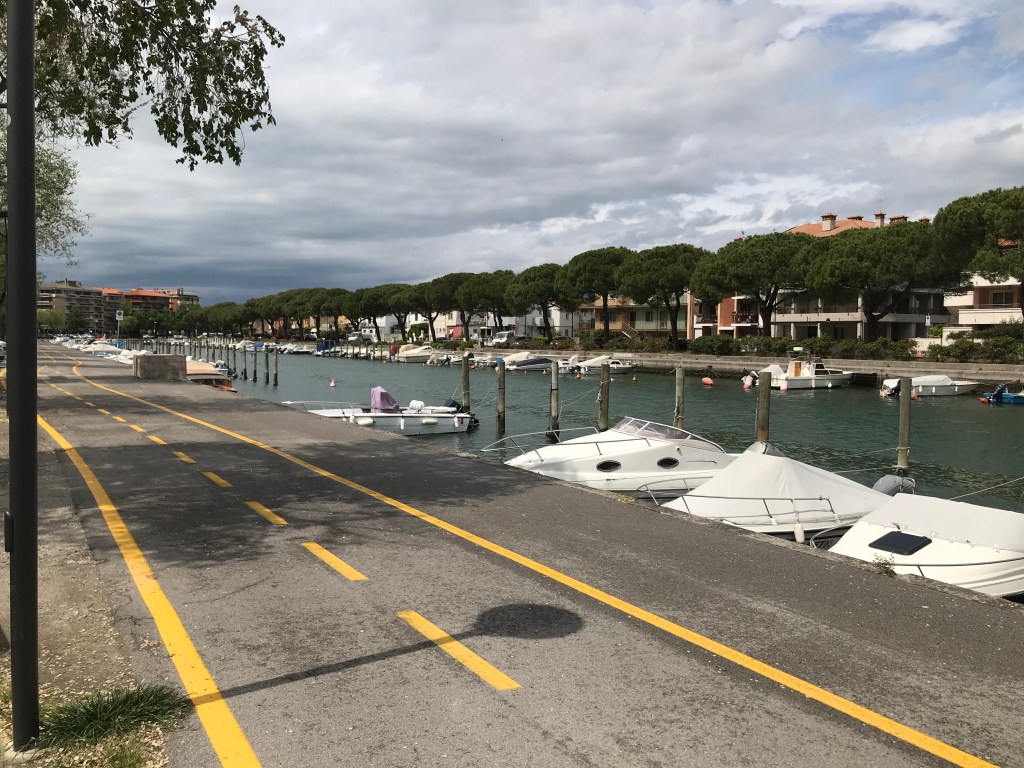
The route out of Grado had us reconsidering our view of the place, the lagoon side was rather nice.

We had a decision to make, should we head for Garda as planned or try and meet up with Ken and Jacky who were going straight to Innsbruck. We checked weather and campsite check in times and crossed Garda off our itinerary! 5 hours across the Dolomites and through the Italian Tyrol it was.

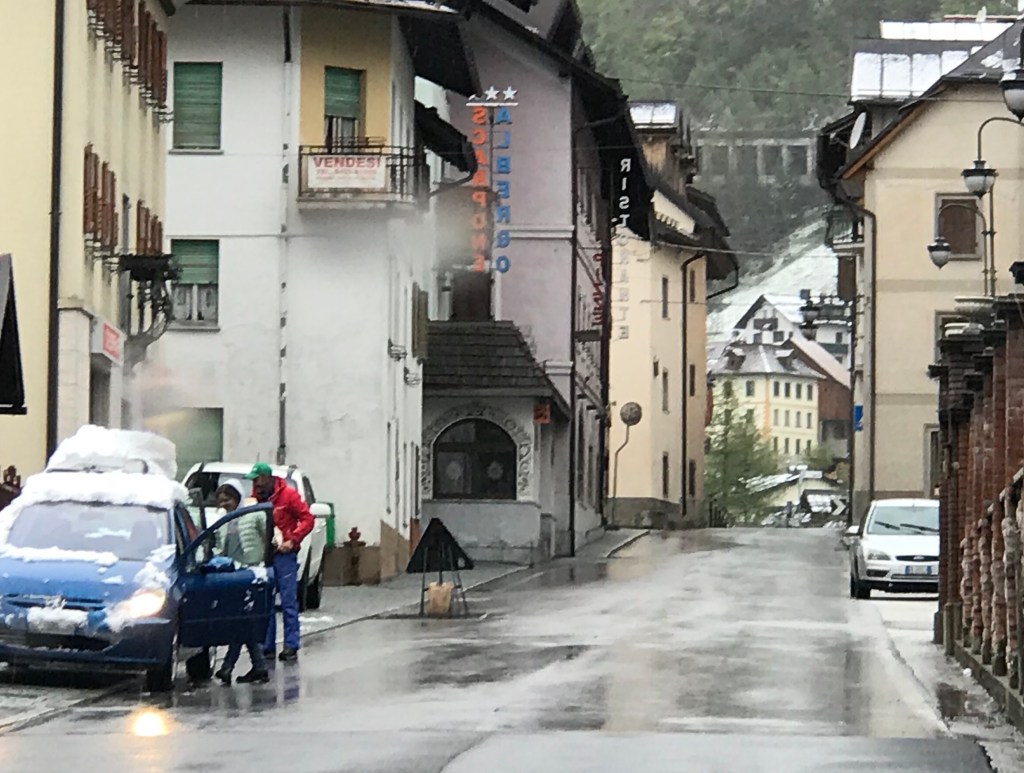
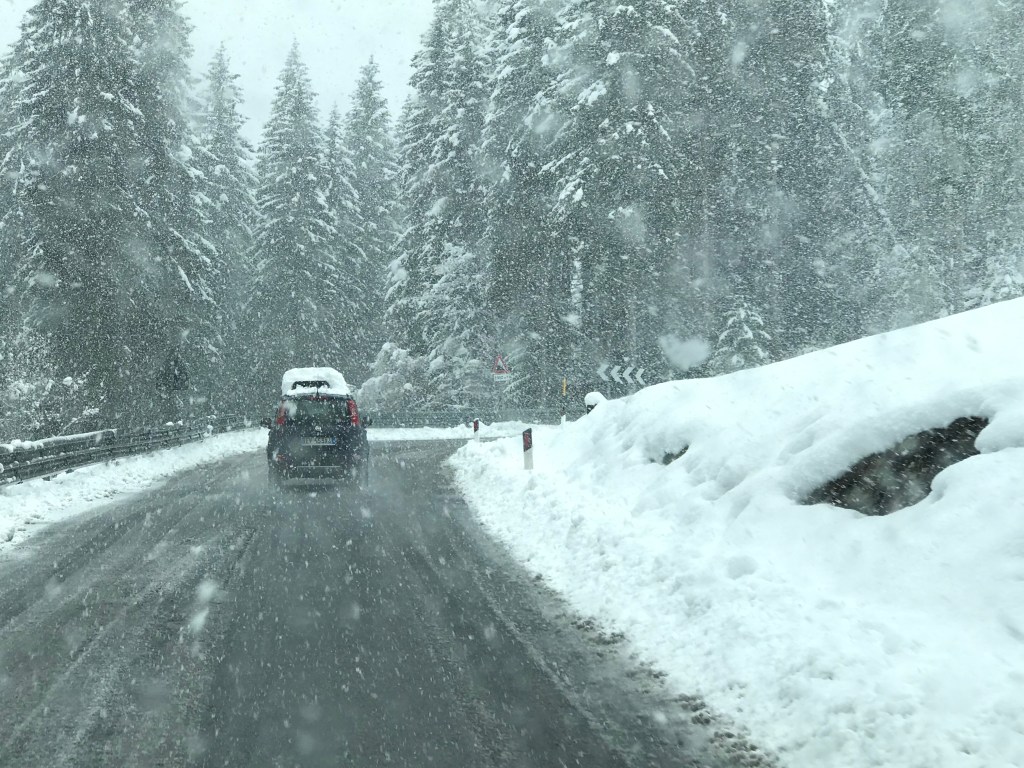
John wanted a more interesting drive so we left the motorway north of Udine and followed the SS52 along the valley of the Tagliomento River. It was raining hard but the villages were pretty. The little Fiat van breathed in as we squeezed round some very narrow roads. Alarm set in when we started to see cars with snow on them.

It got considerably worse, and there was no other way through. Temperatures dropped and rain turned to snow…

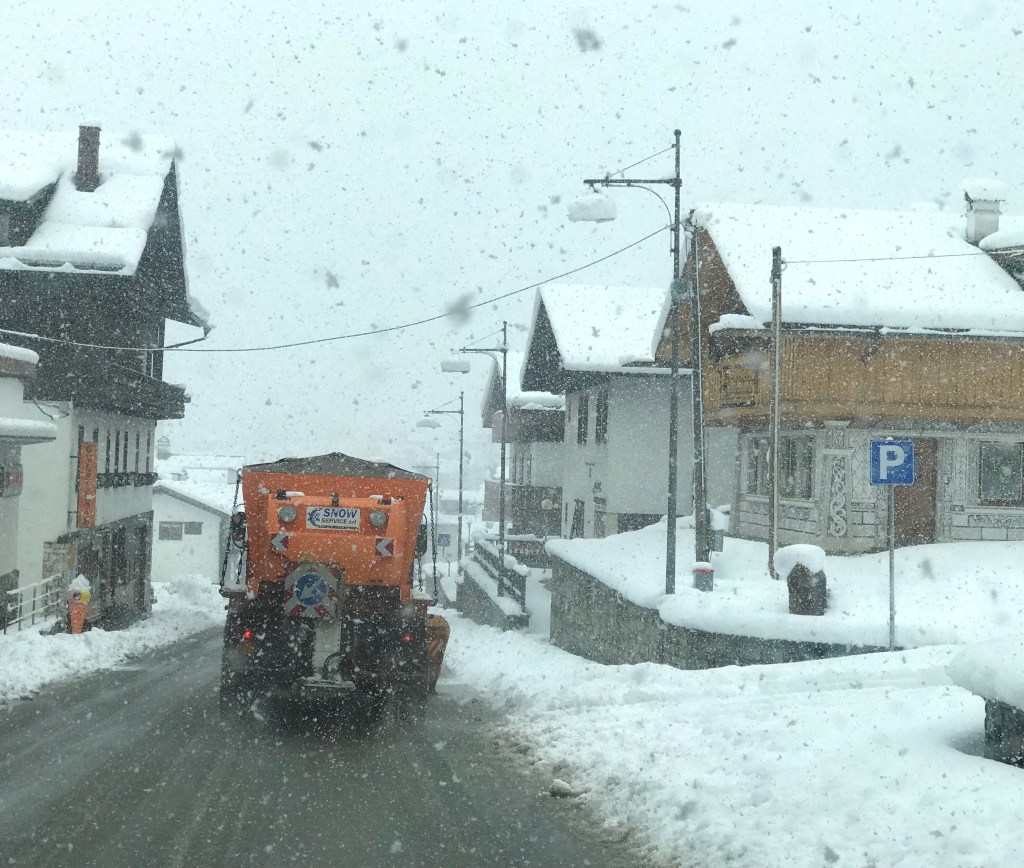
We followed a snow plough for miles- John was having the time of his life, wondering if we were allowed to overtake it.

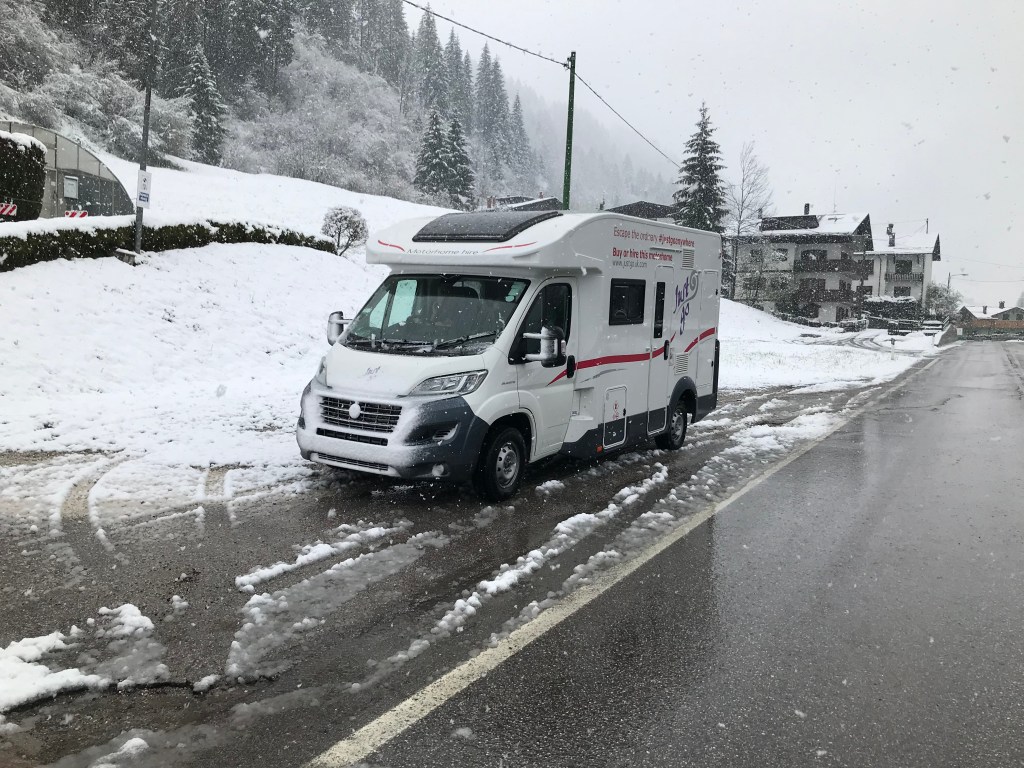
The roads cleared for a while so we thought the van deserved a photo. There wasn’t as much snow on it as we had hoped.

Then we got to the point that a snowplough was behind us, we wished it was in front and even John was becoming alarmed by the conditions and wishing we had snow chains. Kim had been in a state of alarm for at least an hour!

We survived and re joined the motorway just south of the new Brenner Pass and, through heavy rain and snow, made it to Natterer See campsite just after 6.

Beer and chips in the campsite restaurant beckoned as a reward.

The biggest success of the day, apart from not crashing, is the van’s heating system is working. We are tucked up and toasty!

Three countries in one day

A beautifully clear morning greeted us, and we could see the fantastic view from our pitch which had previously been hidden in the haze.

We headed out with a 4 hour/150 mile journey to do and almost immediately left lovely smooth, EU tarmac roads for bumpy narrow Croatian ones!

The van bumped and twisted for the best part of an hour. Roads narrowed and hairpin bends appeared. Luckily, in all that time 3 cars, a coach and one lorry passed on the other side. We were too busy watching the road to take photos but it was lovely. John wants to return in something sensible, like a Porsche or Ferrari.

As we drove around Rijeka, the Adriatic reappeared on our left, it feels a lot longer than two days since our drive along the coast.

Heavy rain and dramatic lightning faced us as our route took us up over the mountains and back inland towards Slovenia.

30 minutes from the border, we joined long queues to enter Slovenia where recent hailstones had been rather ferocious – luckily before we arrived.

Slovenia, not surprisingly, was much like Croatia, with rolling forested hillsides but instead of cheese and honey it was pig roasts which were frequently available at the roadside.

Then we were back in Italy with great views across the Gulf of Trieste.

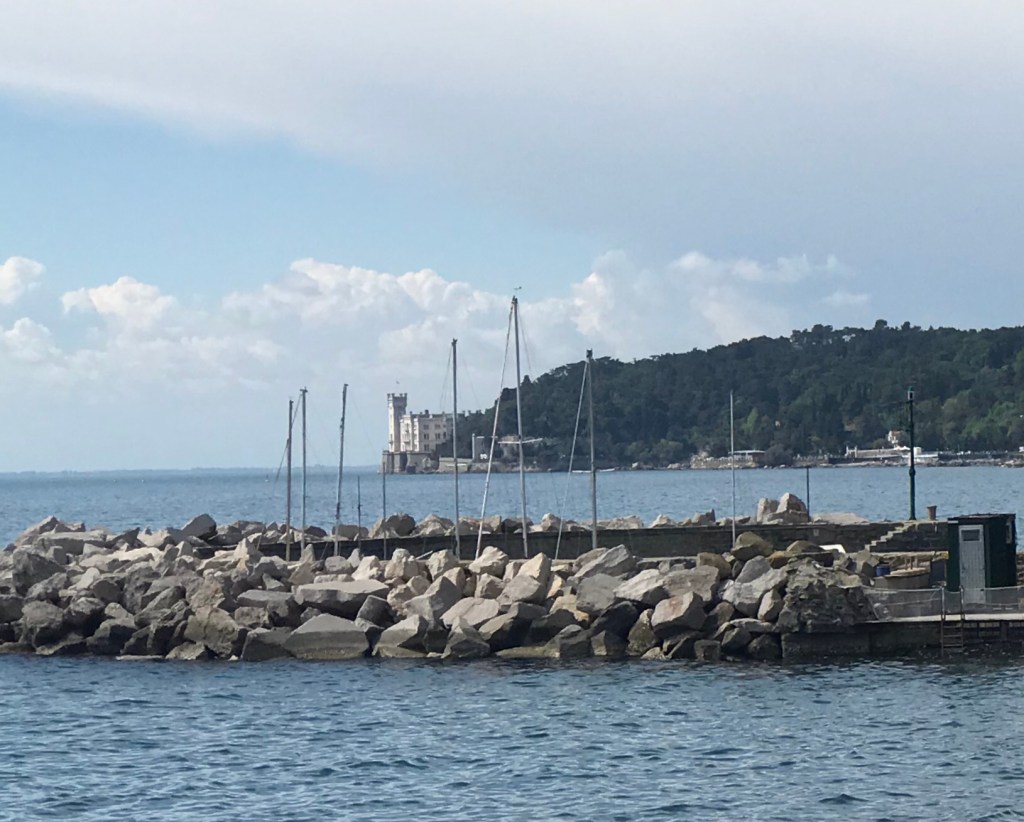
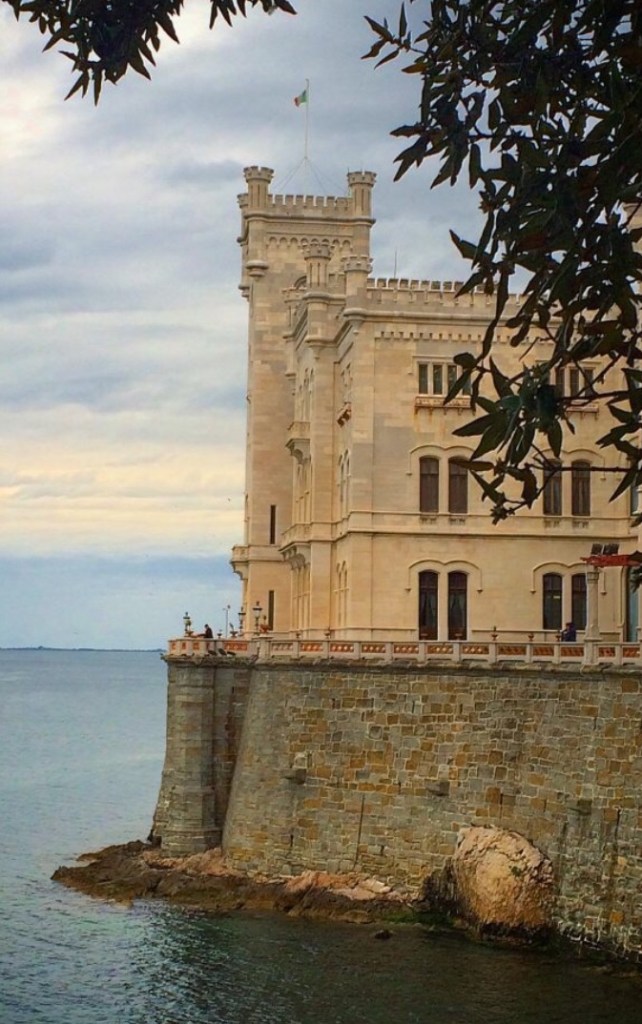
Our plan was to stop at Castello Di Miramar. As we drove out of Trieste, it appeared in the distance on the headland.

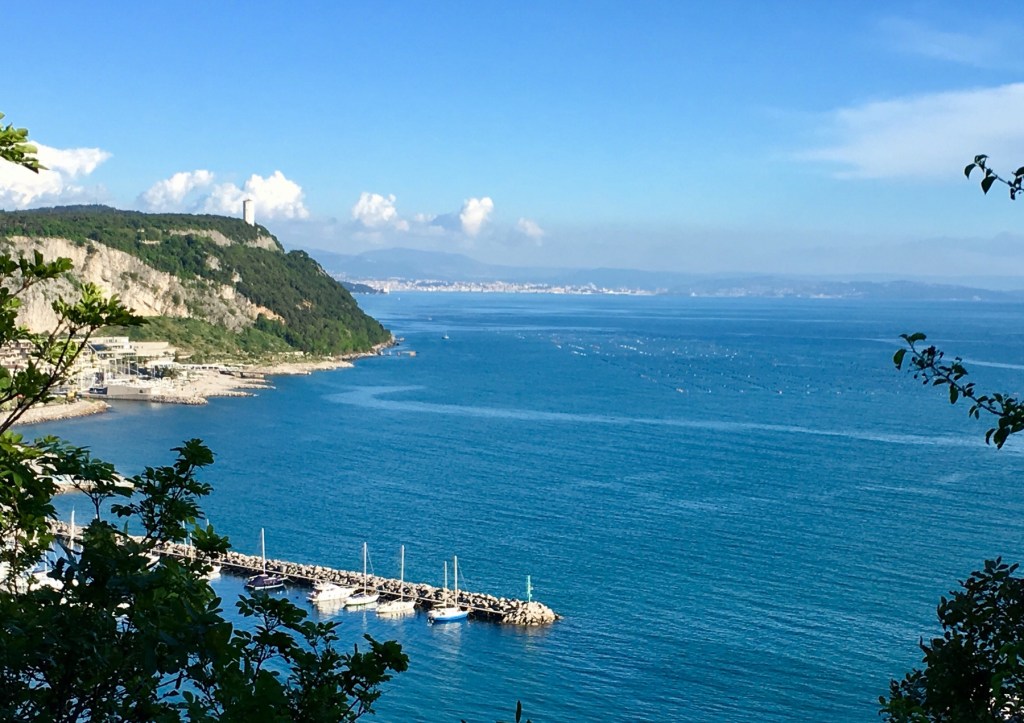
The satnav delivered us to within 100m of the castle, down a very narrow road with parked cars and pedestrians. A parking attendant waved us down and told us to turn around. Scenes reminiscent of last year’s accident came flooding back. We had to turn around in a confined space full of parked cars. Luckily a lovely Italian came to our aid and, with lots of exaggerated gestures described the best way to turn around! There was a queue of cars waiting to follow us out. We’d failed in our attempt to do ‘culture’ and so headed to our overnight stop at Sistiana. The campsite runs alongside the Rilke walking trail and has great views back towards Trieste.

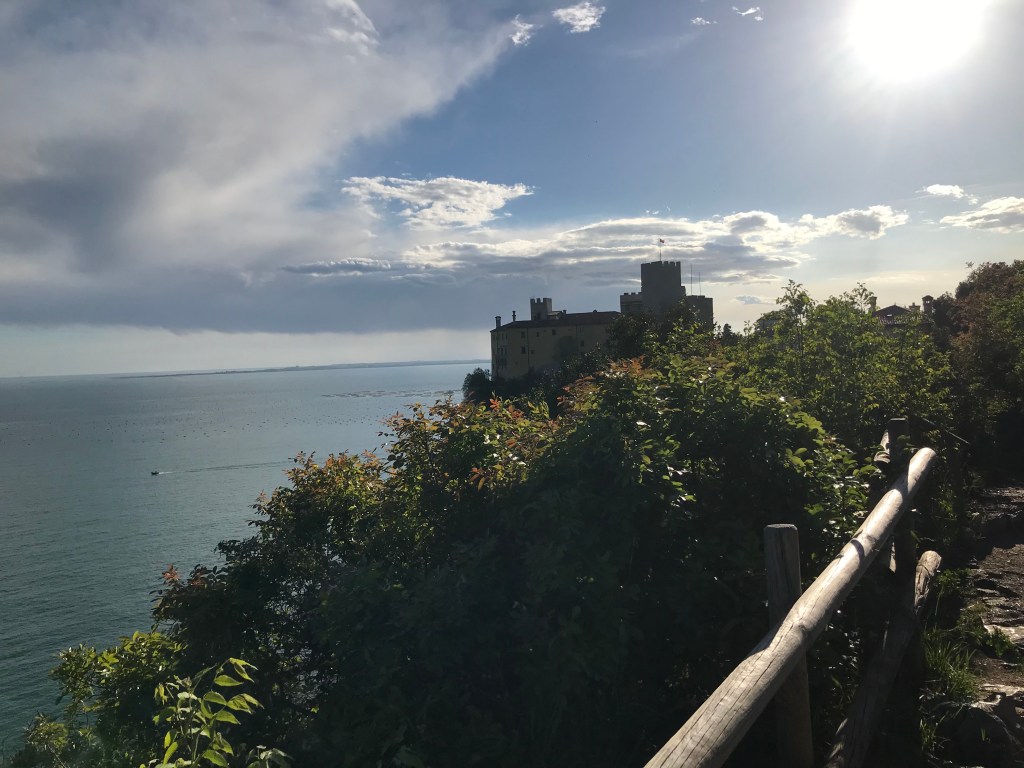
Ken’s back is still bad so John stayed at the campsite, keeping him company with a beer while Kim and Jacky walked the trail out to Duino to see the castle. There are many fortifications along the route created during WW1 and used by the Third Reich in WW2, that have been converted to viewing points across the bay.

Tomorrow were heading to Lazise on Lake Garda.

Plitvicka National Park

Today’s plan was a visit to Plitvicka National Park, one of the most Instagrammed places in the world. Helpfully, the campsite ran a shuttle bus for the 19k journey rather than pack up and take one of our camper vans.

We were up and ready in plenty of time when we noticed Ken walking in a strange way. His back had gone and he was unable to stand upright or walk more than a couple of paces. He was confined to the campsite, heroically declined company and we set off with Jacky.

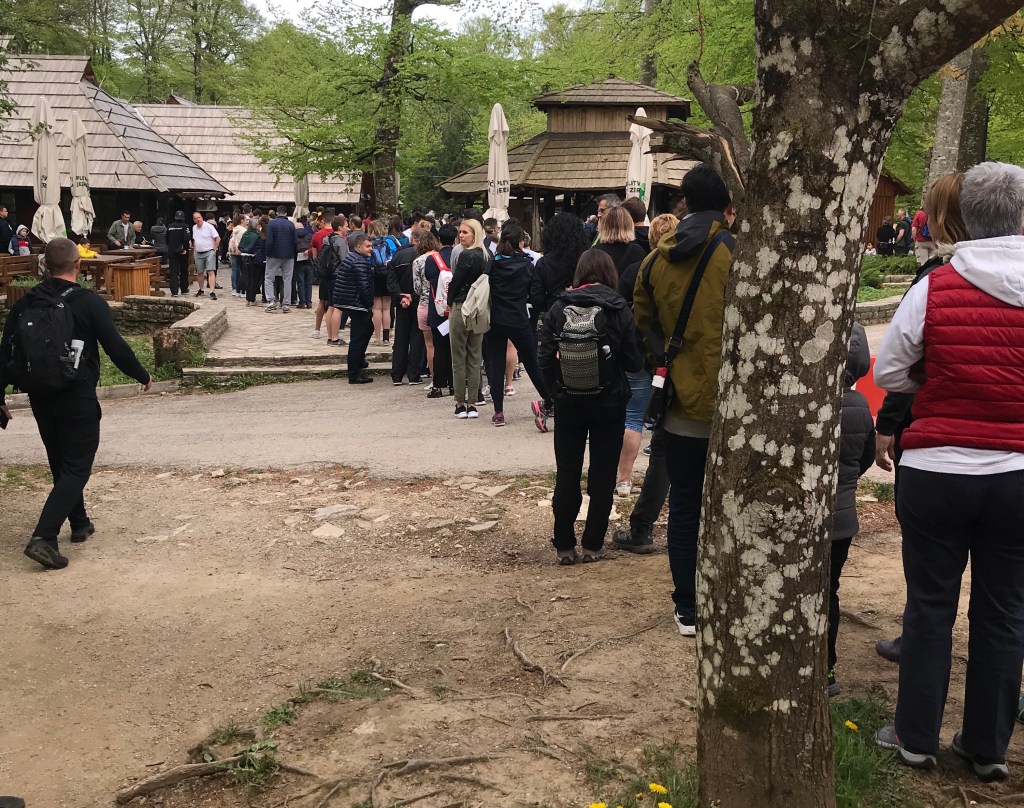
We’d reserved entry tickets, Kim had read that, at busy times entry is declined and we didn’t want to risk being turned away. It was 9:15 and this is the scene that greeted us.

Luckily Jacky read the ticket booth signs so Kim joined the shorter queue and an hour later we finally gained entry.

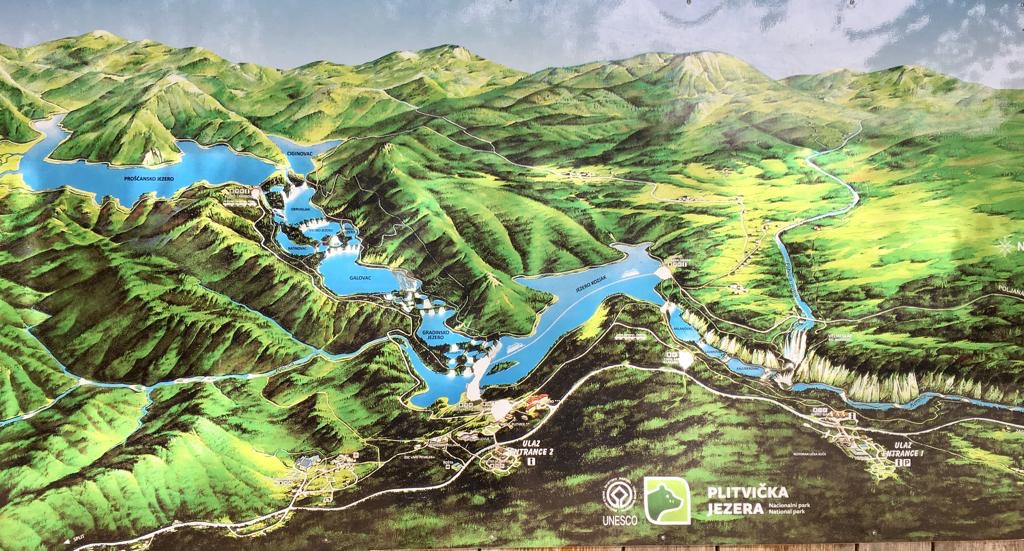
The park is famous for 16 terraced lakes, joined by 400 waterfalls that drop 500m down a limestone gorge. It was recognised as a UNESCO World Heritage Site in 1979. The lakes are surrounded by boardwalks and hiking trails. Small electric boats ferry you up and down the largest lake and a bus service runs from one end of the park to the other – all for 100 khn per person (less than £12!)

We took advantage of the bus to get us to the bottom of the park and John was transfixed by the ability of a bus with two large trailers to negotiate very narrow winding roads. Talk about bendy bus

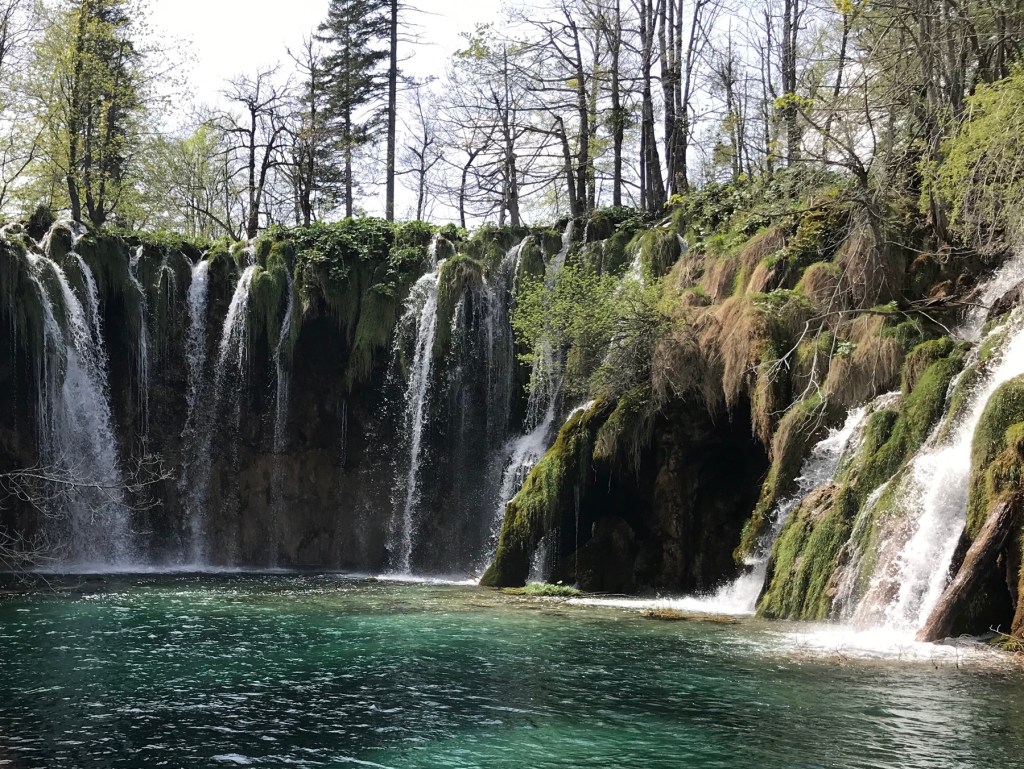
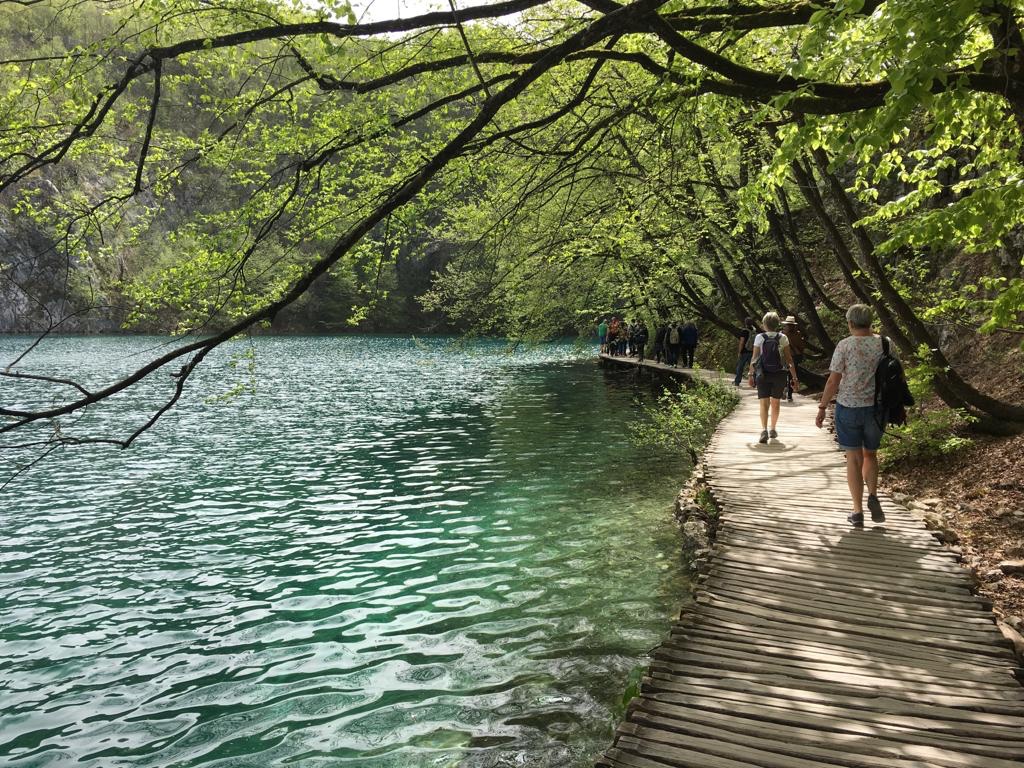
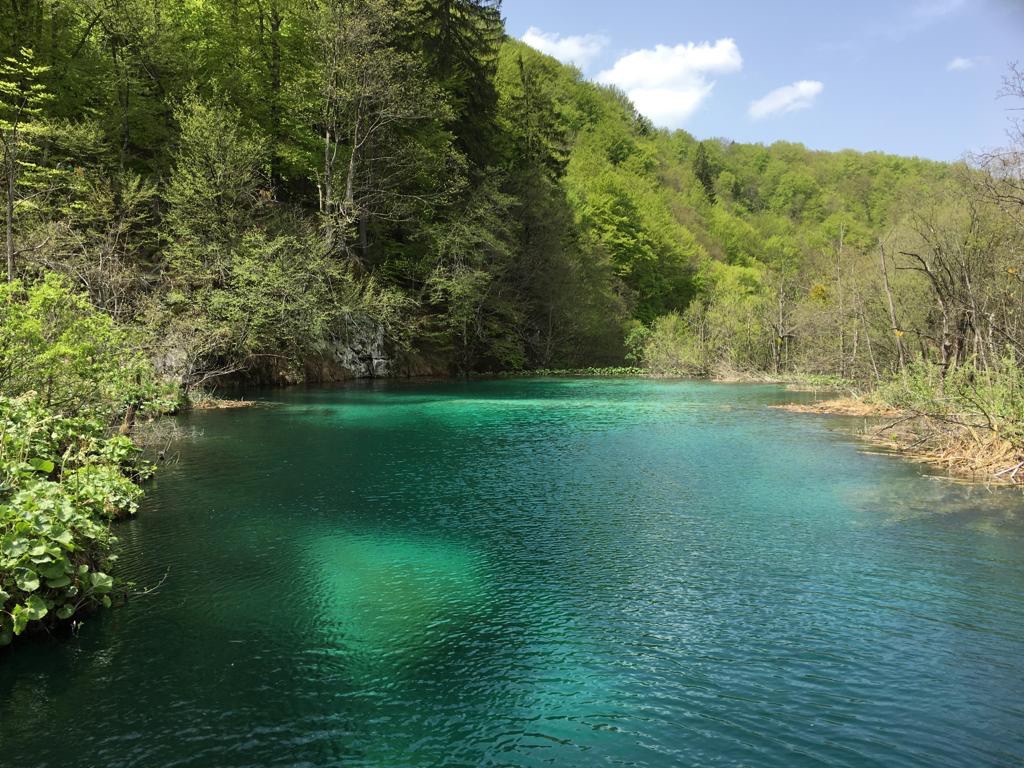
If you google images of the park, they are absolutely stunning and often heavily photoshopped. The water was crystal clear with light reflected in brilliant blues and greens. Our photos can’t capture the panoramic scenes adequately and stunning views lose their impact due to a lack of perspective but here’s a selection.

By the time the shuttle bus collected us at 3:30, we’d walked over 6 miles around the park, climbed 45 flights of steps, taken the ferry and bus between all their stops and felt that we’d made the most of the day. We were ready to head back. It was hot and tiring work avoiding coach parties on narrow boardwalks!

Tomorrow we head back into Italy, via Slovenia. Our wait at Border Control is rumoured to be lengthy….

Croatia here we come!

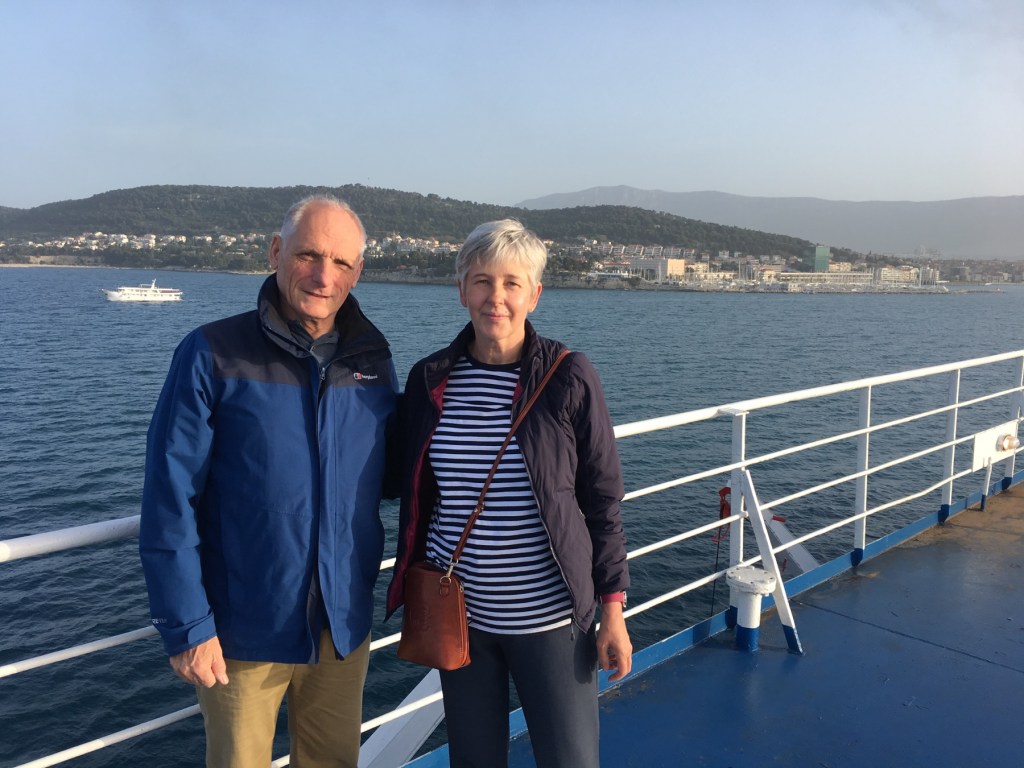
The day started with a 07:00 docking in Split….or so we thought. SNAV’s view on sailing times is flexible to say the least. Everything was at least 45 minutes late, but enough of grumbling about timekeeping. The sun was shining as we approached the harbour.

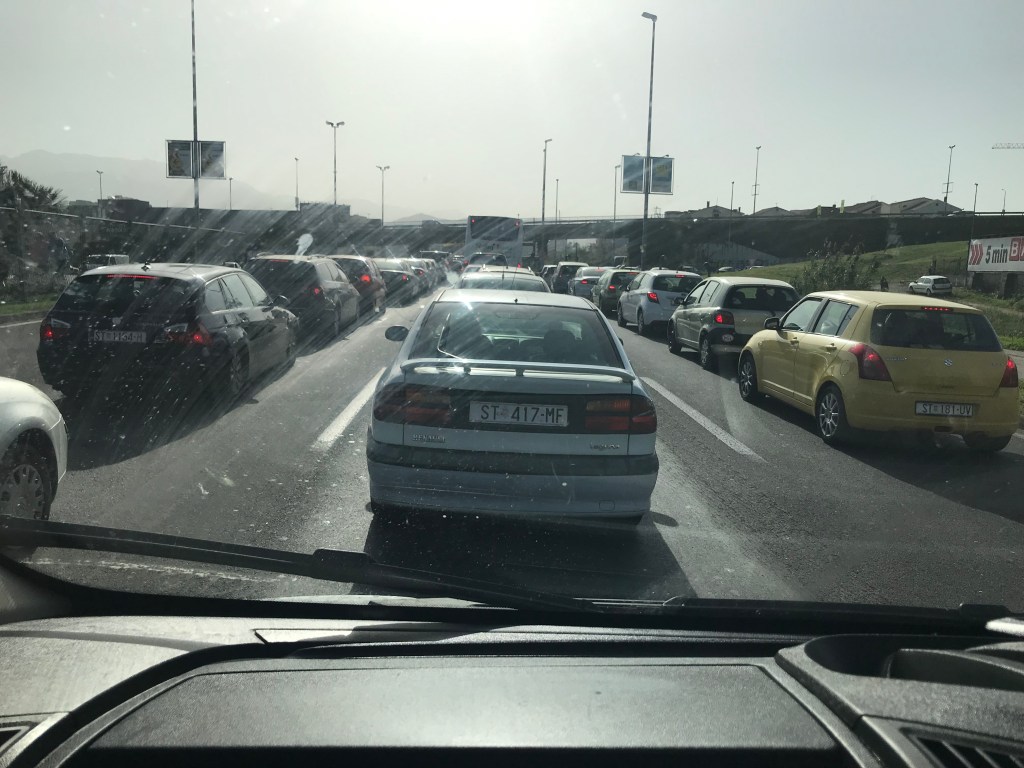
The drive out of Split was a challenge. Quite why we thought a city in rush hour would be easy remains a mystery.

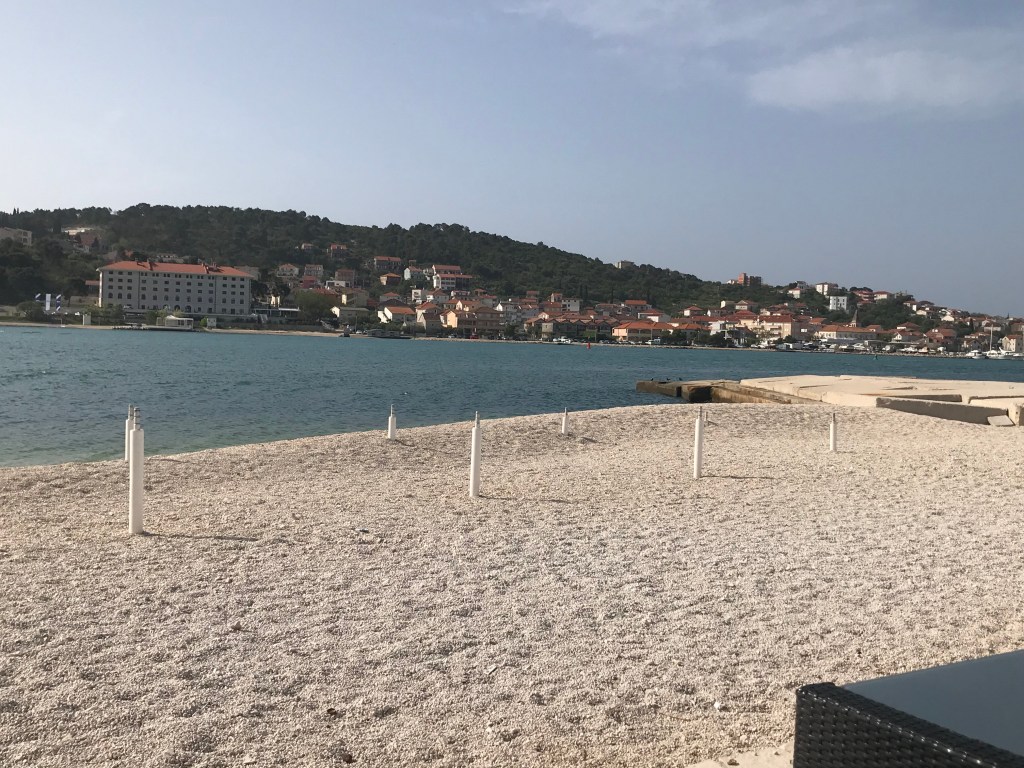
We aimed for the coast road which was quite unprepossessing initially and then we found a little cafe just outside Trogir for our first stop.

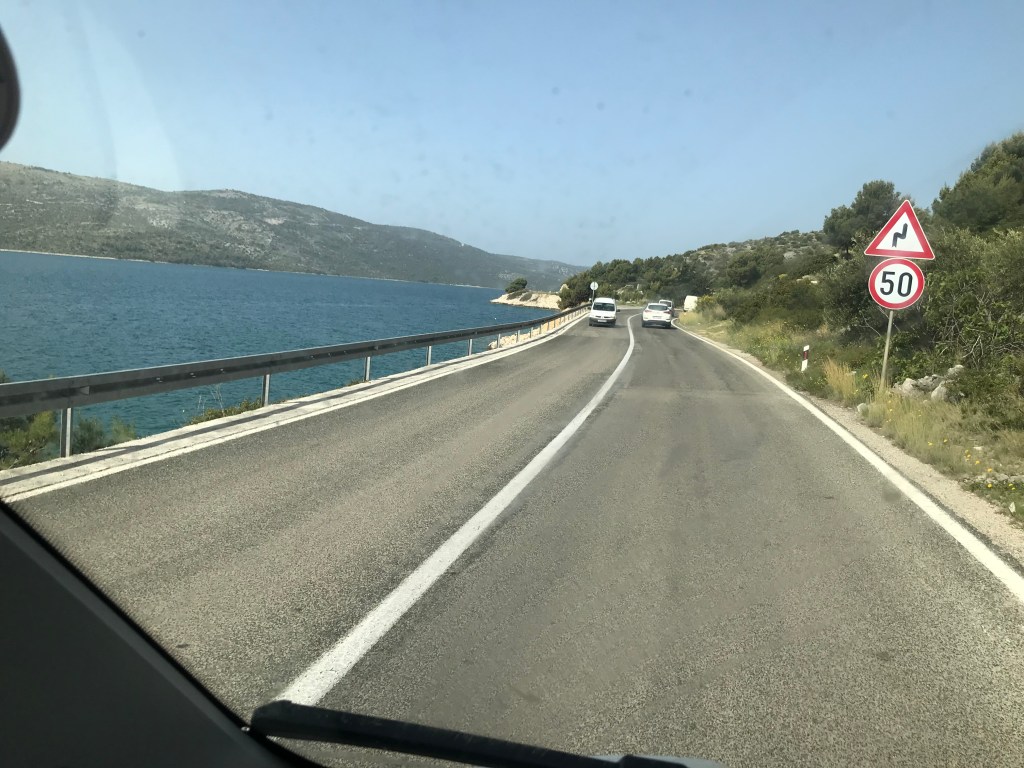
Our drive continued via Route 8, along the Dalmatian coast to Zadar and was glorious, with wide smooth open roads, we could see where EU money had been spent and were thankful for it.

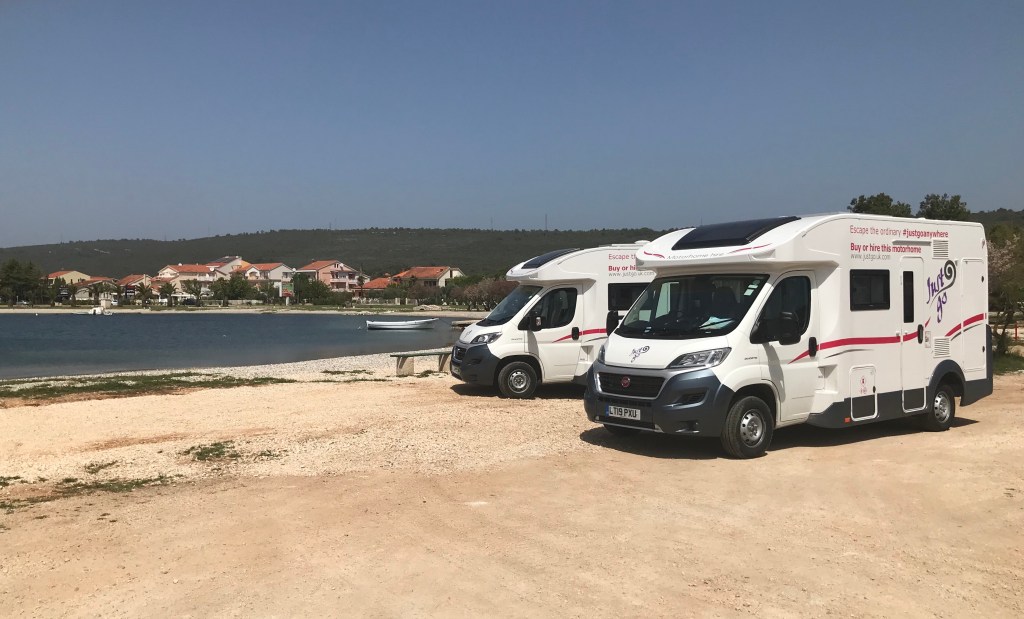
Ken and Jacky caught us up just outside Zadar for a cuppa alongside a marina.

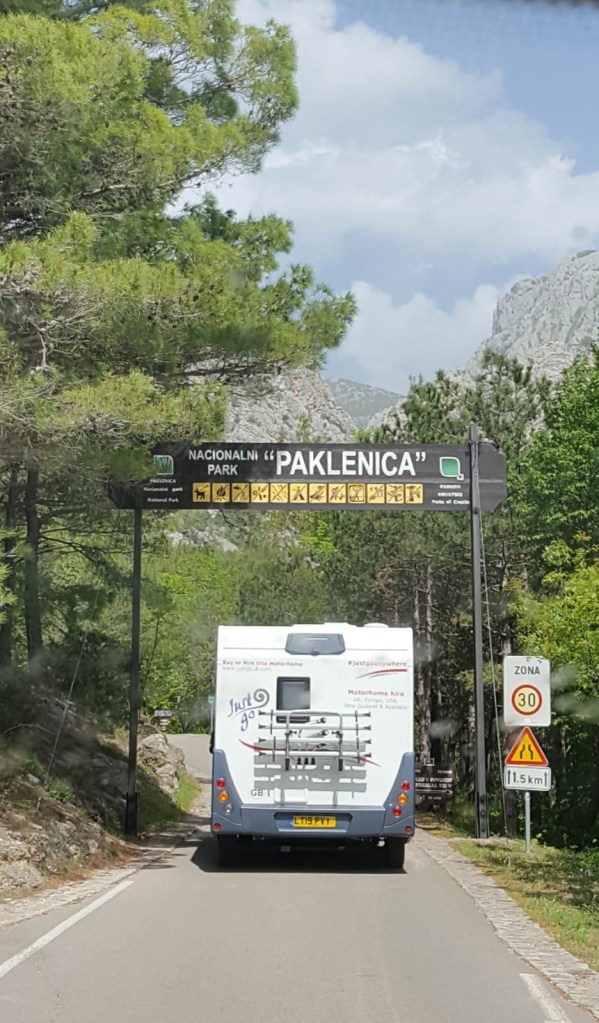
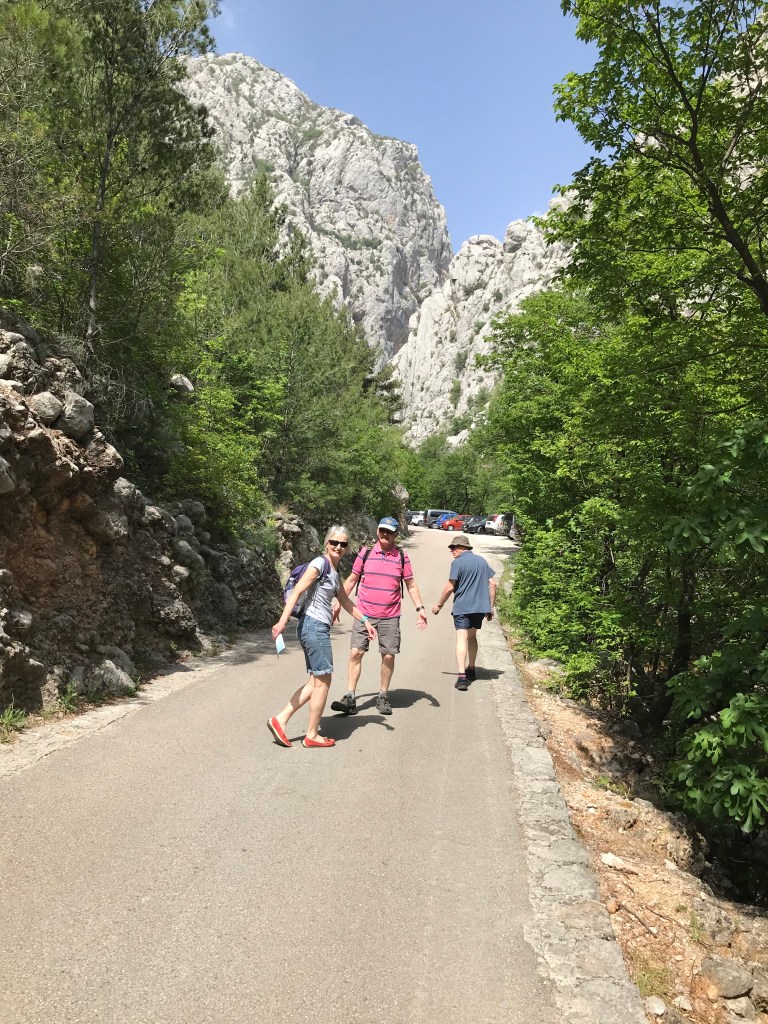
Next we headed to the Paklenica National Park to see the underground bunkers built by President Tito in the 1950s during tense times between the former Yugoslavia and USSR they were to serve as a refuge in case of conflict. The road was narrow but there was no stopping us!

The walk up through the ravine was lovely and it’s a great area for mountain climbers.

The actual bunkers were a little disappointing, very little about their history but plenty apocryphal information on mountain climbing.

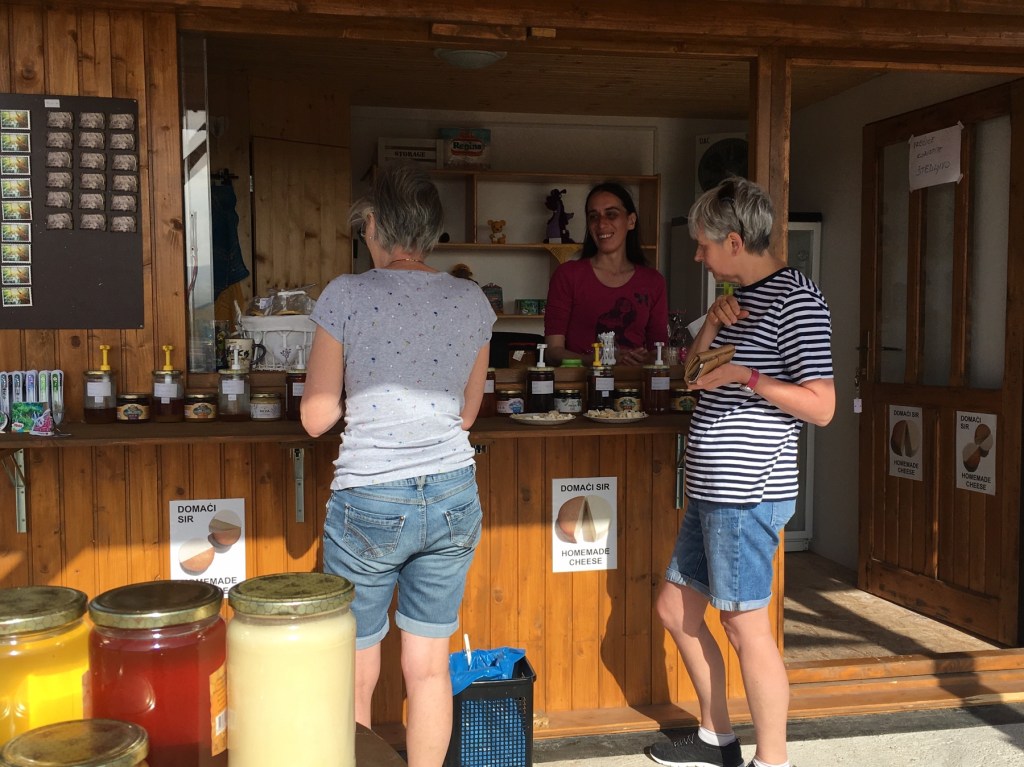
Our final drive was almost 2 hours to the Plitvice National Park where we are spending the next two nights. More wonderful scenery, and roads, populated by roadside shacks selling local cheese and honey.

It seemed rude not to stop for a tasting! We have assumed these are locally produced but didn’t ask the question and are wondering if it’s all made in a factory in Zagreb for tourists. Anyway, we had fun tasting and there are a couple of cheeses tucked in the fridge to bring home.

We arrived at Plitvice Holiday Resort and caused a major international skirmish resulting in a nice couple from Germany being evicted from their parking place and an Italian couple leaving site. Our diplomatic duties completed, we finished the evening off with a pasta supper skilfully prepared in a camper van which has a kitchen the same size as a dolls house.

And the sun came out

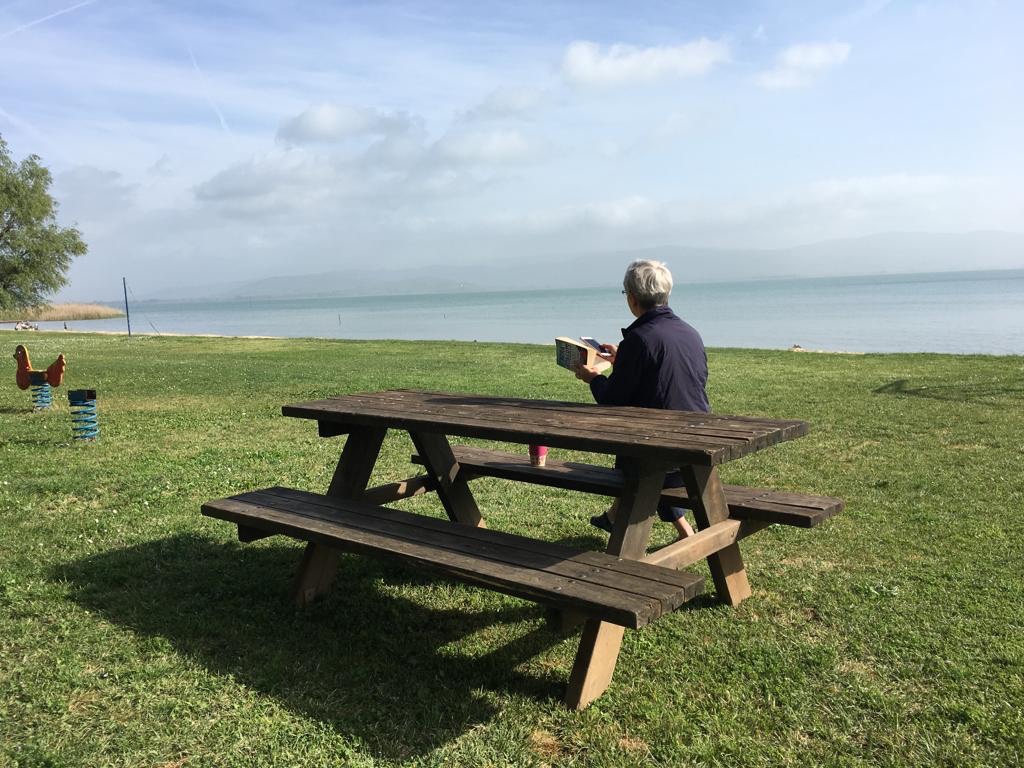
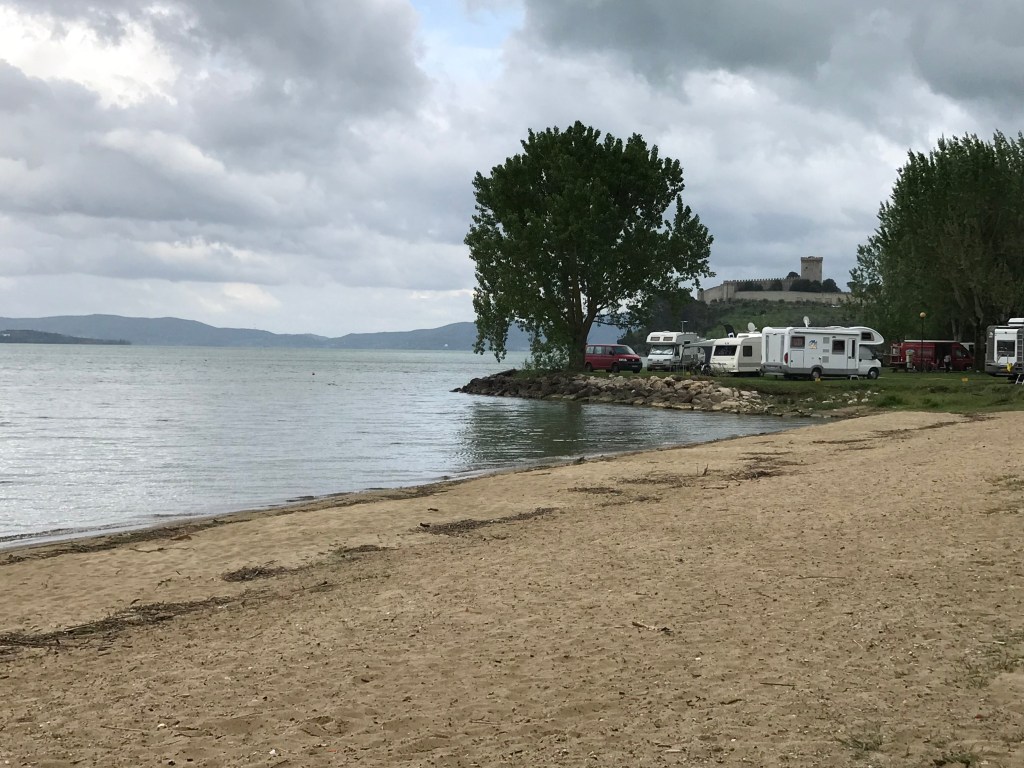
We woke to beautiful sunshine on Lake Trasimento so Kim headed down to the shoreline with a book and cuppa.

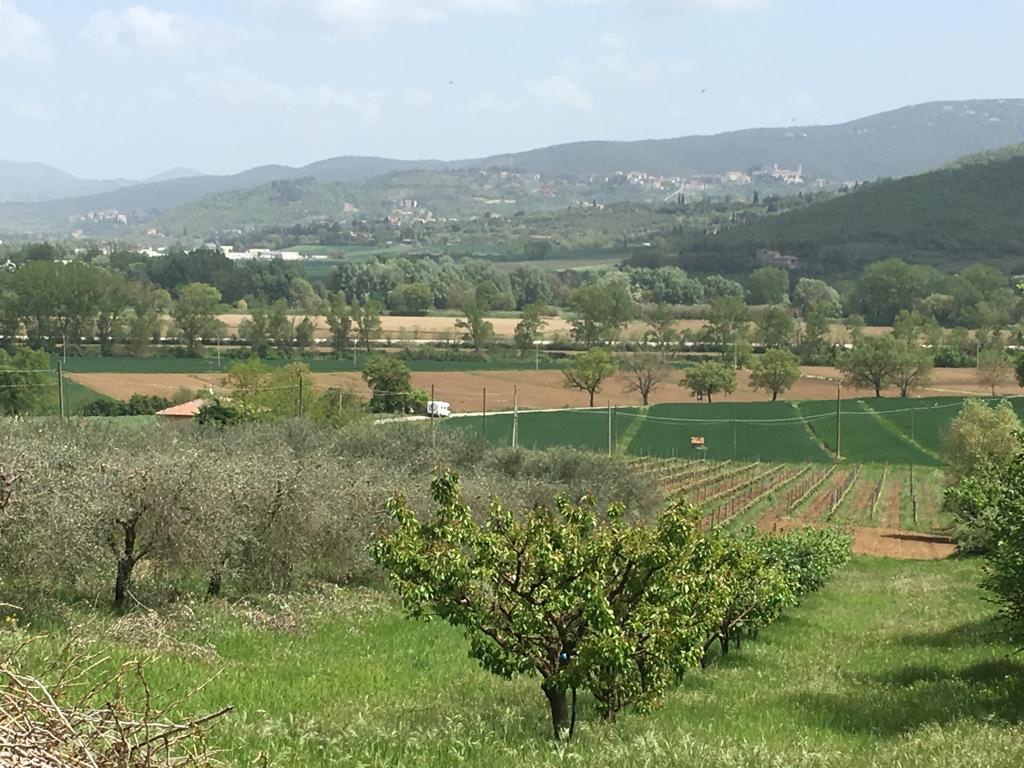
Our journey to Ancona started with a glorious drive around the South side of the lake before arriving at our first stop.

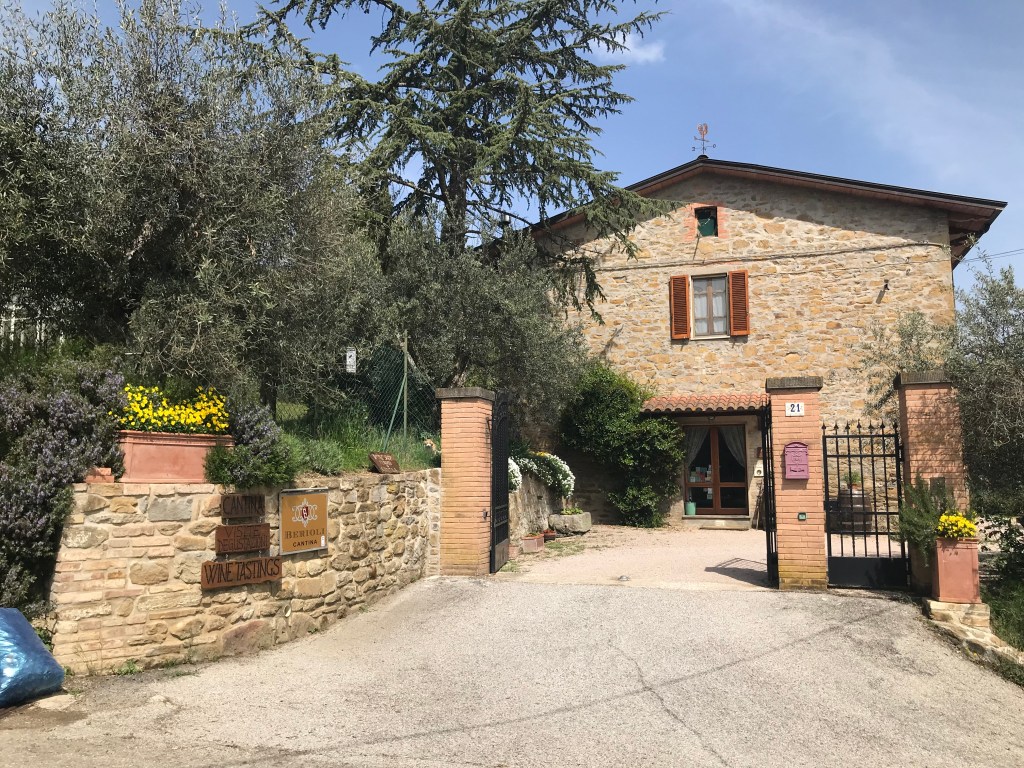
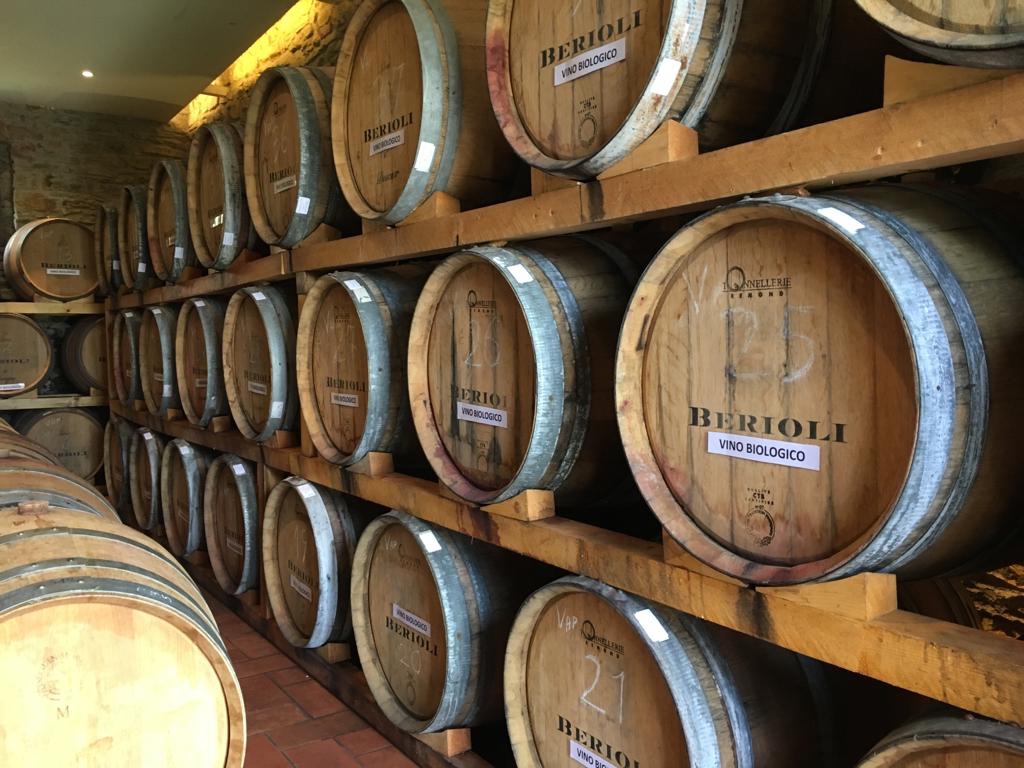
Cantina Berioli, is a small award winning wine producer in the Umbrian hills near Perugia.

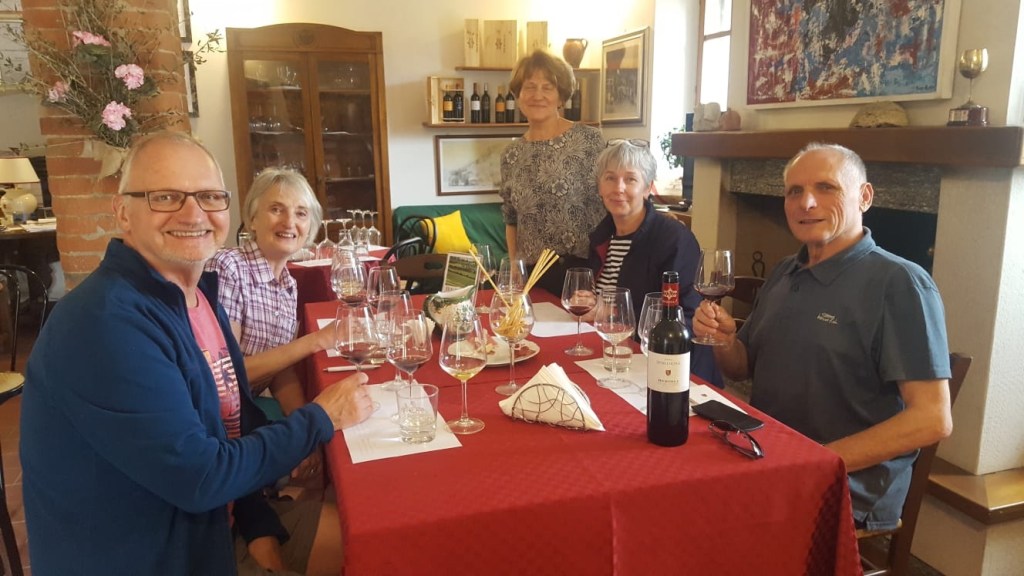
Christina who owns the vineyard with her husband Roberto, panicked at the sight of us. She was flustered that she couldn’t speak English, then made us feel at home with a summary of each wine and presented us with cheese, freshly sliced ham and chocolate to accompany the wines all in very good English!

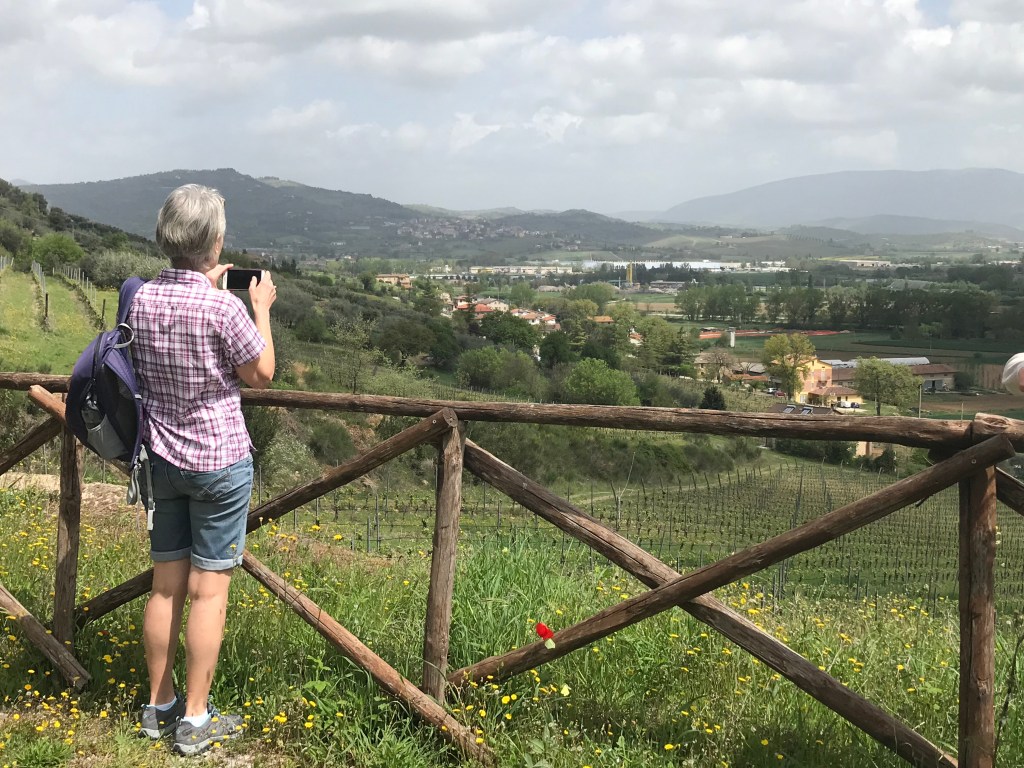
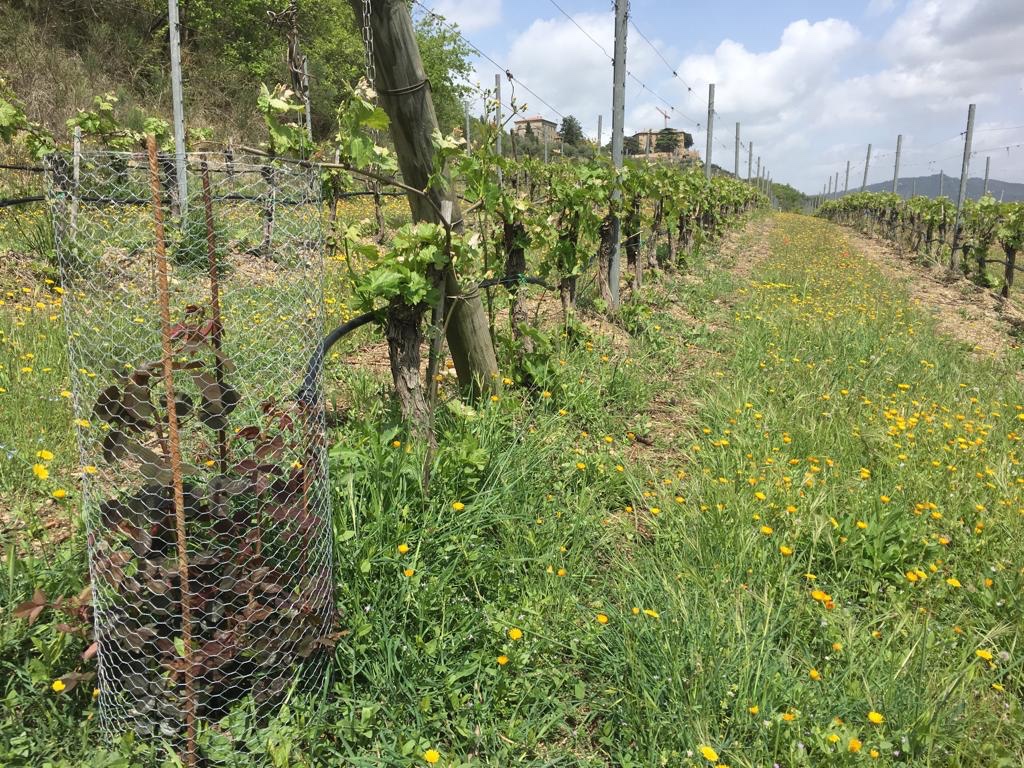
We tasted four wines, followed by a tour of the vineyard given by Christina’s assistant (who had been summoned in early to deal with us!)

We learned about the reason for planting roses by the vines, do you know?

And the cellar where 40-50,000 bottles of wine are made each year. Most are exported to Germany or China!

We loaded up the vans with cases of wine, Ken and Jacky headed off to Ancona, spurred on by vague promises of a new wing mirrors. We sat and watched them go..

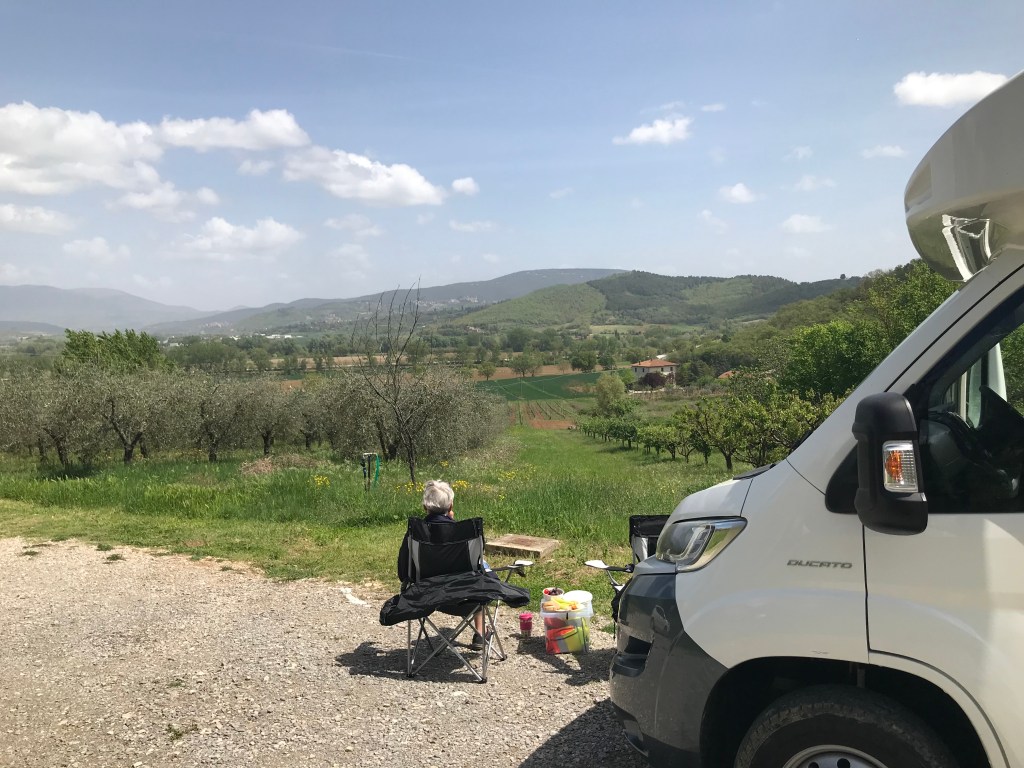
We settled down for lunch al fresco….. this is the life (apart from the flies)

We’d had vague plans to visit a medieval town of Fabriano and Grotte Di Frassasi en route so set off on the 80 mile drive. John says ‘one medieval town looks like another and we’ve done one this year’ so we gave Fabriano a miss. We thought the Grotte was worth a 15 minute detour, mainly because we needed a break and a cuppa. We hadn’t planned on 2 hours for the tour so were on our way without getting further than the car park!

Falconara Marritima, on the coast, didn’t get our custom either…. it looked rather grim and we do shop in Waitrose! As a result, we arrived at Ancona port 3.5 hours before sailing. On a positive note, we successfully managed to fill the van up with fuel, we’re not sure there are petrol stations in Croatia…..

We met up with Ken and Jacky, still with a broken wing mirror, and aimed for the ferry. We were told off for inadvertently trying to queue jump. Us? We’re British and we definitely don’t jump queues, we were mortified and here’s proof that we did queue politely.

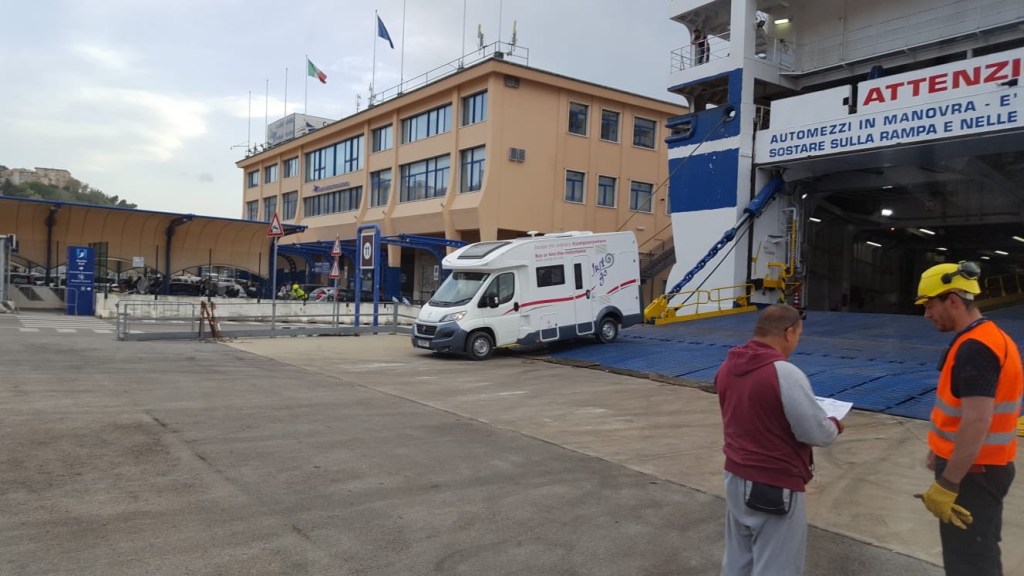
It got worse. By now, you know that we’re not naturals in motorhomes. We were told we must reverse onto the ferry into a narrow corridor assisted by men with shrill whistles and determined hand signals. It was very scary but too late to change our minds

We are all safely stowed on the ferry, our cabins are 40 degrees and beer is costing a fortune! Cheers.

Castiglione del Lago

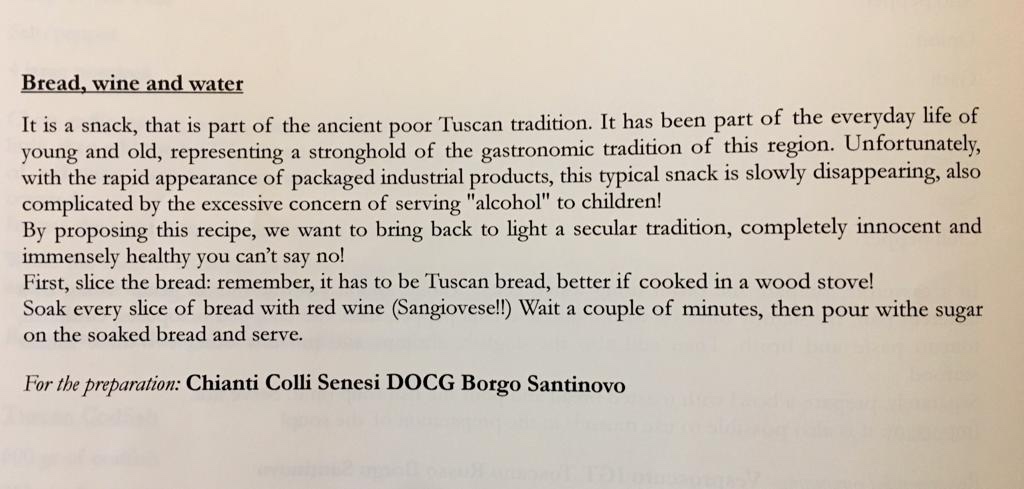
There is a vineyard and farm associated with our hotel that showcases Tuscan food and wine. We were a little concerned by one local recipe.

It was still raining when John and Ken went to pick up the motorhomes.

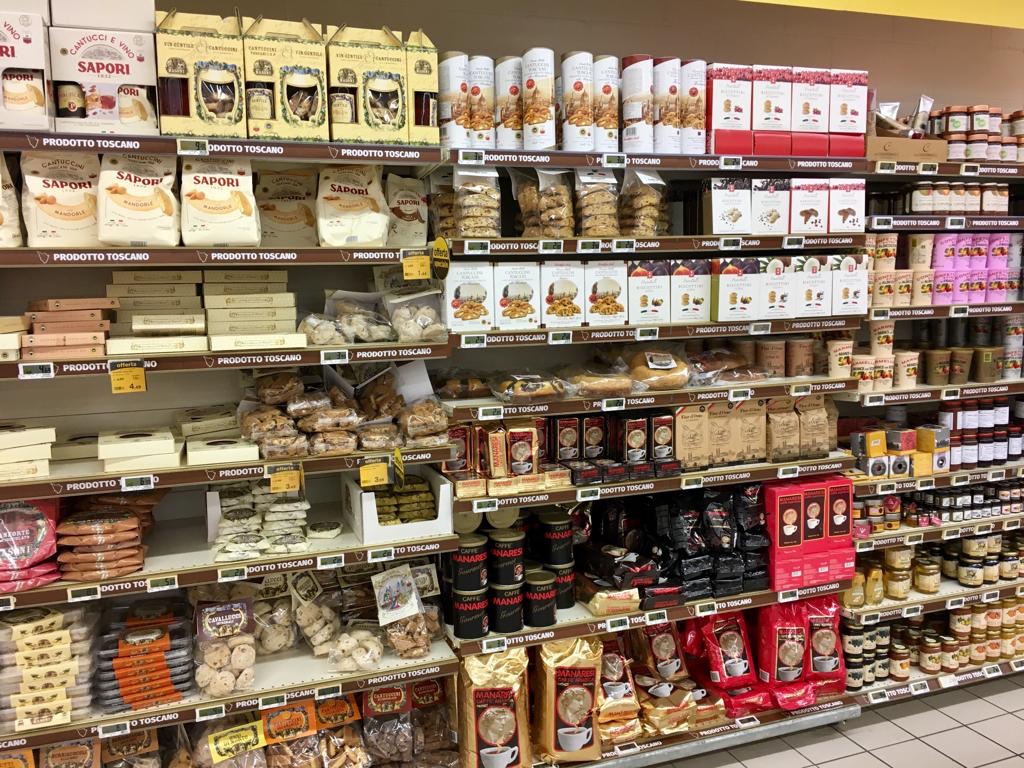
Jacky and Kim offered to shop to save time. It’s a shame because John loves foreign supermarkets and Kim really can’t get excited by them!

For the first time, we found ourselves drinking tea in the supermarket carpark. We have truly become cheapskate campers!

We arrived, without incident or getting lost at Castiglione del Lago by early afternoon. Ken and Jacky weren’t quite so lucky.

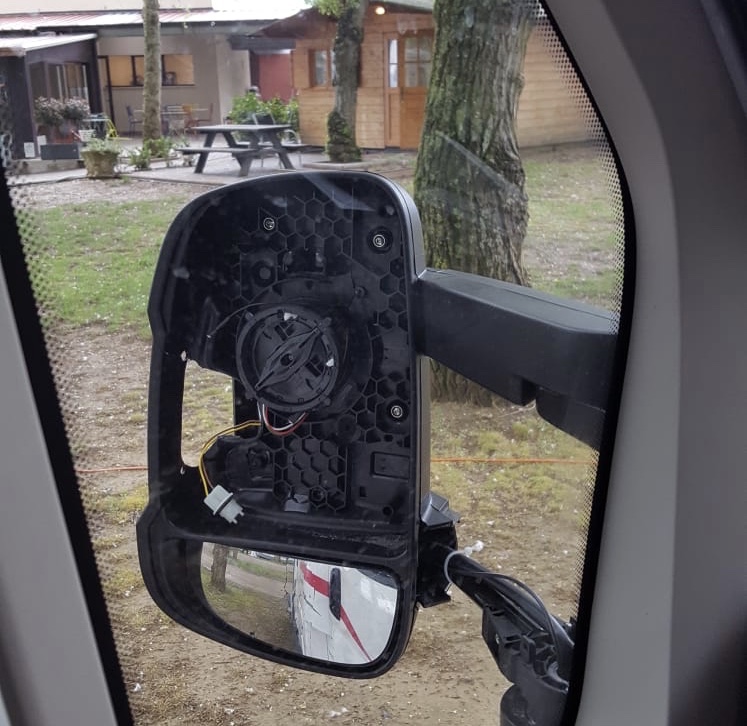
A lorry, on the wrong side of the road, took out their wing mirror. Jacky had the fright of her life when it went bang! We are waiting for advice from JustGo to see if it needs repairing before we continue, in the meantime, we’re parked under the trees at Camping Listro.

The site is rather muddy but the sky cleared and we had a lovely view over Lago Trasimeno.

The medieval town of Castiglione del Lago was a 30 minute walk and well worth the effort, it was rather nice.

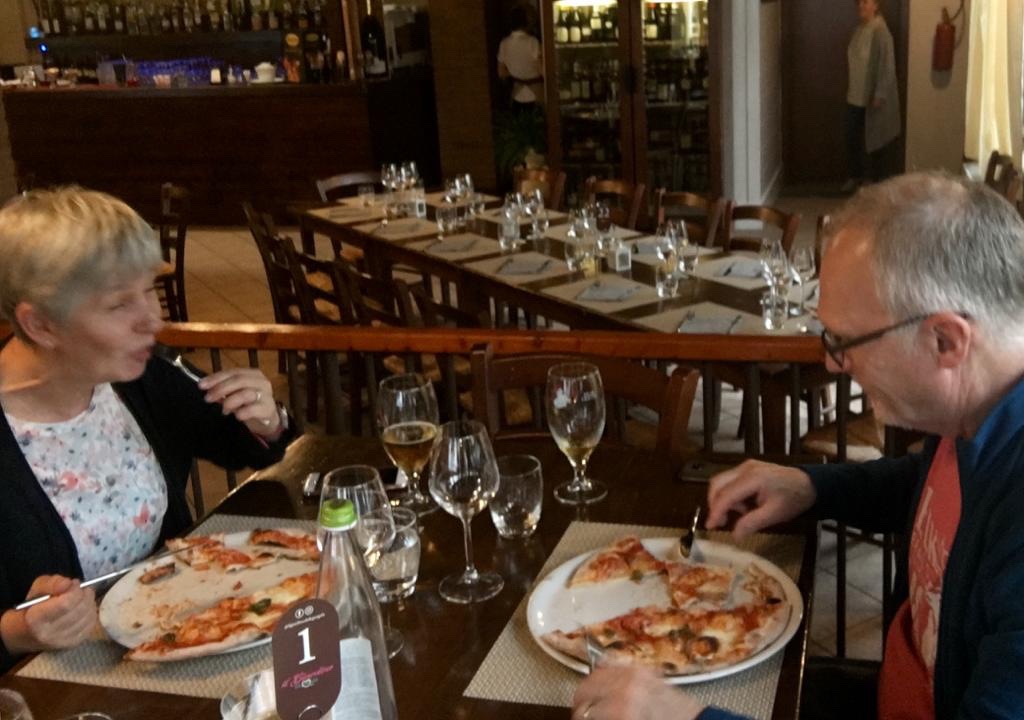
No trip to Italy is complete without a Pizzeria visit so we finished the evening in true Italian style, while talking to a couple from Holland about petrol engines and the exchange rate of Sterling. For the price of one weeks holiday in the UK they used to get 4 weeks in Italy. Nowadays they find it very cost effective to holiday in the UK having just returned from touring Scotland and the Lake District.

And the adventure begins…

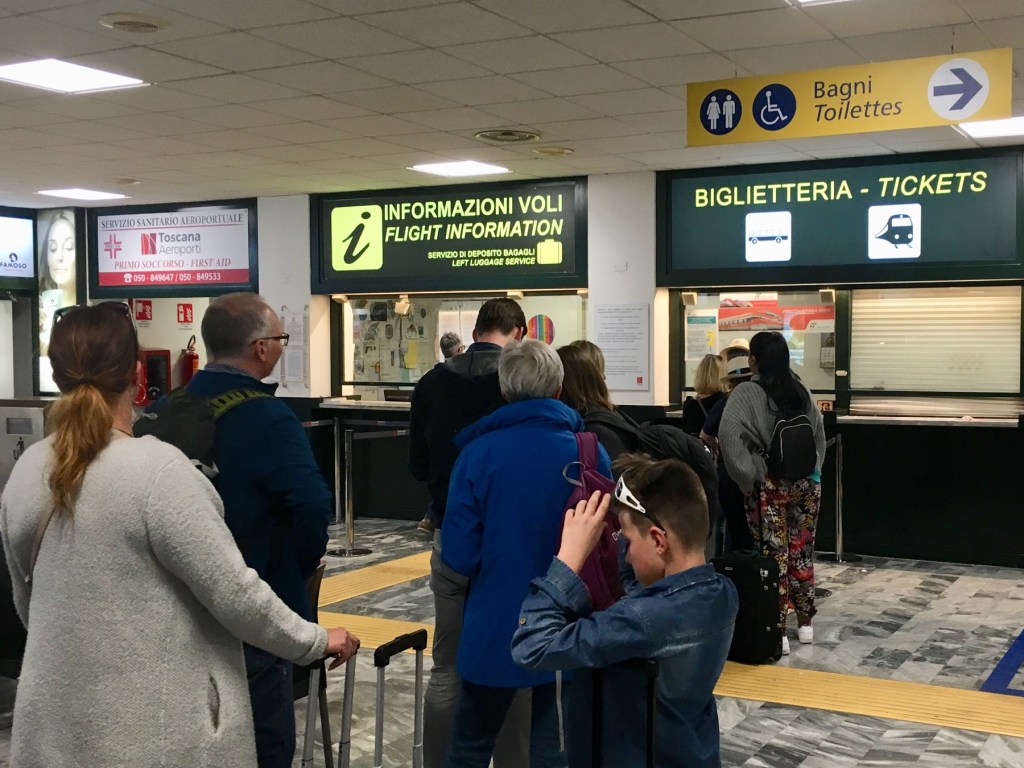
Pisa was overcast when we landed which came as a surprise, it’s only ever been sunny on previous visits. In under 15 minutes we were through passport control, luggage collected. Queuing for train tickets took considerably longer

€50 euros for four to Poggibonsi was a bargain compared to a taxi transfer which was nearer €200. The PisaMover shuttle train was well signed and we headed off to Pisa Centrale with confidence.

Today is the last of three Easter festival days and we hadn’t bargained for the trains being so busy. There was only just room for us to manhandle ourselves and our suitcases aboard, it was very cosy, very hot and standing room only.

We changed trains at Empoli with only 4 minutes to meet our connection on a different platform. It was hard work dragging heavy suitcases up and down stairs.

The train to Poggibonsi was marginally better, we had room to sit down in the small lobby between carriages.

It was pouring with rain in Poggibonsi and the train doors took against us. They refused to stay open long enough for us to get off and a sense of panic ensued as we struggled to get out with doors persistently closing on us – they were determined to decapitate! Luckily other passengers were there to help otherwise we would have made national news. Suddenly UK trains seem absolutely wonderful.

Things improved when we found a solitary taxi at the station and we were on our way to the hotel. In view of the weather we decided to eat in the hotel only to be told the restaurant was closed but we could pop across the road to the supermarket.

We did just that, then sat at a discreet table in the hotel bar and proceeded to picnic. Luckily Jacky had packed plastic plates and cutlery and Ken had a bottle opener.

6m x 2.35m…..

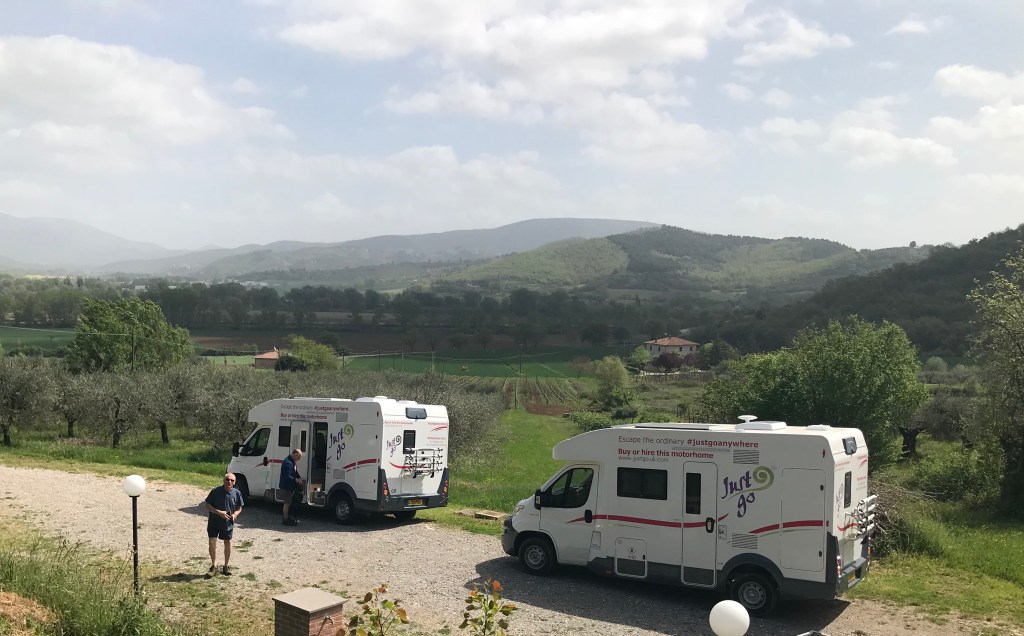
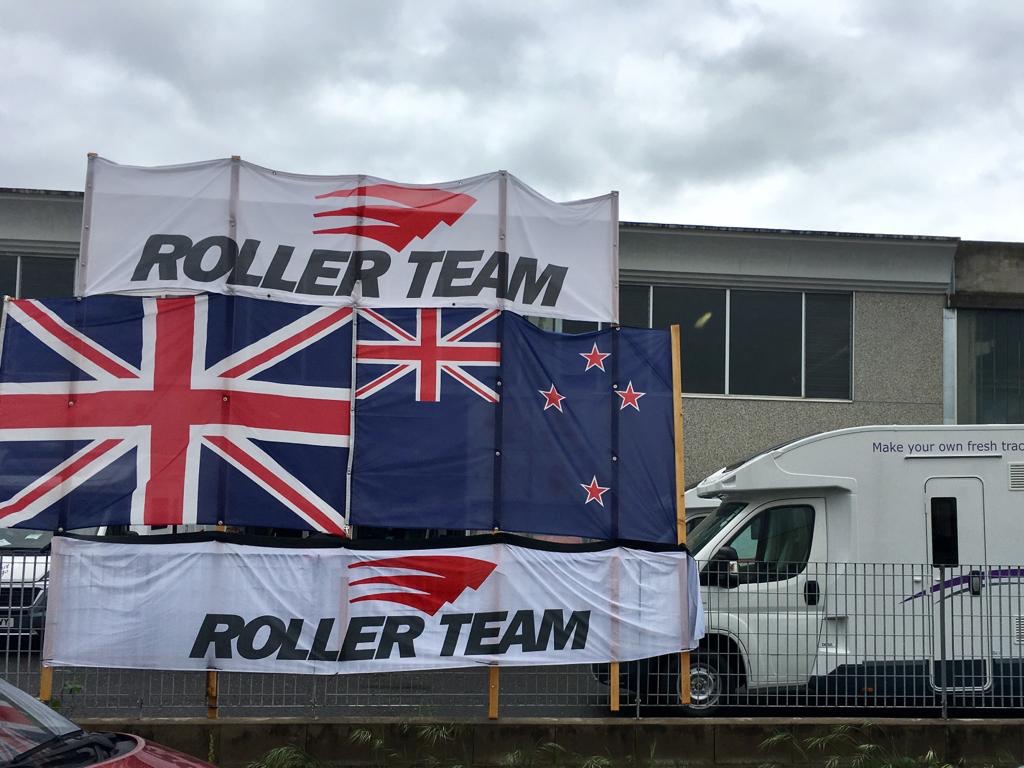
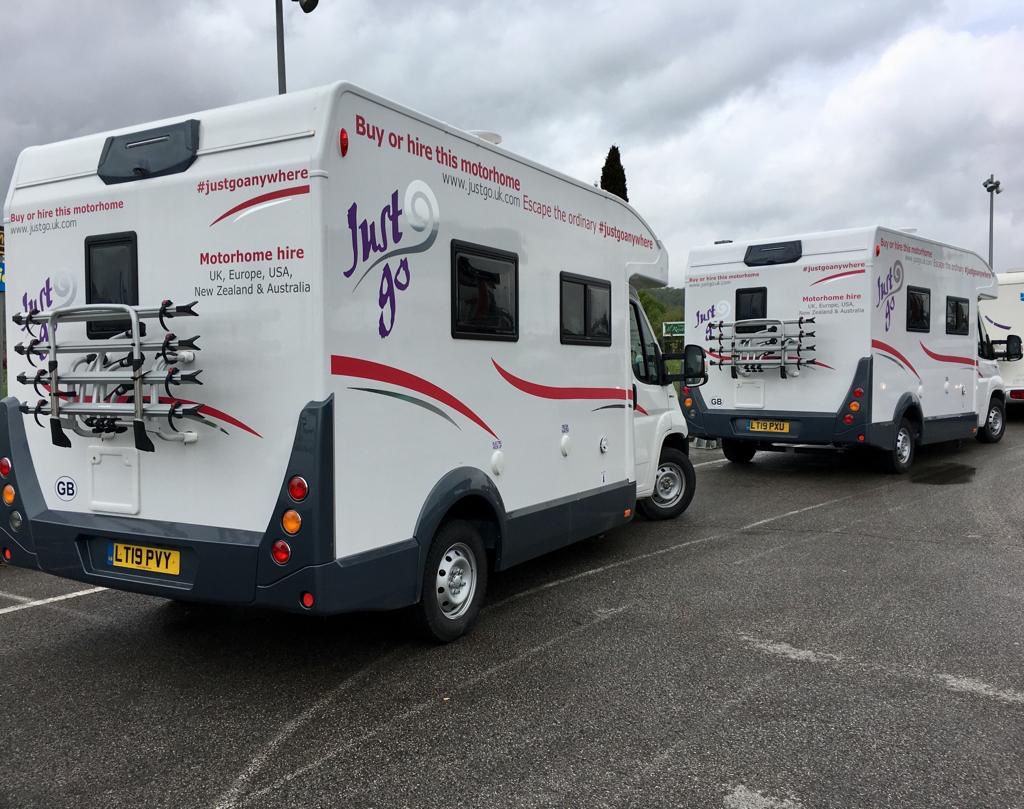
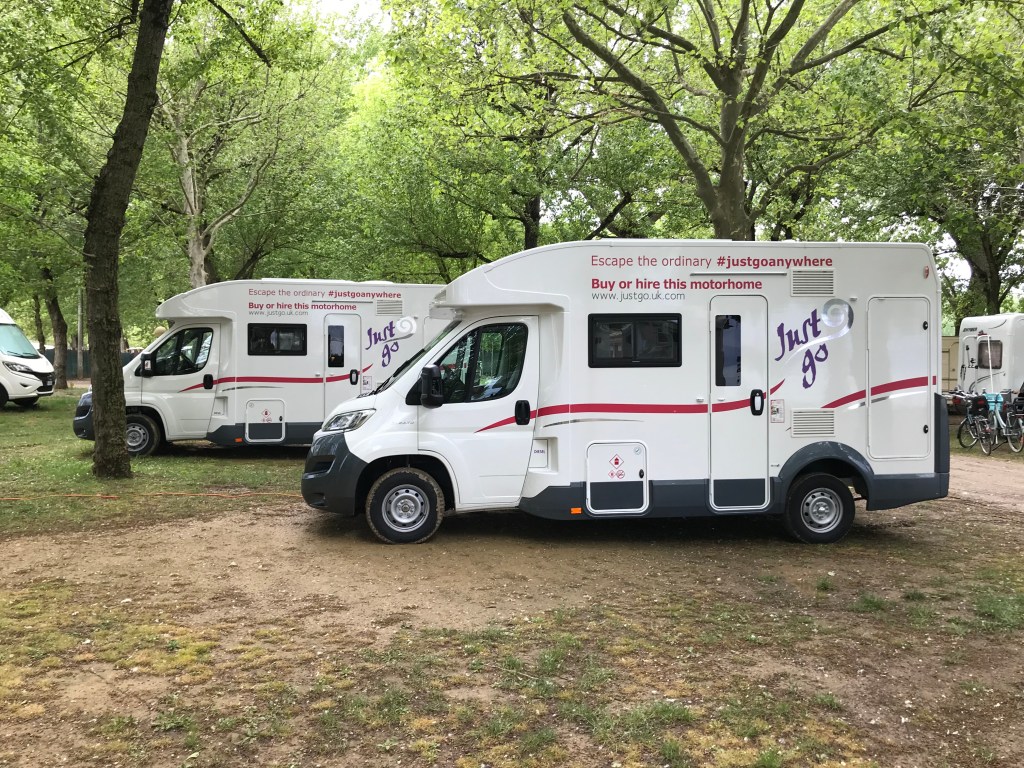
JustGo tempted us back for a third year and, yes, we are going smaller but for longer!

We’re living in a 6m x 2.3m tin can for 14 nights. Almost 2m of that length comprises a bathroom, engine and front seats.  As you can imagine, John is thrilled and Kim’s convinced he wasn’t paying attention when he agreed to an extended trip. Katie commented that she would have ‘personal space issues’……. there’s no doubt we will have too.

According to Robert M. Pirsig, the Zen approach suggests it’s often better to travel than to arrive.  So with this in mind, once we land in Italy, our adventure starts with a journey on public transport from Pisa Airport to Poggibonsi, where we spend the night before collecting the Motorhome from the factory.  Our journey from airport to hotel is self guided, involving a bus, two trains, a taxi and a foreign language of which we have very little knowledge.  We then have 14 days to get the shiny new Motorhome back to the UK. Brexit has been deferred, what could possibly go wrong?

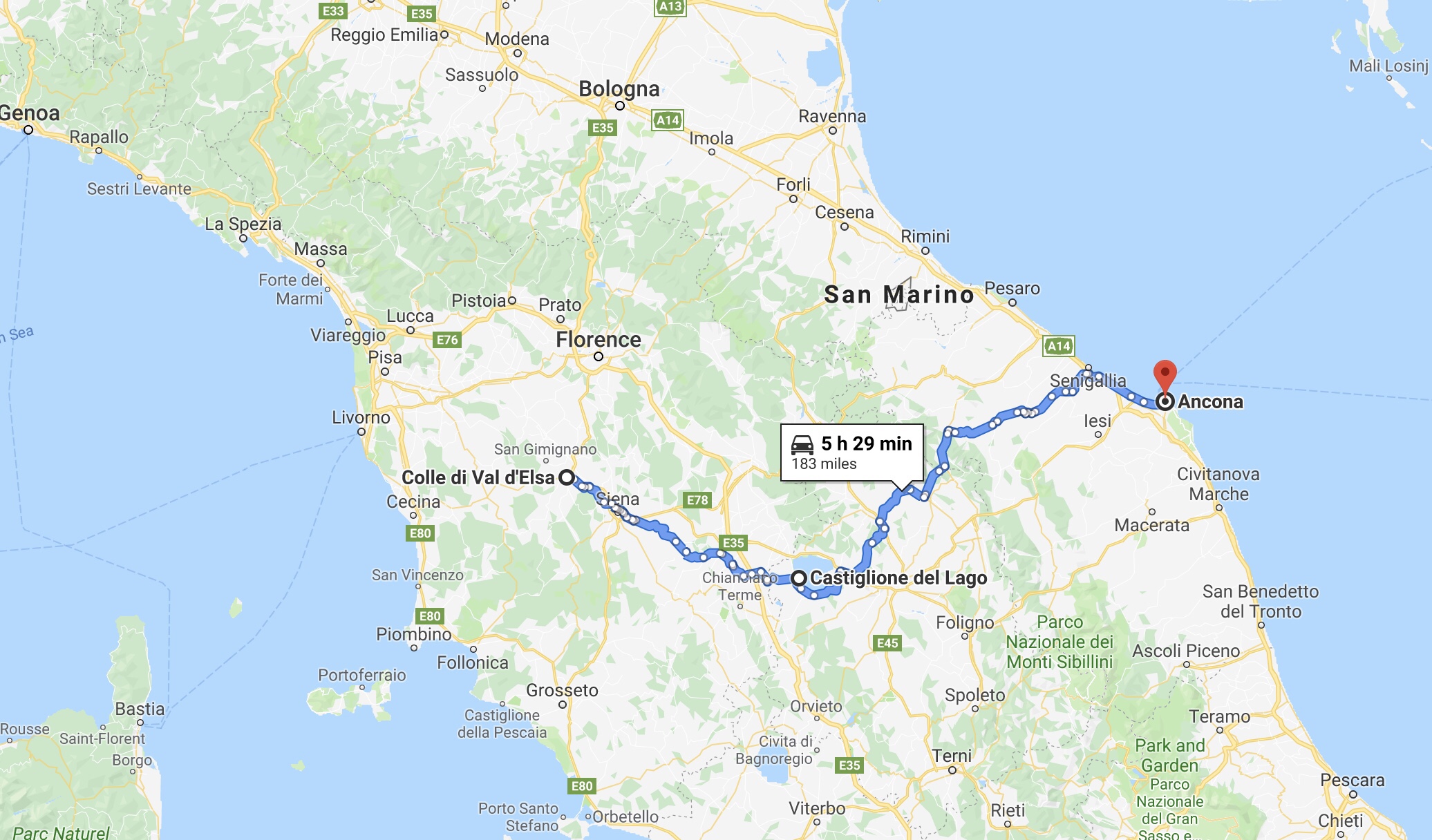
Our draft itinerary takes us across Italy through Chianti country followed by a ferry to Croatia.

Our intention is then to drive up the Damaltian coast, back through Italy  Austria and Germany. It gets a little vague after that. Our draft route takes us into France for our last few nights but Kim is determined to say she’s been to Luxembourg. Watch this space…..

As usual, we have Jacky and Ken for company (in their own motorhome, thank goodness!) but Jane and David are absent this year – David vowed never to set foot in a motorhome again and he’s stayed true to his word.

David was our wine expert and we’re worried about being let loose in Italy without his informed nose and palate.  Luckily, last year, we made notes so all may not be lost.  When we were the last to arrive at a campsite, after an ‘adventurous’ journey,  Jane was always ready with a freshly boiled kettle and beautifully presented nibbles.  Kim is likely to miss Jane more than David. Sorry, David!

Final day in Carrapateira

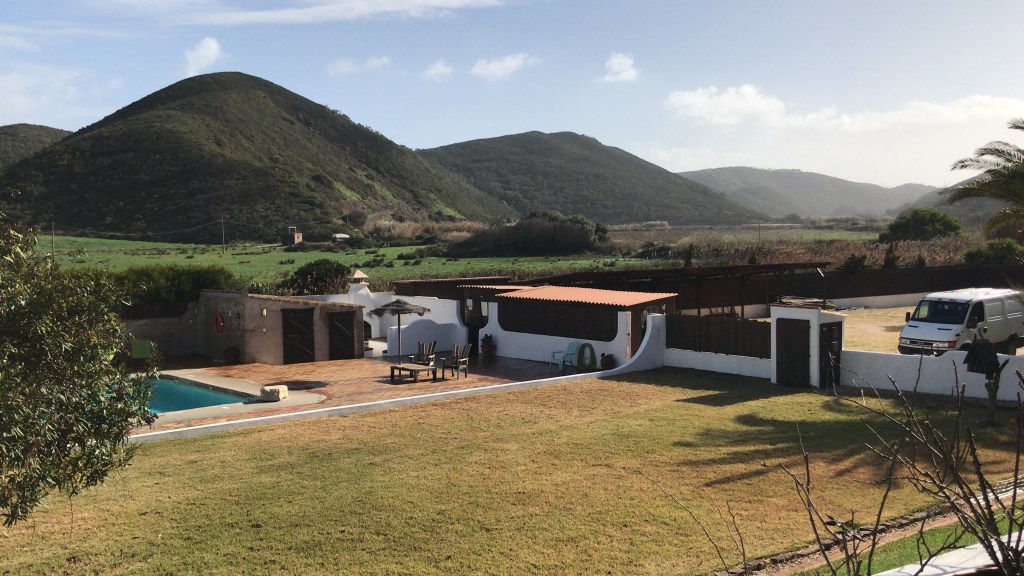
For the last couple of nights, we had the hotel to ourselves. Each afternoon, a man appeared and lit the fire despite the under floor heating and warm weather. Rebecca, a Welsh horticulturist and chef has cooked just for us and, after dinner we whiled away the evenings sharing a beer with her. She has tales to tell from saffron farming in Australia to personal chef for world class yachtsmen in New Zealand and the wealthy in Tonga.

On our final morning, John took a stand (which was really a seat). He’d had enough walking and was going to sit and read for a few hours. Kim hatched a plan to walk up to the next hamlet of Vilarinho with Rebecca, the sun was shining so John was left in charge of a very nice hotel.

The cork oaks really have been a highlight this trip. By the time Kim had walked up the valley, Rebecca knew all there was to know about them too!

On the way, a group of enduro riders passed us, John was suitably miffed to have missed them. All week, he’s been wittering on about how good the trails are for off road motorcycling.

Just before 2, our taxi turned up. Isobel’s son was driving but she’d come along for the ride. When she collects people from the airport, she likes to check they’ve had a good time…….and make sure her son drives safely. He must be at least 30!

We chatted all the way to the airport, mainly about Brexit, the EU and it’s effect on Portugal and of course Donald Trump. It’s been interesting to hear some European views, at least everyone agreed that Trump makes the US look dafter than the UK does.

There is one person we met who we haven’t mentioned and he deserves a name check for when we re- read about our trip. Thursday, at the cafe in Carrapateira, our path crossed with Yanni, a French Canadian from Montreal. He’s in Portugal for three months cycling and wild camping. He’s done the same across the Canadian Rockies and was quite clearly bonkers. No sane person would cycle and wild camp, would they? Especially somewhere with wild bears? He told us all about the website warmshowers.org which is a hospitality site for touring cyclists and we started to think perhaps he wasn’t so daft after all.

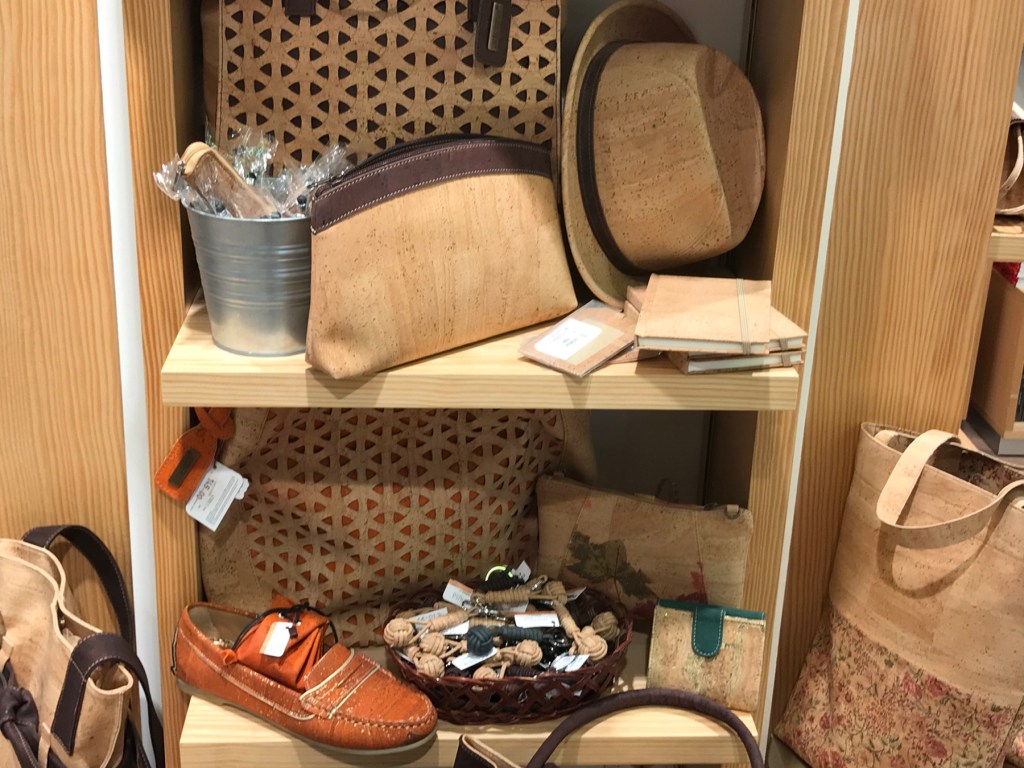
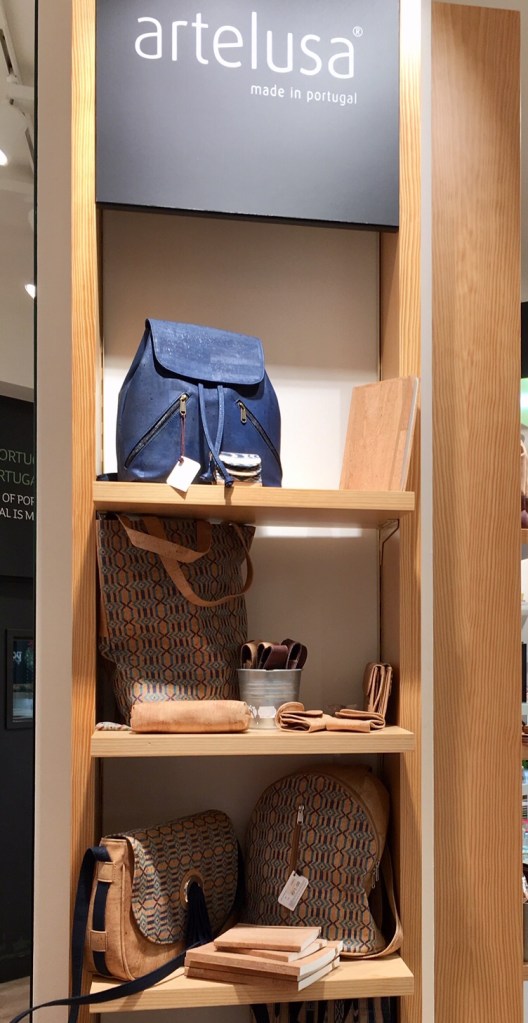
Finally, we arrived at Faro Airport and saw some of the gifts made from cork, these include shoes, ties, purses, hats and umbrellas. It becomes incredibly soft and flexible..

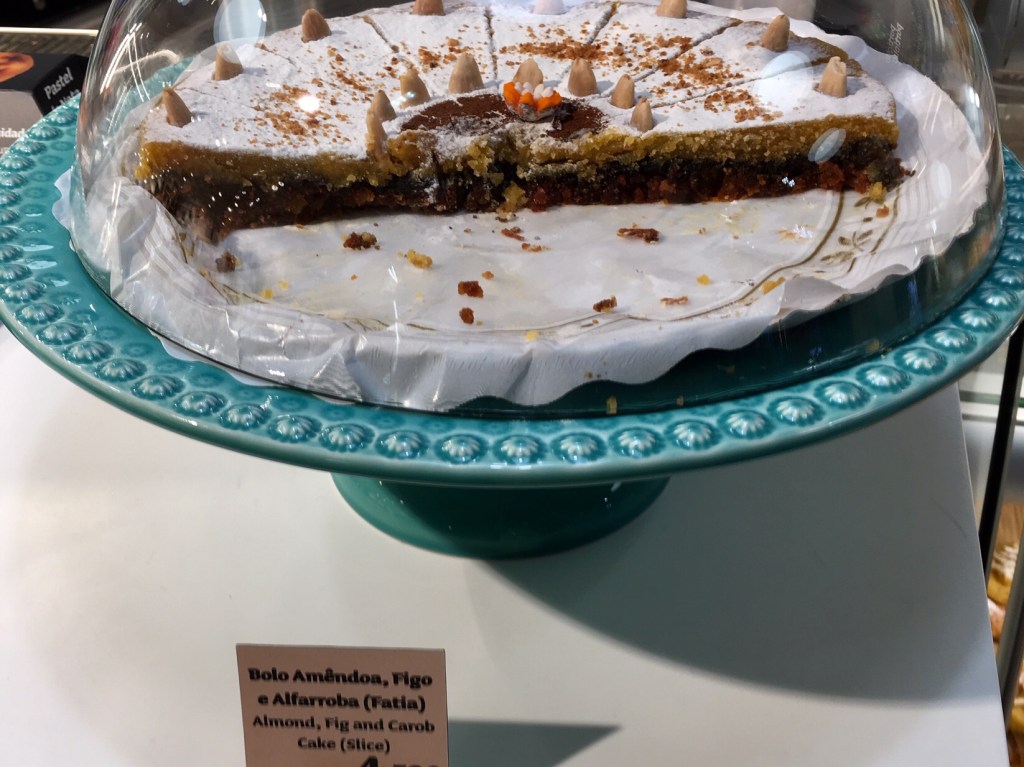
We also managed to find some of the elusive bolo de amendoa cake, a traditional cake made from almonds, figs and Alfarroba. We’d tried it in Vila do Bispo but this version took it to a whole new level of sweetness.

We have had the most amazing time, the scenery was stunning and we’ve explored a part of Portugal that remains quite rural despite its proximity to the sea. Attention to detail by Inntravel in terms of both itinerary and accommodation has been perfect and we’d certainly use them again for an activity holiday.

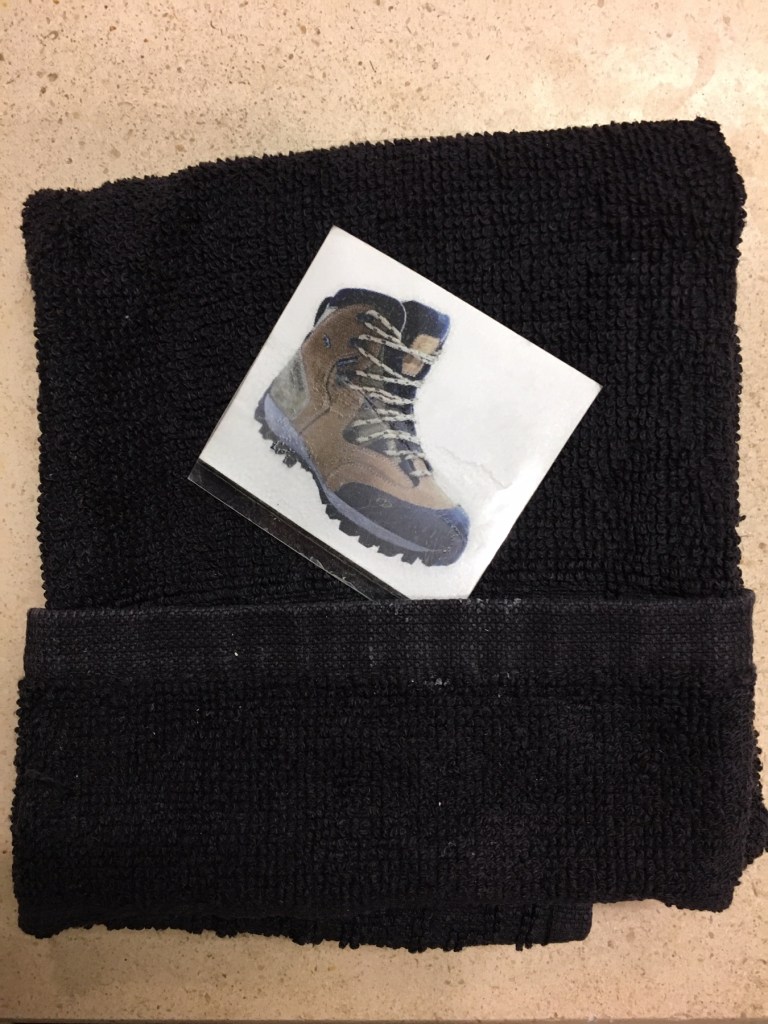
One of the hotels even had special boot cleaning flannels for walkers.

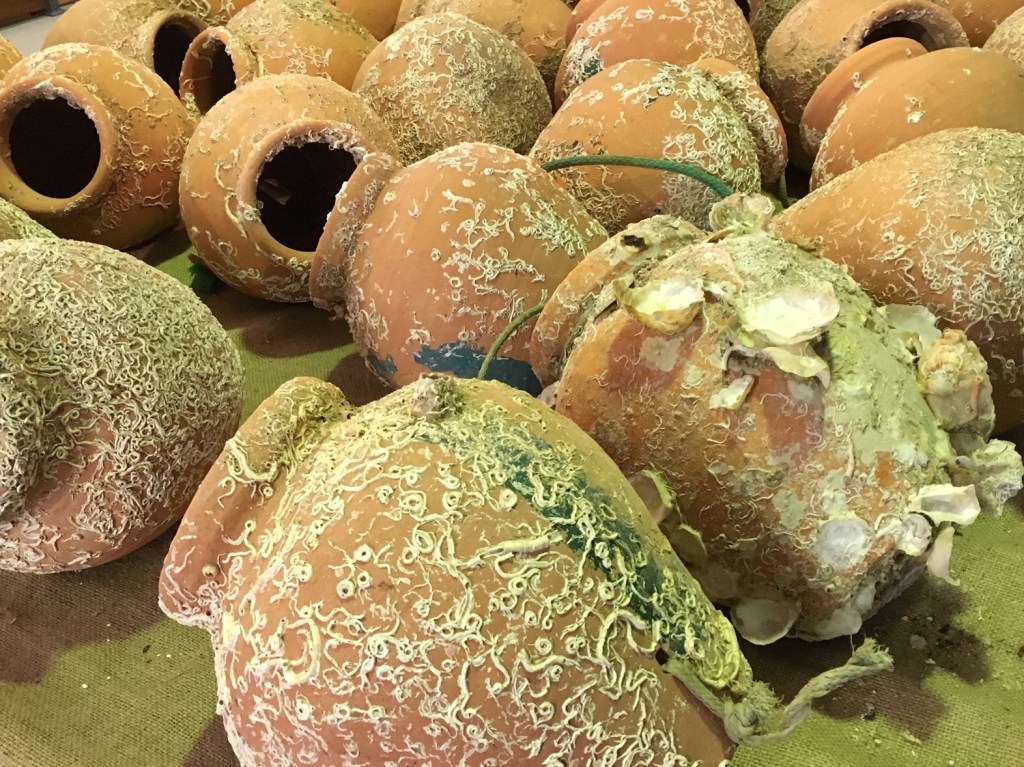
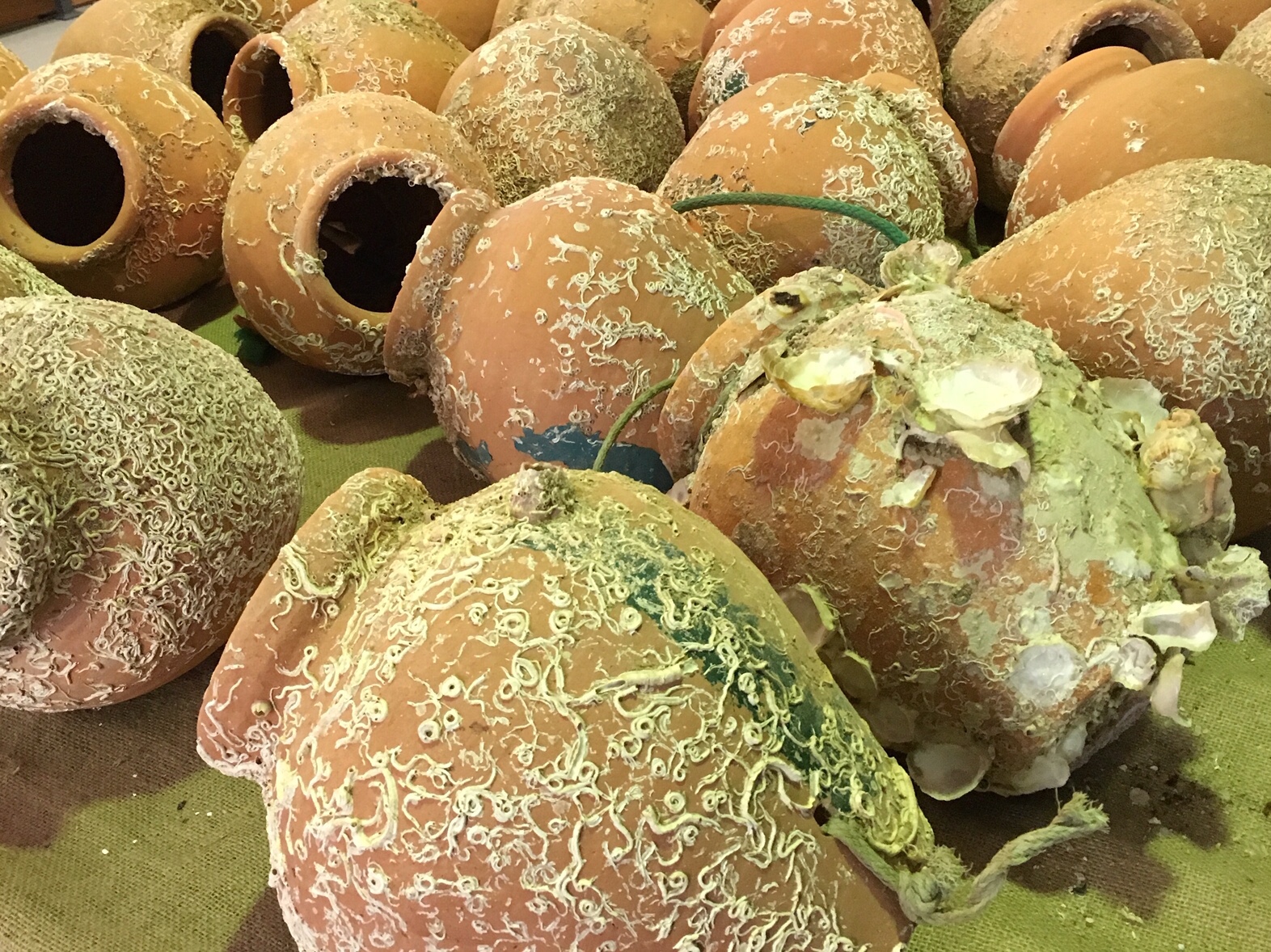
Finally, remember those pots?

They are specifically designed for catching octopus. They are dropped to the sea bed and the octopi seek them out for shelter, mean but effective.

Carrapateira to Bordeira

We know you’ve woken up to snow and thought this might cheer you up….

We decided to attempt the suggested 15km walk to Bordeira. The last 5-6km would be a challenging walk through sand dunes and the map showed a path to cut that out – we had a plan and were suitably smug.

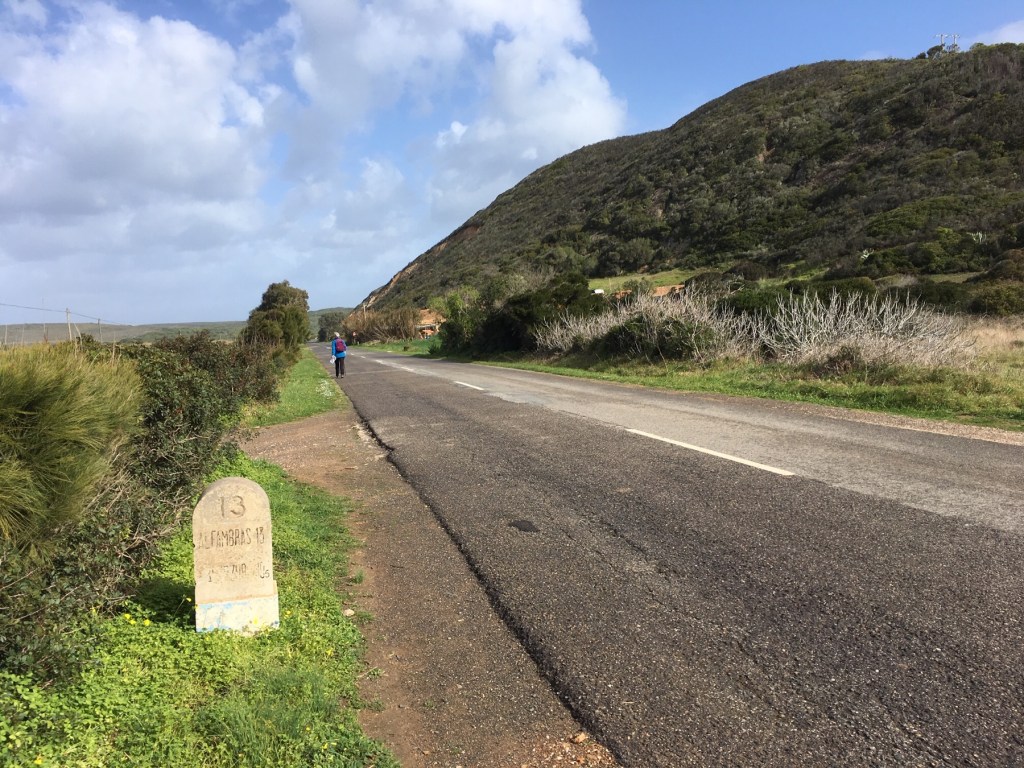
We started out on the main road through Carrapateira, you can see how busy Portuguese roads are.

The first 3km took us back along stony paths with a fair few steep ascents and descents.

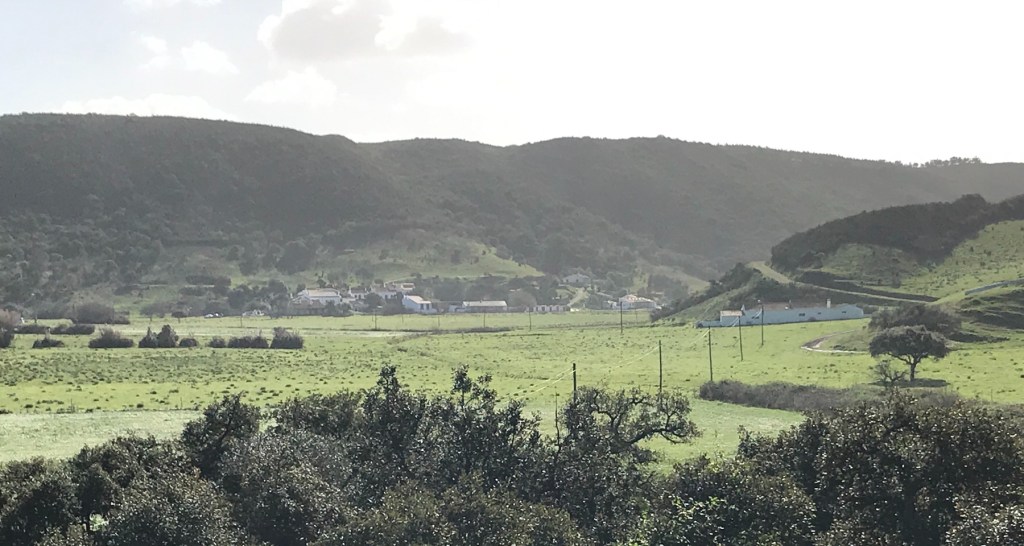
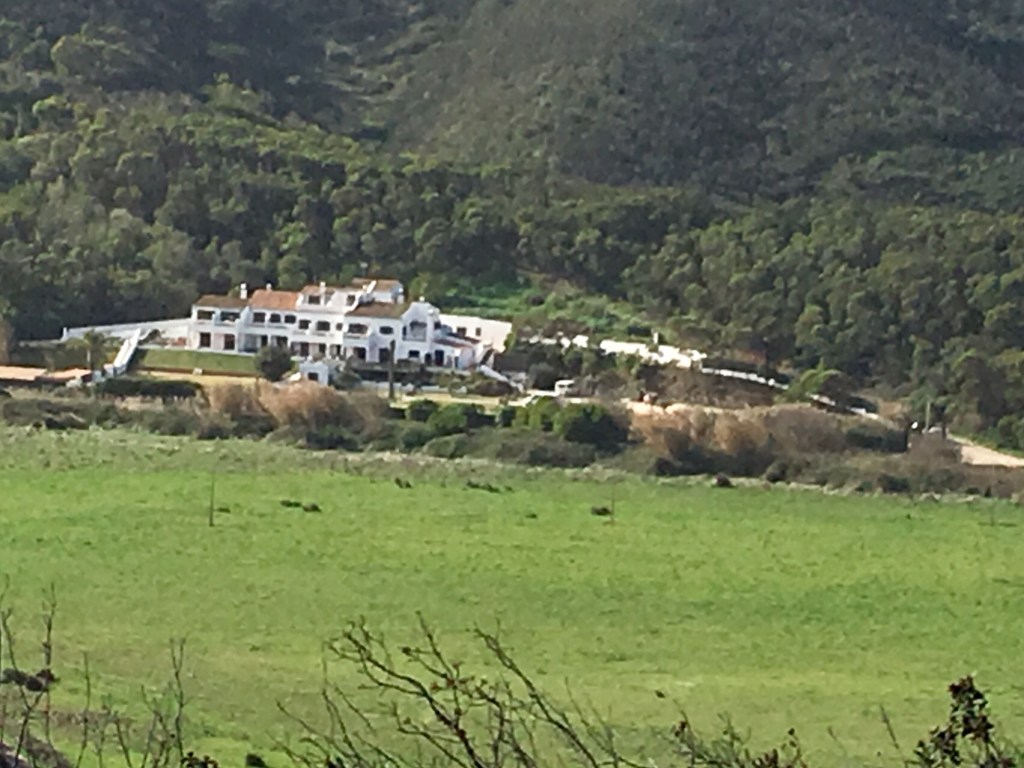
At one point we could see back across the valley to our hotel which appears a lot larger when viewed from a distance.

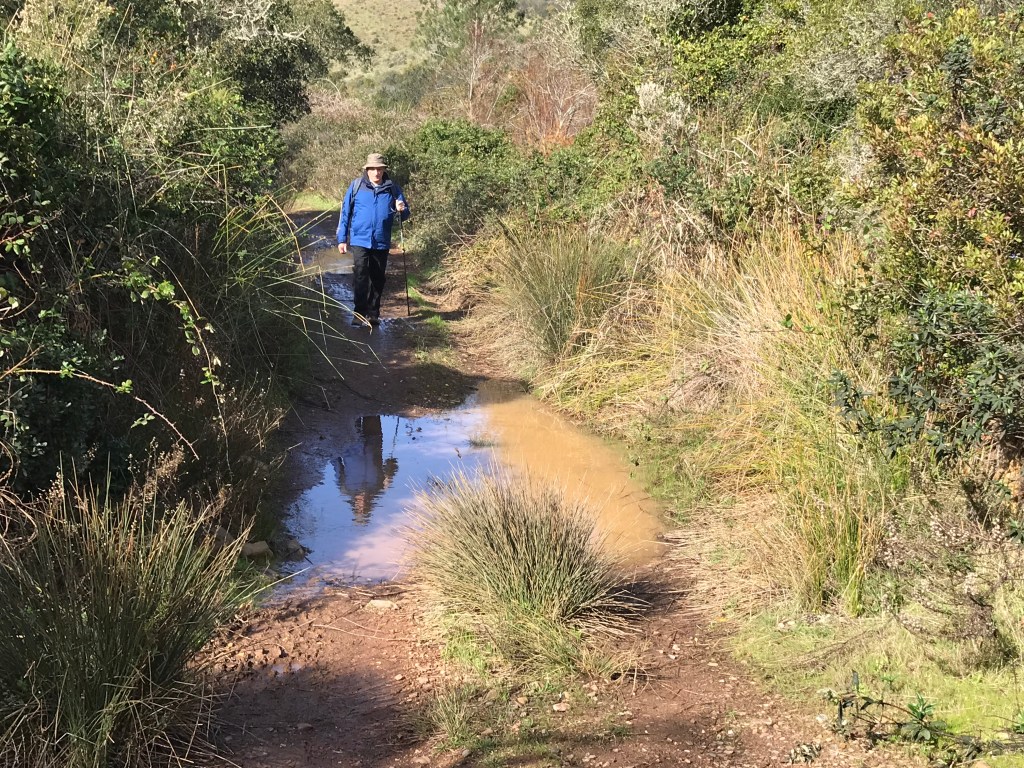
We negotiated a couple of stream crossings and were grateful that despite the heavy overnight rain it’s been so dry here. We’d been warned about wet feet on a couple of our walks and bought a small travel towel especially! Out feet have remained dry as has the towel.

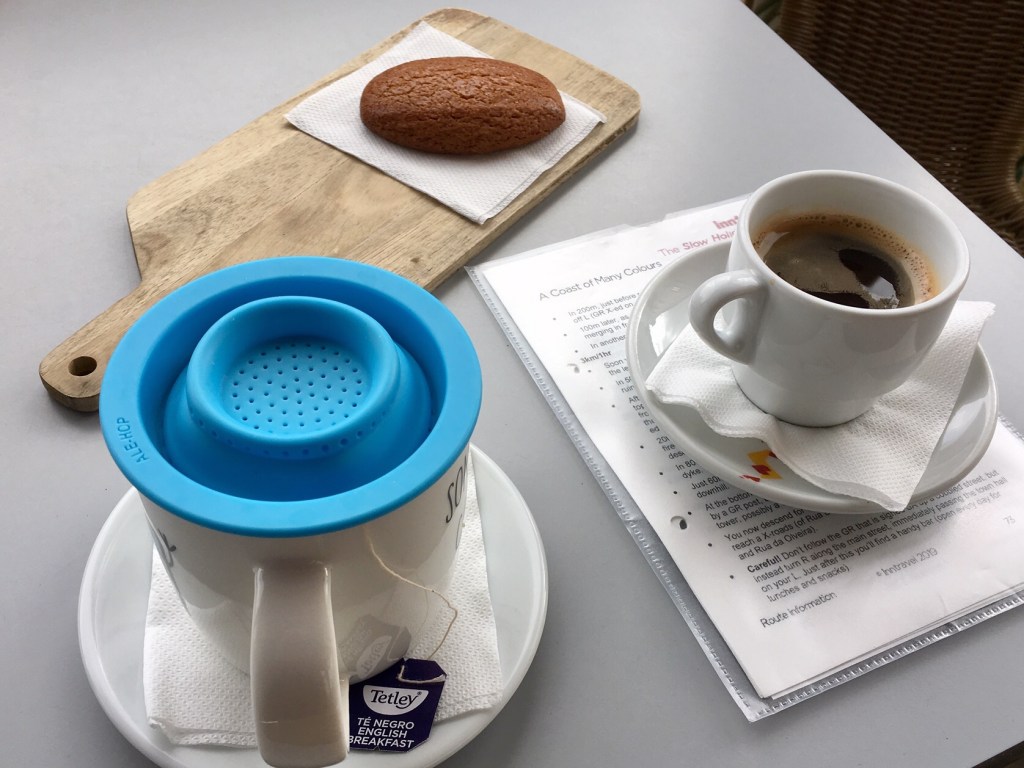
2 hours and 5.5km later, we reached the village of Bordeira in the sunshine, found an open cafe and sat down with a cuppa, home made soup and ginger cake (all for under £5).

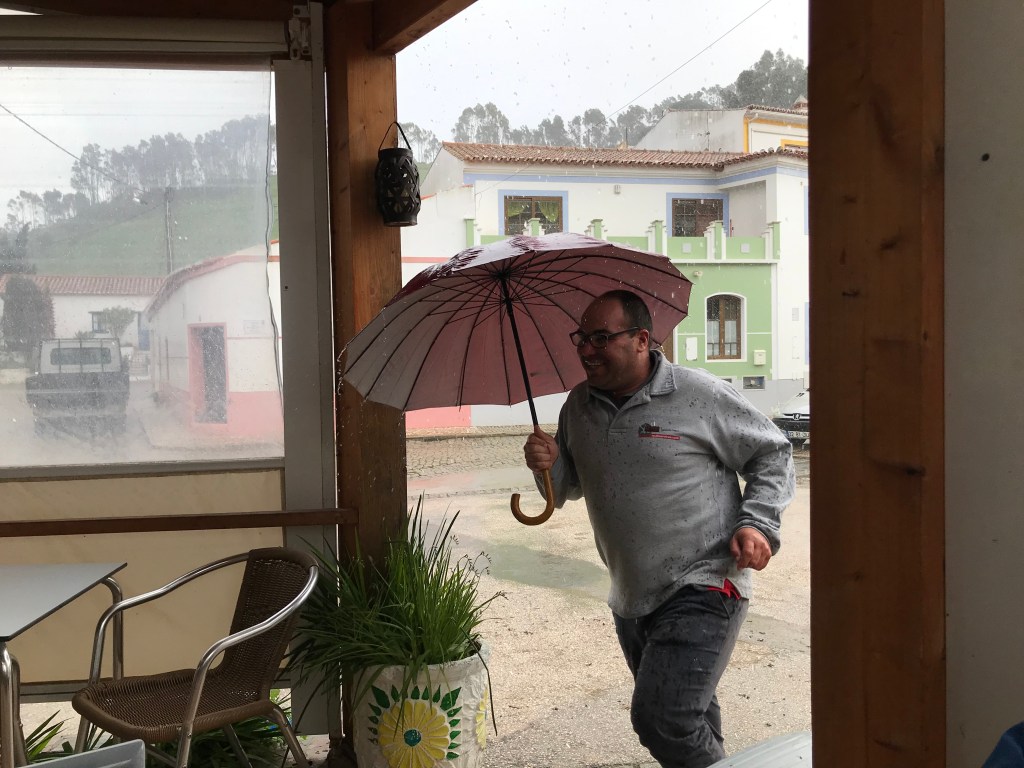
The heavens opened, and the local tradesmen made a dash out of the rain for their lunch.

This is the first cafe we’ve visited since leaving Vila do Bispo where there has been a genuine sense of hospitality. We’ve debated whether the surliness is a result of the hard life Portuguese people endure in remote rural areas or is it more cultural? Today’s cafe was run by a young couple so perhaps it’s a generational thing?

We whiled away almost an hour as the weather went through a cycle of torrential rain and sunshine. Finally we just had to make a move!

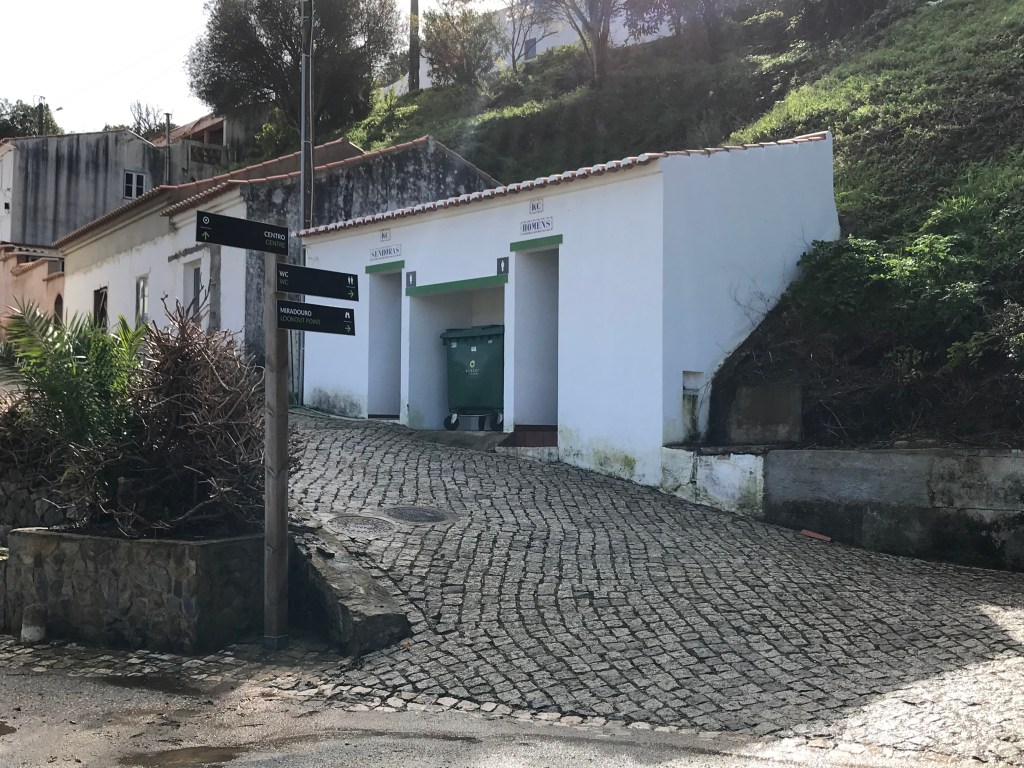
On the way out of the village we saw this.

This is the first public toilet we have seen, there are none on the beaches or in towns or villages.

I know it’s a bit late in the day to tell you, but we’ve been walking the South West Alentejo and Vicentina Coast National Park! It seems unusual not to see facilities and considering the number of camper vans we’ve seen around you would have thought keeping the National Park clean would be important!

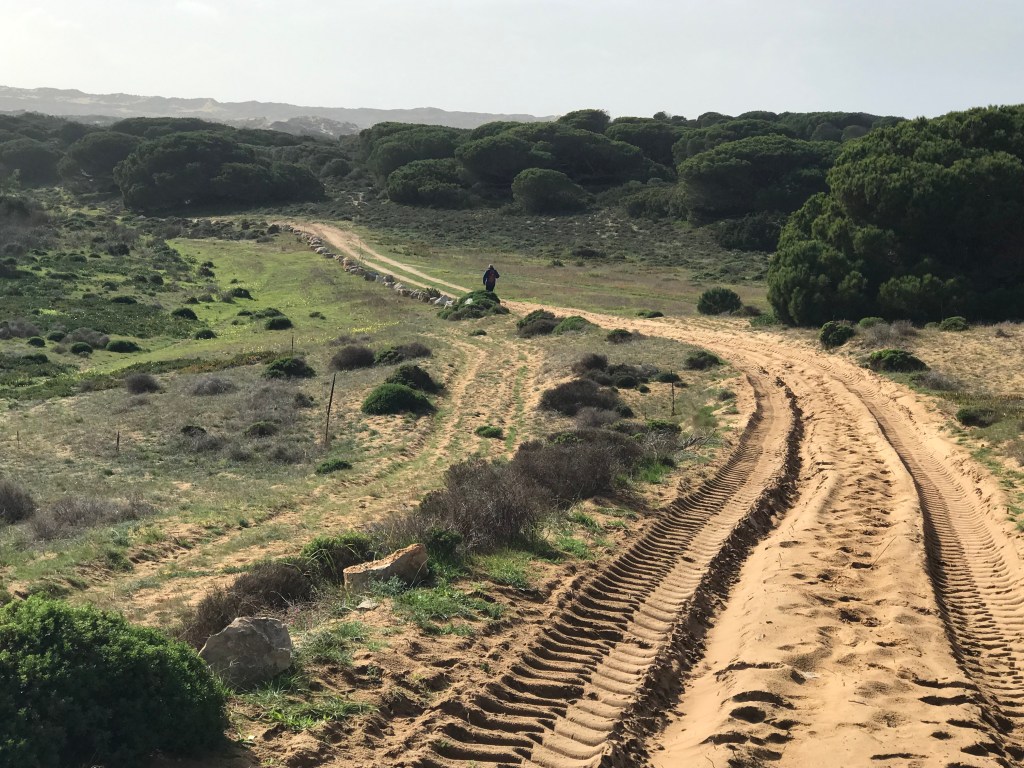
We chose the suggested shortcut in the instructions. It saved 1.5km another steep ascent and followed it down through a lush valley. It was wet and muddy before becoming sandy and hard work underfoot.

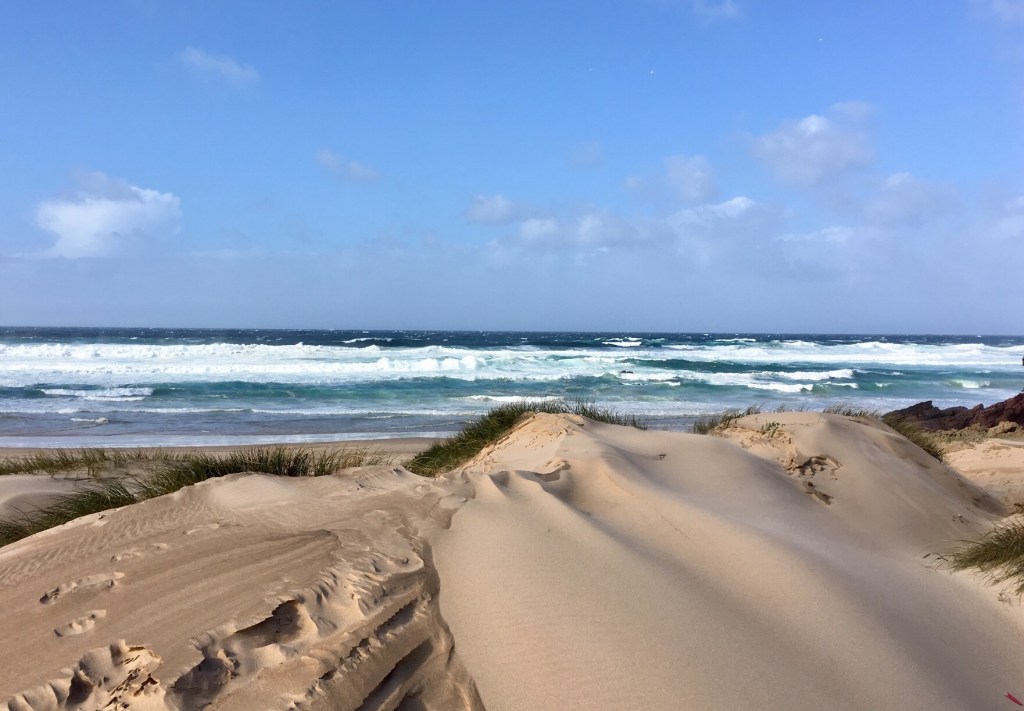
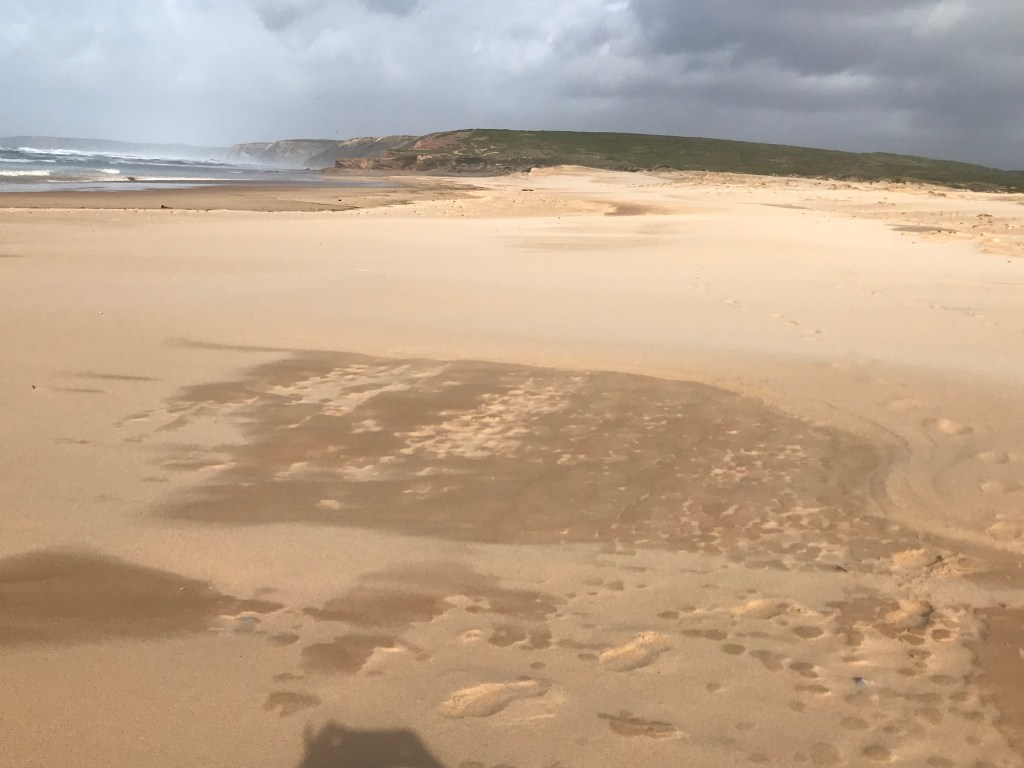
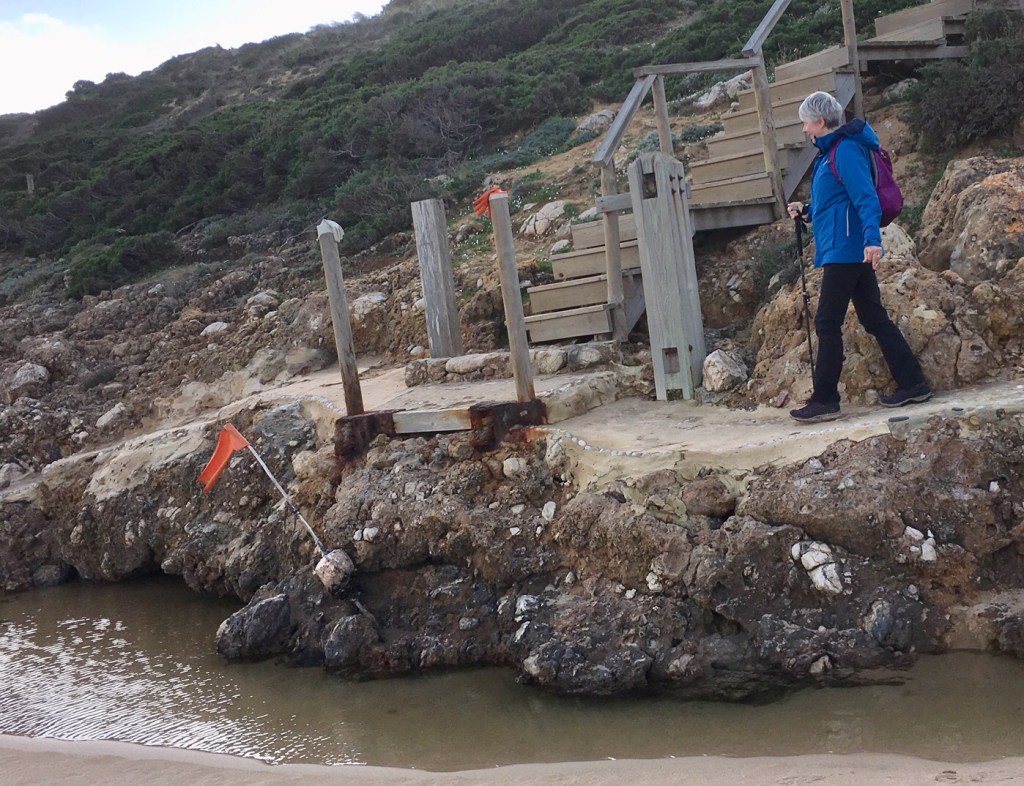
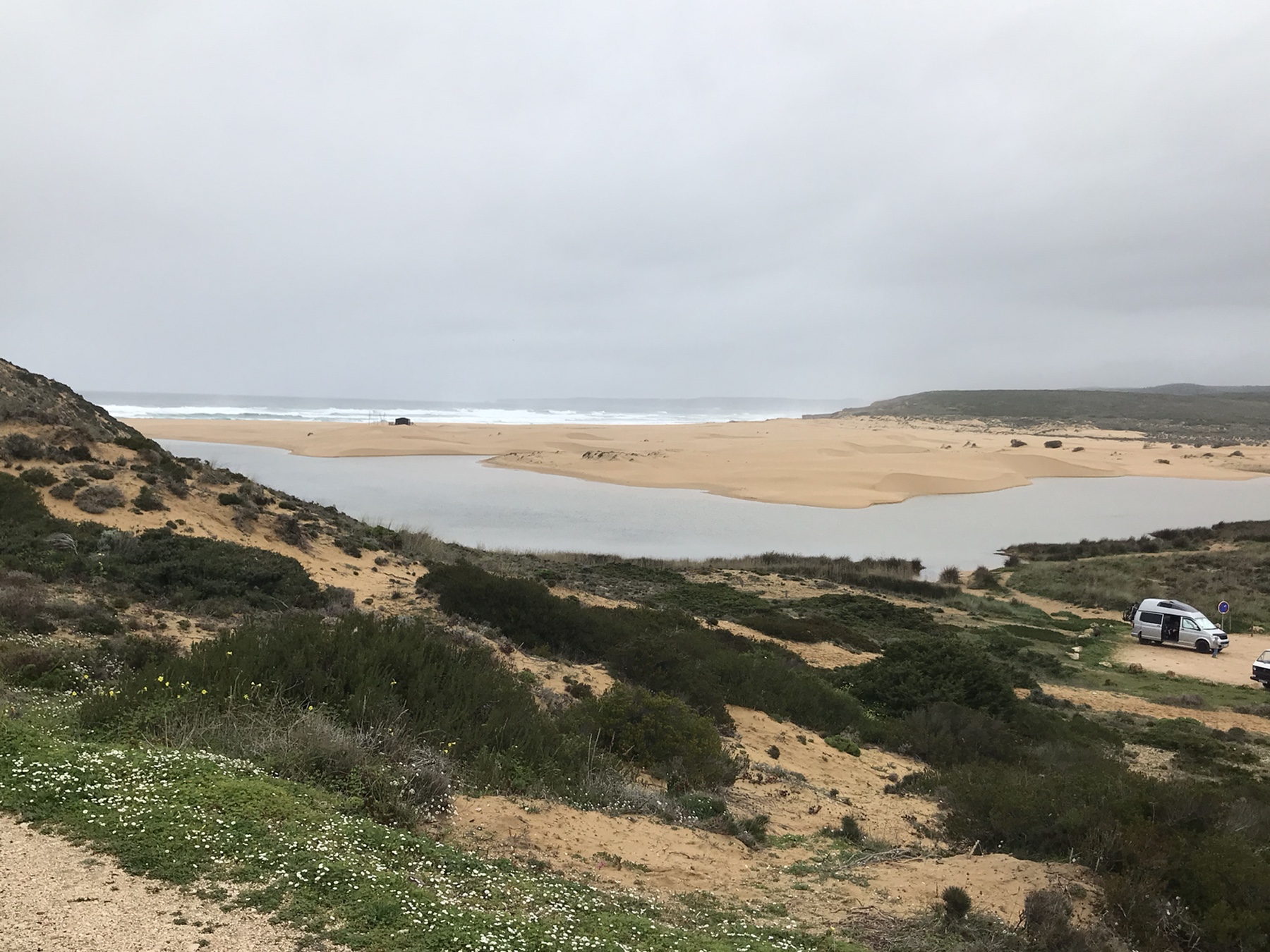
Somewhere we had missed our shortcut back to the road and there was no escape. We had to cross the sand dunes, walk 1km across the beach and cross the Carrapateira river. The wind was blowing hard and it was an unpleasant, gritty walk.

The beach tried to compensate by looking dramatic but we’d had enough.

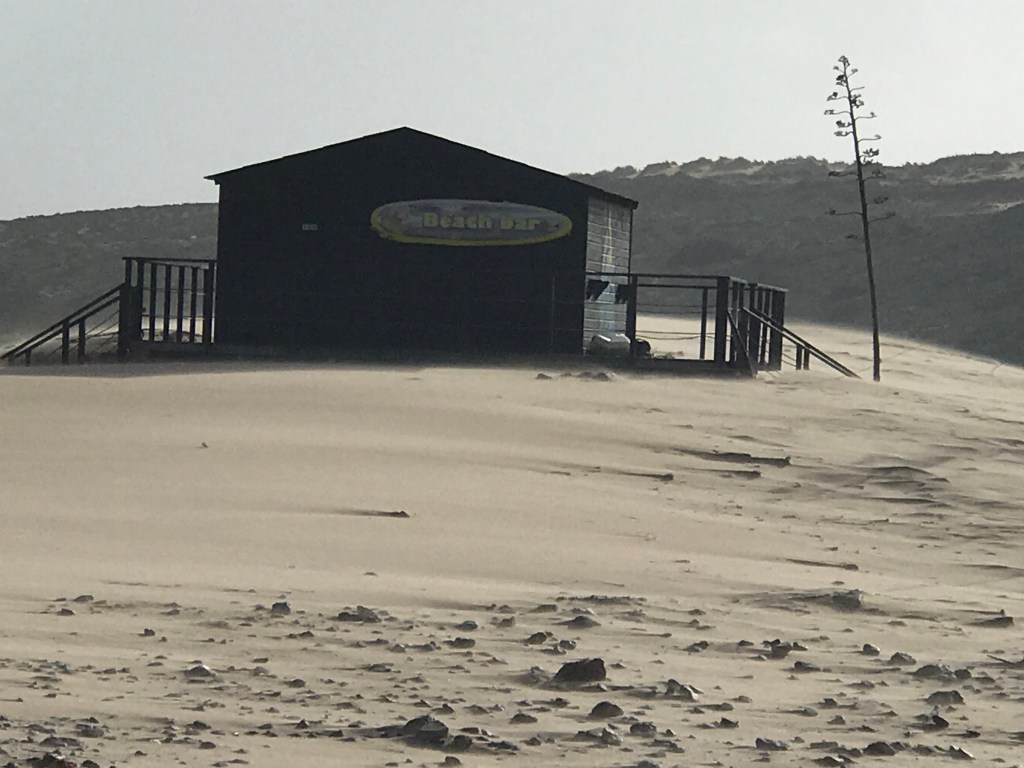
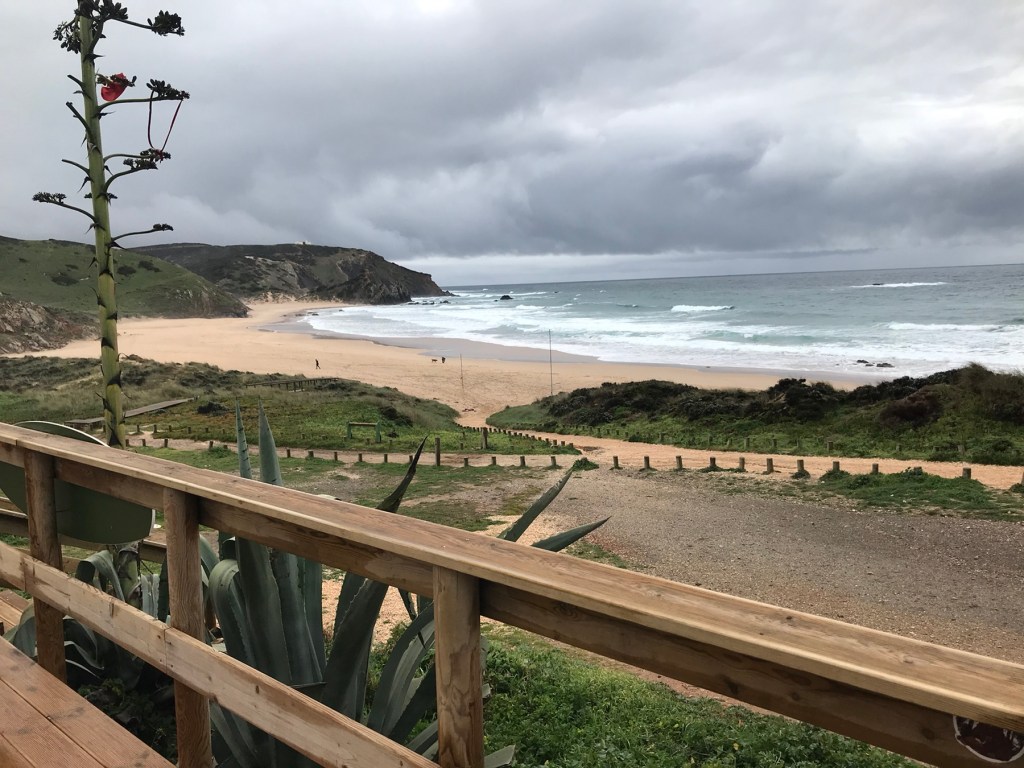
This came into view as we rounded a sand dune.

It’s difficult to see how the building survives in such an inhospitable environment but it must be a welcome retreat for the surfers. However its still a 2km walk back to the car park and a further 1km to the nearest cafe.

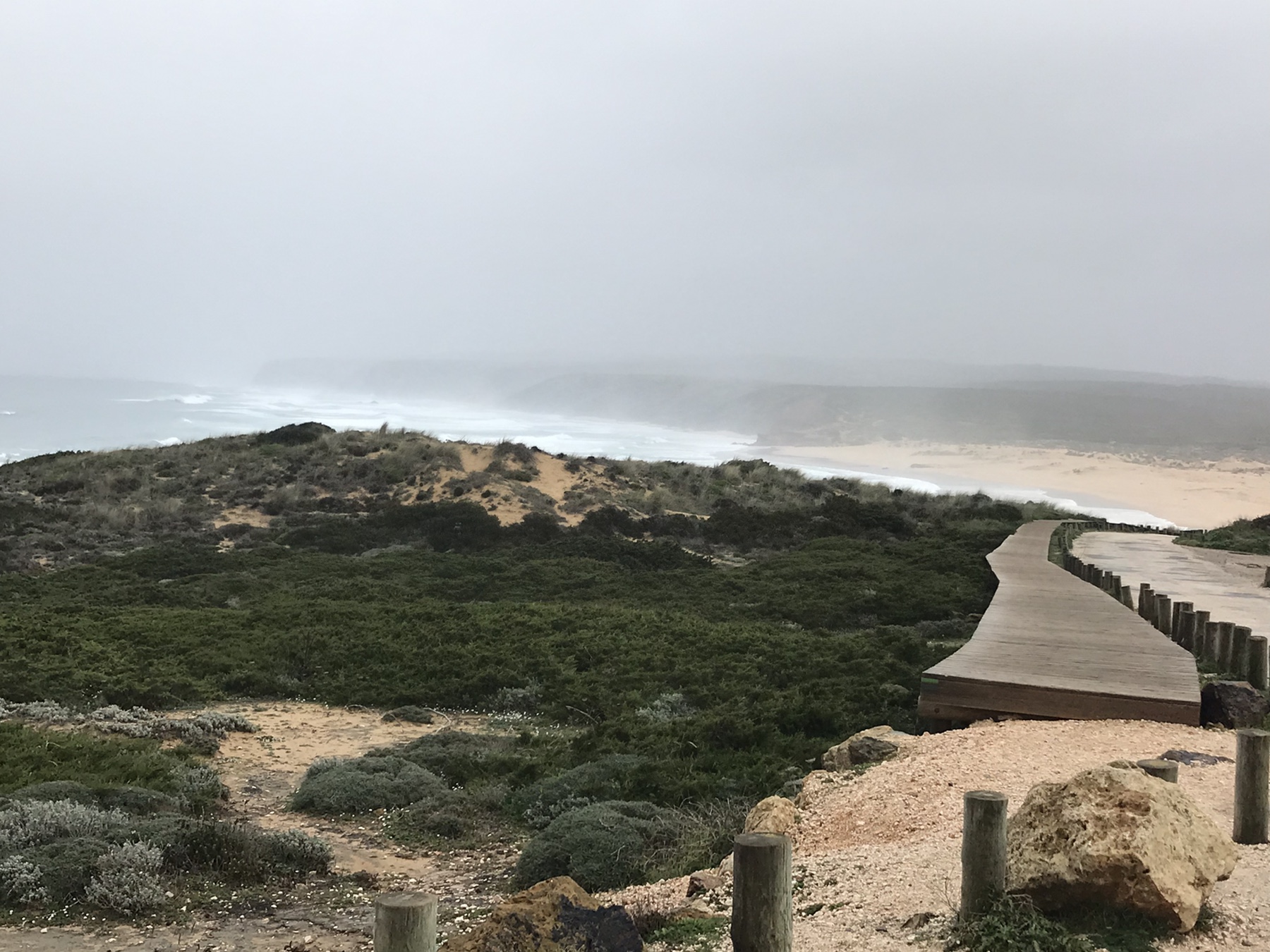
We finally made it to the boardwalk to take us up off the beach and crossed the river without getting wet!

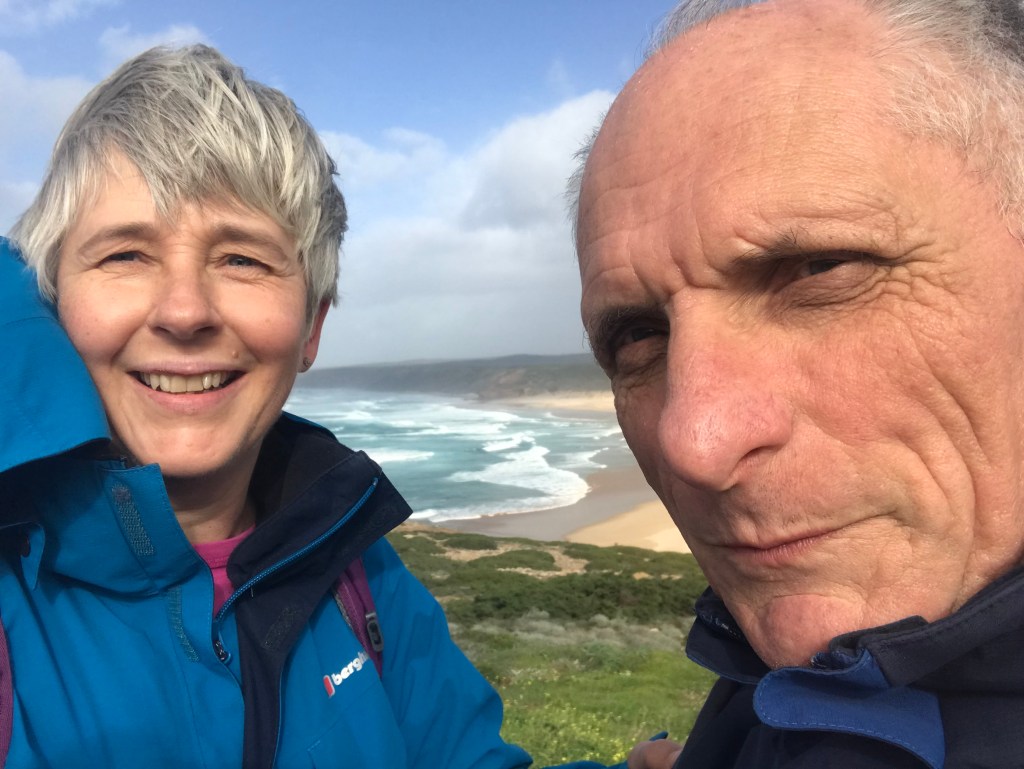
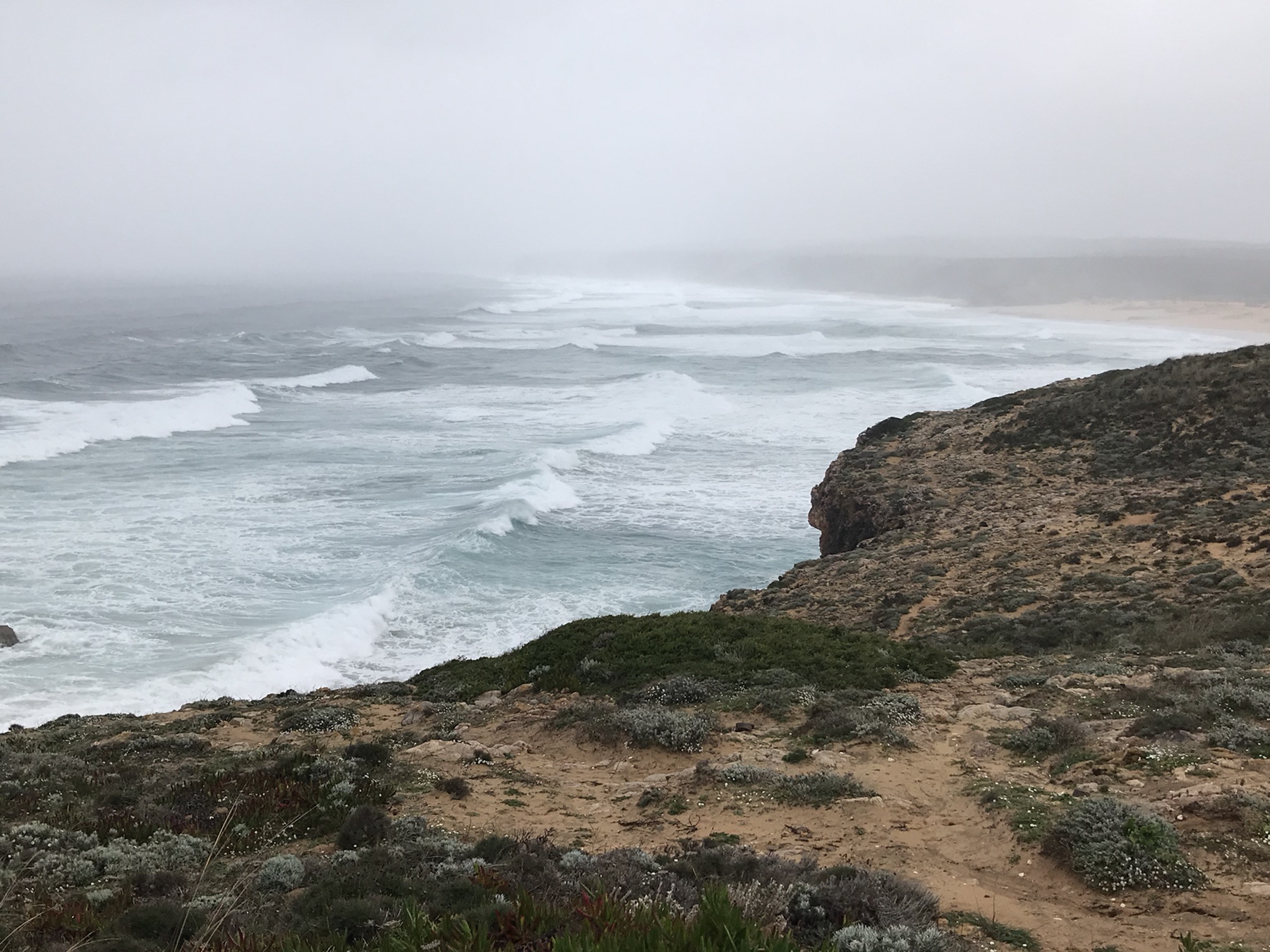
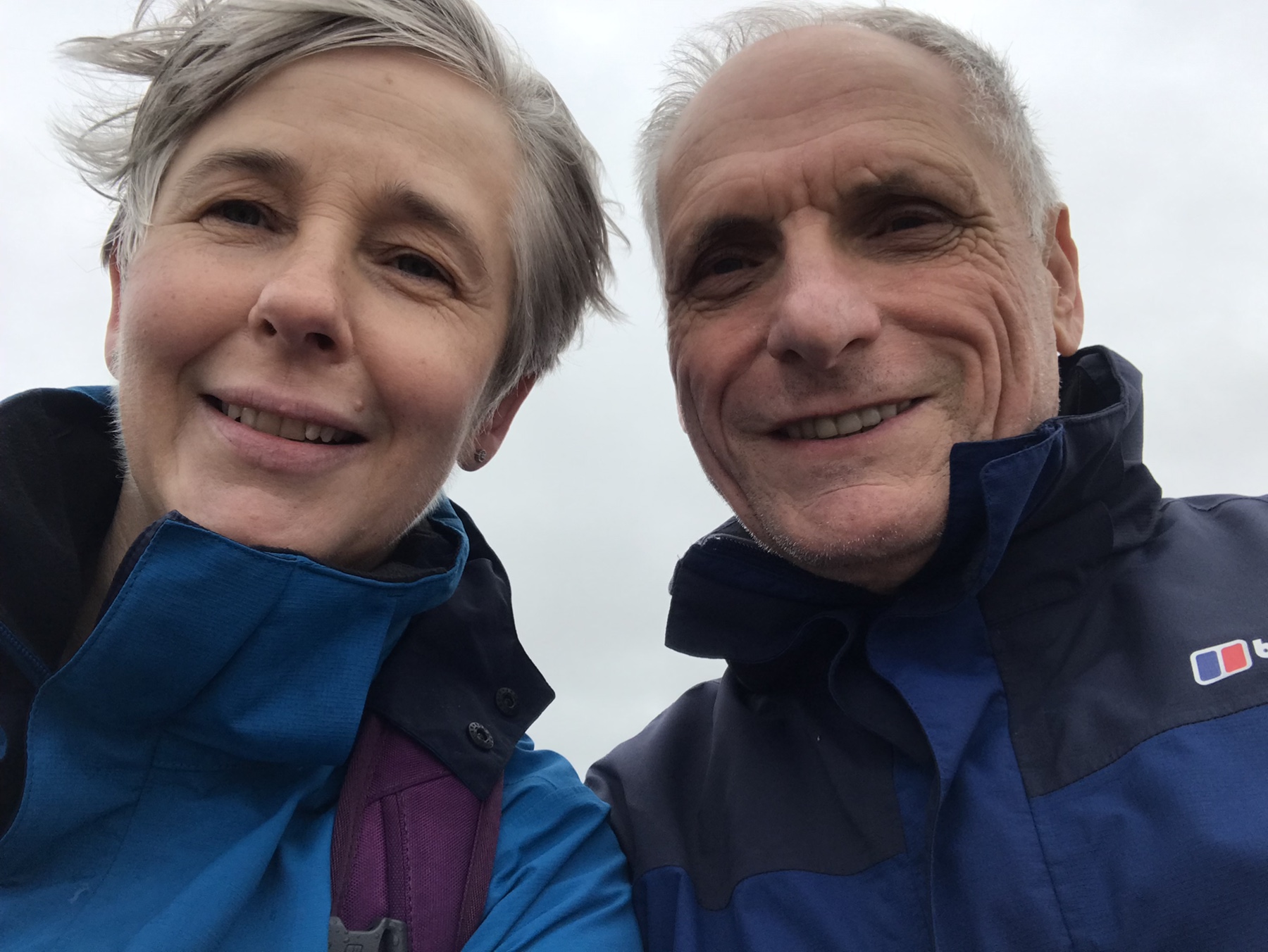
At the top of the cliff we stopped for a selfie. Sorry, we’re not getting much better but at least the sea made an appearance in this one.

So much for our short cut! We’d been out over 5 hours and walked 14km.

Carrapateira – part 2….

…..and we are broken. Different bits of our legs have given up and we are hobbling somewhat.

At dinner, last night, we met a couple from Guernsey who are two days ahead of us on the same walking holiday. They walk, cross country ski and sail – they are not broken!

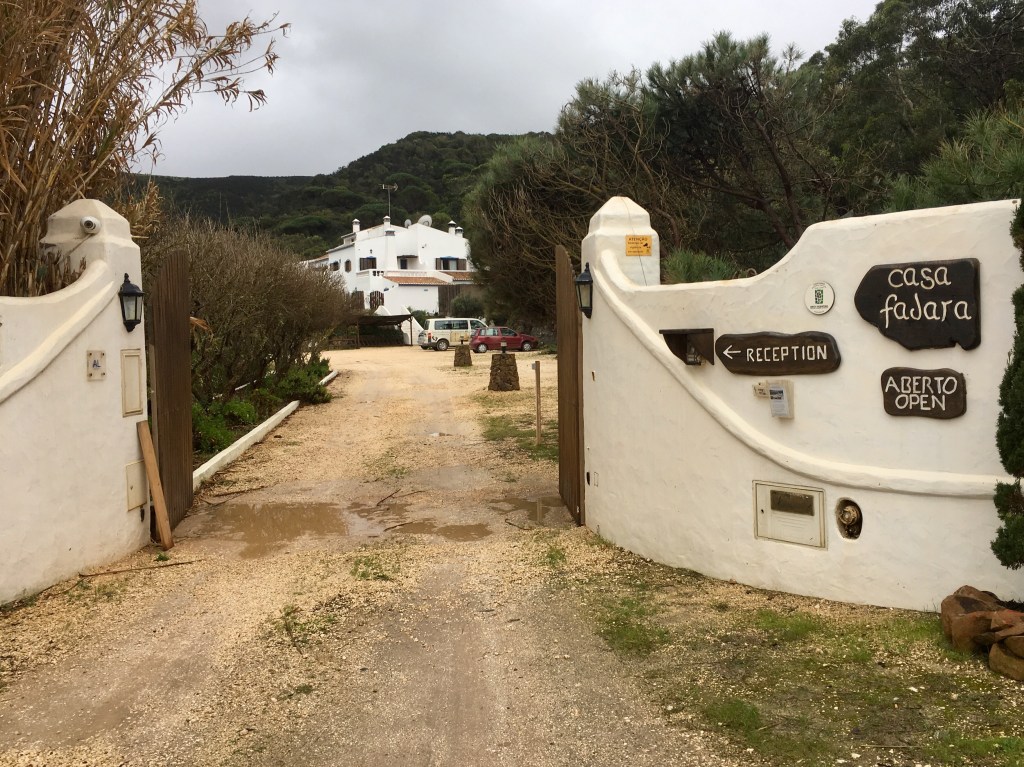
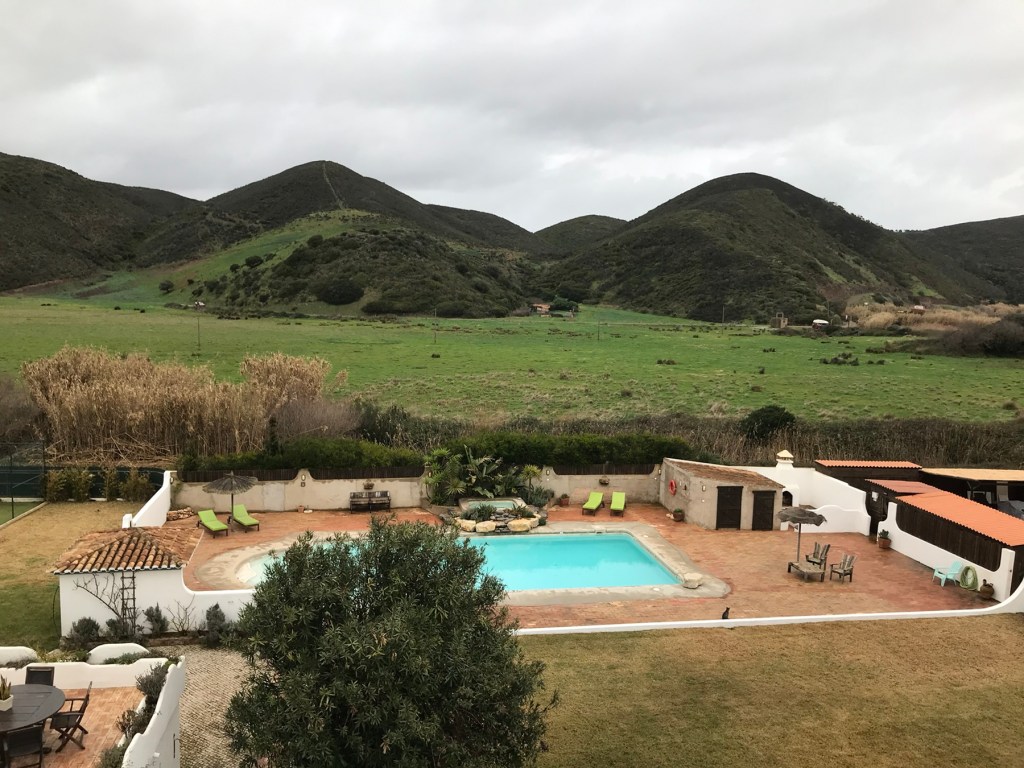
Before continuing to whine about injuries, just a few lines about our hotel, Casa Fajara. It used to be a farmhouse, has just 12 rooms and has been lovingly restored by its English owners. It is a real haven of peace and quiet and not a place we would have considered had we tried to organise this trip ourselves. The staff are warm and friendly and the freshly prepared food is superb.

Anyway, during breakfast, we reviewed two circular walks suggested for our time here and discounted both in terms of distance and uneven terrain. It was a useful exercise in comparing written instructions against map contours which we haven’t really bothered with.

Last night, we read through our Inntravel booklet and found all sorts of information which would have been of use over the last few days. There were tips on how to deal with menacing dogs, making sure you had the telephone number of the hotel you were heading for and checking written directions against the map so you knew where you were at all times. We’d taken the approach that maps are just for making the rucksack heavier!

So back to today, we decided to find our own way along the coast, following roads to minimise further limb discomfort. We followed the Carrapateira river through the sands dunes to the beach before climbing up along the cliffs.

Along the way, EU money had funded boardwalks over the cliffs and dunes to help protect fragile ecosystems, as a plus, it’s much easier than walking through mud and on loose sand.

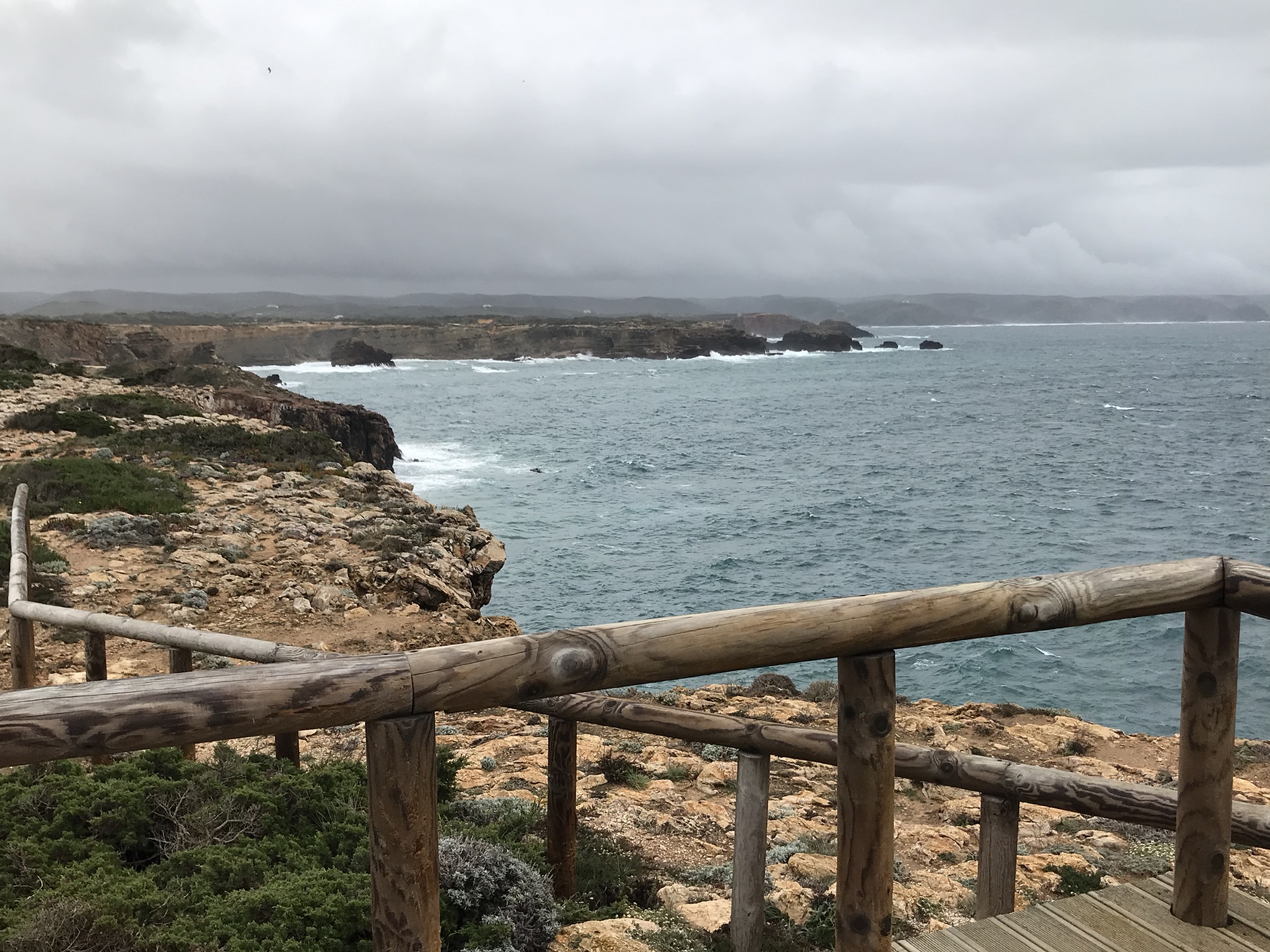
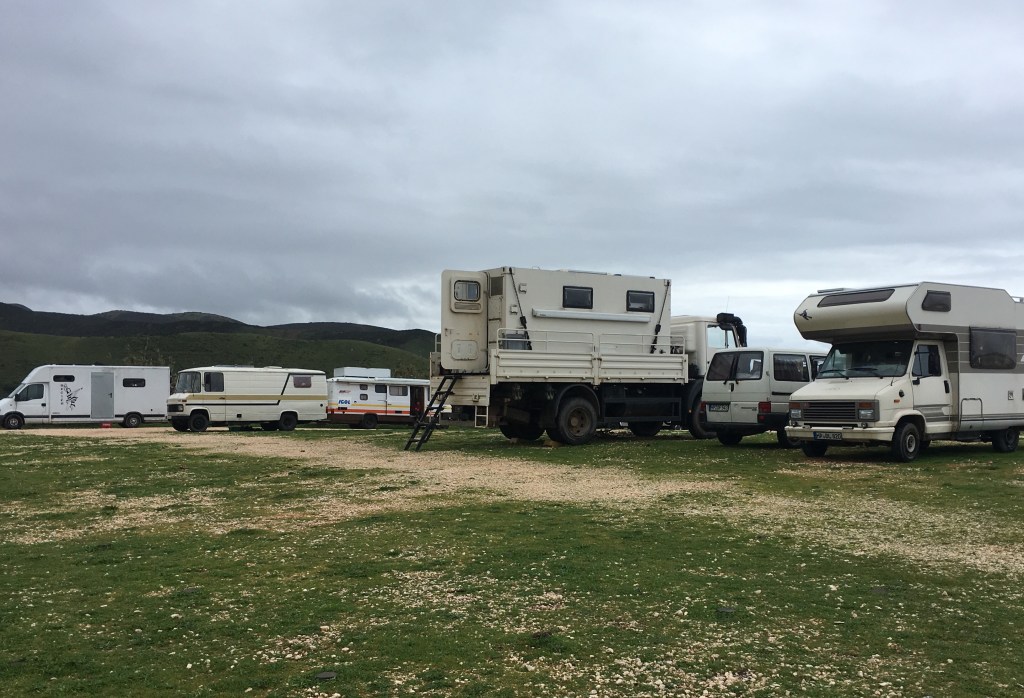
The coastline is rugged and dramatic and you can see why it draws the surfers. We saw plenty of camper vans with surf boards in the car parks but no one actually in the sea. We thought surfers were rugged but obviously a bit of wind and rain puts them off. We came to the conclusion that they just sit in the car park and talk about surfing rather than actually trying to catch any waves.

We tried for an obligatory selfie and attempted to get the cliffs and sea in too. Obviously it’s just too difficult for us.

Despite our weary, painful legs we’d still managed to walk 8km before the town came into view. It’s certainly been easier staying on tthe road.

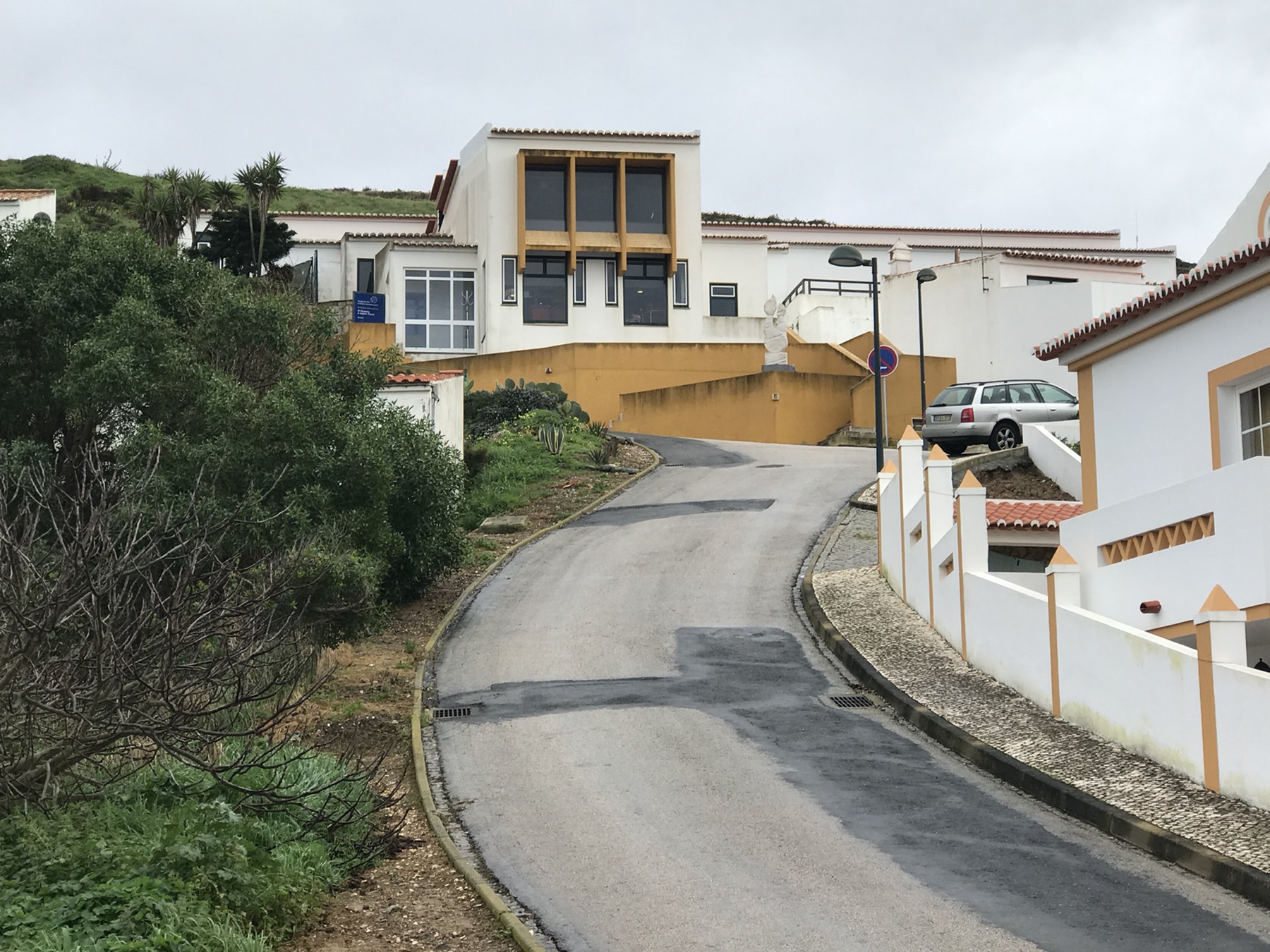
None of the cafes were open when we got back so we visited the Museum of Sea and Land. It was at the top of a very steep hill but had a cafe so we thought the effort worthwhile.

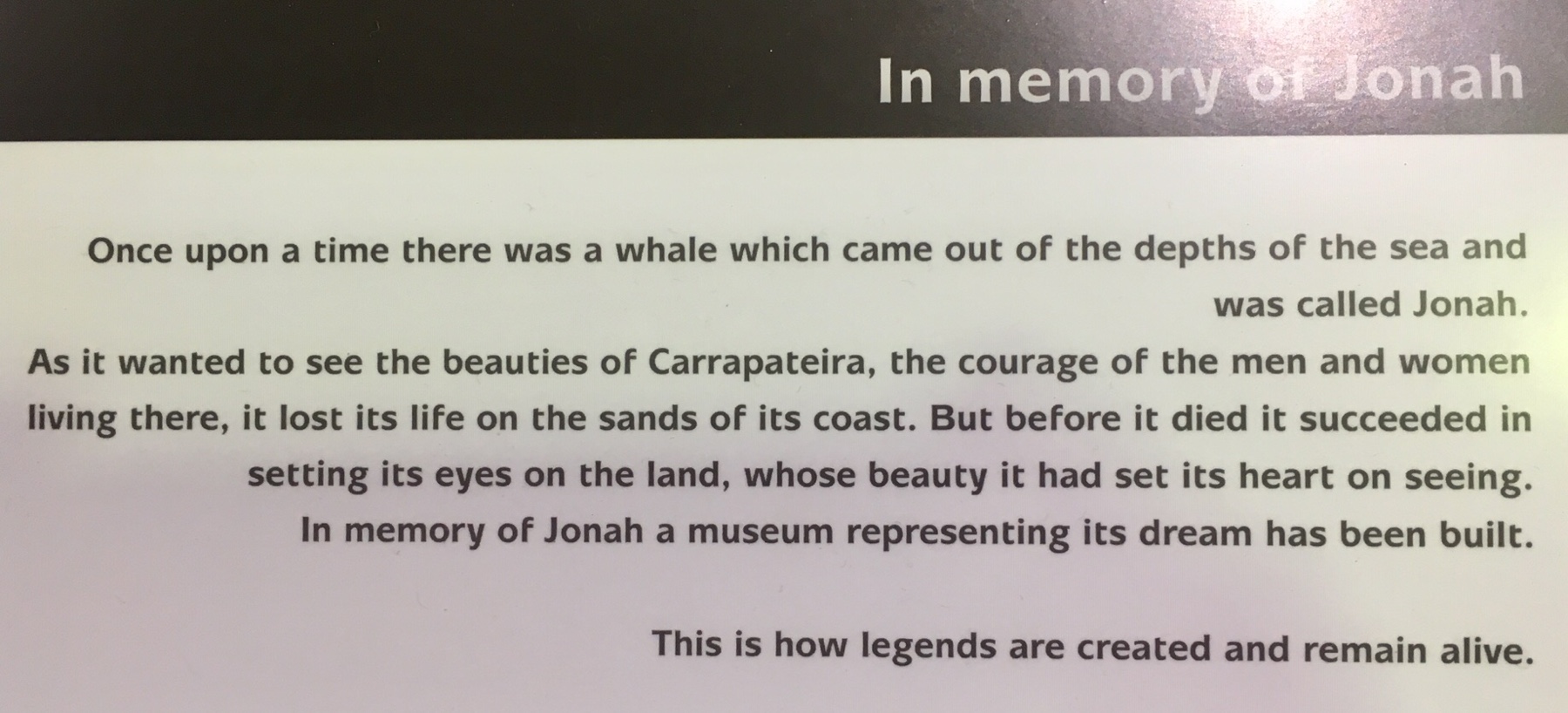
The museum tells the story of life as it’s evolved in the community, starting bizarrely with the story of Jonah, a sperm whale washed upon the beach in 1991.

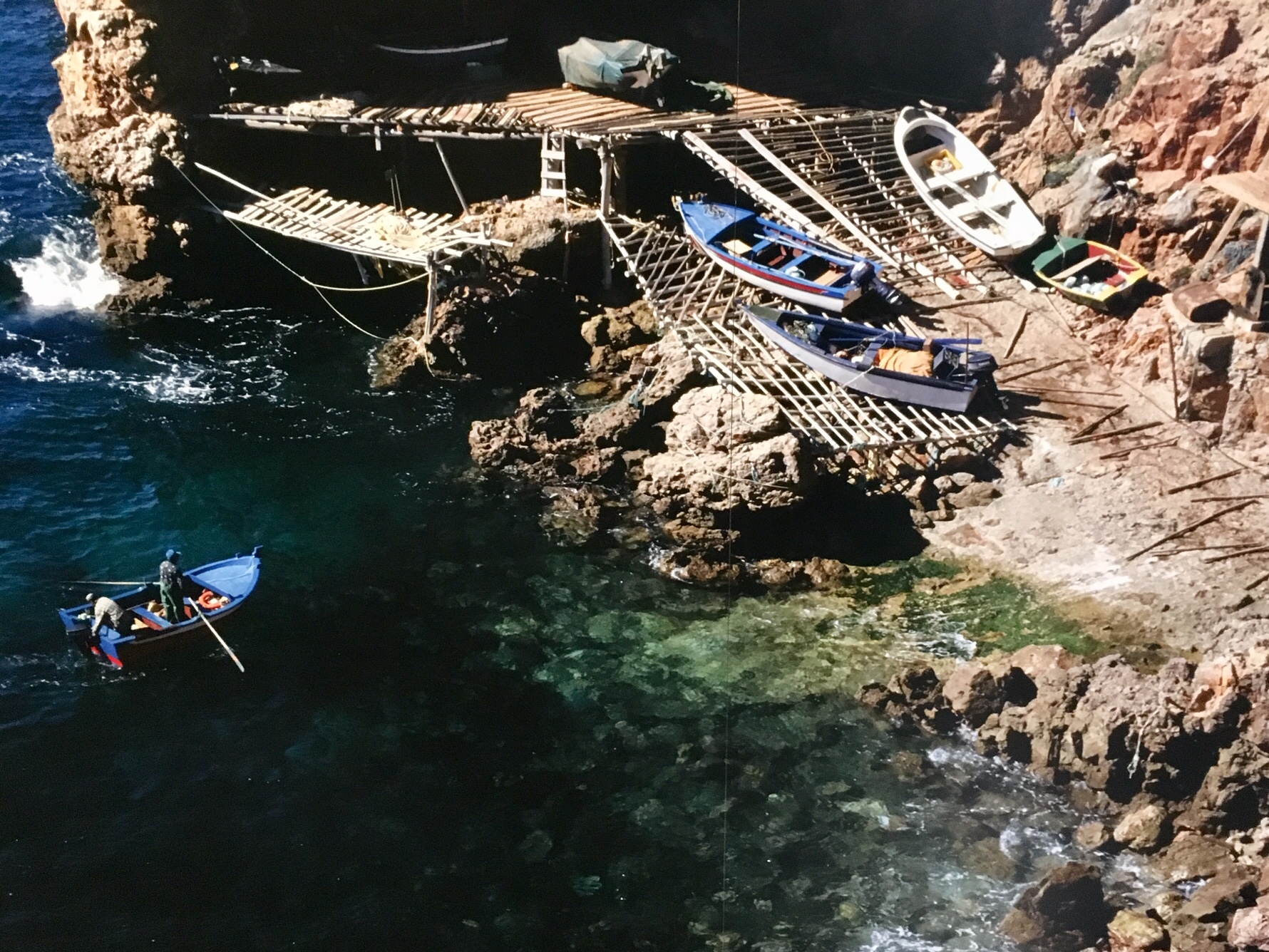
The exhibition shows how villagers worked the land before changing to fishing. You have to wonder about the effort it took to haul the boats onto the makeshift quays and how they were constructed in the first place.

It’s clear that it’s a very hard life, with poor financial reward.

Oh, and the cafe in the museum? The curator confirmed its a publicity lie to draw visitors in! We spent ages chatting with her, covering diverse subjects as the internet and children, the impact of Portugal’s entry into the EU the Euro and the dreaded Brexit!

Quiz question of the day – What are these used for?

Pedralva to Carrapateira – 12.5 km

We woke to the sound of heavy rain partly because the Portuguese don’t seem to bother with gutters. Any rain pours straight off the roof onto the cobbled streets making a lot of noise.

At breakfast, the staff were delighted with the rain and proudly announced that it was raining all over Portugal. The rain’s badly needed as the rivers and land are very dry. We made it clear that we didn’t share their enthusiasm but, on a positive note, we’re growing slightly immune to the pains in our feet and legs.

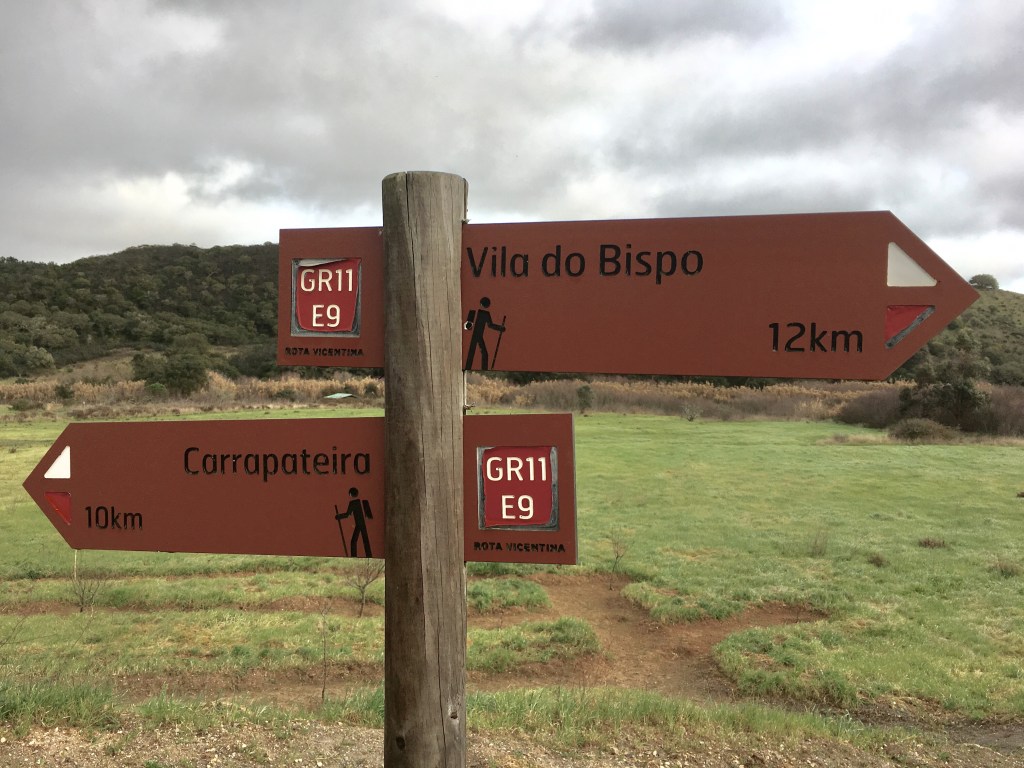
Our route took us out of Pedralva, along a wide track signposted ‘Carrapateira 10km’. Inntravel like to take more scenic routes and obviously felt an extra 2.5km would be well worth the effort. We considered taking the shorter, more direct route before agreeing we were more likely to get lost.

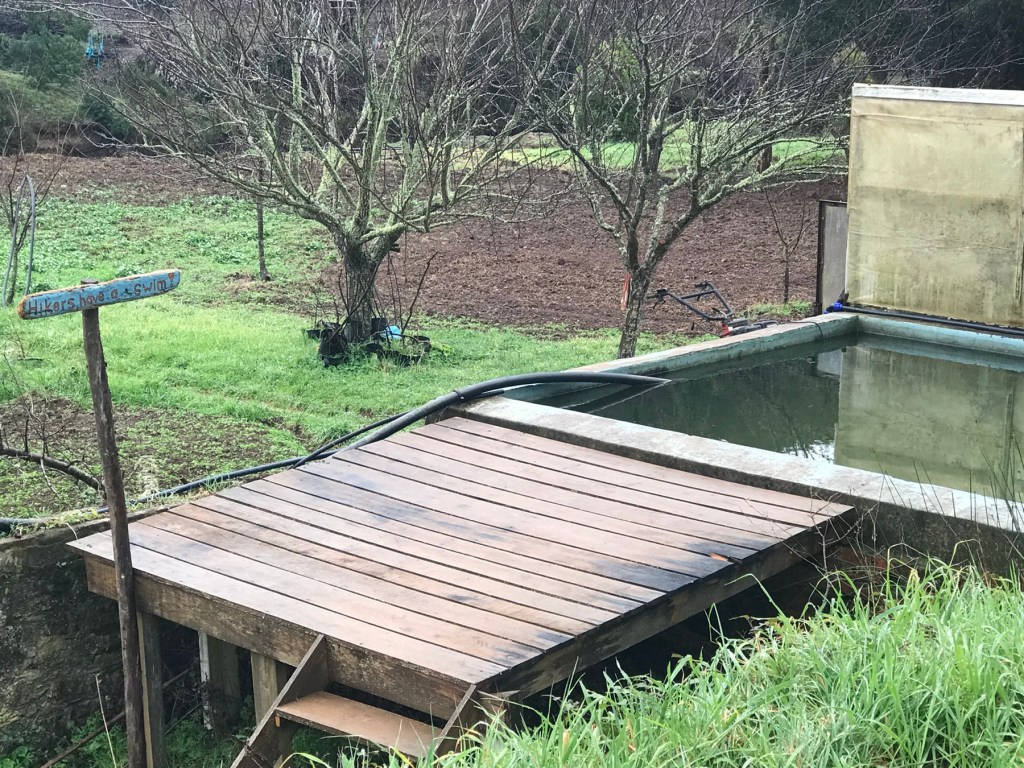
The path took us along a lush valley, past an organic farm with an unusual feature.

Hopefully you can read the sign encouraging hikers to have a swim. The water was very grey and mucky so we declined the kind offer…..

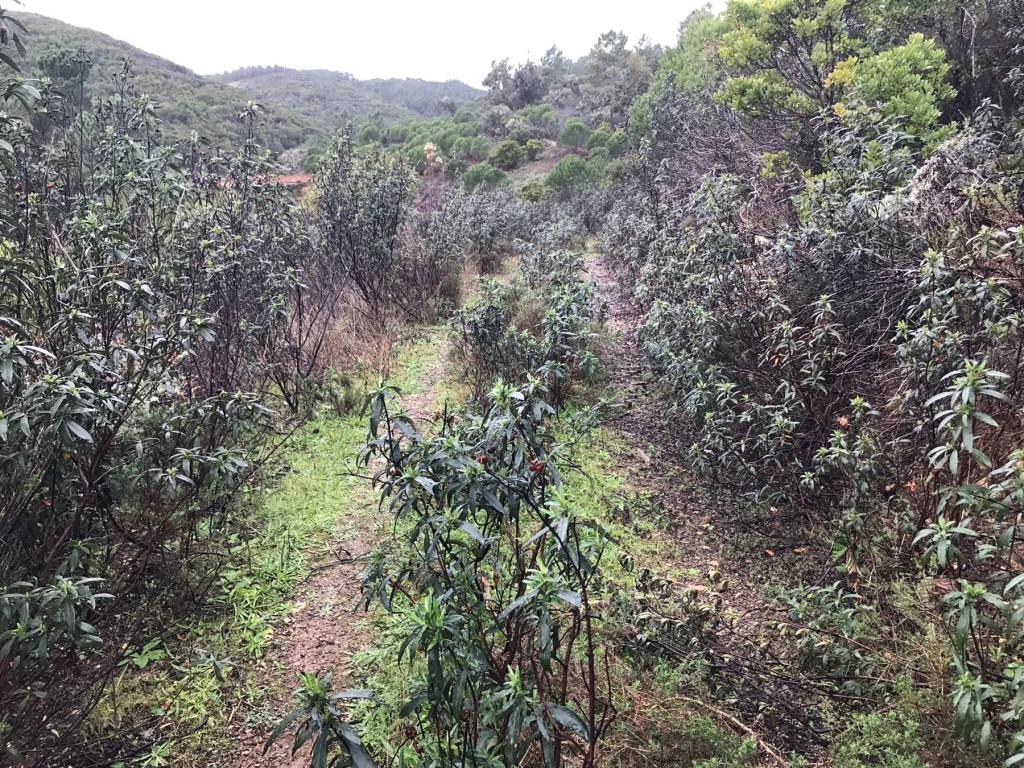
Soon, we left the nice flat path along the valley for a steep, grassy track covered in cistus. The cistus will look amazing in the spring, today in the rain it was a energy sapping trip hazard.

We wound our way up around the valley with the weather alternating between torrential rain and mildly pleasant.

After we’d survived the challenge of the cistus, we joined a steep wide path which promised a view of the sea at the top. No such luck in today’s weather but we could just about see it as we went over the brow of the next hill. In the distance you can see the beach at Amado where we were aiming to stop for lunch.

By now it was raining very heavily and we were soaked. As we were over halfway we decided to shelter under a tree and treat ourselves to a break of fruit juice and a banana. We heard footsteps and met our first serious walker of the holiday. Helen, from Quebec, was trekking in Europe for 3 months, had started out on 12th January and was expecting to walk 300km in Portugal before heading across to Spain. Interestingly, she said it was much cheaper for her to visit Europe than British Columbia which seems bizarre. We parted company, colder and damper from standing still, and round the next bend were treated to our first glimpse of Carrapateira.

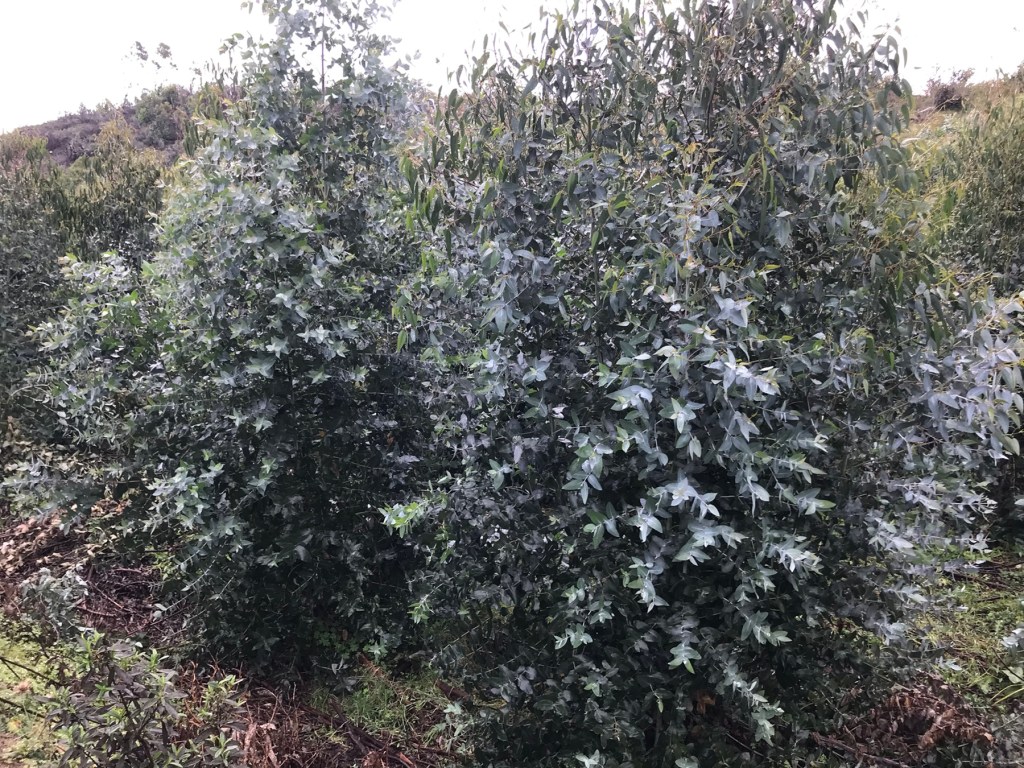
We headed down towards the beach through groves of recently coppiced eucalyptus.

The cloud lifted as we approached the beach and, although the cafe was closed, we found a reasonably dry bench to sit at and have lunch. We passed many camper vans in the car park and although a popular surfing area there was no one out surfing today.

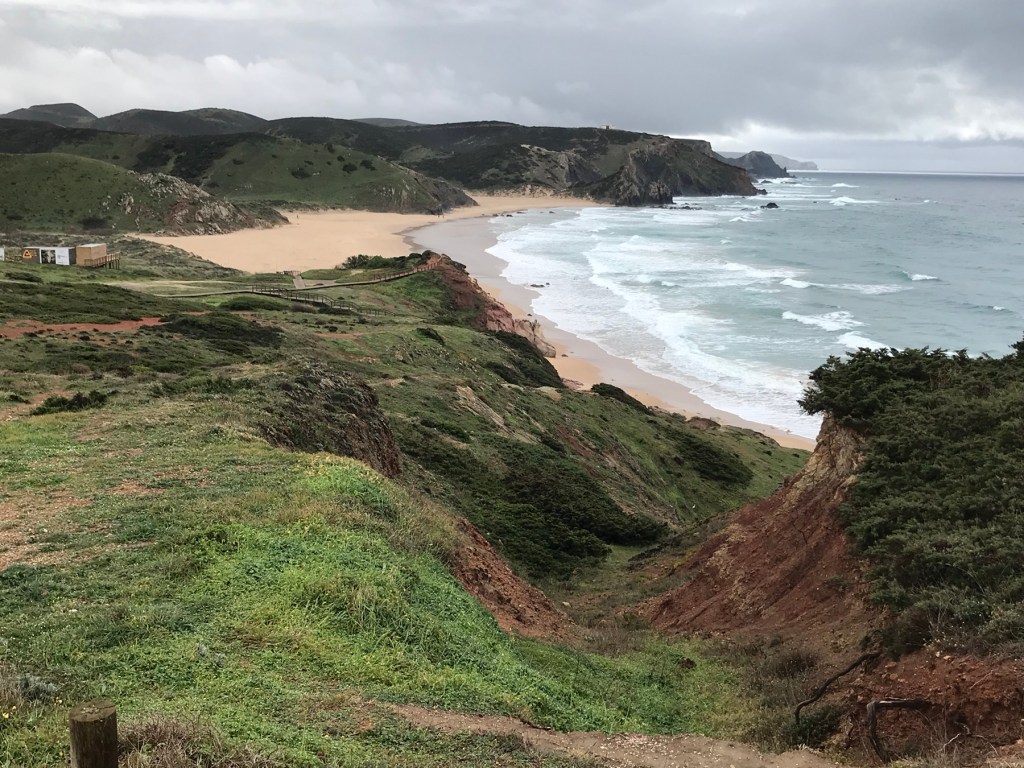
As we headed uphill away from beach and along the cliff, the views opened up and became quite dramatic.

We followed the road round to a restaurant renowned for its fish (It was closed!) and took a path down by some restored fishermen’s storehouses. These were relocated when their original port was destroyed. The huts and quay were rebuilt with an EU grant although there was no sign of any fishermen using them.

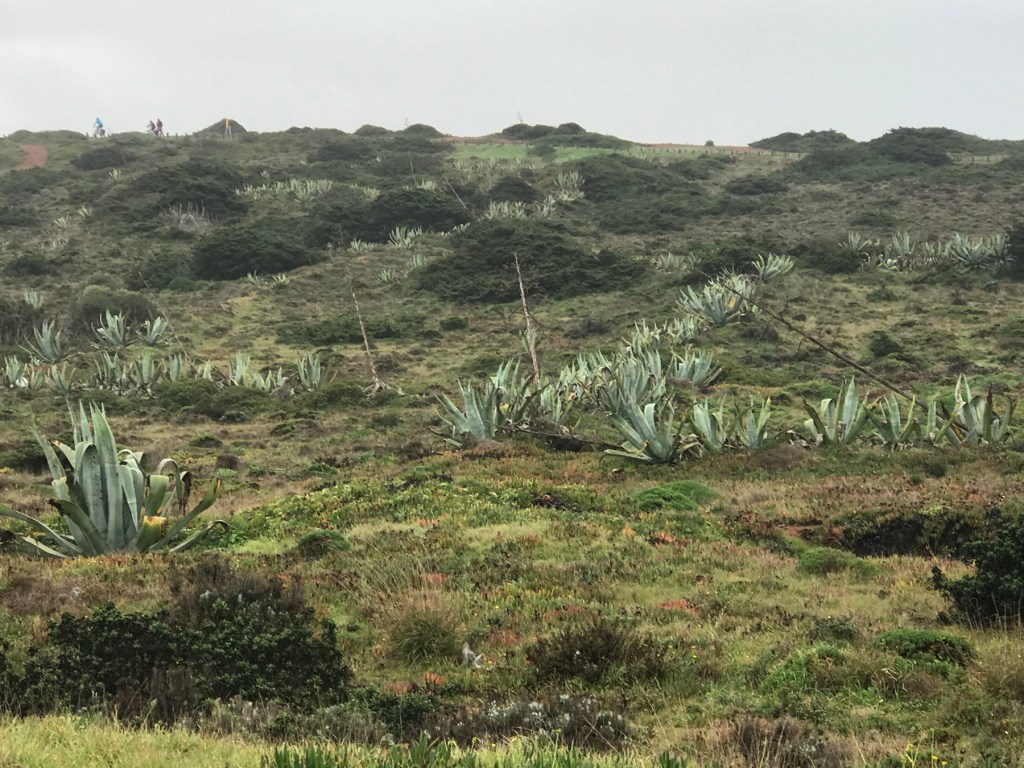
Our final few km started with a walk through fields of agave, originally planted to weave rope from.

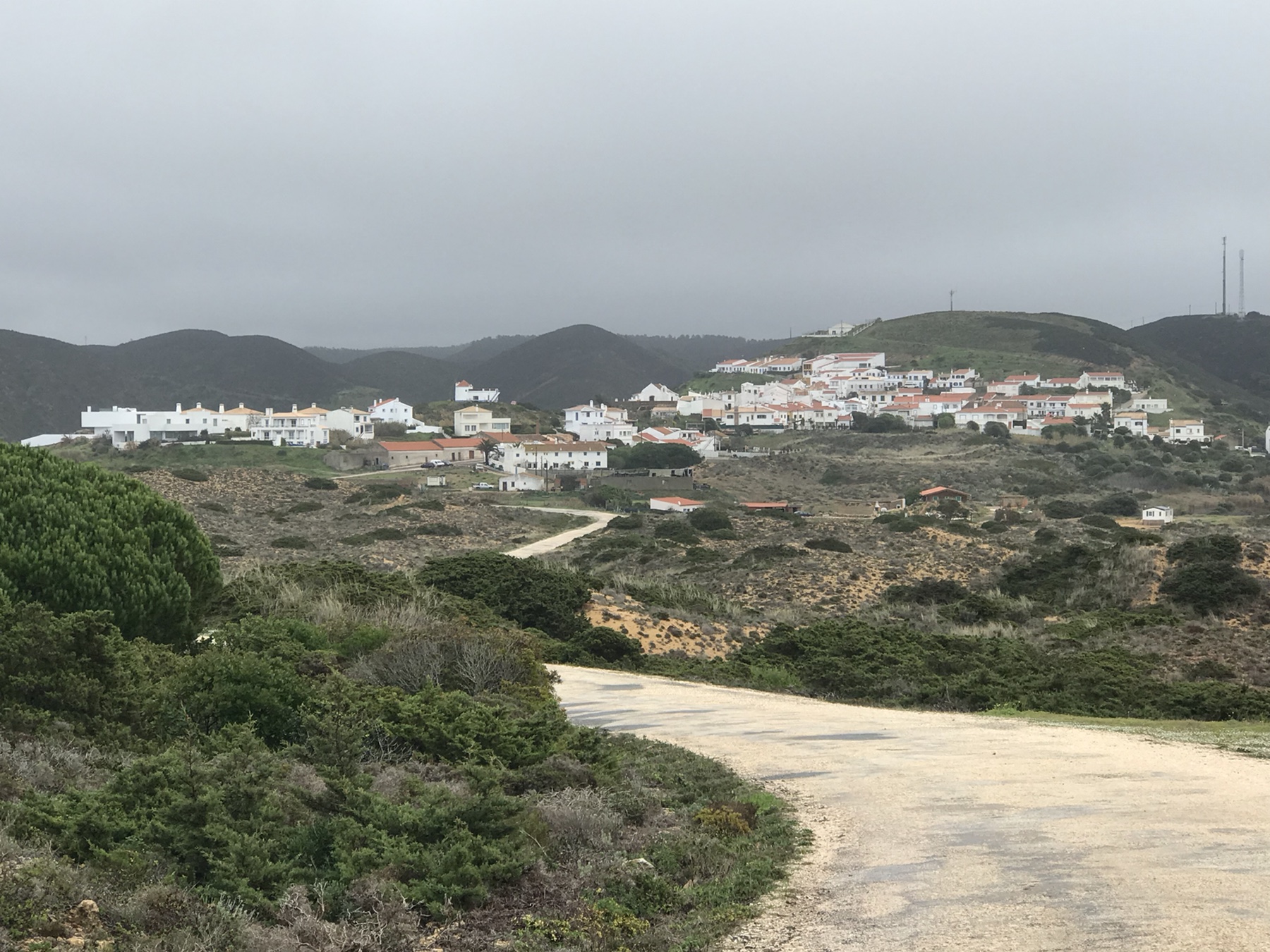
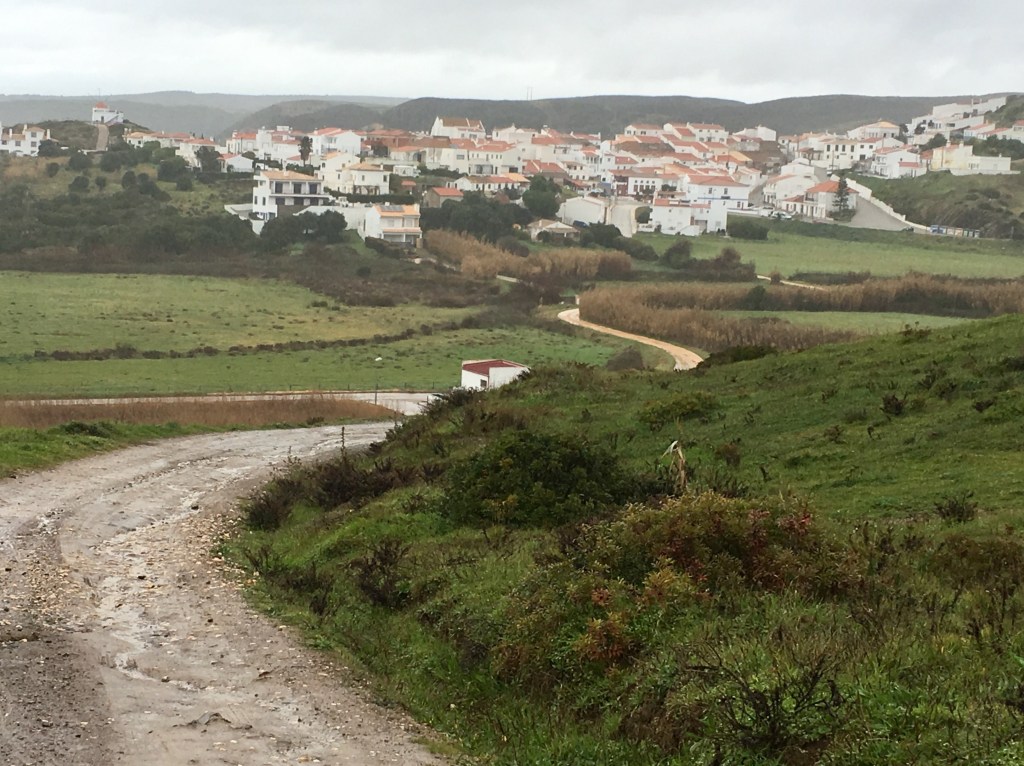
Followed by the welcome sight of Carrapateira through the mist.

We decided to stop in a small cafe in the square for a coffee, yet again another cafe owner who didn’t seem very impressed at having any customers. She was very grumpy and, despite a ‘No Dogs’ sign on the door, there was a grubby little dog clearly very much at home.

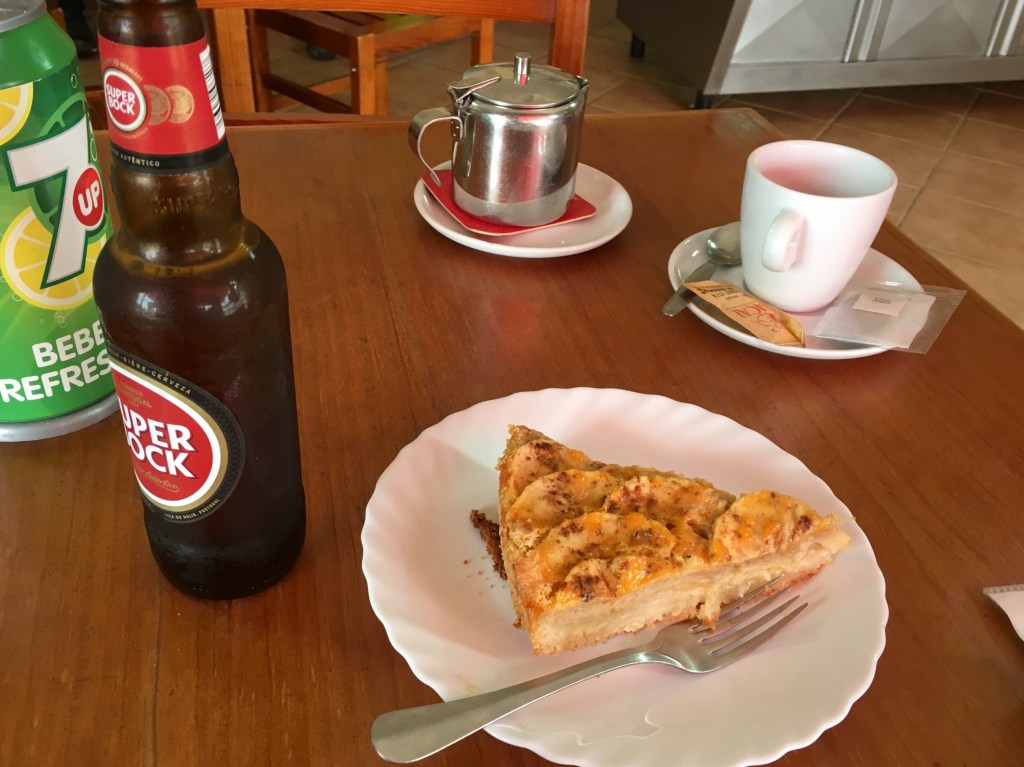
Cost of one bottle of beer, a pot of tea together with a slice of local orange pie was €3 (£2.60).

Suitably refreshed we headed out of town to our hotel, it’s set in a valley about a km outside Carrapateira.

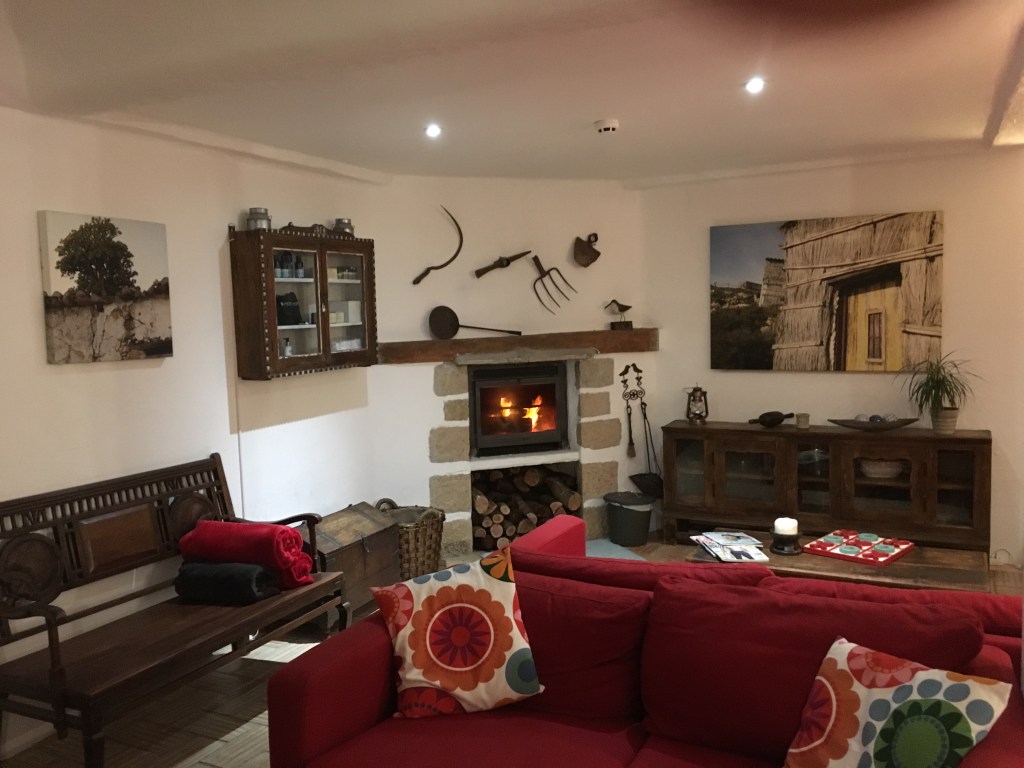
There are a couple of lounges with large comfy sofas, a log fire and we have quite a nice view from our terrace.

The rest of our itinerary includes two circular walks, if the sun shines we may just stay here and read!

Vila do Bispo to Pedralva

Only 15km today, about 5 hours walking.

Breakfast wasn’t served until 8:30 so we had a leisurely start which our legs and feet welcomed.

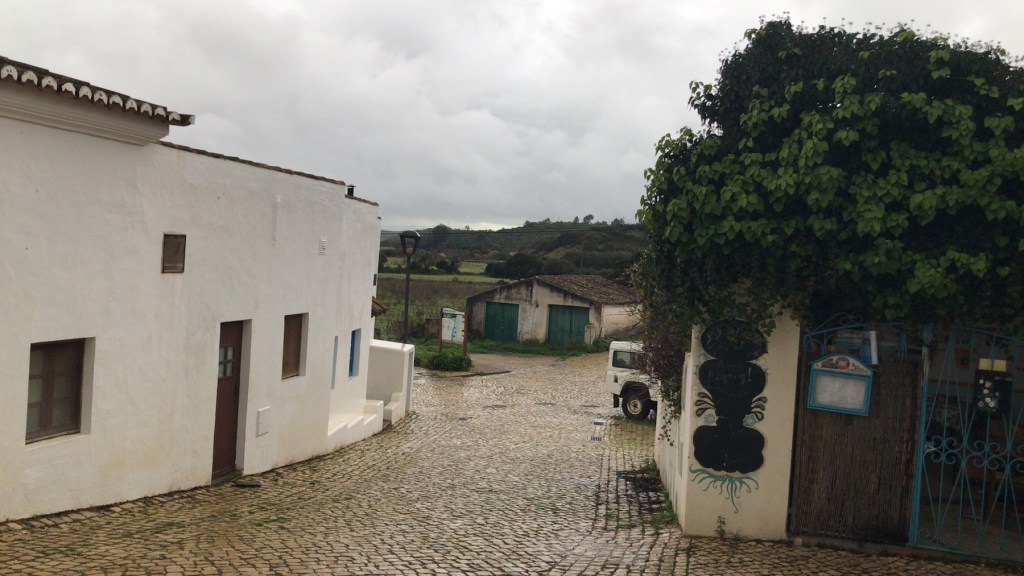
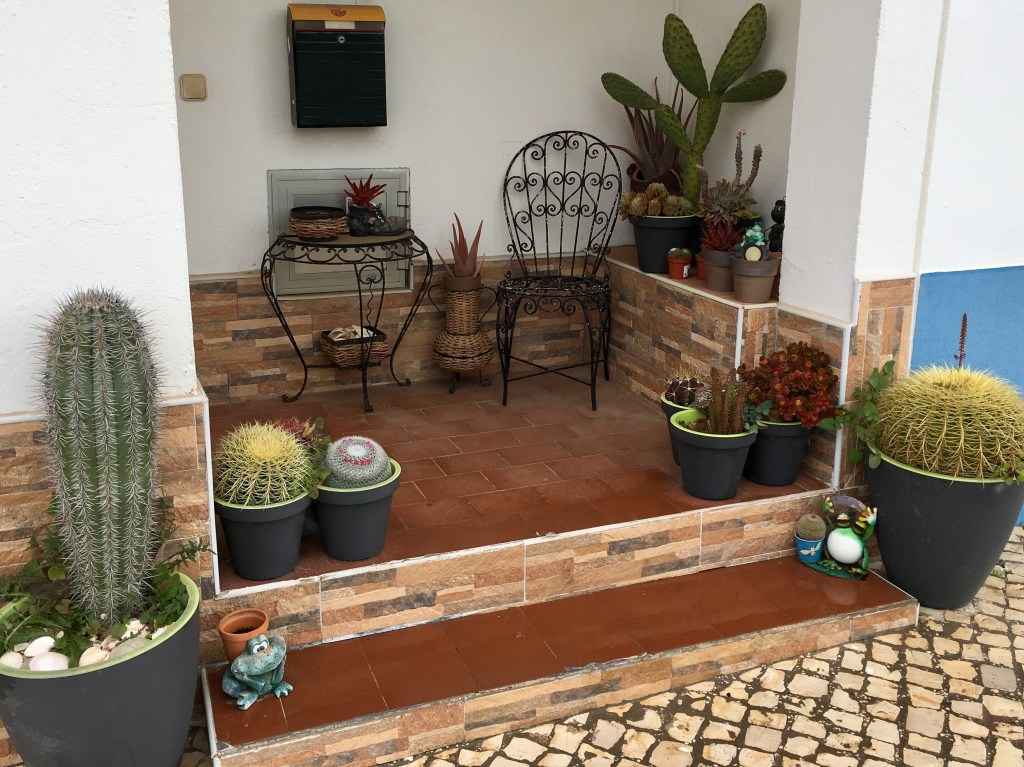
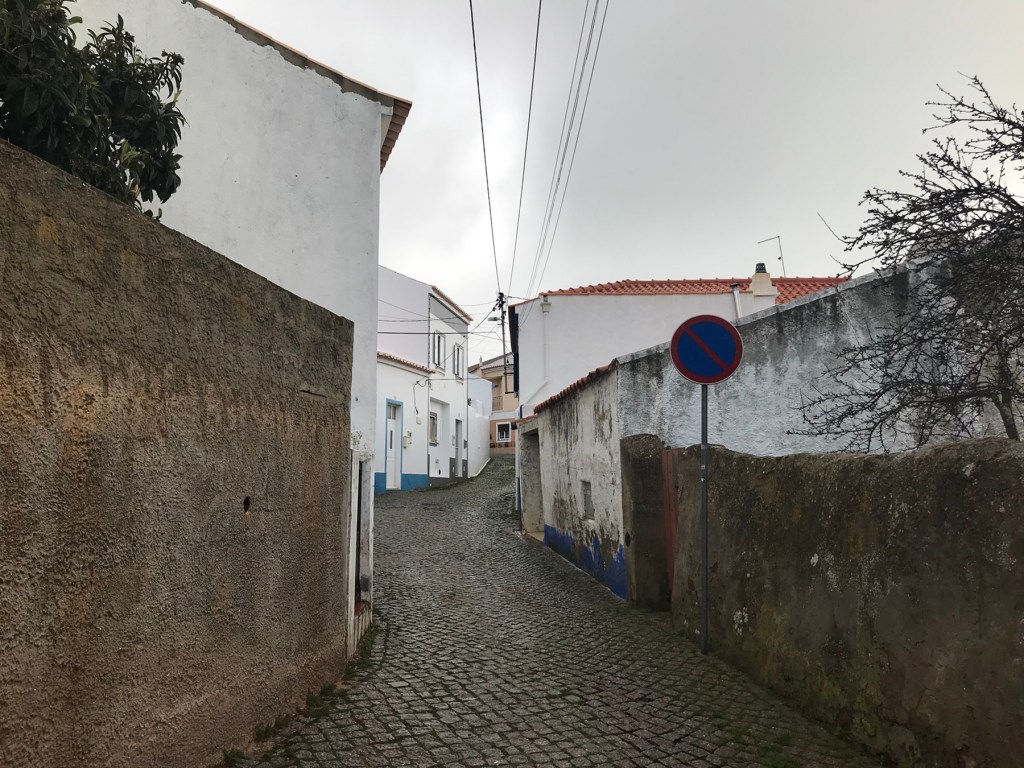
Our packed lunch was handed over and we decided to travel light. Water was decanted into our water bottles and fruit juice in glass bottles was poured into the empty plastic water bottles! We set out in the rain past this lovely little front porch.

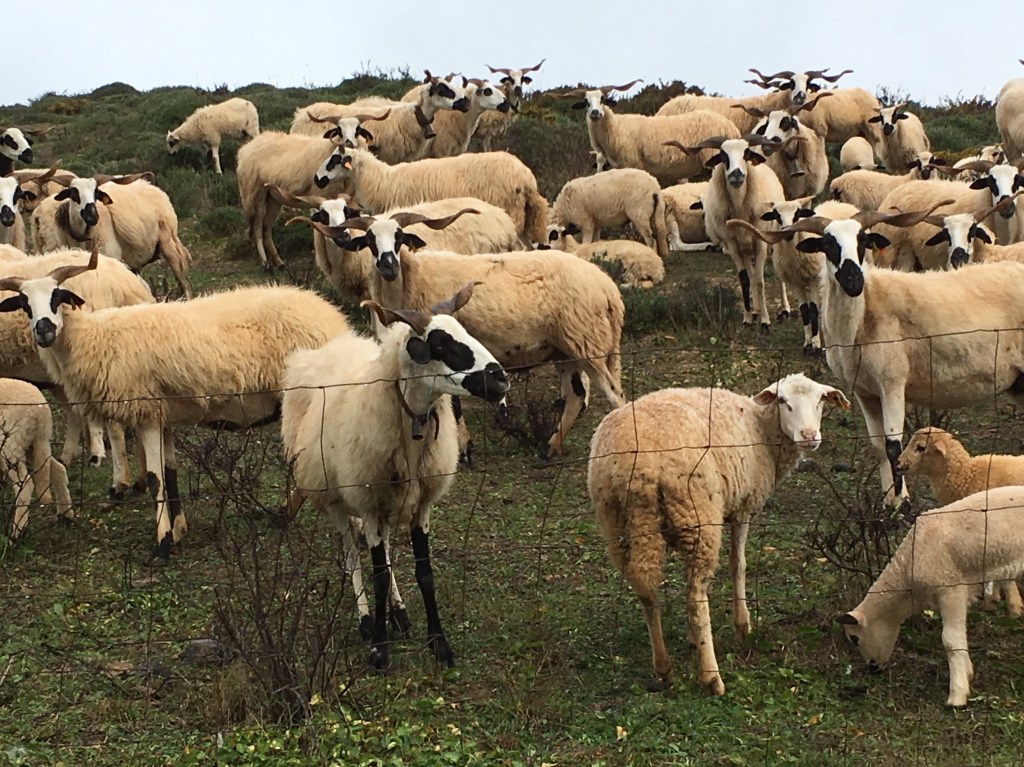
The first stop was in the next village of Raposeira, another essentially Portuguese village and past a field of very scary sheep. Look at those horns and penetrating stares.

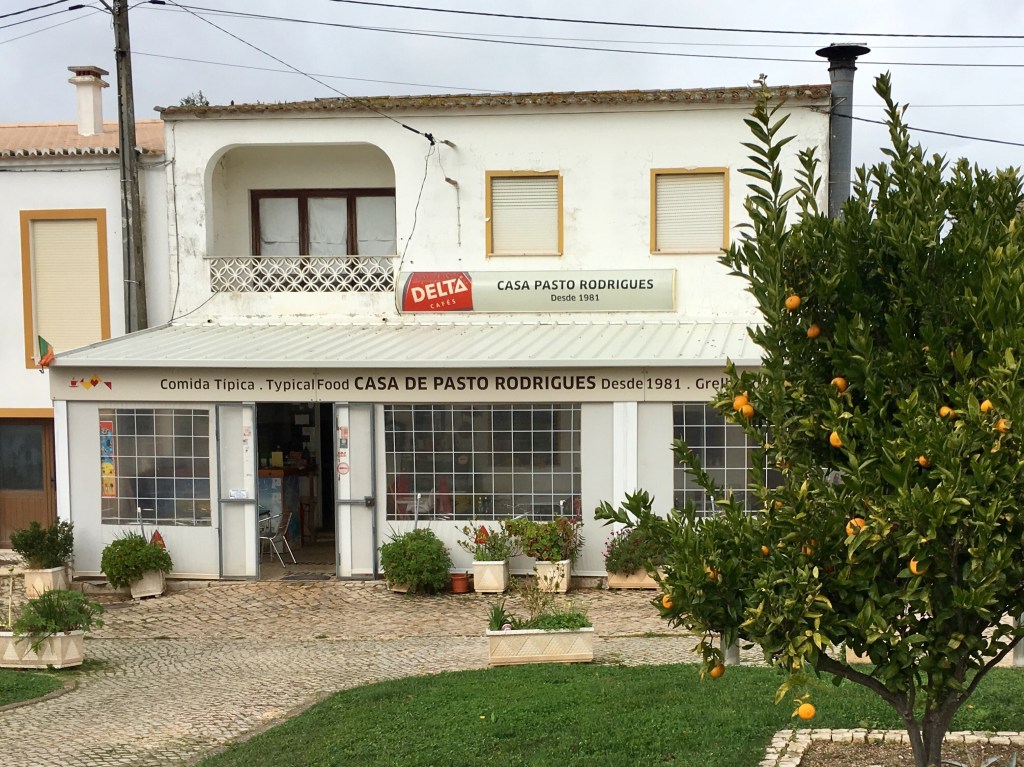
The biggest lure of the village was an open cafe. There’s a theme with Portuguese cafe owners, they don’t seem particularly keen to have customers.

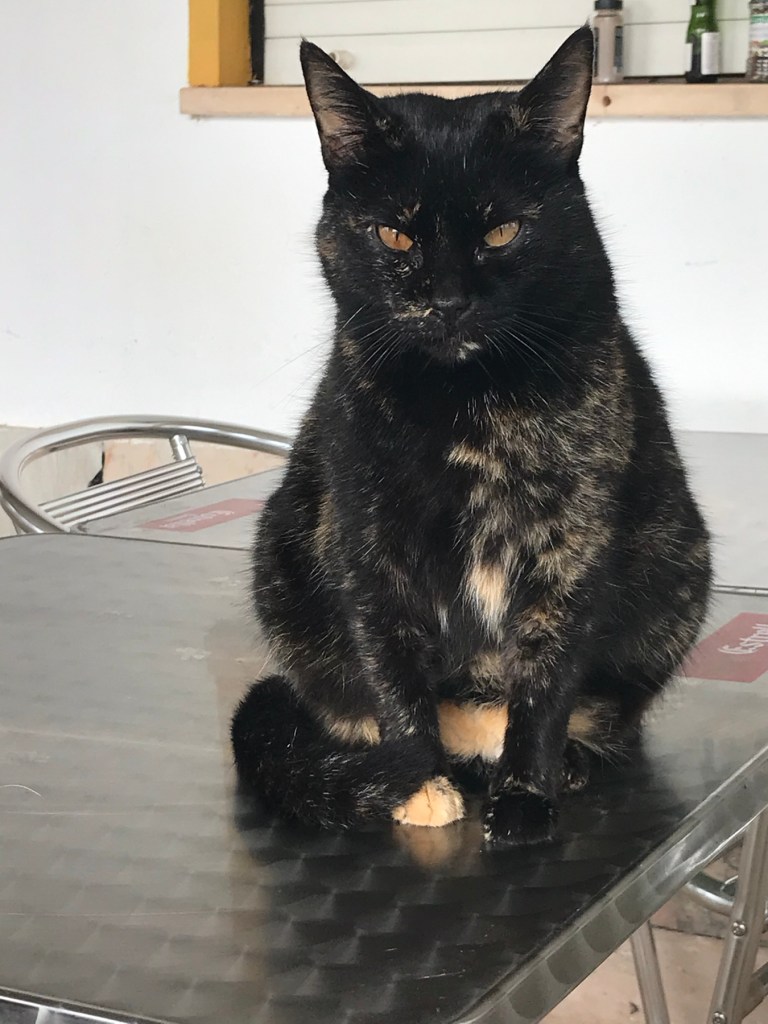
We had a tea and coffee, under the watchful eye of the security guard (with mismatched eyes), at the exorbitant cost of €1.50 (£1.30).

We wandered up though Raposeira and out into the valley, past lines of flowering eucalyptus trees. We’re not sure if it’s just the tree for sale…

The tracks today have generally been wider and flatter under foot which has been very welcome although still plenty of uphill climbs.

Our route took us towards a reservoir and the hamlet of Vale do Passo which was abandoned when the valley was flooded.

A flock of sheep and goats kept us company on the walk down to the reservoir.

Lunch was eaten overlooking the reservoir, before heading down the Vale do Passo, through a wooded valley of cork oaks, eucalyptus and cistus. You could certainly smell the eucalyptus in the air. It must be overpowering on really hot days.

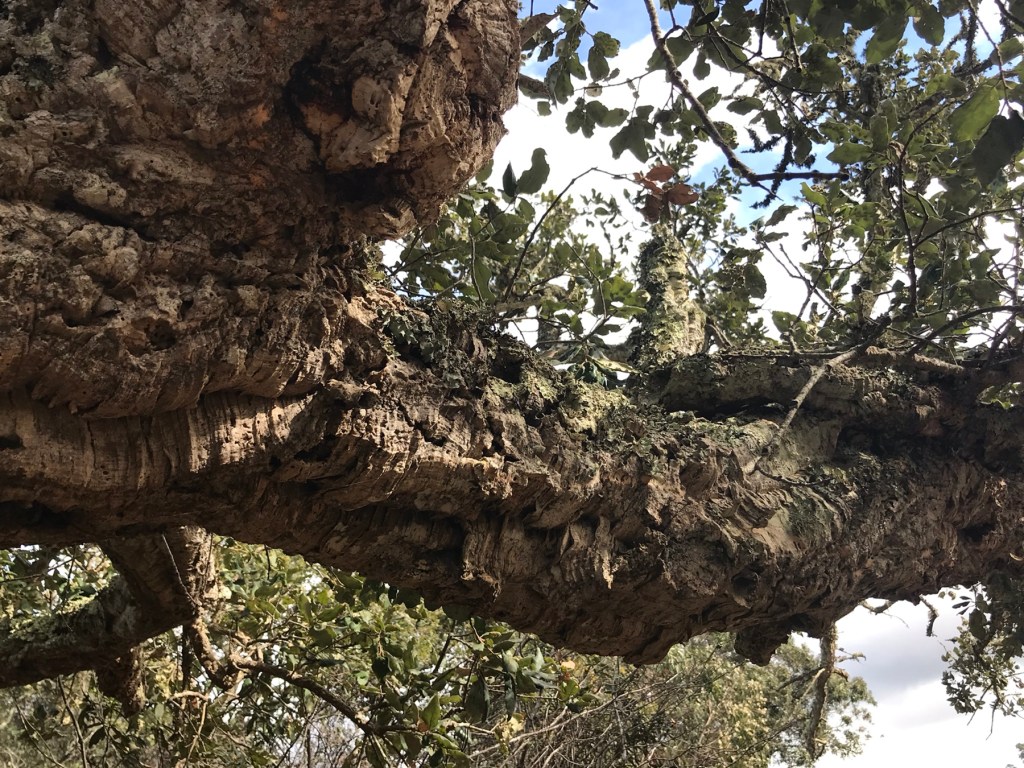
The cork oaks started to fascinate us.

We became a bit obsessed with them. The cork can be harvested from the trees every 7-10 years without significant harm.

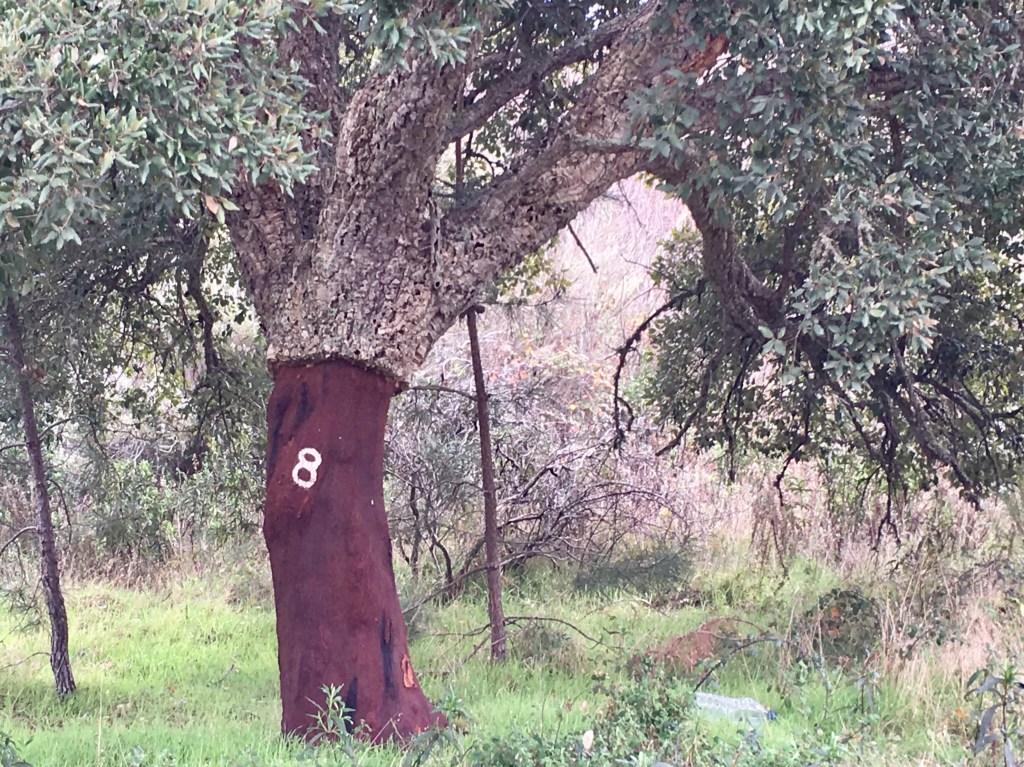
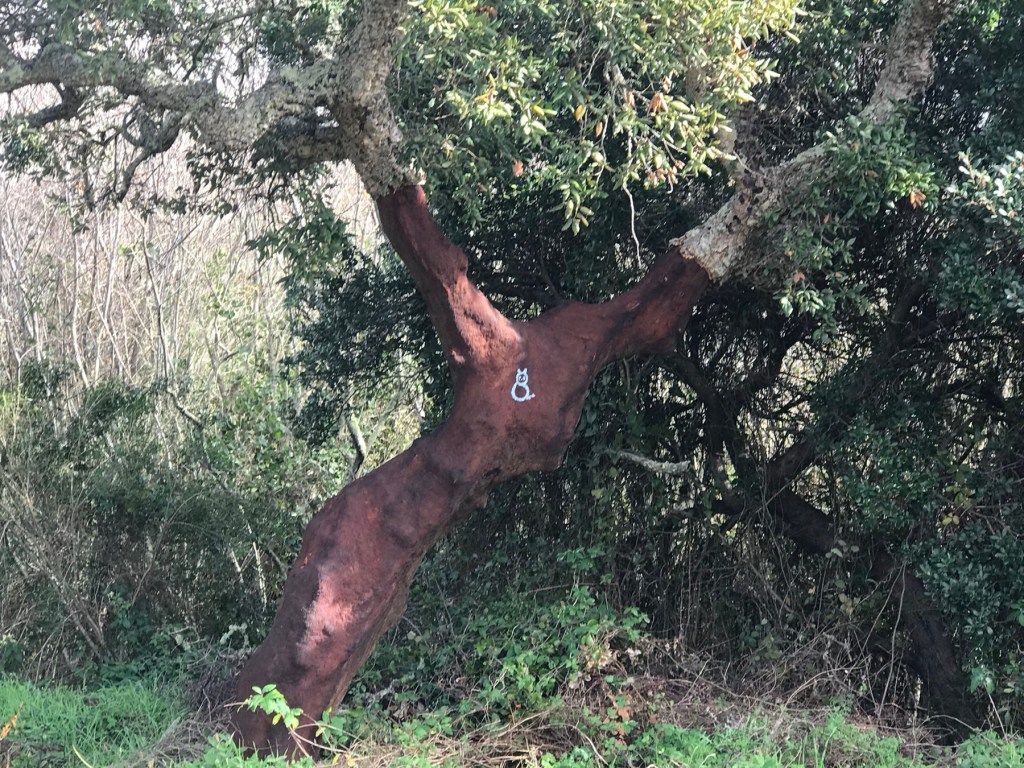
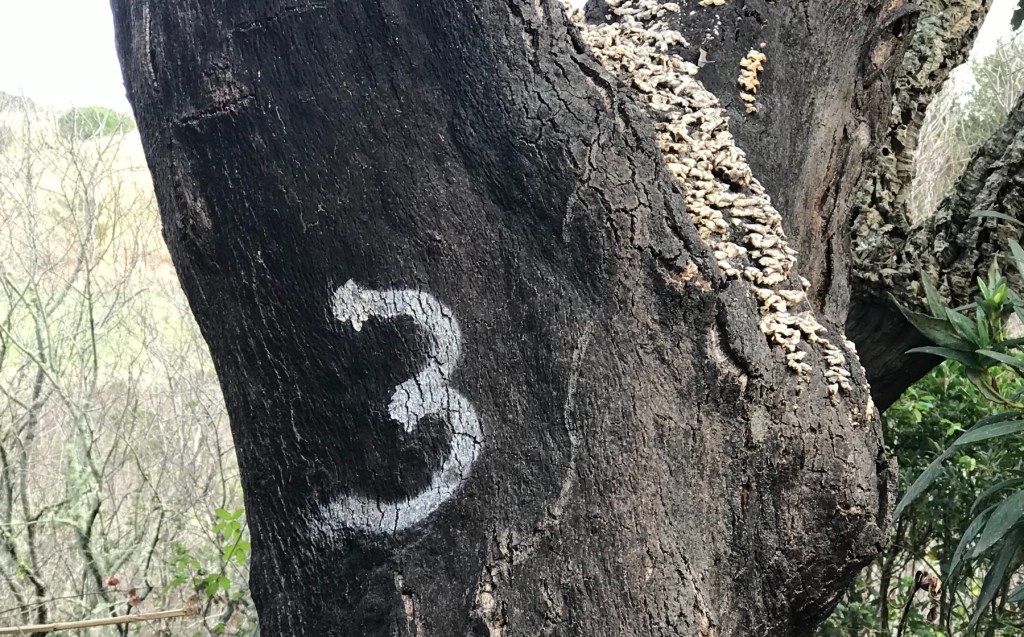
The bark regrows and provides a renewable resource used in the wine industry (hic), flooring and the centre of cricket balls. As we walked through the valley, we came across trees with numbers on, we assume indicating the year of harvest. At this point someone became bored with spraying 8…

This tree had been harvested earlier and was showing signs of re-growth.

We had a lovely flattish walk along the valley to Pedralva, our home for the night. In fact, today has been a walk of mainly wide paths with fewer hills than the last couple of days.

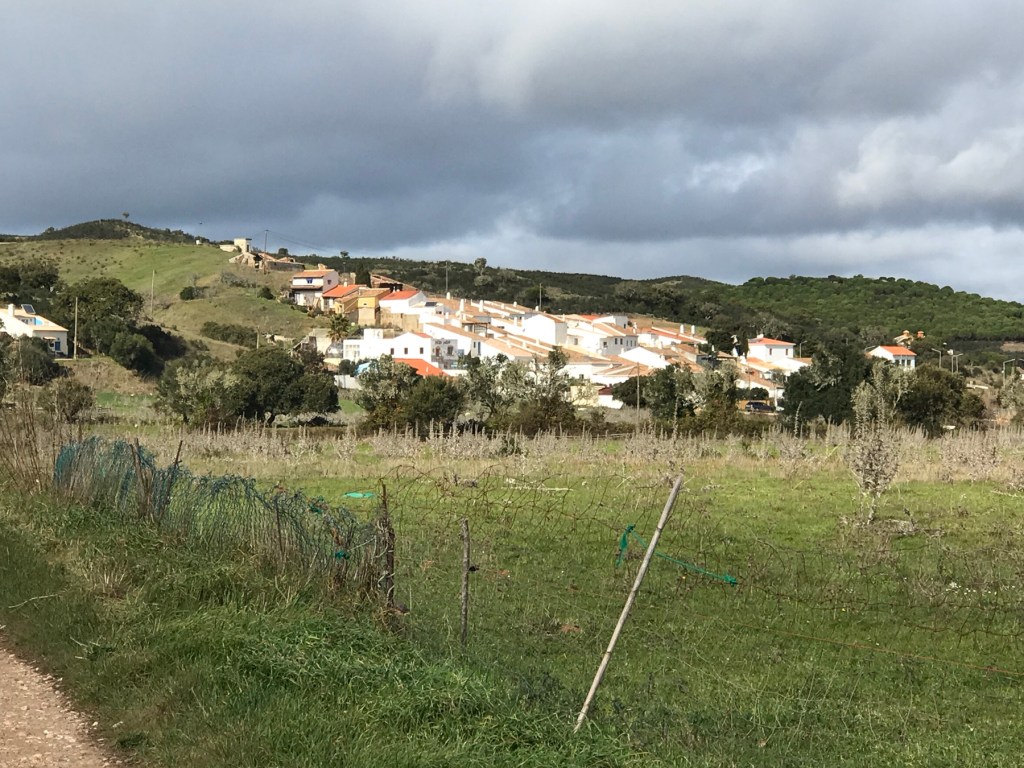
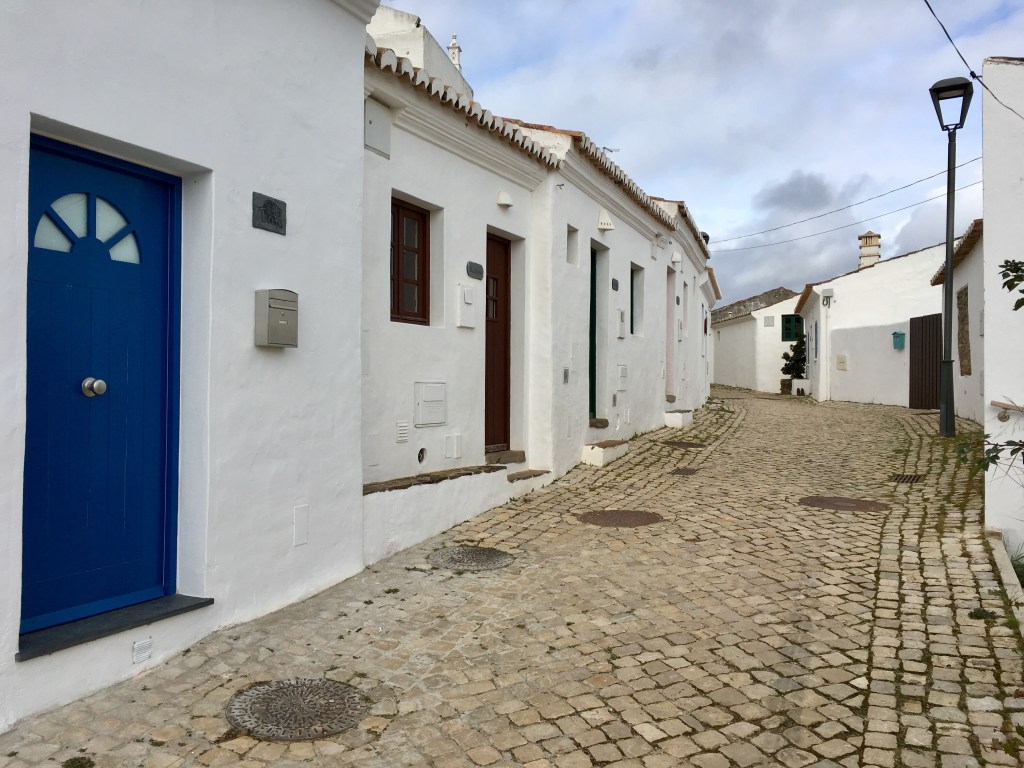
Pedralva was once a thriving, but poor, hamlet. As tourism boomed in the area, villagers moved away for a better life. A stressed advertising executive decided he needed a change of lifestyle and went into property development. He discovered Pedralva and is slowly tracing owners of properties and bringing the village back to life as an eco friendly complex.

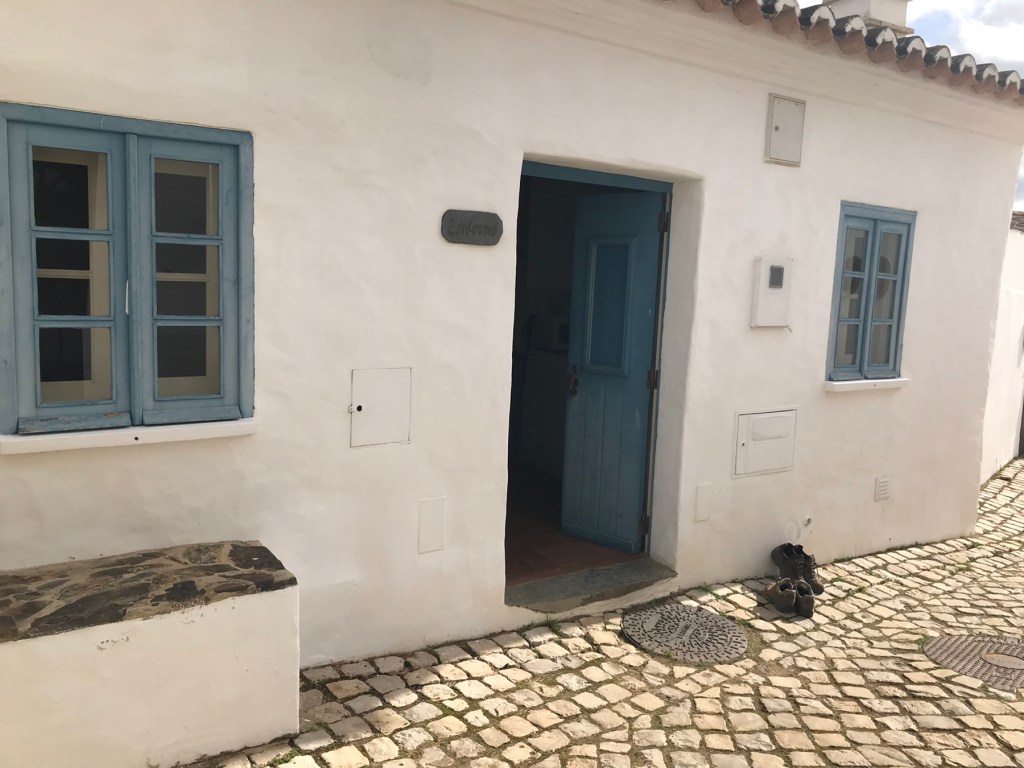
This is our home for the night

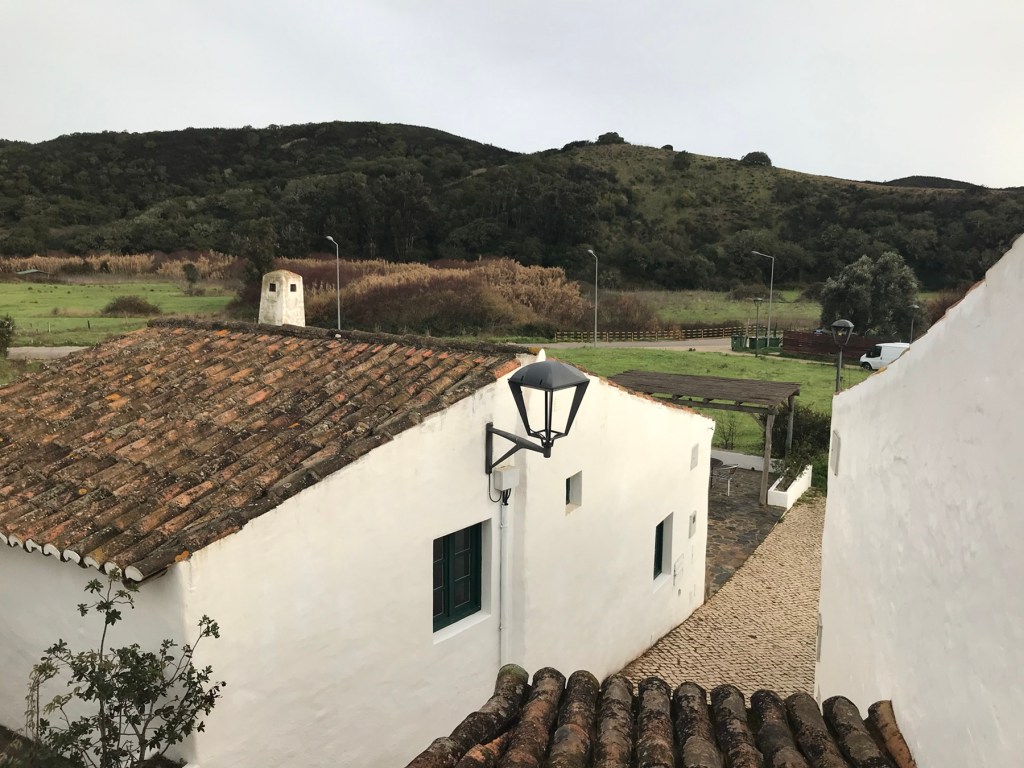
The view out of bedroom window

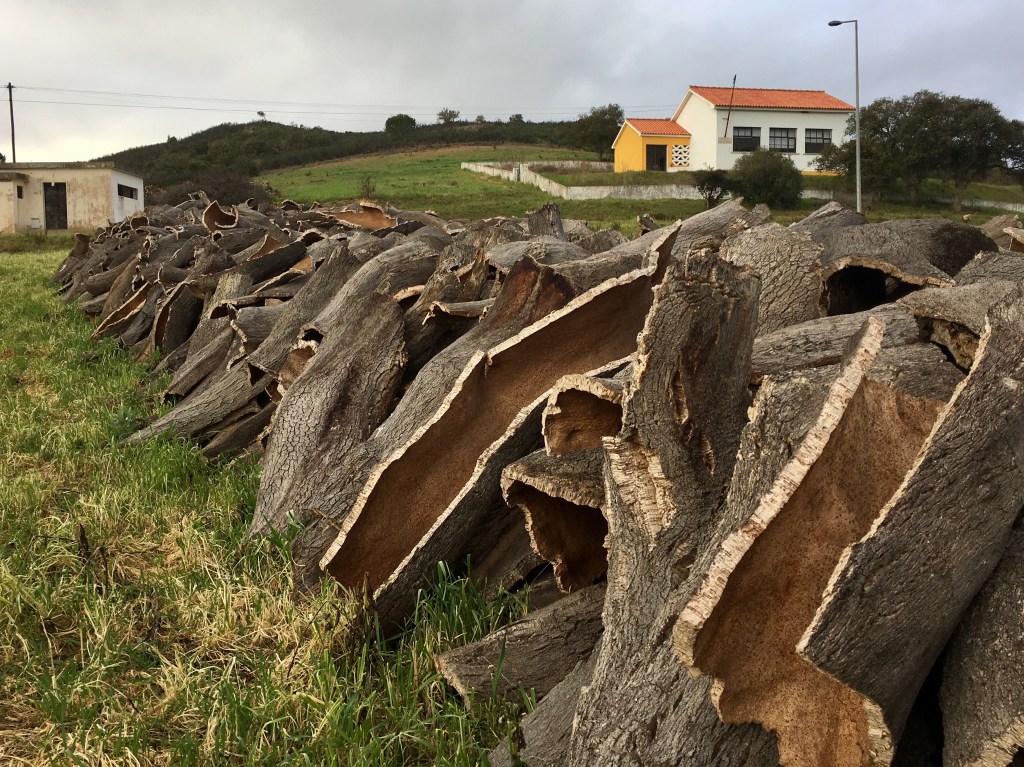
After a short walk we found the cork taken from the trees. Now many corks are made out of plastic, it’s also used to make souvenirs.