…….busiest bus in the world.
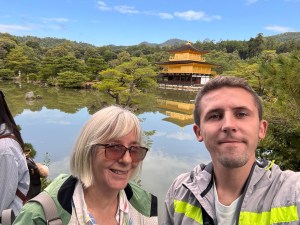
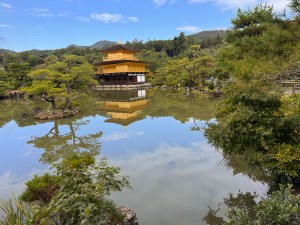
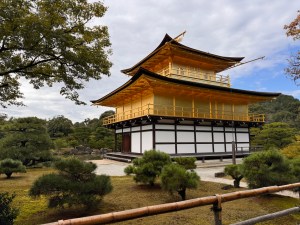
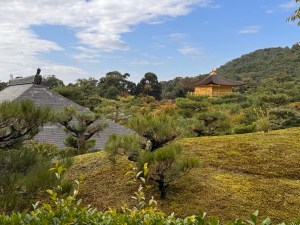
It was a 7:30 start for us to beat the crowds at Kinkaku-ji, Temple of the Golden Pavillion. The Zen Buddhist Temple dates back to 1397, with the top two floors covered in gold leaf, it’s quite a tourist magnet. It was re-built in 1955 after being destroyed, in 1950, in an arson attack by a novice Buddhist monk, how’s that for a story?
It was worth arriving before the Temple opened, we were ahead of the crowds and had space to take in the atmosphere as we walked through its’ Japanese Strolling Garden. There’s a clear one way system round the Temple with no way to retrace your steps. With the number of visitors, chaos would ensue if you were left to your own devices so, before we knew it, we were out and enroute to Ryoan-ji.
Ryoan-ji – The Temple of the Dragon at Peace, dating back to 1450, is a Zen Temple belonging to the Myoshin-ji school of the Rinzai branch of Zen Buddhism. The Rock garden is considered one of the finest surviving examples dry landscape. Within it are fifteen stones of different sizes, carefully composed in five groups, and surrounded by white gravel, which is carefully raked each day by the monks. The only vegetation in the garden is some moss around the stones.
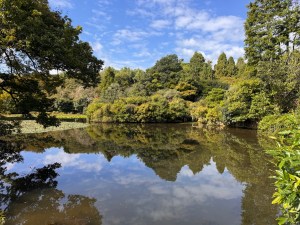
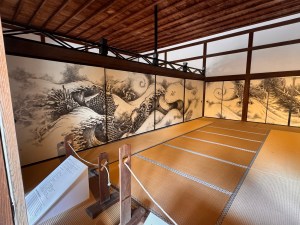
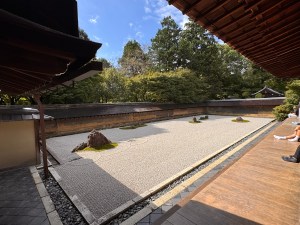
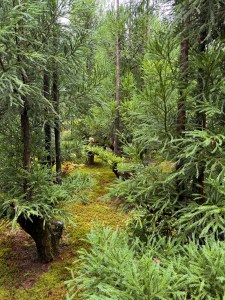
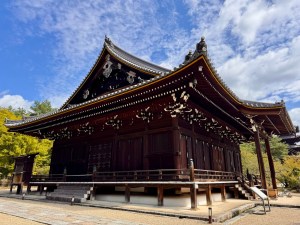
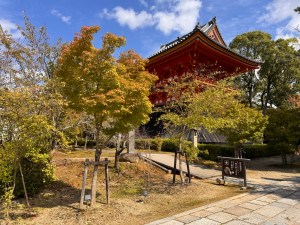
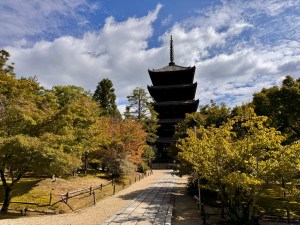
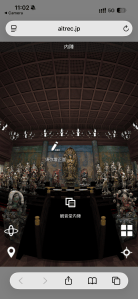
Our next stop was Ninna-Ji, the head temple of the Omuro school of the Shingon Sect of Buddhism and first founded in 888. A very different prospect to the other two, no entrance fee and few visitors. It was a peaceful wander after what had turned into quite an active morning. You really need to read its Wikipedia page to understand its significant cultural importance. While we couldn’t access any buildings, each one had an information board with a QR code for a 3D image – there are some fantastic artefacts behind the wooden doors.
We took the bus back into the city and I’m not sure Matt will ever recover. 10 minutes in the wrong direction before 35 minutes in the right direction on the most crowded bus ever. Luckily, we were able to sit all the way but it wasn’t pleasant.
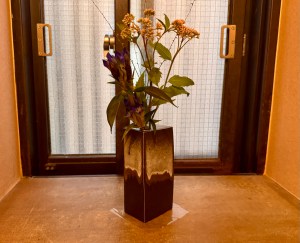
Anyone who watches The Pottery Throw Down will know about the Raku challenge. Raku originated in Kyoto 400 years ago, with the Raku family, and there is a Raku museum. The family is still renowned for their handmade tea cups and the museum displays cups made by each head of the family. Sadly no photos were allowed but I took this sneaky one in the Ladies.
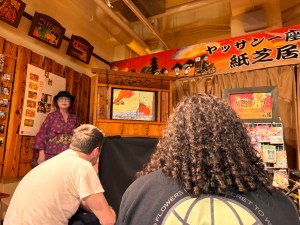
Who could come to Japan and not visit a Manga Museum? Not us! The Kyoto Manga museum is housed in a Primary School built in the late 19th Century and closed in the 80s due to falling pupil numbers. The museum is part history of the school, part history of Manga and part library where you sit and read Manga books. Somehow I managed to sit in on the regular ‘entertainment’ – a manga quiz followed by an enthusiastic telling of a Golden Bat story. Although he looks like a villain, The Golden Bat is credited with being the first Japanese Superhero and possibly the first modern superhero in the world as he dates back to the early 1930s. Anyway, I know nothing about Manga but did win a prize for correctly identifying a British Post box from an aerial drawing. Matt was so thrilled with his Minecraft sticker.
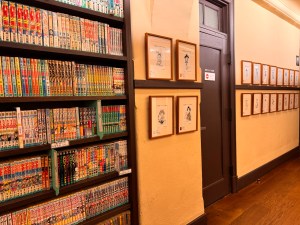
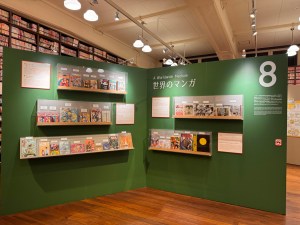
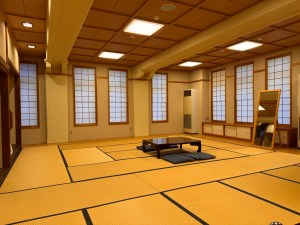
The classroom pictured above was purely used to teach the girls deportment.
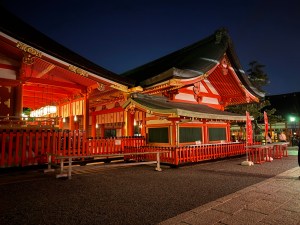
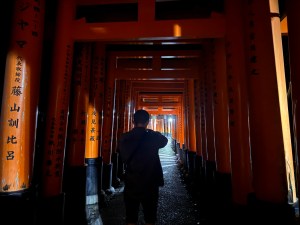
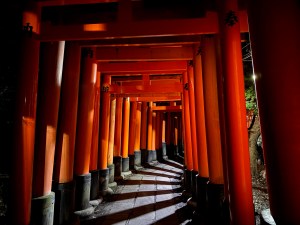
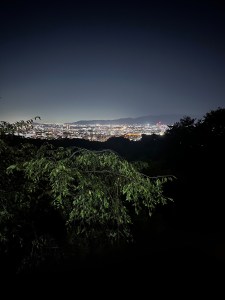
Our final cultural trip of the day was to the Fushimi Inari Shinto Shrine. Established in 711, it is famous for the Torii path and, in total, there are approximately 10000, 800 of which form the Senbon tunnel to the Shrine. we were advised to go after 5, when the crowds disperse and it was dark when we arrived, Poor lighting and a 4 km walk up a mountain were not ideal companions. We made it most of the way but it was too much, in the dark, for me. The view across Kyoto was amazing as was the sight of wild boar in the undergrowth.
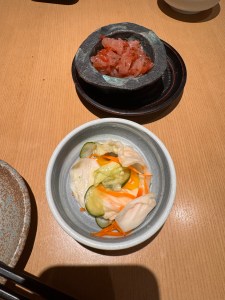
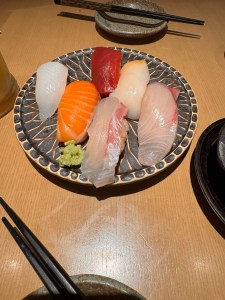
Finally, to dinner. Sushi, nigiri and tempura tonight. Please admire how brave we were to try crispy jellyfish with pickled plum. Only slightly more palatable than last night’s chicken gizzards. The tempura didn’t stay on the table long enough to photograph.